Data compiled across major cybersecurity benchmarks in 2017 revealed a dramatic escalation in cloud-related security risks, driven primarily by enterprise misconfigurations, poor identity management, and rapid unsanctioned cloud adoption. Industry reports from Gartner, Symantec, and the Ponemon Institute established that over 90% of cloud security incidents stemmed from customer-side operational oversights rather than cloud provider infrastructure flaws.
The 2017 Cloud Security Landscape: Key Findings and Benchmark Data
The year 2017 represented a pivotal watershed moment for cloud infrastructure security. Prior to 2017, enterprise technology executives evaluated cloud adoption primarily through the lens of performance, cost optimization, and infrastructure scalability. However, as public cloud migration shifted from experimental workloads to mission-critical operational data, empirical security statistics exposed severe governance gaps across Hybrid Cloud, Infrastructure as a Service (IaaS), Platform as a Service (PaaS), and Software as a Service (SaaS) environments.
Industry data published throughout 2017 highlighted a troubling paradox: while enterprise confidence in major cloud service providers (CSPs) like Amazon Web Services (AWS), Microsoft Azure, and Google Cloud Platform (GCP) remained high, security incident frequency escalated rapidly. Security teams struggled to maintain visibility across fragmented public, private, and multi-cloud footprints.
- 2017 Enterprise Cloud Adoption Paradox
- High Provider Infrastructure Trust (Hyperscaler physical security & hypervisor isolation validated)
- Low Customer Operational Visibility & Misconfigured Access Control Policies
The Surge in Enterprise Cloud Adoption vs. Security Readiness
According to the 2017 State of the Cloud Report by RightScale, enterprise cloud adoption reached an astonishing 95% among surveyed IT organizations. Hybrid cloud strategies became the dominant enterprise architecture, with 85% of enterprises operating across a combination of public and private cloud environments.
Despite this high rate of deployment, technical readiness failed to keep pace with migration velocity:
- Persistent Top Concern: Security remained the leading challenge for 25% of enterprise IT leaders, closely followed by cloud cost management (23%) and a lack of internal cloud resources or expertise (22%).
- Skills Shortage Impact: 56% of organizations cited a lack of specialized cloud security architecture talent as their primary operational bottleneck, leading directly to misconfigured storage buckets and insecure application programming interfaces (APIs).
- Multi-Cloud Complexity: The average enterprise utilized 3.0 public clouds and 3.3 private clouds simultaneously, compounding the challenge of managing uniform security policies across disparate environments.
Data Breach Costs and Incident Frequency in 2017
The financial impact of security failures became starkly evident in the 2017 Cost of Data Breach Study conducted by the Ponemon Institute and sponsored by IBM Security. The global average cost of a data breach reached $3.62 million, with the average cost per compromised record standing at $141.
In regions with stringent regulatory enforcement and high compliance thresholds, such as North America, the financial consequences were significantly steeper:
- United States Benchmark: The average cost of a data breach in the United States surged to $7.35 million, the highest globally.
- Cloud Involvement: Breaches involving public cloud repositories or third-party SaaS environments took significantly longer to identify and contain—averaging 214 days to identify and 77 days to contain.
- Financial Drag of Malicious Attacks: Malicious or criminal attacks were identified as the root cause of 47% of all data breaches in 2017, costing on average $156 per record compared to $128 per record for breaches caused by system glitches.
Primary Risk Vectors Highlighted by 2017 Industry Reports
An examination of 2017 incident logs and forensic reports reveals that cloud vulnerabilities were rarely caused by zero-day hypervisor exploits or physical data center intrusions. Instead, the vast majority of security failures were attributable to operational execution errors, weak access controls, and unmanaged cloud instances.
Dominant 2017 Cloud Vector Hierarchy
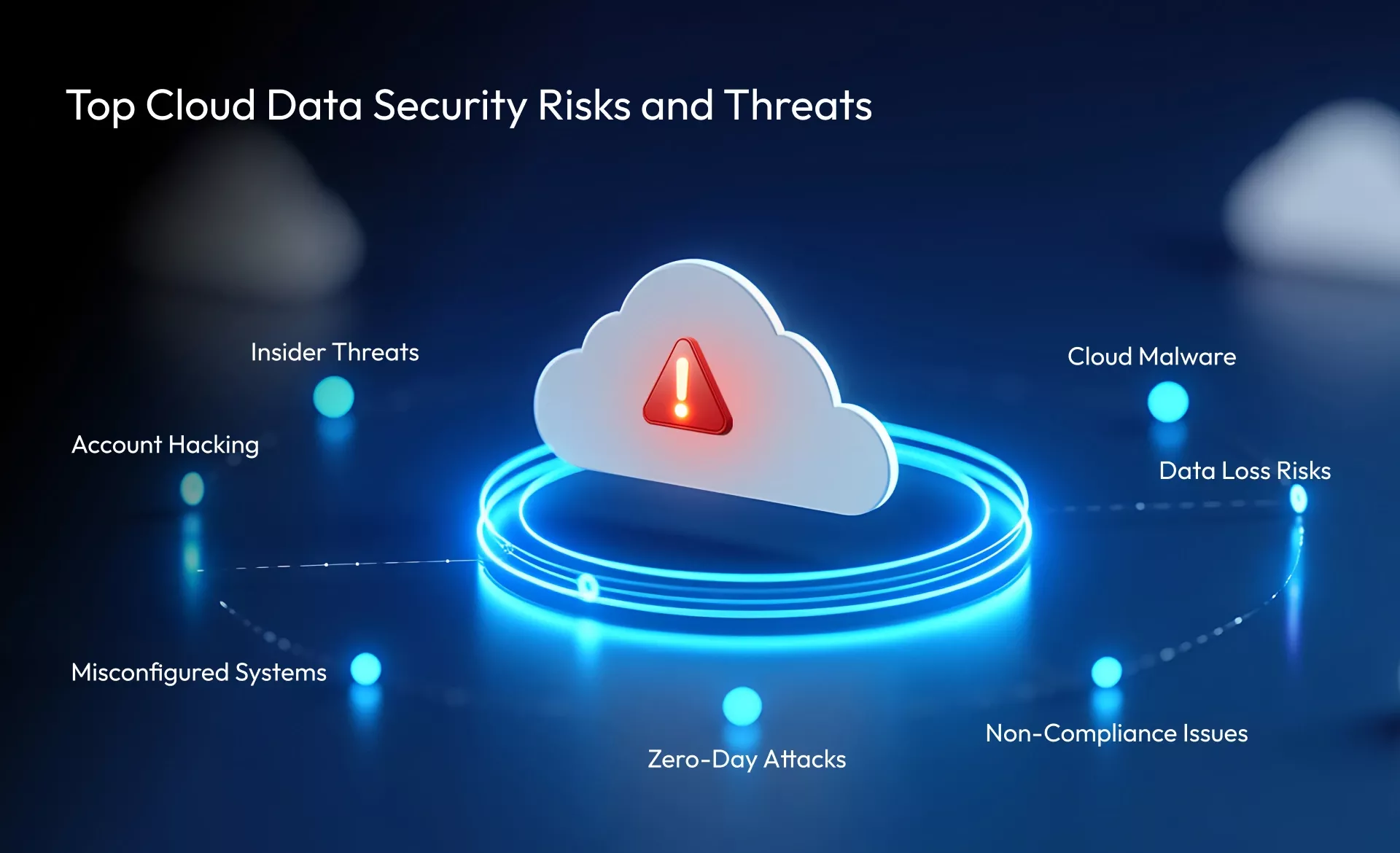
- Cloud Misconfigurations (Exposed S3 Buckets, Open ElasticSearch)
- Identity & Access Management (IAM Key Leakage, Weak MFA Enforcement)
- Shadow IT & Unsanctioned SaaS (Unmonitored Data Exfiltration)
- Cloud-Targeted Ransomware & Malicious API Hijacking
Cloud Misconfigurations and the Amazon S3 Exposure Epidemic
The defining cloud security threat of 2017 was the public exposure of sensitive data hosted in cloud storage repositories, most notably Amazon Simple Storage Service (Amazon S3) buckets. The default permission settings for Amazon S3 were designed to allow rapid developer access, but inadequate access policy enforcement left thousands of enterprise storage buckets open to the public internet without authentication requirements.
High-profile data exposure events in 2017 underscored the systemic nature of misconfigurations:
- Deep Root Analytics Breach: In June 2017, cyber researchers discovered an exposed AWS S3 bucket containing sensitive personal data belonging to 198 million American citizens (nearly 61% of the entire U.S. population). The repository was left open without a password.
- Verizon Customer Data Exposure: A third-party vendor operating on behalf of Verizon exposed personal details and PIN codes for over 14 million subscribers due to an improperly configured cloud storage instance.
- Defense Contractor Key Leaks: Top-tier defense contractors and consulting firms, including Booz Allen Hamilton and Accenture, experienced incidents where cloud storage repositories holding secret keys, military intelligence files, and internal credentials were published directly to public S3 URIs.
Security audits conducted in late 2017 indicated that over 7% of all publicly accessible S3 buckets contained unencrypted, sensitive enterprise files, corporate emails, or system backup archives.
Identity and Access Management (IAM) Failures and Credential Sprawl
Identity replaced the traditional network perimeter in public cloud environments, yet enterprise Identity and Access Management (IAM) practices in 2017 were severely underdeveloped. The Cloud Security Alliance (CSA) identified "Insecure Interfaces and APIs" alongside "Bad IAM Practices" among the top threats in its annual security analysis.
Key statistics regarding IAM vulnerabilities included:
- Hardcoded Credentials: Over 35% of public GitHub repositories scanned by security researchers in 2017 contained embedded cloud API access keys, cryptographic secrets, or database connection strings.
- Lack of Multi-Factor Authentication (MFA): More than 60% of enterprise cloud administrative accounts did not require mandatory multi-factor authentication, making root tenant accounts highly vulnerable to credential stuffing and phishing vectors.
- Over-Privileged Roles: Audit logs revealed that 88% of IAM roles possessed broad administrative privileges (
*:*) that far exceeded the operational access requirements of the assigned workload or user.
The Persistence of Shadow IT and Unsanctioned Cloud Applications
Shadow IT—the deployment of software, cloud instances, or SaaS applications without formal corporate IT authorization—reached unprecedented levels in 2017. The Symantec Internet Security Threat Report (ISTR), Volume 22 revealed a massive discrepancy between IT leadership's perception of shadow IT and actual operational realities.
| Metric | Enterprise CIO Estimate | Actual 2017 Audit Findings |
|---|---|---|
| Average Unsanctioned SaaS Apps per Org | 30 to 40 applications | 928 to 1,217 applications |
| Unsanctioned Cloud Data Storage | < 5% of total corporate data | 28% of confidential documents |
| SaaS Apps Compliant with GDPR/SOC 2 | Assumed 80%+ | Actual < 11% compliant |
Employees routinely utilized consumer file-sharing tools, web-based PDF converters, and unapproved project management applications. This unmonitored data exfiltration bypassed perimeter firewalls and Data Loss Prevention (DLP) systems entirely, exposing sensitive corporate Intellectual Property (IP) to external breach risks.
Malware, Ransomware, and Account Hijacking in Cloud Environments
While traditional malware target vectors remained focused on endpoint workstations, 2017 marked the rise of cloud-native malware execution and account hijacking.
- Malware Hosting in Cloud Storage: Attackers increasingly leveraged legitimate SaaS platforms (such as Google Drive, OneDrive, and Dropbox) to host malicious payloads. Because these domain names carried high reputation scores, email gateways and network firewalls failed to block the malicious downloads.
- Cloud Compute Hijacking (Cryptojacking): Late 2017 saw an explosion in cryptojacking incidents. Attackers scanned public code repositories for cloud administration API keys, used them to spin up thousands of high-performance compute instances (such as AWS EC2 GPU instances), and mined cryptocurrencies at the victim organization's expense.
The Shared Responsibility Model: The Core Conceptual Failure of 2017
The dramatic rise in cloud security incidents throughout 2017 was not primarily caused by technological limitations; it was rooted in a widespread failure to understand the Cloud Shared Responsibility Model.
- The Cloud Shared Responsibility Model
- Customer Responsibility: Data Classification, IAM Policies, Network Firewall Rules, Encryption, Client OS
- Provider Responsibility: Physical Infrastructure, Hypervisor Isolation, Host OS, Hardware, Global Datacenters
Gartner's 95% Rule and Customer-Side Oversight
In an influential security research report published in 2017, technology research firm Gartner issued a stark prediction:
"Through 2020, 95% of cloud security failures will be the customer's fault."
Gartner's analysis emphasized that cloud service providers invested heavily in physical data center security, hypervisor isolation, host OS hardening, and physical media destruction. However, customers frequently operated under the false assumption that migrating a workload to AWS, Azure, or GCP meant the cloud vendor assumed full responsibility for data protection, network access rules, and application-level security.
Operationalizing Shared Responsibility Across IaaS, PaaS, and SaaS
Understanding where cloud provider responsibility ends and customer responsibility begins requires examining the operational boundaries across service models:
- Infrastructure as a Service (IaaS): The CSP manages physical servers, storage arrays, networking hardware, and virtualization layers. The customer retains 100% responsibility for operating system patching, middle-tier configuration, guest network firewalls (Security Groups), IAM role definition, and data encryption at rest and in transit.
- Platform as a Service (PaaS): The CSP manages the underlying operating system, runtime execution framework, and middleware. The customer remains responsible for application code security, database access configuration, API token security, and user access management.
- Software as a Service (SaaS): The CSP manages the entire application stack, background infrastructure, and release updates. The customer remains strictly responsible for data classification, user authentication controls, endpoint access security, and third-party integration permissions.
In 2017, enterprise security teams consistently failed to enforce security controls within their operational boundaries, creating permissive environments ripe for exploitation.
Comparative Analysis of 2017 Cloud Security Benchmarks
To understand how cloud security statistics varied across different industry reports published in 2017, the following table synthesizes data points, surveyed metrics, identified primary risks, and strategic impact levels across major research releases.
| Research Source / Report | Key Statistic / Metric Reported | Primary Identified Risk Factor | Organizational Impact Level | Strategic Takeaway for IT Leaders |
|---|---|---|---|---|
| RightScale State of the Cloud 2017 | 95% Cloud Adoption; 25% cite security as #1 concern | Lack of internal cloud architecture expertise | High | Multi-cloud adoption outpaces internal skill development. |
| Gartner Cloud Security Report (2017) | 95% of cloud security failures predicted to be customer fault | Customer misconfigurations and weak IAM | Critical | Responsibility for securing data lies entirely with the enterprise customer. |
| Ponemon / IBM Cost of Breach (2017) | $3.62M global average breach cost ($7.35M in U.S.) | Delayed detection/containment of cloud breaches | Critical | Incident response playbooks must adapt to cloud environments. |
| Symantec Threat Report (ISTR 22) | Enterprise shadow IT usage averaged 928+ unsanctioned apps | Unmonitored data exfiltration to unauthorized SaaS | Moderate to High | Perimeter defenses fail to detect hidden cloud application traffic. |
| Cloud Security Alliance (CSA) Top Threats | Insecure APIs and IAM flaws rank among top cloud risks | Public API key leaks and over-privileged permissions | High | Identity must become the primary governance and access perimeter. |
| McAfee / Skyhigh Cloud Report (2017) | 7% of public AWS S3 buckets contained sensitive, unencrypted data | Open S3 bucket permissions and lack of policy guardrails | Critical | Automated compliance scanning is required for cloud storage assets. |
Lessons Learned and Strategic Evolutions: From 2017 to Modern Cloud Security
The alarming cloud security statistics of 2017 triggered a major shift in how cybersecurity software was built, deployed, and managed. The industry recognized that traditional security controls—such as hardware firewalls, network taps, and static endpoint antivirus tools—were structurally inadequate for dynamic, API-driven cloud environments.
- Architectural Transformation Driven by 2017 Data
- Pre-2017 Paradigm:
- Manual Change Control Checklists
- Perimeter Network Firewalls
- In-House Server Audits
- Modern Cloud Posture:
- Cloud Security Posture Mgmt
- Native Zero Trust Access
- Automated IaC Scanning
- Pre-2017 Paradigm:
The Rise of Cloud Security Posture Management (CSPM)
Prior to 2017, cloud infrastructure auditing was largely a manual process involving periodic security checklists. The surge in cloud storage leaks led directly to the creation and rapid enterprise adoption of Cloud Security Posture Management (CSPM) platforms.
CSPM tools continuously monitor public cloud environments via CSP APIs to:
- Identify publicly accessible S3 storage buckets, open ElasticSearch clusters, and exposed relational database instances in real time.
- Enforce baseline compliance frameworks such as CIS Benchmarks, NIST SP 800-53, and PCI-DSS across multi-cloud footprints.
- Automatically remediate misconfigurations by updating access control lists (ACLs) and security group parameters without manual analyst intervention.
Zero Trust Architecture as a Native Requirement
The failure of network-based perimeters in 2017 accelerated the transition toward Zero Trust Architecture (ZTA), as formalized in guidelines such as NIST Special Publication 800-207.
Zero Trust discards the concept of implicit trust based on network location. Instead, every access request to a cloud application or database must be explicitly authenticated, authorized, and continuously validated based on:
- User Identity: Strong multi-factor authentication (MFA) and risk-based authentication checks.
- Device Posture: Health checks verifying endpoint compliance, disk encryption, and active EDR agents.
- Least Privilege Context: RBAC/ABAC models ensuring users and machine workloads receive only the minimum permissions necessary for specific operational tasks.
Automated Guardrails and Infrastructure as Code (IaC) Scanning
To prevent human error from creating insecure cloud resources, modern DevOps pipelines integrate security controls directly into software deployment workflows (DevSecOps).
Rather than provisioning cloud resources manually through web administration consoles, organizations utilize Infrastructure as Code (IaC) templates (such as Terraform, AWS CloudFormation, or Ansible). Automated static analysis tools scan these IaC templates within CI/CD pipelines before deployment. If a developer attempts to commit code that provisions an unencrypted S3 bucket or opens SSH port 22 to 0.0.0.0/0, the automated pipeline breaks the build and flags the security violation immediately.
Frequently Asked Questions
Why were cloud security statistics in 2017 considered a turning point for enterprise IT?
2017 was the year enterprise cloud adoption crossed the threshold into mainstream operational dominance (95% adoption), but it was also characterized by major public data leaks caused by misconfigured infrastructure. The contrast between high cloud investment and widespread configuration vulnerabilities forced IT leadership to redefine cloud security strategies.
What was the primary cause of cloud data leaks reported in 2017?
The primary cause of cloud data leaks in 2017 was customer-side misconfiguration—specifically publicly exposed cloud storage repositories (such as AWS S3 buckets) and weak identity access permissions. Hypervisor software vulnerabilities and cloud provider data center breaches accounted for virtually zero major corporate leaks.
How did Gartner's cloud security predictions from 2017 hold up over time?
Gartner's 2017 prediction that 95% of cloud security failures through 2020 would be the customer's fault proved highly accurate. Subsequent breach analyses confirmed that over-privileged access keys, unencrypted storage, exposed databases, and poor secret management accounted for almost all reported cloud security breaches.
What is the Shared Responsibility Model and how did it fail enterprises in 2017?
The Shared Responsibility Model defines security obligations between cloud service providers (who secure the physical facilities, hypervisors, and core hardware) and enterprise customers (who must secure data classification, access rights, network rules, and application code). In 2017, enterprise failures stemmed from customers incorrectly assuming cloud providers handled customer-side data governance and access security.
What tool categories emerged directly to address the security risks identified in 2017?
The operational gaps highlighted in 2017 led directly to the commercial emergence of Cloud Security Posture Management (CSPM), Cloud Access Security Brokers (CASB), Cloud Workload Protection Platforms (CWPP), and specialized static analysis engines for Infrastructure as a Code (IaC) scanning.
Strategic Next Steps for Modern Cloud Posture Maintenance
The empirical lessons of 2017 remain directly applicable to enterprise cloud management today. Organizations seeking to audit and harden their cloud security posture should execute the following core remediation steps:
- Implement Automated Real-Time Posture Auditing: Deploy enterprise-grade CSPM solutions across all public cloud accounts to continuously discover exposed storage buckets, unencrypted databases, and loose security group rules.
- Enforce Strict Least-Privilege IAM Policies: Conduct comprehensive access reviews to eliminate over-privileged administrative roles (
*:*). Enforce mandatory hardware-backed Multi-Factor Authentication (MFA) across all cloud portal login interfaces. - Shift Security Left into CI/CD Pipelines: Mandate that all infrastructure changes be declared as code. Implement pre-commit hooks and static code analysis to detect misconfigurations before resources are provisioned in live production environments.
- Conduct Regular Cloud-Native Penetration Testing: Periodically evaluate your cloud tenant configuration against real-world attack scenarios, focusing specifically on privilege escalation vectors, storage API permissions, and serverless runtime security.