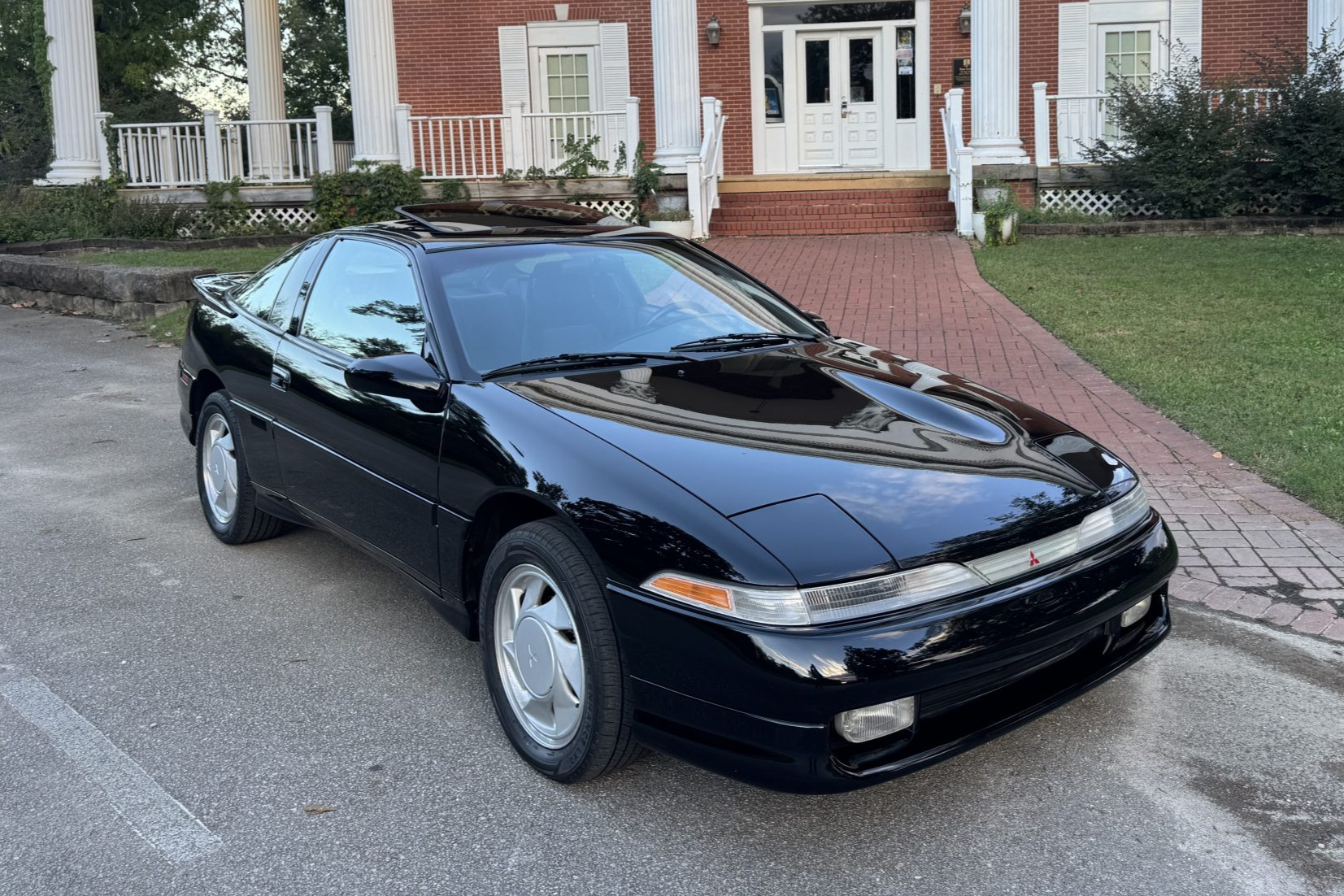
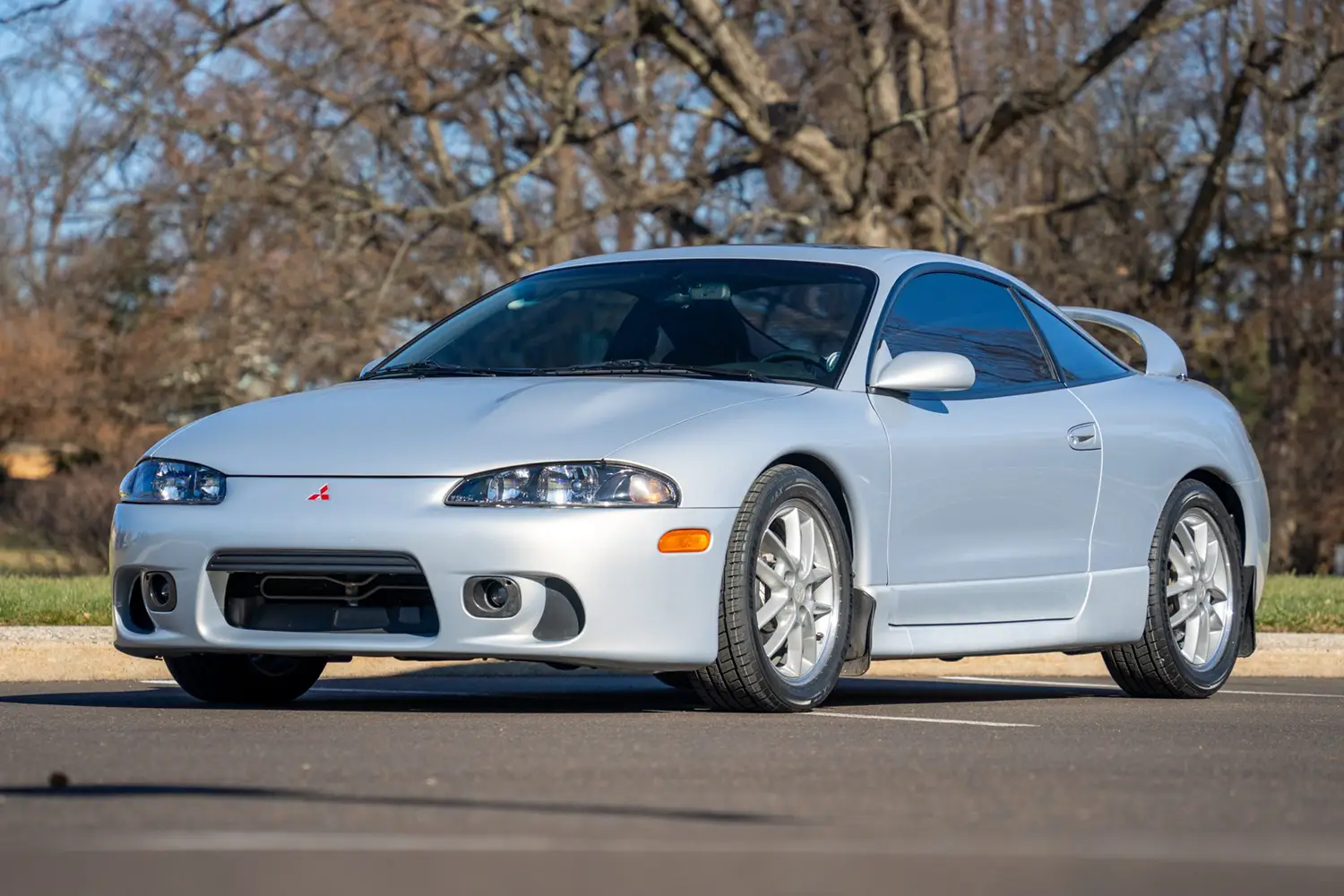
The 1994 Mitsubishi Eclipse GSX represents the final and most refined iteration of the first-generation (1G) Diamond-Star Motors (DSM) platform. As a turbocharged, all-wheel-drive sport compact, it offers a 195-horsepower 4G63T engine and a sophisticated drivetrain that solidified its status as a foundational pillar of the modern tuning scene and a highly collectible modern classic in 2026.
The Legacy of the 1994 Eclipse GSX
By 1994, the Mitsubishi Eclipse had already established itself as a giant-killer. Developed as a joint venture between Mitsubishi Motors and Chrysler (forming Diamond-Star Motors), the Eclipse was manufactured in Normal, Illinois. While its siblings—the Eagle Talon and Plymouth Laser—shared the same DNA, the Eclipse GSX was the flagship model that carried the most prestige.
The 1994 model year is particularly significant because it served as the "swan song" for the first generation. It benefited from all the incremental updates made since the car's 1989 debut, including the mid-cycle facelift that replaced the iconic pop-up headlights with sleek, exposed aerodynamic units. For enthusiasts in 2026, the '94 GSX is often viewed as the bridge between the raw, mechanical purity of the early 90s and the burgeoning electronic complexity of the late 90s. It provides a tactile driving experience that is increasingly rare in the contemporary automotive landscape.
Technical Specifications: The 4G63T Powerplant
At the heart of the 1994 Eclipse GSX is the legendary 4G63T engine. This 2.0-liter, inline-four, turbocharged engine is widely regarded as one of the most robust and tunable powerplants ever produced.
Engine Architecture
The 4G63T features a cast-iron block for maximum rigidity and an aluminum cylinder head with dual overhead camshafts (DOHC) and four valves per cylinder. This combination allows for high boost pressures without compromising structural integrity.
- Displacement: 1,997 cc (2.0L)
- Bore x Stroke: 85.0 mm x 88.0 mm
- Compression Ratio: 7.8:1 (Manual) / 8.5:1 (Automatic)
- Turbocharger: Mitsubishi Heavy Industries (MHI) TD05H-14B (Manual transmission models)
- Intercooler: Side-mount air-to-air unit
Power Output and Tuning Potential
In stock form, the 1994 GSX manual produced 195 horsepower at 6,000 RPM and 203 lb-ft of torque at 3,000 RPM. Automatic models were slightly detuned to 180 horsepower and used a smaller TD04 turbocharger to improve low-end response, balancing out the parasitic loss of the torque converter.
The "1994" engine is technically a "7-bolt" engine, referring to the number of bolts holding the flywheel to the crankshaft. While the earlier "6-bolt" engines (1989–mid-1992) are often preferred by high-horsepower drag racers for their thicker connecting rods, the 1994 7-bolt engine is more than capable of handling significant modifications and is often praised for its revised cylinder head ports that offer improved flow characteristics for street-driven applications.
All-Wheel Drive Drivetrain and Handling
The "GSX" badge signifies the top-tier drivetrain: All-Wheel Drive. While the GS-T (Turbo) was front-wheel drive, the GSX utilized a sophisticated permanent AWD system that allowed it to launch with ferocity and maintain composure in adverse weather conditions.
The Center Differential and Viscous Coupling
The 1994 GSX uses a center differential with a viscous coupling unit (VCU). Under normal driving conditions, the torque is split 50/50 between the front and rear axles. When the system detects wheel slip, the viscous fluid in the VCU shears and thickens, effectively locking the differential to send power to the wheels with the most traction. This mechanical simplicity provides a predictable, "analogue" feel that modern electronically controlled haldex systems often lack.
Transmission Options
- 5-Speed Manual (W5M33): The preferred choice for enthusiasts, offering short throws and a robust gearset. The 1994 manual transmission featured improved synchros compared to early 1990 models.
- 4-Speed Automatic (F4A33): While less popular for spirited driving, the automatic in the GSX was remarkably advanced for its time, featuring "Power" and "Economy" shift modes.
Suspension and Braking
The 1G GSX utilized a MacPherson strut front suspension and a multi-link rear setup. By 1994, the suspension tuning had been refined to reduce the "nose-heavy" understeer characteristic of early AWD sport compacts.
- Front Brakes: 10.1-inch vented discs (Dual-piston calipers were standard on 1994 GSX models, an upgrade over earlier single-piston units).
- Rear Brakes: 10.4-inch solid discs.
- Anti-lock Braking System (ABS): Available as an option, though many purists in 2026 prefer models without it to simplify weight and maintenance.
Performance Metrics: Street and Track
The 1994 Mitsubishi Eclipse GSX was a performance bargain that could shame contemporary European sports cars costing twice as much.
| Metric | Specification (Manual Transmission) |
|---|---|
| 0-60 MPH | 6.5 - 6.8 Seconds |
| 1/4 Mile | 14.9 - 15.2 Seconds @ 92-94 MPH |
| Top Speed | 143 MPH (Drag limited) |
| Braking 60-0 MPH | 128 Feet |
| Lateral Acceleration | 0.86g |
| Curb Weight | 3,091 lbs (Approx.) |
On the street, the GSX's performance is defined by its mid-range punch. Once the TD05H turbocharger reaches full boost (roughly 11-12 PSI stock) around 3,000 RPM, the car pulls cleanly to its 7,000 RPM redline. The AWD system ensures that this power is translated directly into forward momentum rather than tire smoke, making it exceptionally fast in "stoplight-to-stoplight" scenarios.
Interior Design and 1990s Ergonomics
Inside the 1994 GSX, the driver is greeted by a cockpit that is unapologetically driver-centric. The dashboard curves around the driver, placing the boost gauge (integrated into the instrument cluster), HVAC controls, and the shift lever within easy reach.
Features and Comfort
Despite its performance focus, the 1994 GSX was well-equipped for its era. Standard and optional features included:
- Bolstered Sport Seats: Often finished in a durable grey or black cloth, or optional leather.
- Leather-Wrapped Steering Wheel: A thick, three-spoke design that provides excellent feedback.
- Power Everything: Windows, locks, and mirrors were standard on the GSX trim.
- Sunroof: A large, power-tilting/sliding glass sunroof was a common option.
The interior plastics are typical of early 1990s Japanese design—durable but prone to rattling over decades of use. In 2026, finding an interior with an uncracked dashboard and intact seat bolsters is a primary indicator of a well-cared-for example.
Maintenance and Known Issues
Owning a 1994 Eclipse GSX in 2026 requires a proactive approach to maintenance. While the engine is "bulletproof" in terms of structural integrity, several age-related issues are common to the DSM platform.
The ECU Capacitors
One of the most notorious issues with 1G Eclipses involves the electrolytic capacitors in the Engine Control Unit (ECU). Over time, these capacitors can leak corrosive fluid onto the circuit board, leading to erratic engine behavior, stalling, or a "no-start" condition. Most surviving GSX models in 2026 have already had their ECUs rebuilt or replaced with aftermarket solutions like DSMLink.
Crankwalk
While more prevalent in the second-generation (2G) 7-bolt engines, "crankwalk"—a condition where the crankshaft's thrust bearing wears prematurely, allowing excessive axial play—can occasionally affect 1994 models. Symptoms include a sinking clutch pedal during left-hand turns or a flickering oil pressure light. Regular oil analysis and using high-quality synthetic lubricants are the best preventative measures.
Transfer Case and Drivetrain
The transfer case on the GSX is a known weak point if the fluid levels are not strictly maintained. Mitsubishi issued a recall in the late 90s for transfer case leaks that could lead to lockups. Owners should verify the transfer case is dry and the fluid is changed every 15,000 to 30,000 miles, depending on driving intensity.
Rust and Chassis Integrity
Like many cars of the era, the 1G Eclipse is susceptible to rust, particularly in the rear wheel arches, rocker panels, and the strut towers. For collectors in 2026, a "clean" shell is often more valuable than a running car with a rusted chassis, as mechanical components are easier to source than structural metal.
Modifying the 1994 GSX: The Tuner's Canvas
The 1994 GSX is famous for its "mod-ability." The 4G63T is over-engineered from the factory, meaning significant power gains can be achieved with relatively few changes.
- Free Mods: Removing the intake silencer and restrictive airbox components can improve throttle response and turbo spool sound.
- Boost Control: Installing a manual or electronic boost controller allows the user to safely increase boost to 14-15 PSI on the stock fuel system.
- Exhaust and Downpipe: A 3-inch turbo-back exhaust system is one of the most effective ways to reduce backpressure and "wake up" the engine.
- Fuel and Management: Upgrading to 550cc or larger injectors and an adjustable fuel pressure regulator, paired with a tuning interface, can push the 1994 GSX toward the 300-horsepower mark without internal engine modifications.
Comparative Analysis: 1994 GSX vs. Competitors
To understand the 1994 GSX's value proposition, it must be compared to its rivals from the early-to-mid 1990s.
| Feature | 1994 Eclipse GSX | 1994 Toyota Celica All-Trac (ST205) | 1994 Nissan 240SX (S13/S14) |
|---|---|---|---|
| Drivetrain | AWD | AWD | RWD |
| Engine | 2.0L Turbo I4 | 2.0L Turbo I4 | 2.4L NA I4 (USDM) |
| Horsepower | 195 hp | 239 hp (JDM/Euro) | 155 hp |
| Accessibility | High (US Produced) | Low (Rare in US) | High |
| Tuning Ceiling | Extremely High | High | High (with SR20 swap) |
The Eclipse GSX offered a unique combination of AWD stability and turbocharged power that few domestic cars could match. While the Celica All-Trac was a formidable rally-bred competitor, it was significantly more expensive and rarer in the North American market. The Nissan 240SX offered great handling but lacked the "out-of-the-box" power of the turbocharged Eclipse.
Frequently Asked Questions
Is the 1994 Eclipse GSX a "6-bolt" or "7-bolt" engine?
The 1994 model year features the "7-bolt" engine. Mitsubishi transitioned from the 6-bolt to the 7-bolt in mid-1992. While the 6-bolt is legendary for its beefier rods, the 1994 7-bolt is highly capable and benefits from better-flowing cylinder head ports.
How can I tell a real GSX from a converted GS or GS-T?
Check the VIN; the eighth character should indicate the engine and trim level. Furthermore, a genuine GSX will have a rear differential, rear axles, and a specific fuel tank shape to accommodate the AWD driveshaft.
What is the current market value of a 1994 GSX in 2026?
Values have risen sharply. A high-mileage but drivable GSX typically sells for $12,000 to $18,000. Pristine, low-mileage, unmodified examples are increasingly rare and can command $30,000 or more at enthusiast auctions.
Can the 1994 GSX be used as a daily driver in 2026?
While mechanically robust, the 1994 GSX is now over 30 years old. Parts availability for interior trim and specific AWD components can be challenging. It is best enjoyed as a weekend "toy" or a well-maintained secondary vehicle rather than a primary commuter.
Does the 1994 model have pop-up headlights?
No. The 1994 model is part of the 1Gb facelift. Pop-up headlights were discontinued after the 1991 model year. The 1994 model features fixed, wrap-around composite headlights.
Practical Recommendation for Buyers
If you are looking to acquire a 1994 Mitsubishi Eclipse GSX in 2026, prioritize chassis integrity and maintenance records over modifications. A car that has been "lightly tuned" with quality parts (like a genuine MHI turbo and reputable engine management) is often a better buy than a neglected "stock" car that has sat for years.
Always perform a compression test on the 4G63T engine (look for 150-160 PSI across all cylinders) and inspect the transfer case for leaks. As a 30-year-old vehicle, the rubber bushings, vacuum lines, and cooling system components will likely need replacement if they haven't been serviced recently. Investing in a clean 1994 GSX is not just a purchase of a car; it is an investment in a piece of Japanese-American automotive history that defined a generation of performance.