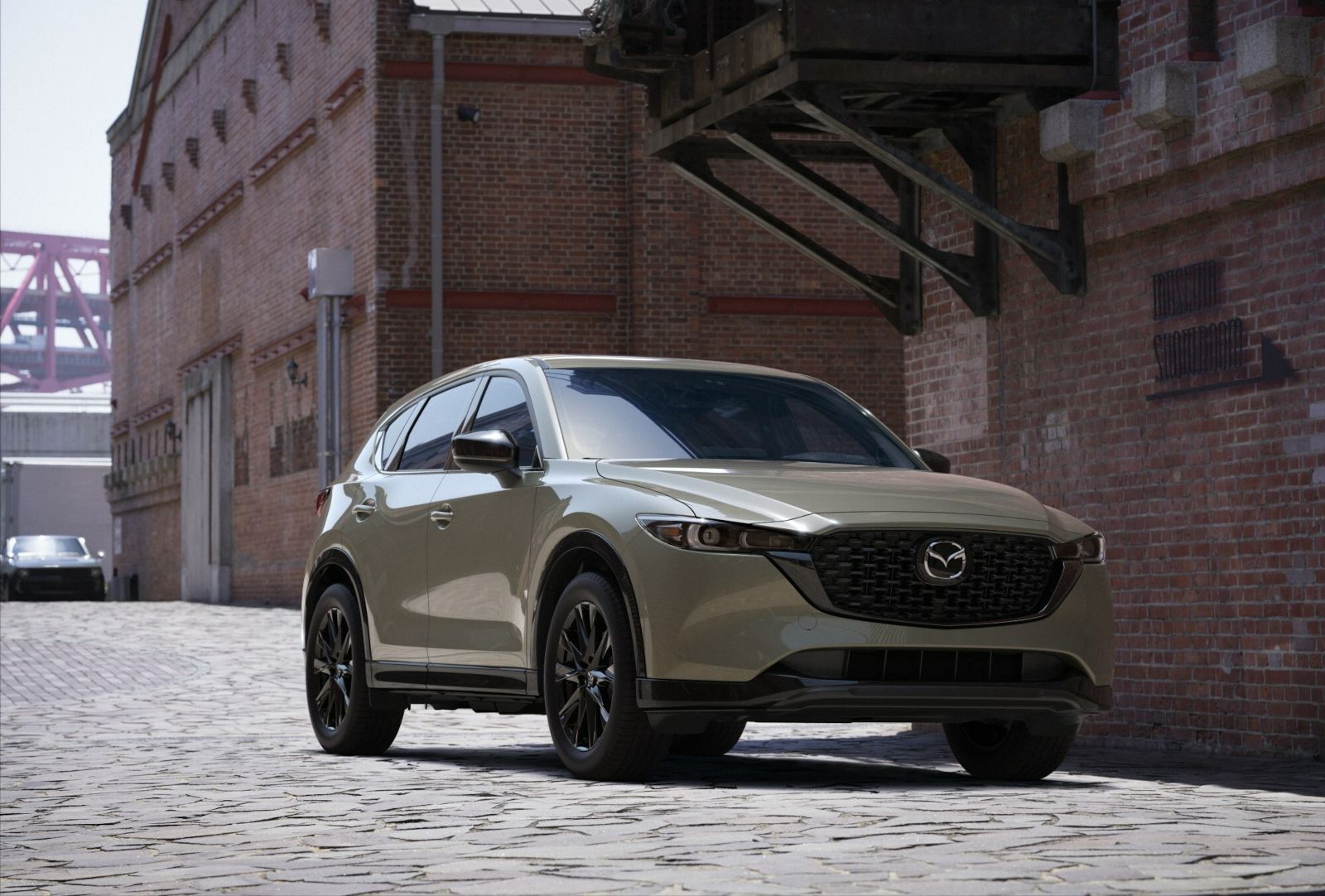
The Mazda CX-5 stands out in the crowded compact crossover segment by blending premium interior craftsmanship, engaging driving dynamics, and a refined design language that punches well above its price class.
The compact SUV market is flooded with competitors that prioritize pure utilitarian space over emotional connection and driving pleasure. Amidst this sea of appliance-like crossovers, the Mazda CX-5 has consistently carved out a distinct identity. It bridges the gap between mainstream practicality and entry-level luxury, attracting buyers who want everyday family versatility without sacrificing the joy of driving. Examining the vehicle reveals the engineering and design choices that make it a standout choice for automotive enthusiasts and pragmatic daily commuters alike.
1. Class-Above Interior Craftsmanship and Materials
One of the first aspects that strikes anyone stepping inside the Mazda CX-5 is the cabin quality. Mazda has made a concerted push toward upmarket status, and the interior execution reflects this ambition.
Unlike rivals that rely heavily on hard plastics and shiny faux metals in lower-tier trims, the CX-5 utilizes soft-touch surfaces, authentic stitching, and genuine materials like layered wood and brushed aluminum accents on upper trims. The layout is clean and driver-focused, avoiding the cluttered dashboard syndrome plaguing modern automotive design. The attention to detail extends to tactile feedback, where every switch, dial, and stalk operates with a weighted, satisfying click reminiscent of European luxury brands.
2. Engaging Driving Dynamics and Handling Precision
While most compact crossovers treat steering feel and handling agility as secondary considerations, the Mazda CX-5 treats them as core priorities. It remains the driving enthusiast's choice in its segment.
The secret lies in a rigid chassis tuning paired with Mazda’s G-Vectoring Control Plus (GVC Plus) system. GVC Plus subtly adjusts engine torque and applies slight braking inputs to the outer wheels during cornering, transferring weight to the front tires and sharpening turn-in response. The steering is direct, well-weighted, and offers genuine feedback from the road surface. Body roll is kept tightly in check through corners, meaning drivers can navigate winding backroads with a level of confidence and enjoyment rare in a family-oriented crossover.
3. Sophisticated Kodo Exterior Design Language
The exterior styling of the CX-5 relies on Mazda's "Kodo: Soul of Motion" design philosophy, which emphasizes organic curves, light reflection, and minimalist lines over aggressive, angular creases.
The sheet metal features sweeping contours that catch light dynamically as the vehicle moves, giving the crossover a sense of motion even when parked. Signature paint options, particularly Soul Red Crystal Metallic and Machine Gray Metallic, use proprietary multi-stage painting processes that create deep, rich hues and complex highlights. The front fascia is anchored by a commanding grille flanked by slim, sharp LED headlights, projecting an upscale road presence that easily rivals vehicles costing thousands more.
4. Balanced Powertrain Options and Refined Performance
The CX-5 offers powertrain configurations tailored to different driving preferences, balancing efficiency with responsive power delivery.
Base and mid-tier models typically feature a naturally aspirated 2.5-liter four-cylinder engine adequate for daily commutes. However, stepping up to the available 2.5-liter turbocharged four-cylinder transforms the vehicle's character. Pumping out up to 250 horsepower and 320 lb-ft of torque on premium fuel (or 227 hp on regular), the turbo engine provides effortless highway passing power. Both engines are paired with a responsive six-speed automatic transmission. Eschewing the rubber-band feel of continuously variable transmissions (CVTs) favored by competitors, Mazda’s traditional automatic delivers crisp, predictable gear changes.
5. Standard i-Activ All-Wheel Drive Confidence
For drivers facing diverse weather conditions, the integration of standard all-wheel drive across recent model years provides significant reassurance.
Mazda’s i-Activ AWD system goes beyond reactive slip-and-grip setups. It continuously monitors twenty-seven different sensor inputs—including steering angle, outside temperature, braking pressure, and windshield wiper usage—to predict traction loss before it happens. The system shifts torque proactively to the rear wheels the moment road conditions deteriorate, ensuring seamless stability on snow, ice, or wet pavement without demanding driver intervention or fuel economy penalties.
6. Comprehensive i-Activesense Safety Suite
Safety remains a top priority for crossover buyers, and the CX-5 equips a comprehensive suite of active safety and driver-assistance technologies as standard equipment.
The i-Activesense package includes advanced features such as:
- Smart Brake Support: Detects potential frontal collisions and applies emergency braking if the driver fails to react.
- Mazda Radar Cruise Control with Stop & Go: Maintains a safe following distance on highways and handles stop-and-go traffic congestion.
- Lane Keep Assist and Lane Departure Warning: Provides steering correction if the vehicle drifts unintentionally out of its lane.
- Blind Spot Monitoring with Rear Cross Traffic Alert: Warns drivers of vehicles lurking in blind spots during lane changes or reversing out of tight parking spaces.
7. Quiet, Serene Cabin Isolation
Refinement goes beyond surface aesthetics; acoustic comfort plays a major role in reducing driver fatigue during long road trips.
Mazda engineers invested heavily in Noise, Vibration, and Harshness (NVH) mitigation for the CX-5. Thick window glass, strategic door seals, sound-deadening floor mats, and optimized suspension bushings work in tandem to insulate occupants from wind, tire, and powertrain noise. The result is a library-quiet cabin where passengers can converse in whispers at highway speeds, enhancing the perception of driving a luxury vehicle.
8. Intuitive Ergonomics and Infotainment Architecture
While many modern manufacturers are moving toward screen-dominated, touch-only cockpits, Mazda takes a more ergonomic and driver-safety-focused approach with its Mazda Connect infotainment system.
The center display sits high on the dash to minimize eye movement away from the road and is operated via a physical rotary command knob situated on the center console, supplemented by steering wheel controls. This layout allows drivers to navigate menus, zoom maps, and select audio sources by muscle memory rather than poking blindly at a glass screen while driving. Apple CarPlay and Android Auto integration come standard, bridging smartphone connectivity with physical controls.
9. Comprehensive Comparison with Segment Competitors
To understand how the Mazda CX-5 measures up against mainstream rivals, evaluating core performance and interior metrics provides clear context:
| Feature / Metric | Mazda CX-5 (Turbo) | Toyota RAV4 | Honda CR-V |
|---|---|---|---|
| Base Horsepower | 187 hp (Naturally Aspirated) | 203 hp | 190 hp (Turbo) |
| Max Horsepower | 250 hp (Turbo) | 219 hp (Hybrid) | 204 hp (Hybrid) |
| Transmission | 6-Speed Automatic | 8-Speed Automatic | Continuously Variable (CVT) |
| Standard Drivetrain | i-Activ All-Wheel Drive (AWD) | Front-Wheel Drive (AWD Optional) | Front-Wheel Drive (AWD Optional) |
| Interior Vibe | Near-Luxury / Premium | Utilitarian / Rugged | Family-Oriented / Spacious |
While competitors like the Toyota RAV4 and Honda CR-V offer slightly more cargo capacity and better fuel economy in hybrid variants, the CX-5 counters with superior material quality, standard AWD, and driving dynamics that reward the person behind the wheel.
10. Exceptional Residual Value and Ownership Value
Beyond driving dynamics and luxury styling, the Mazda CX-5 offers strong financial arguments for buyers planning a long-term investment.
The vehicle consistently earns high marks for reliability from major automotive evaluation organizations like Consumer Reports and J.D. Power. This reputation for dependability, combined with its timeless exterior styling that resists rapid obsolescence, helps the CX-5 retain strong resale value on the pre-owned market. Owners benefit from lower depreciation rates compared to many volume-brand competitors, lowering the total cost of ownership over a typical five-to-seven-year financing cycle.
Frequently Asked Questions
Is the Mazda CX-5 good for families?
Yes, the CX-5 accommodates small to medium families comfortably. It features robust safety ratings, LATCH anchor points for child safety seats, and ample rear-seat legroom. While its cargo capacity is slightly smaller than boxier rivals like the Honda CR-V, it easily manages weekly grocery runs, stroller storage, and family road-trip luggage.
Which Mazda CX-5 trim level offers the best value?
The Carbon Edition and the 2.5 S Select trims offer the optimal balance of features and cost. The Carbon Edition introduces unique Polymetal Gray exterior paint, red or black leather interior options, and the available turbocharged engine, delivering near-luxury features without pushing into top-tier pricing territory.
How does the fuel economy of the CX-5 compare to rivals?
The base naturally aspirated 2.5-liter engine achieves competitive fuel economy figures, averaging around 24 mpg city and 30 mpg highway. However, the turbocharged engine and standard all-wheel-drive setup result in slightly lower fuel efficiency, hovering around 22 mpg city and 27 mpg highway, which is the trade-off for its performance capability.
Does the Mazda CX-5 require premium fuel?
The standard naturally aspirated engine runs perfectly fine on regular 87-octane fuel. The 2.5-liter turbocharged engine can also run on regular 87-octane fuel, but output is reduced to 227 horsepower. To unlock the full 250 horsepower rating, filling the tank with 93-octane premium fuel is required.
Is the Mazda Connect infotainment system difficult to learn?
No. While it uses a rotary dial instead of a pure touchscreen interface while driving, most owners adapt within a few days. The physical dial design minimizes distracted driving, allowing users to navigate menus safely by feel rather than sight.
Conclusion
The Mazda CX-5 proves that practical family transportation does not need to be boring or sterile. By prioritizing driver engagement, upscale cabin materials, striking exterior design, and comprehensive standard features, it bridges the gap between mainstream economy brands and luxury marques. For buyers seeking a refined, reliable, and genuinely enjoyable compact crossover, scheduling a test drive to experience its dynamics firsthand remains the best next step.