A secured credit card with a $49 deposit is a specialized financial product designed to help individuals with limited or damaged credit histories establish or rebuild their credit score. By providing a low barrier to entry, this type of card allows users to make a small initial security deposit that serves as collateral, which the issuer then uses to set the account's credit limit and mitigate the risk of default.
The Role of Secured Credit Cards in Financial Health
For many consumers, accessing traditional, unsecured credit is impossible due to a lack of credit history or past financial challenges. Secured credit cards bridge this gap by functioning as a teaching tool. Unlike a debit card, which draws directly from your existing bank balance, a secured card acts as a line of credit that reports your payment behavior to the major credit bureaus.
The defining feature of the "$49 deposit" variant is its accessibility. Most secured credit card programs traditionally require a minimum deposit of $200 or more. A card requiring only a $49 deposit is significantly more approachable for those living on a tight budget. These products are essentially performance-based; as long as the cardholder manages the account responsibly—making timely payments and keeping their balance low—they can eventually graduate to an unsecured card or qualify for better lending terms.
How a Secured Card Functions
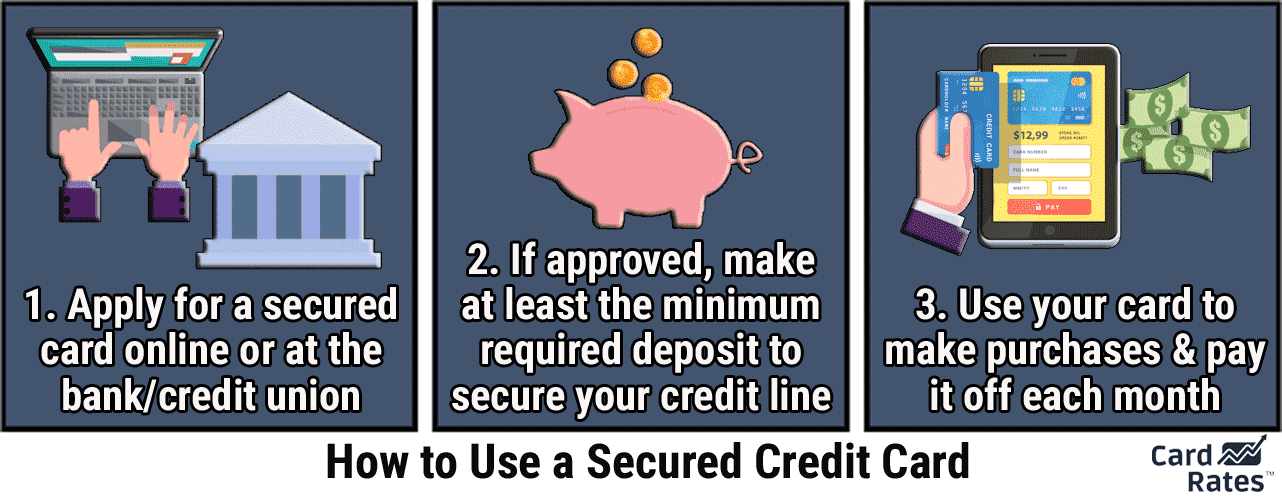
When you open a secured card account with a $49 deposit, you are establishing a contractual agreement with the issuer. The process follows a specific lifecycle:
- The Deposit: You provide the issuer with a $49 security deposit. This money is held in a secure, non-interest-bearing (in most cases) account. It is not a fee, but rather collateral. If you fail to pay your bill, the issuer uses this deposit to cover the debt.
- The Credit Line: Once the deposit is processed, the issuer assigns you a credit limit. In many cases, for a $49 deposit, the credit limit might be exactly $49 or slightly higher, depending on the issuer's specific underwriting policies.
- Usage: You use the card to make small, manageable purchases, such as groceries or utility bills.
- Reporting: The issuer sends data to the three major credit bureaus (Equifax, Experian, and TransUnion) regarding your monthly activity. On-time payments are the most critical factor in improving your credit score.
- Recovery: If you close the account in good standing and have no outstanding balance, the issuer returns your $49 deposit.
Prerequisites for Approval
Even though these cards are designed for those with poor or no credit, they are not guaranteed approvals. Financial institutions still conduct a basic evaluation of your profile. To qualify for a card with a $49 deposit, you generally must meet the following criteria:
- Identity Verification: You must be at least 18 years old and a resident of the United States. You will need to provide a Social Security number or an Individual Taxpayer Identification Number (ITIN).
- Income Proof: While the income threshold is low, issuers need to know that you have the capacity to repay the credit you are using. You may be required to disclose your annual income or monthly housing expenses.
- Bank Account Status: Many issuers require that you have an active checking account to facilitate the transfer of the $49 deposit and to set up automatic bill payments.
- No Recent Bankruptcy or Fraud: While some issuers accept applicants with previous bankruptcy, they may decline those with active or very recent fraud alerts on their credit file.
Comparison of Entry-Level Credit Products
Choosing the right tool for credit building requires understanding how different products compare in terms of cost and structure.
| Feature | Secured Card ($49 Deposit) | Unsecured Student Card | Prepaid Debit Card |
|---|---|---|---|
| Credit Reporting | Yes | Yes | No |
| Initial Cost | $49 | $0 | $0–$10 |
| Collateral Required | Yes | No | No |
| Credit Limit | Low ($49+) | Variable | Account Balance |
| Primary Use | Credit Building | Credit Building | Spending Control |
As shown in the table, the primary advantage of the $49 secured card is its ability to report to credit bureaus, which prepaid cards fail to do. While an unsecured student card is cheaper, it is generally restricted to individuals enrolled in higher education.
Navigating Fees and Terms
It is essential to distinguish between the security deposit and other fees. A $49 deposit is fully refundable, but some entry-level cards may also carry "annual fees" or "monthly maintenance fees" that are not refundable.
Before signing up, review the "Schumer Box"—a standardized table mandated by the Truth in Lending Act—found in the card’s terms and conditions. Look specifically for:
- Annual Percentage Rate (APR): Secured cards often have high interest rates. Since the goal is to build credit, aim to pay your balance in full every month to avoid paying interest entirely.
- Annual Fee: Some cards charge $25 to $50 annually. When possible, look for cards with no annual fee to keep your total cost of ownership low.
- Late Fees: Missing a payment can trigger a fee that may exceed the cost of your initial deposit, effectively wiping out the progress you are trying to make.
Strategic Steps to Build Credit Effectively
Simply holding the card is not enough; you must use it as a strategic instrument. Follow these steps to maximize the impact of your $49 secured card on your credit score:
- Keep Utilization Low: Even with a $49 limit, your credit utilization ratio matters. Try not to exceed 30% of your limit (approximately $15). If you spend more than this, your credit score could see a temporary dip, even if you pay it off.
- Automate Payments: Set up an autopay function from your checking account for at least the minimum amount due. This ensures you never miss a reporting cycle due to an oversight.
- Keep the Account Open: The age of your credit accounts is a factor in your score. Once you have built a history, consider keeping this card open for a long period, even if you graduate to a better, unsecured card later.
- Monitor Your Reports: Use free credit monitoring services to ensure that the issuer is actually reporting your on-time payments to the bureaus.
Common Pitfalls and Troubleshooting
The most common mistake users make with a $49 secured card is treating it like a standard credit card with high purchasing power. Because the limit is low, it is easy to "max out" the card in a single grocery run. Maxing out the card signals to lenders that you are overextended, which can hurt your score even if you pay the balance off immediately.
If you encounter issues, such as a denied application or a charge that failed to go through, troubleshoot by checking:
- The Funding Source: Ensure your checking account has sufficient funds for the $49 deposit at the exact moment of application.
- Internal Limits: Some issuers prevent the account from being used for certain transactions (e.g., gambling or wire transfers) to protect the security deposit.
- Reporting Delays: It may take 30 to 60 days for your first payment behavior to appear on your credit report. Do not be discouraged if your score does not jump in the first month.
Professional Guidance and Financial Responsibility
Secured cards are a proven path to credit recovery, but they are not a "get-out-of-debt" solution. If you are struggling with a high debt-to-income ratio or are currently facing litigation from creditors, a secured card will not resolve those structural financial issues. If your financial situation is complex, consider consulting with a non-profit credit counseling agency before committing to new credit products. These organizations can provide personalized budgeting advice that aligns with your long-term financial stability.
By utilizing a $49 secured card as a temporary training ground, you can demonstrate the financial discipline required to eventually qualify for higher-limit, lower-interest-rate financial products in the future.
Frequently Asked Questions
Does a $49 deposit mean my credit limit is limited to $49? Usually, yes. The security deposit serves as collateral, and issuers set your credit limit to match that amount to minimize their risk. Some issuers may offer a small credit increase after several months of on-time payments, but you should expect the limit to start at or near your deposit amount.
Is the $49 deposit a fee? No. A security deposit is your money, held by the bank to cover potential defaults. As long as your account remains in good standing and you eventually close it or transition to an unsecured card, that money should be returned to you. Always verify that there are no separate, non-refundable "processing fees."
How long does it take to see an improvement in my credit score? Credit building is a gradual process. Generally, you may start seeing a change in your score within three to six months of consistent, on-time payments. It is not an overnight fix, but it is a consistent method for demonstrating creditworthiness.
Can I increase my credit limit by adding more money? Some cards allow for "additional deposits" to increase your credit limit, while others have a fixed limit. Check the terms and conditions provided by the specific issuer to see if they offer a "top-up" feature.
What happens if I forget to make a payment? Missing a payment can result in a late fee and, more importantly, a negative mark on your credit report. Because secured cards are meant to build credit, a late payment acts against that primary goal. Always set reminders or use automatic payment features to ensure payments are received on or before the due date.
Next Steps for Financial Growth
If you are ready to proceed, identify an issuer that reports to all three major credit bureaus. Research their current 2026 fee structure and confirm that the $49 deposit is indeed fully refundable upon account closure. Once you have selected a card, complete the application, provide your initial deposit, and commit to using the card for one small, recurring monthly expense that you pay off in full every single month. By maintaining this discipline, you will lay a solid foundation for your future financial endeavors.