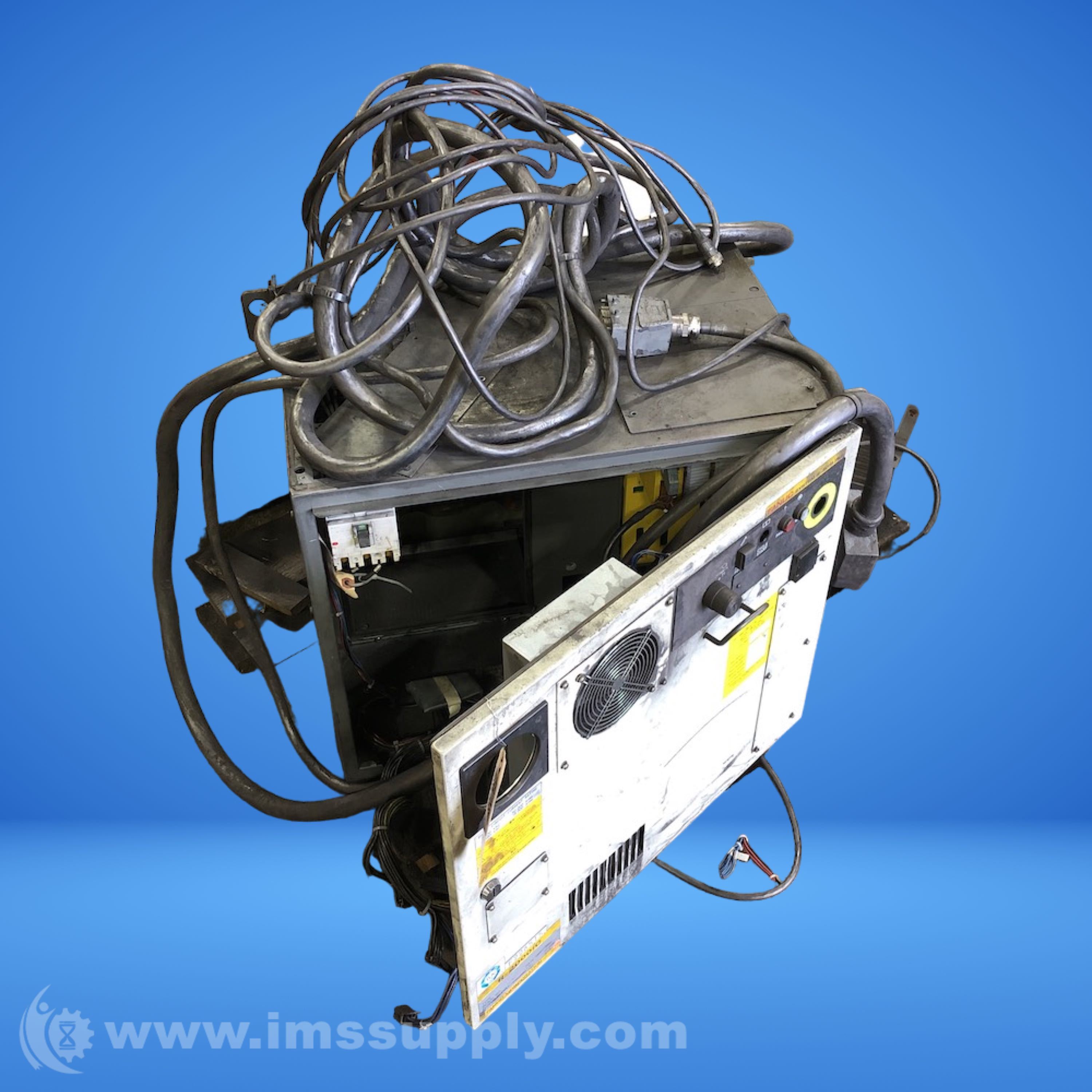
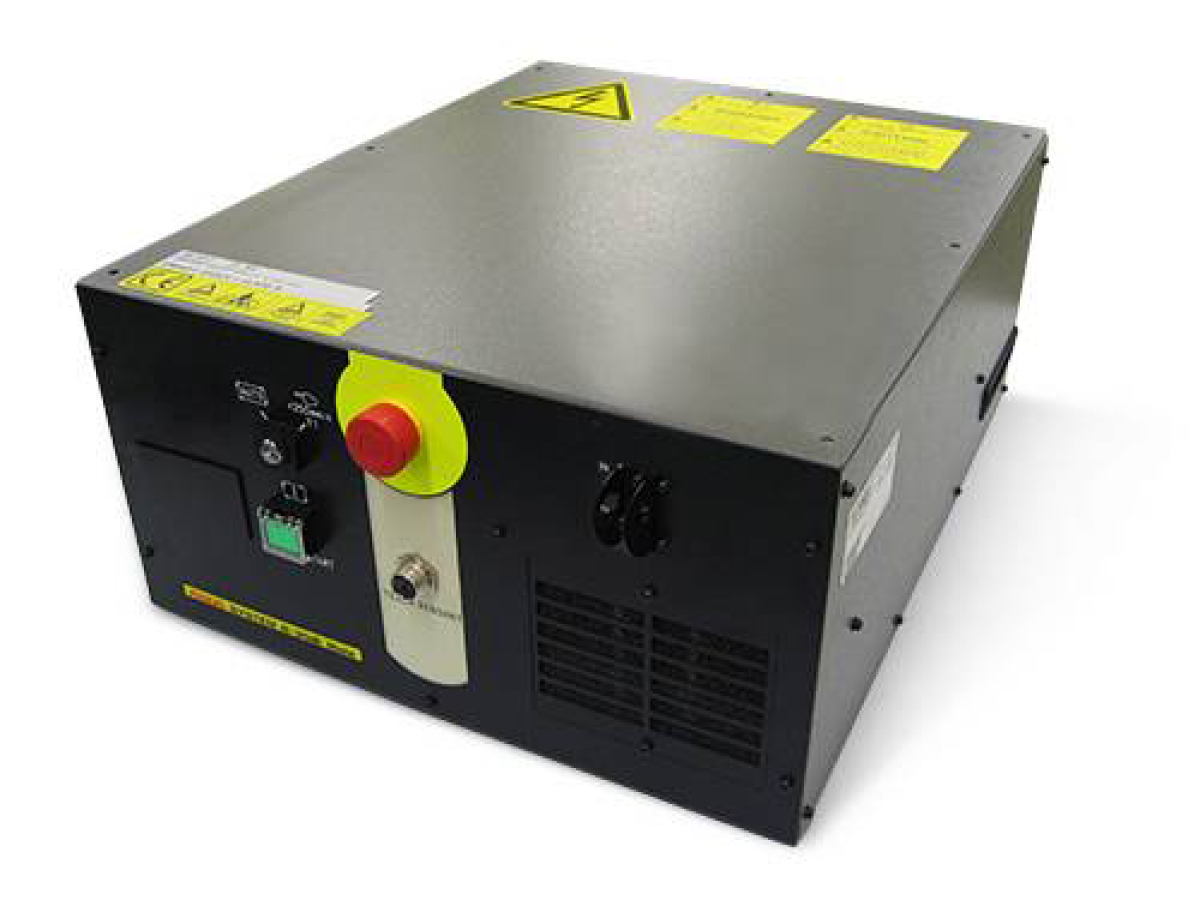
The FANUC R-30iB controller is a high-performance industrial robot control platform designed to provide advanced motion control, safety integration, and connectivity for automated manufacturing environments. Known for its reliability and energy efficiency, it serves as the foundational processing unit for a wide range of robotic applications, offering precise trajectory execution and extensive support for complex industrial peripherals.
Evolution and Positioning in Industrial Automation
The R-30iB controller represented a significant leap forward in FANUC’s control technology, succeeding the R-30iA and laying the groundwork for the later R-30iB Plus series. Engineered to balance processing speed with energy conservation, this controller utilizes proprietary FANUC hardware architecture to manage high-speed motion profiling while simultaneously overseeing integrated vision, force sensing, and safety protocols.
In the landscape of 2026, the R-30iB remains a ubiquitous component in manufacturing facilities worldwide. Its longevity is attributed to its modular design, which allows for consistent performance across diverse robotic configurations, from small-payload assembly robots to high-capacity palletizing units. Understanding the R-30iB requires looking at it not just as a power source for motors, but as a central computing hub that synchronizes data from sensors, PLC (Programmable Logic Controller) inputs, and human-machine interfaces.
Core Architecture and Hardware Components
The architecture of the R-30iB is designed for durability in harsh industrial environments, featuring a compact cabinet design that facilitates efficient floor space utilization. At its heart, the main CPU board manages the complex calculations required for Cartesian coordinate interpolation and joint torque control.
Key Hardware Modules
- Main CPU Board: The central processor handles all motion logic, background tasks, and I/O (Input/Output) polling. It is optimized for the proprietary FANUC software stack, ensuring deterministic performance even during high-bandwidth communications.
- Axis Control Cards: These cards translate high-level trajectory commands into specific current pulses sent to the servo amplifiers. They are critical for maintaining the high repeatability ratings for which FANUC is known.
- Power Supply Unit: Engineered for international compatibility, the power supply manages the input voltage and provides stable DC rails to the various internal components, mitigating risks from power quality fluctuations common in industrial plants.
- Servo Amplifiers: These modules handle the actual power stage of the robot. The R-30iB uses highly efficient regenerative braking architectures to recover energy during deceleration phases, contributing to the system's overall low power consumption profile.
Software Capabilities and Programming Environment
The power of the R-30iB lies in its firmware and the associated programming environment, primarily centered on the Teach Pendant (TP). The controller supports the KAREL language, a high-level programming language that allows developers to write structured code for complex logic, string manipulation, and communication with external devices.
Programming for the R-30iB is typically divided between "Teach" mode, where operators physically guide the robot and record points, and "Production" mode, where optimized motion paths are executed. The controller’s software supports advanced features such as:
- Dual Check Safety (DCS): This software-based safety feature allows for virtual zoning. Instead of relying solely on physical light curtains or cages, the R-30iB can monitor robot position and velocity in real-time, slowing or stopping the robot if it violates pre-defined workspace boundaries.
- iRVision: FANUC's integrated vision system allows the R-30iB to perform 2D and 3D object detection, guiding the robot in pick-and-place tasks or quality inspection routines without needing a secondary industrial PC.
- Collision Guard: An intelligent algorithm that detects abnormal torque signatures in the robot joints, allowing the controller to stop motion instantly if a collision is detected, minimizing potential damage to the robot or the workpiece.
Integration and Communication Protocols
The R-30iB is designed to act as a primary node in an automated cell. It supports a vast array of communication protocols, ensuring seamless integration with third-party PLCs (like Allen-Bradley or Siemens) and supervisory control systems.
Common Communication Standards
- EtherNet/IP: Highly prevalent in North American automotive and consumer goods manufacturing.
- PROFINET: Commonly utilized in European-based manufacturing installations.
- DeviceNet/PROFIBUS: While aging, these legacy protocols remain supported for integration into older existing plant architectures.
- Socket Messaging: Enables direct data exchange between the R-30iB and external servers, facilitating Industry 4.0 data logging and remote diagnostics.
Operational Requirements and Maintenance
Operating the R-30iB successfully requires strict adherence to maintenance schedules. Because the controller relies on high-speed cooling fans and sensitive electronics, it is critical to maintain environmental standards within the control cabinet.
Maintenance Checklist
- Air Filter Replacement: Dust ingress is the primary cause of premature component failure in the R-30iB. Filters should be inspected quarterly and replaced according to the environmental cleanliness of the plant.
- Battery Backups: The controller uses internal batteries to maintain CMOS RAM and encoder data. These must be replaced on a strict schedule—typically every 12 to 24 months—to prevent the loss of master counts, which would necessitate re-calibrating the robot.
- Fan Inspection: The CPU and servo amplifier racks contain cooling fans that are essential for heat dissipation. Periodic checking for noise or rotation speed ensures the electronics operate within safe thermal thresholds.
| Feature | Description | Operational Benefit |
|---|---|---|
| DCS (Dual Check Safety) | Software-defined safety zones | Reduced footprint, higher speed in collaborative spaces |
| Regenerative Power | Energy recovery during deceleration | Lower energy costs and reduced cabinet heating |
| iRVision Integration | Direct camera-to-controller processing | Eliminates external PCs for vision guidance |
| KAREL Support | High-level structured programming | Simplifies complex mathematical and logic tasks |
Troubleshooting Common Issues
When an R-30iB controller experiences an error, it provides specific alarm codes that can be cross-referenced with the official FANUC manuals. Most common issues stem from communication timeouts, I/O mapping errors, or battery failures.
- Communication Errors: Often caused by cable degradation or electromagnetic interference (EMI). Ensuring that communication cables are shielded and routed away from high-voltage motor cables is the most effective preventative measure.
- I/O Mapping: If the controller fails to "see" a sensor, first verify the status of the I/O configuration in the software. Discrepancies between the PLC map and the robot's I/O table are frequent during initial setup or after software updates.
- Servo Over-current: This error usually points to a mechanical bind in the robot or a failing brake. Inspect the robot's physical linkages and ensure the lubrication schedule has been followed correctly.
Comparison: R-30iB vs. Legacy Controllers
Compared to earlier controllers like the R-J3iB, the R-30iB represents a move toward integrated intelligence. While legacy controllers required separate vision processors and complex, bulky external safety relay cabinets, the R-30iB consolidated these into a unified, software-driven architecture. This transition reduced the "total cost of ownership" by lowering the number of spare parts needed and simplifying the cabling requirements inside the control cabinet.
For facilities currently operating an R-30iB in 2026, the primary advantage is the maturity of the software. Most bugs and operational quirks have been documented extensively, and a large global network of integrators is familiar with the platform, making the sourcing of parts and troubleshooting expertise relatively accessible compared to newer, less-tested systems.
Strategic Next Actions for Users
If you are managing or maintaining an R-30iB controller, focus on the following steps to ensure maximum uptime:
- Audit Your Backups: Ensure you have a recent, verified image of the controller’s files, including the robot's master counts and I/O configurations. Store these in a secure, redundant location.
- Verify Safety Settings: Even if your layout hasn't changed, periodically review the DCS settings to ensure they still meet current plant safety standards.
- Proactive Replacement: Replace internal batteries before the "Low Battery" alarm triggers. Relying on the alarm is a reactive approach that risks data loss if the power happens to cycle during the alarm window.
- Training: Ensure that your onsite maintenance staff are certified on the R-30iB specifically. Familiarity with the Teach Pendant interface is the single biggest factor in reducing downtime during production stops.
By maintaining a disciplined approach to hardware maintenance and keeping current with software updates, the R-30iB remains a capable and reliable workhorse for modern industrial robotics.
Frequently Asked Questions
Can the R-30iB be upgraded to the R-30iB Plus? No. The R-30iB and R-30iB Plus utilize different hardware mainboards and processor architectures. A direct swap is generally not possible without also replacing the robot’s cable harness and potentially the servo drives, which usually renders the upgrade economically unfeasible.
How do I clear a "SRVO-003" alarm on the R-30iB? The SRVO-003 alarm generally indicates a "deadman" switch issue or an emergency stop. First, check the Teach Pendant deadman switch. If the error persists after resetting the E-stop, check the safety input wiring on the back of the controller for loose connections or short circuits.
What is the maximum number of axes an R-30iB can control? The R-30iB standard configuration can typically control up to 8 axes (the robot arm plus two external axes, such as a positioner or rail). Expansion hardware can be installed to manage additional axes if the application requires it.
Is the R-30iB compatible with all FANUC robots? The R-30iB is compatible with a wide range of FANUC robots within its generation. However, it is not backward-compatible with legacy robots from the 1990s or early 2000s, nor is it forward-compatible with the newest high-payload robots released long after its production peak. Always check the specific controller compatibility chart provided by the manufacturer for your robot model.
How do I back up my programs? You can back up programs using the USB port on the front of the Teach Pendant or via the Ethernet port using an FTP client on a laptop. It is recommended to perform a "Full Backup" (which includes all system files and variables) at least once a month.