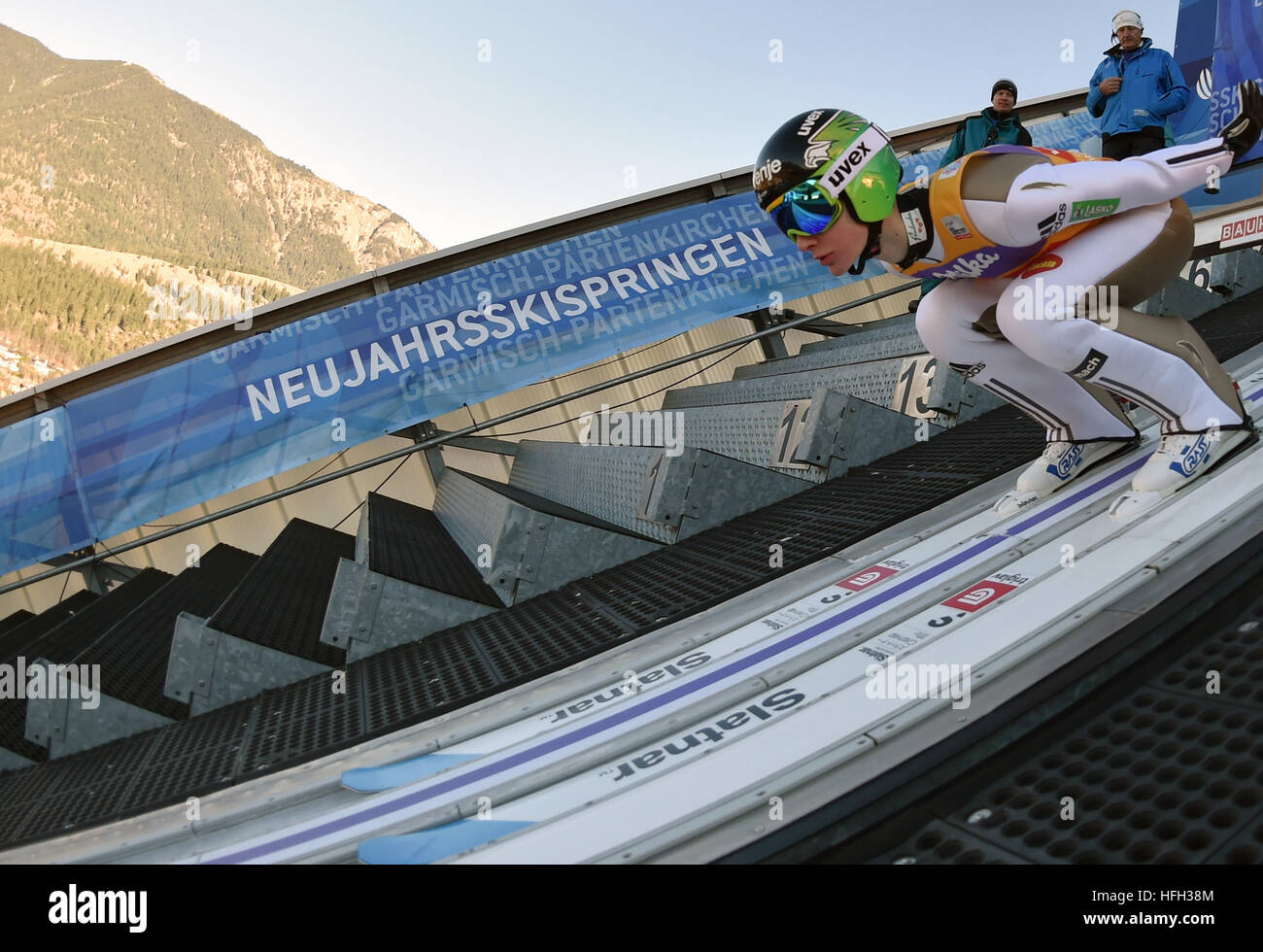
When a Nordic jumper goes off a ski jump, they transition from a high-speed descent to a state of controlled aerodynamic flight. This process requires precise timing during the takeoff, where the athlete must convert downward velocity into lift, followed by a stable V-style aerial posture to maximize distance before executing a Telemark landing.
Ski jumping, often referred to as the "Formula 1" of winter sports, is a discipline defined by the pursuit of the perfect flight. Whether in specialized ski jumping competitions or the jumping portion of a Nordic Combined event, the moment an athlete "goes off" the takeoff table is the culmination of immense physical power, psychological focus, and aerodynamic science. As of 2026, the sport has reached new heights of technical sophistication, utilizing advanced materials and data-driven training to push the limits of human flight.
The Infrastructure of Flight: Understanding the Hill
To understand what happens when a Nordic jumper goes off a ski jump, one must first understand the environment. A modern ski jump (or "hill") is a highly engineered structure designed according to strict International Ski Federation (FIS) standards.
The Inrun and the Takeoff Table
The inrun is the steep ramp where the jumper gains speed. It typically has two tracks (grooves) for the skis to ensure a stable, straight path. As the jumper approaches the end of the inrun, they reach the "takeoff table." Contrary to popular belief, the takeoff table is not a horizontal platform or an upward ramp; it is actually angled downward at approximately 10.5 to 11 degrees. This design allows the jumper to maintain speed while transitioning into the air.
The K-Point and Hill Size (HS)
Every hill is categorized by its K-point (Konstruktionspunkt) and its Hill Size.
- K-Point: Historically the "critical point," this represents the distance the hill was designed for. In 2026, most major competitions take place on "Large Hills" with a K-point of 120 meters or "Normal Hills" with a K-point of 90 meters.
- Hill Size (HS): This is the distance from the takeoff to the end of the landing area's "safe zone." Landing beyond the HS is possible but becomes increasingly dangerous due to the flattening of the slope.
Equipment: The Tools of the Trade
A Nordic jumper cannot "go off" a hill successfully without highly specialized equipment. Every gram and millimeter is regulated to ensure safety and fair competition.
Specialized Jumping Skis
Jumping skis are significantly longer and wider than those used for alpine or cross-country skiing. Under FIS regulations, the maximum length of the skis is 145% of the jumper's height. These skis act as wings, providing the necessary surface area to generate lift. They are surprisingly light for their size, constructed from carbon fiber and composite materials to provide both rigidity and flexibility.
The Binding and Boot System
The binding system is unique to ski jumping. It connects only the toe of the boot to the ski, allowing the heel to rise significantly. This freedom of movement is essential for the jumper to lean forward over the skis during flight, creating the aerodynamic "V" shape. A "heel clip" or a flexible cord limits how far the heel can move to prevent the ski from flapping uncontrollably.
The Aerodynamic Jumpsuit
The suit is a marvel of 2026 textile engineering. It must have a specific air permeability (measured in liters per square meter per second) to ensure it does not act too much like a parachute. However, it is designed to be stiff enough to help the athlete maintain a stable shape in the air. The thickness of the suit is strictly regulated (usually 4mm to 6mm) to prevent teams from gaining an unfair aerodynamic advantage.
Phase 1: The Inrun and Acceleration
The journey begins at the start gate. The jumper sits on a bar, waits for the green light (indicating safe wind conditions), and drops into the inrun.
In this phase, the primary goal is to minimize friction and maximize velocity. The jumper adopts a deep crouch—the "inrun position"—with the chest pressed against the thighs and arms tucked behind the body. This position minimizes the frontal area, reducing wind resistance. By the time a jumper reaches the takeoff table on a large hill, they are traveling at speeds between 88 and 95 kilometers per hour (55–60 mph).
Maintaining a perfect line within the ceramic or ice tracks is vital. Any slight wobble or deviation creates friction, which translates to a loss of speed. In a sport where centimeters determine the winner, losing 0.5 km/h on the inrun can result in losing several meters of distance.
Phase 2: The Takeoff – The Critical 0.1 Seconds
The moment a Nordic jumper "goes off" the ski ramp is the most technically demanding part of the sport. The transition from the inrun to the air takes roughly 0.1 to 0.15 seconds.
The Explosive Extension
As the jumper hits the end of the takeoff table, they must perform an explosive extension of the legs. This is not a simple upward jump; it is a forward-rotating movement. The athlete must propel their center of mass upward and forward simultaneously. If they jump too early, they lose the "kick" from the end of the table. If they jump too late, they "fall off" the end, losing the vertical lift needed to clear the initial steep drop of the hill.
Transitioning to Flight
During the takeoff, the jumper must also begin the transition of their skis. As they leave the ground, the tips of the skis are pulled upward and outward into the V-style. This must be done smoothly; a jerky movement can cause the athlete to lose balance or create unwanted drag that "stalls" the flight.
Phase 3: The Flight and the V-Style
Once the Nordic jumper goes off the ski ramp and enters the air, they are effectively a glider. The physics of flight are governed by the relationship between lift, drag, and gravity.
The Evolution of the V-Style
Until the late 1980s, jumpers kept their skis parallel. In 1985, Swedish jumper Jan Boklöv pioneered the V-style—pointing the tips of the skis outward while keeping the tails close together. Initially penalized by judges, this style was found to increase lift by up to 28%, allowing for significantly longer jumps. Today, the V-style is the universal standard.
Aerodynamic Balance
In flight, the athlete aims to become a single aerodynamic wing. The body is leaned forward, often almost parallel to the skis. The arms are held close to the sides or slightly flared to act as rudders. The jumper must constantly "feel" the air, making micro-adjustments to their hand position or ski angle to react to wind gusts.
- Headwinds: A steady headwind is beneficial as it creates more lift under the skis, allowing the jumper to "float" further.
- Tailwinds: A tailwind is dangerous and detrimental, as it pushes the jumper down toward the slope faster.
Phase 4: The Landing and Style Points
As the ground approaches, the jumper must prepare for the impact. This is the transition from "flying" back to "skiing."
The Telemark Landing
To receive the highest style points from the five judges, a jumper must perform a Telemark landing. This involves landing with one foot significantly in front of the other, knees bent, and arms outstretched for balance. This position is not just for aesthetics; it provides a much more stable base for absorbing the vertical force of the landing, which can be equivalent to several times the athlete's body weight.
The "Two-Foot" Landing
If a jump is particularly long or the landing is unstable, the jumper may opt for a "two-foot" landing (landing with feet parallel). While safer in some extreme scenarios, this results in a significant deduction in style points (usually 2.0 points per judge).
Scoring: How the Winner is Decided
Ski jumping is not just about who goes the furthest. The final score is a combination of several factors, calculated with high precision by 2026 standards.
| Component | Description | Calculation Method |
|---|---|---|
| Distance Points | Points awarded based on the K-point. | 60 points for reaching the K-point; +/- points per meter beyond/short. |
| Style Points | Evaluation of the flight and landing. | 5 judges give up to 20 points; highest and lowest are dropped. |
| Wind Compensation | Adjustment for wind speed/direction. | Points added for tailwind; subtracted for headwind. |
| Gate Compensation | Adjustment for starting position. | Points added if the coach/jury lowers the start gate for safety. |
The Role of Technology in 2026
In 2026, the wind compensation system uses a network of ultra-sensitive sensors along the entire length of the hill. These sensors feed data into an algorithm that calculates a real-time "wind factor," ensuring that a jumper who faces a sudden gust of headwind doesn't unfairly beat a competitor who jumped in still air.
Safety and Training Requirements
When a Nordic jumper goes off a ski jump, they are taking a calculated risk. Safety is the primary concern for FIS and national federations.
Physical Preparation
Athletes must possess incredible explosive power in their legs (for the takeoff) and exceptional core stability (to hold the flight position). Interestingly, jumpers must also maintain a low body weight to optimize their lift-to-weight ratio, though the "BMI Rule" ensures they do not become dangerously thin. If an athlete’s BMI is too low, they are forced to use shorter skis, which reduces their lift and makes them less competitive.
Mental Discipline
The psychological aspect of going off a 120-meter hill cannot be overstated. Jumpers use visualization and cognitive drills to ensure that their reactions at the takeoff are instinctive. At 90 km/h, there is no time to "think" about the jump; the body must simply execute the learned pattern.
Common Mistakes to Avoid
- The "Hollow Back": If a jumper arches their back too much in flight, they lose the flat surface area needed for lift, causing them to drop like a stone.
- Early Opening: Opening the body too early before landing acts like a brake, stripping away the final few meters of distance.
- Ski Crossing: If the tips of the skis cross in the air, the aerodynamic lift is destroyed, often leading to a dangerous crash.
Related Questions
Why do ski jumpers lean so far forward?
Ski jumpers lean forward to minimize the gap between their body and their skis. This creates a single, continuous surface that acts like an airplane wing. By leaning into the wind, they use the rushing air to create upward pressure (lift), which keeps them in the air longer.
How do they stop after landing?
After the landing area (the outrun), the hill flattens out and then curves upward. This natural incline helps the jumper slow down. Additionally, the jumpers perform a "snowplow" or a sharp turn (Christie turn) to shed their remaining speed.
Can anyone try Nordic ski jumping?
While "going off" a large Olympic-sized hill requires years of specialized training, many Nordic centers offer "K-5" or "K-10" hills for beginners. These tiny hills allow novices to learn the basic crouch and takeoff mechanics in a controlled, safe environment before progressing to larger structures.
What is the difference between Ski Jumping and Nordic Combined?
Ski Jumping is a standalone event focused purely on the jump. Nordic Combined is a multi-discipline sport where athletes compete in a ski jumping round followed by a cross-country ski race. The results of the jump determine the starting order and time gaps for the cross-country race (the Gundersen method).
Practical Advice for New Enthusiasts
If you are following the 2026 winter season or looking to understand the sport better, focus your attention on the "Takeoff Table" during broadcasts. Watch the slow-motion replays of the athletes' legs. The winners are almost always those who achieve the straightest, most explosive extension without "wobbling" their skis as they leave the ground.
For those interested in participating, look for local clubs that utilize plastic-covered hills. Modern technology allows for year-round training, where jumpers slide on specialized plastic mats that mimic the properties of snow. This has made the sport more accessible than ever, allowing athletes to perfect their technique regardless of the season.