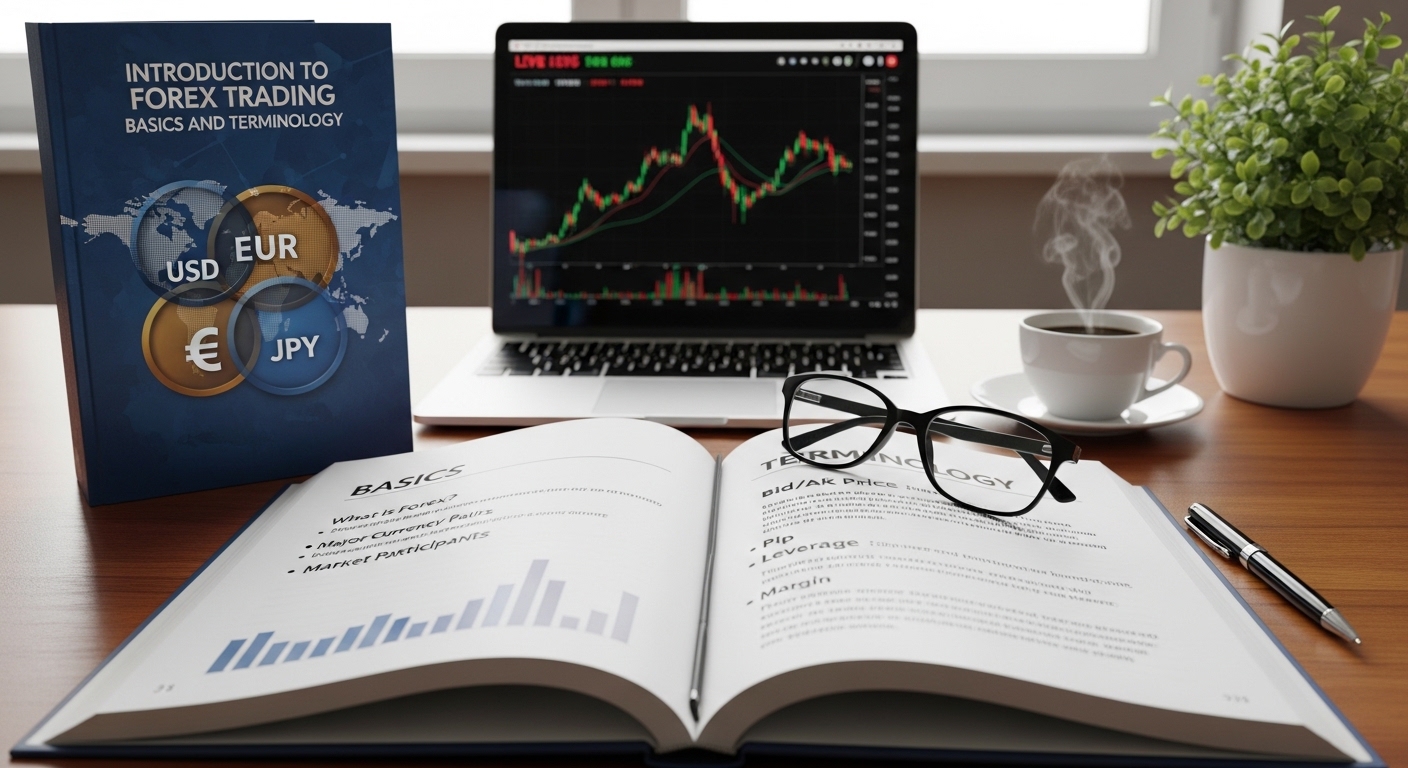
Forex trading, or foreign exchange trading, is the process of buying one currency while simultaneously selling another to profit from fluctuations in exchange rates. As the world’s largest and most liquid financial market, it operates 24 hours a day, five days a week, across a global decentralized network of banks, corporations, and retail investors.
The foreign exchange market has evolved significantly by 2026, integrating advanced artificial intelligence and high-frequency trading algorithms that have reshaped how retail participants interact with global currencies. At its core, the market remains a mechanism for exchanging the value of nations. Whether you are a business hedging international costs or a retail trader speculating on price movements, understanding the foundational mechanics of the forex market is the first step toward navigating this complex financial landscape.
Understanding the Structure of the Forex Market
Unlike stock exchanges such as the New York Stock Exchange (NYSE), the forex market is an over-the-counter (OTC) market. This means there is no central location or exchange where all trades are cleared. Instead, trading is conducted electronically via a global network of computers. This decentralized nature allows the market to remain open continuously, shifting from one major financial hub to the next—from Sydney to Tokyo, London, and New York.
The hierarchy of the forex market is led by the interbank market. This top tier consists of the world’s largest commercial banks, which trade currencies with each other for both their own accounts and their clients. These institutions determine the exchange rates that we see on our screens. Below the interbank market are smaller banks, multi-national corporations (which need to trade currency for business operations), and finally, retail brokers who provide access to the market for individual traders.
By 2026, the distinction between professional and retail tools has blurred. Most retail traders now utilize institutional-grade platforms that offer deep liquidity and ultra-low latency. However, the fundamental driver of the market remains the same: the law of supply and demand, influenced by macroeconomic factors, geopolitical events, and central bank policies.
How Currency Pairs Work
In forex, currencies are always traded in pairs. This is because whenever you buy one currency, you are inherently selling another. Each pair consists of a base currency and a quote currency. For example, in the EUR/USD pair, the Euro (EUR) is the base currency, and the U.S. Dollar (USD) is the quote currency.
The exchange rate tells you how much of the quote currency is needed to purchase one unit of the base currency. If the EUR/USD is trading at 1.1200, it means you need 1.12 U.S. Dollars to buy 1 Euro.
- Going Long (Buying): You buy the pair if you believe the base currency will strengthen against the quote currency.
- Going Short (Selling): You sell the pair if you believe the base currency will weaken against the quote currency.
Currencies are categorized into three main groups:
- Majors: These include the U.S. Dollar paired with other leading economies (e.g., EUR/USD, GBP/USD, USD/JPY). They are the most liquid and have the lowest transaction costs.
- Minors (Crosses): These pairs do not include the U.S. Dollar but involve other major currencies (e.g., EUR/GBP, AUD/JPY).
- Exotics: These pair a major currency with one from a developing or emerging economy (e.g., USD/TRY, EUR/ZAR). These are more volatile and expensive to trade due to lower liquidity.
Essential Forex Terminology for 2026
To trade effectively, you must master the language of the market. While technology has automated many calculations, the underlying math remains vital for risk management.
Pips and Pipettes
A Pip (Percentage in Point) is the smallest price move that a given exchange rate makes based on market convention. For most pairs, this is the fourth decimal digit (0.0001). However, in 2026, most brokers use fractional pip pricing, adding a fifth decimal called a Pipette for even more precision. For Yen-based pairs, a pip is the second decimal place (0.01).
Spreads and Commissions
The Spread is the difference between the "Bid" price (what the broker pays to buy from you) and the "Ask" price (what you pay to buy from the broker). This is the primary way brokers make money. In high-liquidity environments, spreads on major pairs can be as low as 0.0 to 0.5 pips. Some brokers also charge a fixed commission per trade in exchange for tighter spreads.
Lots and Position Sizing
Forex is traded in "lots." A standard lot represents 100,000 units of the base currency. Because most retail traders do not want to trade such large amounts, brokers offer mini lots (10,000 units), micro lots (1,000 units), and even nano lots (100 units). Choosing the correct lot size is the most important factor in managing your financial exposure.
Leverage and Margin
Leverage allows you to control a large position with a relatively small amount of capital. For example, with 30:1 leverage, you could control $30,000 with just $1,000 of your own money. The $1,000 is referred to as the Margin. While leverage can magnify profits, it equally magnifies losses. Regulatory bodies, such as the European Securities and Markets Authority (ESMA), have strictly capped leverage for retail traders in many jurisdictions to prevent catastrophic losses.
The Two Pillars of Analysis: Fundamental and Technical
Successful trading requires a methodology for predicting price movements. Most traders use a combination of fundamental and technical analysis.
Fundamental Analysis
This involves examining the economic health of a country to determine its currency's value. In 2026, fundamental analysts focus heavily on:
- Central Bank Policy: Interest rate decisions by the Federal Reserve (Fed) or the European Central Bank (ECB) are the most significant drivers of currency value.
- Economic Indicators: Reports such as Gross Domestic Product (GDP), Consumer Price Index (CPI) for inflation, and employment data (like Non-Farm Payrolls in the U.S.).
- Geopolitics: Trade agreements, elections, and international conflicts can cause sudden, sharp movements in currency values.
Technical Analysis
Technical analysts believe that all known information is already reflected in the price. Therefore, they study historical price charts to identify patterns and trends. Common tools include:
- Support and Resistance: Identifying price levels where a currency has historically struggled to fall below (support) or rise above (resistance).
- Indicators: Mathematical overlays like Moving Averages, the Relative Strength Index (RSI), and Bollinger Bands.
- Chart Patterns: Formations like "Head and Shoulders" or "Double Bottoms" that suggest a reversal or continuation of a trend.
Market Dynamics: Major Currency Pair Comparison
The following table outlines the characteristics of the most frequently traded currency pairs as of 2026.
| Currency Pair | Nickname | Volatility Level | Best Time to Trade (GMT) | Typical Spread (Pips) |
|---|---|---|---|---|
| EUR/USD | The Fiber | Low to Medium | 13:00 – 17:00 | 0.0 – 0.8 |
| GBP/USD | The Cable | Medium to High | 08:00 – 16:00 | 0.5 – 1.2 |
| USD/JPY | The Ninja | Medium | 00:00 – 08:00 | 0.2 – 0.9 |
| AUD/USD | The Aussie | Medium | 00:00 – 06:00 | 0.6 – 1.4 |
| USD/CAD | The Loonie | Medium | 13:00 – 21:00 | 0.7 – 1.5 |
Risk Management: Protecting Your Capital
The single most common reason new traders fail is a lack of risk management. In the volatile 2026 market, prices can gap significantly during weekend openings or major news events.
- The Stop-Loss Order: This is an instruction to close a trade at a specific price if the market moves against you. It is your primary defense against total account depletion.
- The 1% Rule: Many professional traders never risk more than 1% of their total account balance on a single trade. This ensures that even a string of losses will not result in a "blown" account.
- Risk-to-Reward Ratio: Aim for trades where the potential profit is at least twice the potential loss (a 1:2 ratio). This means you can be wrong more than half the time and still remain profitable.
- Emotional Discipline: Trading is as much about psychology as it is about math. Revenge trading (trying to "win back" losses) and over-leveraging are the hallmarks of an undisciplined trader.
Choosing a Broker and Setting Up
In 2026, selecting a broker involves more than just looking for low spreads. You must ensure the broker is regulated by a reputable authority, such as the Financial Conduct Authority (FCA) in the UK, ASIC in Australia, or the NFA/CFTC in the United States.
Steps to Start Trading:
- Education: Utilize demo accounts to practice trading with virtual money. Do not risk real capital until you have a documented strategy that has proven successful over several months of demo trading.
- Verification: Modern brokers require "Know Your Customer" (KYC) documentation, including a government ID and proof of address.
- Platform Selection: Most traders use MetaTrader 5 (MT5), cTrader, or proprietary web-based platforms that include integrated AI sentiment analysis and advanced charting tools.
- Funding: Use secure methods like bank transfers or regulated digital payment services. Be wary of brokers that only accept untraceable payment methods.
Frequently Asked Questions
Is forex trading profitable in 2026?
Forex trading can be profitable, but it is statistically difficult for retail traders. Most estimates suggest that 70% to 80% of retail traders lose money over the long term. Profitability requires a disciplined strategy, rigorous risk management, and continuous education. It should be viewed as a professional skill rather than a "get rich quick" scheme.
How much money do I need to start trading forex?
While some brokers allow you to open an account with as little as $10 or $100, starting with such small amounts makes proper risk management nearly impossible. To trade micro lots while following the 1% risk rule, a starting balance of $1,000 to $2,000 is generally recommended as a practical minimum for sustainable growth.
Can I trade forex on my mobile phone?
Yes, most modern trading platforms have highly advanced mobile applications. However, professional traders typically use mobile apps only for monitoring positions or closing trades in an emergency. Complex technical analysis and multi-chart monitoring are best performed on a desktop setup with multiple monitors to ensure accuracy.
What is the best time of day to trade forex?
The best time to trade is during "market overlaps" when two major sessions are open simultaneously. The most significant overlap is the London/New York session (13:00 to 17:00 GMT). During these windows, liquidity is at its peak, spreads are tightest, and price movements are often most trending and predictable.
Are there taxes on forex trading profits?
Tax obligations vary significantly by jurisdiction. In many countries, forex profits are treated as capital gains or miscellaneous income. Some regions, like the UK, may offer "Spread Betting" accounts which are currently tax-free under specific conditions, though this depends on your individual status and local laws. Always consult a tax professional in your region.
Next Steps for Aspiring Traders
To begin your journey in forex trading, focus on the "TradeForex" methodology of learning before earning. Start by opening a demo account with a regulated broker to familiarize yourself with the platform's interface. Dedicate the first few weeks to mastering one specific currency pair—ideally the EUR/USD—and observing how it reacts to daily news cycles. Once you can consistently protect your virtual capital, you can consider transitioning to a small "live" account to experience the psychological impact of real-money trading.