The college system in Montreal is a unique educational tier within Canada, primarily defined by the CEGEP (Collège d’enseignement général et professionnel) model. As of 2026, students can choose between public CEGEPs, subsidized private colleges, and non-subsidized vocational institutions, offering both two-year pre-university diplomas and three-year technical certifications.
Understanding the Quebec College System: What is a CEGEP?
To understand colleges in Montreal, one must first understand the concept of a CEGEP. In the province of Quebec, the education system differs significantly from the rest of North America. After completing Grade 11 (Secondary V), students do not go directly to university. Instead, they must attend a college to earn a Diploma of College Studies (DEC).
The CEGEP acts as a bridge. For those pursuing higher education, it provides a two-year Pre-University Program that replaces Grade 12 and the freshman year of university. For those looking to enter the workforce quickly, it offers three-year Technical Programs that provide specialized vocational training. This system is designed to allow students to explore their interests at a much lower cost than university tuition before committing to a major.
By 2026, the CEGEP system has fully integrated the requirements of Bill 96 (Law 14), which significantly impacts how students navigate their language requirements. Depending on whether a student is classified as an "Eligible" student (those who received the majority of their elementary or secondary education in English in Canada) or a non-eligible student, their path through Montreal’s English-language colleges will vary, particularly concerning French language exit exams and the number of courses taken in French.
Public vs. Private Colleges: Defining the Choice
Montreal offers two primary types of college institutions: public CEGEPs and private colleges. Choosing between them depends on the student’s residency status, budget, and specific career goals.
Public CEGEPs
Public CEGEPs are government-funded. For Quebec residents, tuition is essentially free, with students only paying nominal registration and student service fees (typically ranging from $200 to $500 per year in 2026). These institutions are large, diverse, and offer the widest range of programs. There are 12 public CEGEPs on the island of Montreal, including both French and English institutions.
Private Subsidized Colleges
These colleges follow the same curriculum as public CEGEPs and receive government funding for their operation. However, they charge additional tuition fees. They often offer a more "high school-like" environment with smaller class sizes, closer teacher-student interaction, and specialized support services. Examples include Marianopolis College and Collège Jean-de-Brébeuf.
Private Non-Subsidized (Vocational) Colleges
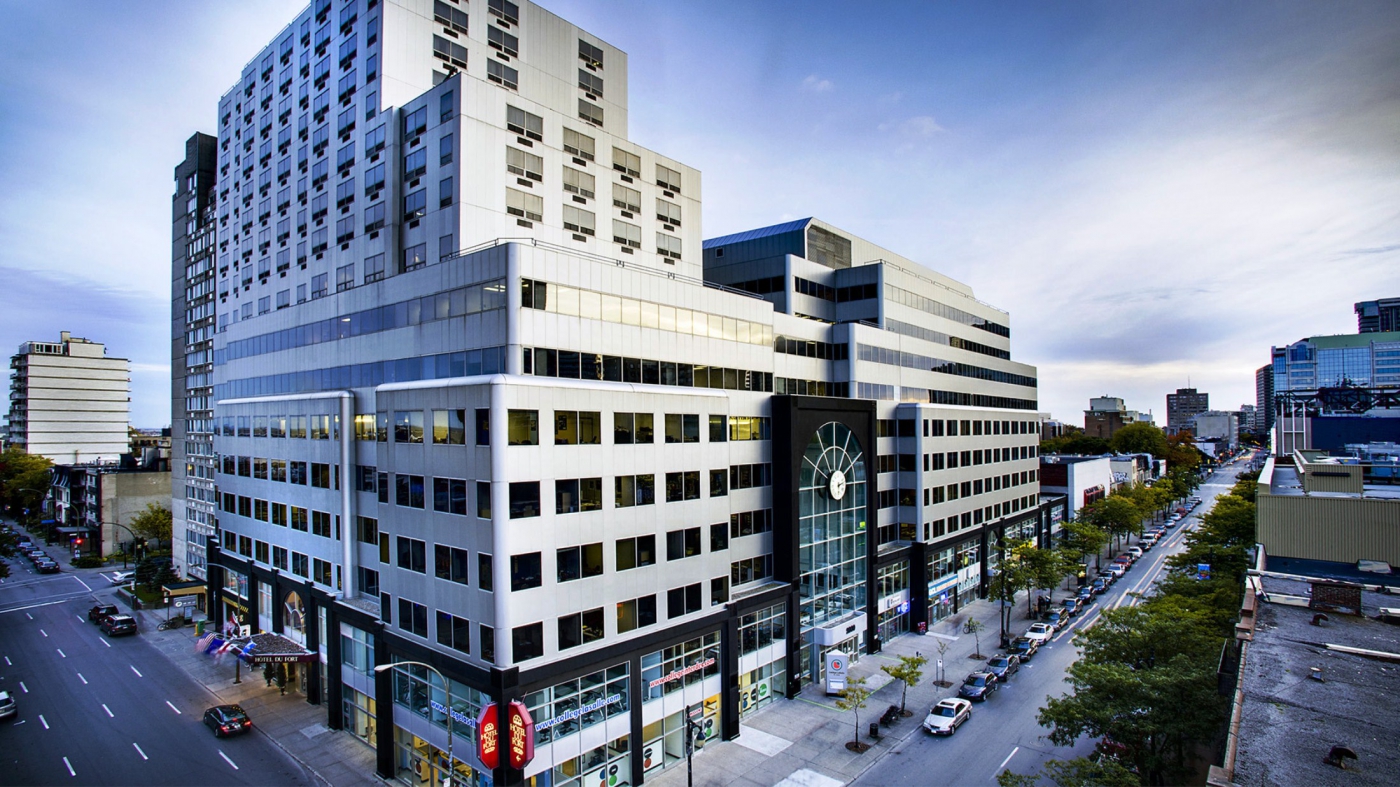
These institutions, such as LaSalle College or CDI College, often focus on short-term, intensive training programs known as an Attestation of College Studies (AEC). These programs are tailored for adults or international students looking for rapid entry into specific industries like fashion, technology, or business. While they do not always require the same general education components (like philosophy or physical education) as a DEC, their tuition is significantly higher.
Top English-Language Colleges in Montreal
For many international students and members of Quebec’s English-speaking community, the "Big Three" English CEGEPs are the primary focus. As of 2026, these institutions remain highly competitive due to government-mandated enrollment caps.
Dawson College
Located in a former motherhouse in the Westmount area, Dawson College is the largest CEGEP in the province. It is known for its vibrant student life and a massive array of programs ranging from Pure and Applied Sciences to 3D Animation and CGI. Because of its central location on the Montreal Metro (Atwater station), it remains the top choice for many urban students.
Vanier College
Situated in the Saint-Laurent borough, Vanier College is renowned for its strong Science and Music programs. It offers a diverse, multicultural environment and is often praised for its robust architectural technology and nursing departments. Vanier provides a slightly more suburban campus feel while remaining easily accessible by public transit.
John Abbott College
Located at the western tip of the island in Sainte-Anne-de-Bellevue, John Abbott College shares a campus with McGill University’s Macdonald Campus. It is famous for its picturesque, lakeside setting and its high-ranking programs in paramedicine, dental hygiene, and police technology. It is often the preferred choice for students living in the West Island or off-island suburbs.
Marianopolis College
As a private English-language college, Marianopolis consistently ranks as one of the top academic institutions in the province. It is strictly a pre-university college, meaning it does not offer three-year technical programs. It is the destination for students aiming for highly competitive university programs like Medicine or Law, offering an elite academic environment and a high average "R-Score."
Renowned French-Language Colleges
While English colleges are popular, the majority of Montreal's college-aged population attends French-language CEGEPs. These institutions often have state-of-the-art facilities and specialized programs not found elsewhere.
- Collège de Maisonneuve: Known for its rigorous science programs and its proximity to the Olympic Park.
- Cégep du Vieux Montréal: Famous for its arts, design, and animation programs, located in the heart of the city near the Quartier des Spectacles.
- Cégep de Saint-Laurent: Highly regarded for its music and theatre departments, as well as its focus on environmental water treatment technologies.
- Collège Ahuntsic: One of the largest French CEGEPs, offering a wide range of technical programs in police technology and health sciences.
Admissions and the R-Score: How Selection Works
In 2026, the most critical metric for any college student in Montreal remains the R-Score (Cote R). This is a statistical method used to rank students for university admission. It measures not just a student's individual grade, but how that grade compares to the class average and the strength of the specific student group.
The Application Process (SRAM)
Most public French-language CEGEPs and some English ones (like Vanier and John Abbott) process applications through the Service régional d'admission du Montréal métropolitain (SRAM).
- Round 1 Deadline: March 1st for the Autumn semester.
- Round 2 & 3: These rounds are for students who were refused in the first round or are looking for programs with remaining space.
Note: Dawson College and Marianopolis College use their own independent application portals. Students must apply directly on their respective websites.
Admission Requirements
To be admitted to any college in Montreal in 2026, students must hold a Quebec Secondary School Diploma (DES) or an equivalent. Specific programs have "prerequisites." For example:
- Health Science: Requires Physics, Chemistry, and Secondary V Mathematics (Natural Science or Technical & Scientific options).
- Social Science: Usually requires standard Secondary V Mathematics.
- Arts/Literature: Generally requires the base DES with no specific science/math prerequisites.
The Impact of Bill 96 in 2026
The implementation of Law 14 (Bill 96) has significantly altered the landscape for English colleges. By 2026, the following rules are strictly enforced:
- Enrollment Caps: The government has frozen the total number of students allowed in English CEGEPs to ensure they do not grow faster than French-language institutions.
- Certificate of Eligibility: Students who have a "Certificate of Eligibility" to receive instruction in English are given priority in the admission process at English CEGEPs.
- French Language Courses:
- Eligible Students: Must take three of their core program courses in French OR take three additional French second-language courses.
- Non-Eligible Students: Must take three of their core program courses in French and must pass the same French language exit exam (Épreuve uniforme de français) as students in French CEGEPs to graduate.
Comparison of Major Montreal Colleges
| Institution | Type | Primary Language | Distinctive Feature | Average Enrollment (2026) |
|---|---|---|---|---|
| Dawson College | Public | English | Massive program variety; downtown location | 10,000+ |
| Vanier College | Public | English | Strong STEM and Music programs | 6,500+ |
| John Abbott College | Public | English | Scenic campus; specialized technical tech | 6,000+ |
| Marianopolis College | Private | English | High university placement rate; academic focus | 2,000 |
| LaSalle College | Private | Bilingual | International fashion and design focus | 4,000+ |
| Cégep du Vieux Montréal | Public | French | Hub for creative arts and animation | 6,000+ |
| Collège de Maisonneuve | Public | French | Research-intensive; strong science focus | 7,000+ |
Tuition and Cost of Study in 2026
Costs vary wildly depending on your residency status. Montreal remains one of the most affordable cities for education in North America for locals, but international fees have seen adjustments.
- Quebec Residents: Tuition is free at public CEGEPs. Expect to pay $200–$500 per year in administrative fees.
- Canadian Non-Residents of Quebec: Students from other provinces usually pay an out-of-province fee. In 2026, this is approximately $1,700 to $2,000 per semester at public institutions.
- International Students: Tuition is significantly higher, ranging from $7,000 to $10,000 per semester for technical programs. International students must also factor in the cost of health insurance, which is mandatory (approx. $800–$1,000 per year).
Cost of Living
Montreal’s cost of living remains lower than Toronto or Vancouver, but housing in 2026 requires careful budgeting.
- Rent (Studio/Shared): $900 – $1,500 per month.
- Public Transit (OPTM): Students under 25 receive a discounted monthly pass (approx. $60).
- Groceries: $400 – $600 per month.
International Student Requirements
Montreal is a top destination for international students, but the 2026 requirements are strict regarding immigration and language.
- CAQ (Québec Acceptance Certificate): Before applying for a Canadian Study Permit, students must obtain a CAQ from the Quebec government. This requires proof of financial capacity to cover tuition and living expenses.
- Study Permit: Issued by the federal government (IRCC). Note that as of 2026, there are stricter caps on the number of study permits issued across Canada.
- Language Proficiency: Even for English colleges, international students may need to provide IELTS or TOEFL scores if their previous education was not in English. Furthermore, international students are subject to the French language requirements of Bill 96 if they attend an English CEGEP.
Frequently Asked Questions
What is the difference between a DEC and an AEC?
A DEC (Diploma of College Studies) is a state-recognized diploma that includes general education courses (English/French, Philosophy, Humanities, PE). It is required for university entry. An AEC (Attestation of College Studies) is a shorter, technical certificate usually for adults or international students, focusing strictly on job skills and skipping general education.
Can I switch from an English college to a French university?
Yes. Many students graduate from English CEGEPs like Dawson or Vanier and go on to French universities like the Université de Montréal (UdeM) or UQAM. Your R-Score is valid across the entire province, regardless of the language of the college.
Is it hard to get into an English CEGEP in 2026?
Yes, it has become increasingly competitive. Due to the enrollment caps set by the Quebec government, the minimum average required for admission has risen. Students with a "Certificate of Eligibility" (English sector students) have a distinct advantage in the selection process.
Are there "Colleges" in Montreal that are actually Universities?
No. In Montreal, the distinction is clear. However, some private institutions use the word "College" in their name (e.g., LaSalle College) but offer diplomas (DECs/AECs), not Bachelor's degrees. Always check if the institution is recognized by the Ministère de l'Enseignement supérieur.
When should I start my application for Autumn 2026?
The application window typically opens in January 2026. You must submit your choice for Round 1 by March 1, 2026. If you are an international student, you should start even earlier (October/November 2025) to allow for CAQ and visa processing.
Practical Next Actions
If you are considering attending a college in Montreal, your first step should be determining your residency status and whether you hold a Certificate of Eligibility for English education. For those targeting public institutions, create an account on the SRAM website to explore program availability. If your interest lies in Dawson or Marianopolis, visit their specific portals to review their unique admission criteria. For international applicants, prioritize securing your CAQ immediately after receiving a letter of acceptance, as processing times can be lengthy in the 2026 cycle.