The primary drawback of a regular savings account is that its low interest rate often fails to outpace inflation, leading to a loss in "real" value over time. While these accounts offer high liquidity and federal insurance protection, the minimal returns effectively reduce your purchasing power, making them inefficient for long-term wealth building or significant capital growth.
Regular savings accounts have long served as the foundational building block of personal finance. They provide a secure harbor for emergency funds and a convenient staging area for monthly expenses. However, as the financial landscape has evolved through 2026, the gap between the yields offered by traditional "brick-and-mortar" savings accounts and other financial instruments has become more pronounced. To manage your money effectively, it is essential to understand why these low rates exist, how they erode your wealth, and what role these accounts should—and should not—play in your broader financial strategy.
The Economic Reality of Low Interest Rates
When you deposit money into a regular savings account, you are essentially providing a low-cost loan to the bank. The bank uses your capital to fund its own lending operations, such as mortgages, auto loans, and business credits, charging those borrowers a significantly higher interest rate than the one they pay you. The difference between what the bank earns on loans and what it pays to depositors is known as the net interest margin.
In 2026, many traditional financial institutions continue to offer interest rates on "regular" savings accounts that hover near the 0.01% to 0.10% range. While this may seem like a safe way to store cash, it represents a significant opportunity cost. The core issue is not just the lack of growth, but the relationship between your nominal return (the interest the bank pays) and the inflation rate.
The Inflation Tax on Stagnant Cash
Inflation is the rate at which the general level of prices for goods and services rises, subsequently causing purchasing power to fall. If the inflation rate is 3% per year and your regular savings account pays 0.05%, you are effectively losing 2.95% of your wealth's value annually.
This phenomenon is often described as a "hidden tax." Because the balance in your account does not physically decrease, many savers do not realize they are losing money. However, the $10,000 you have in a regular savings account today will buy fewer groceries, less fuel, and fewer services a year from now. Over a decade, the compounding effect of low interest against steady inflation can be devastating to a saver’s long-term goals.
The Liquidity Premium and the Cost of Access
Banks justify low interest rates on regular savings accounts by pointing to the "liquidity" they provide. Liquidity refers to how quickly and easily an asset can be converted into cash without affecting its market price. Regular savings accounts are among the most liquid assets available; you can typically withdraw funds at an ATM, transfer them via a mobile app, or visit a branch during business hours.
However, in the modern era, this liquidity comes at a steep price. Financial institutions incur operational costs to maintain physical branches, teller staff, and the technology infrastructure required for instant access. To offset these costs while maintaining their profit margins, they offer lower yields to the consumer. For the average saver, the question becomes: how much are you willing to pay for the ability to withdraw your money at any second? While an emergency fund requires high liquidity, keeping excessive amounts of cash in a low-interest environment is a strategic error.
The Impact of Federal Reserve Policies
The interest rates offered by commercial banks are heavily influenced by the Federal Reserve's monetary policy, specifically the Federal Funds Rate. This is the rate at which commercial banks borrow and lend their excess reserves to each other overnight.
In 2026, the Federal Reserve continues to use interest rate adjustments as a primary tool to balance employment and inflation. When the Fed keeps rates low to stimulate economic growth, banks have little incentive to offer high yields to savers. Even when the Fed raises rates, traditional banks are often slow to pass those increases on to regular savings account holders, a behavior known as "deposit beta." They tend to raise rates on loans immediately while lagging for months—or years—on savings products. This lag further exacerbates the drawback of low interest for the average consumer.
Comparing Savings Vehicles: Where Regular Accounts Fall Short
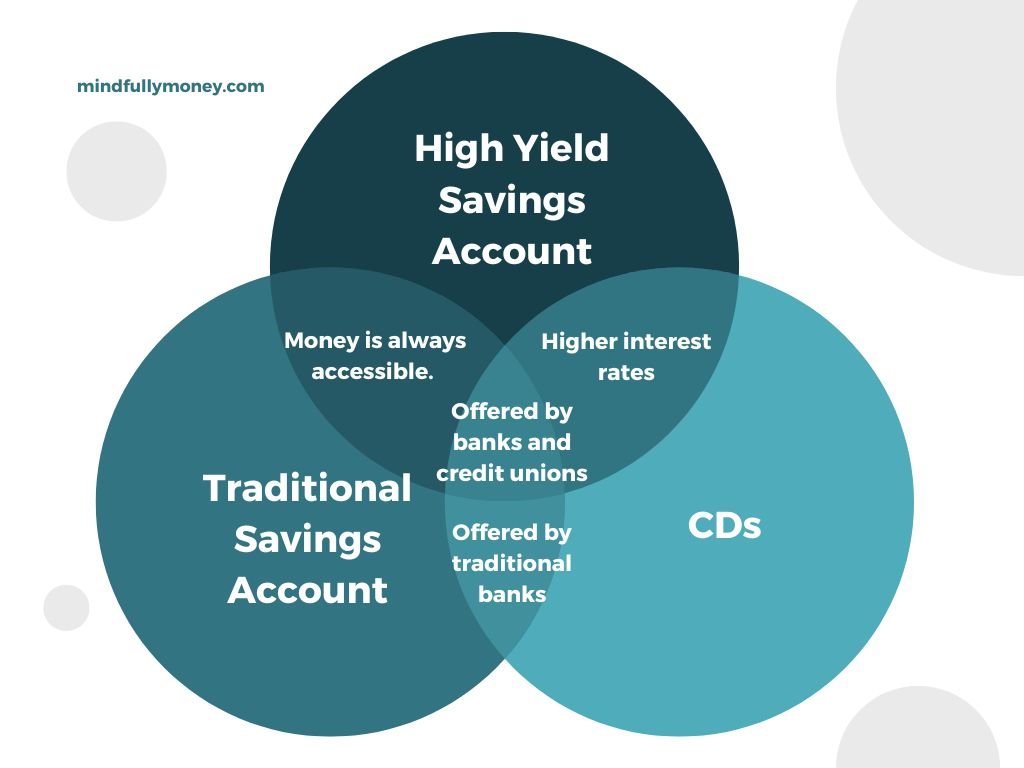
To understand the magnitude of the low-interest drawback, one must compare regular savings accounts with other low-risk alternatives available in 2026. High-yield savings accounts (HYSAs), money market accounts (MMAs), and Certificates of Deposit (CDs) often offer significantly better returns for similar levels of risk.
| Account Type | Typical Yield Range (2026 Est.) | Liquidity | Best Used For |
|---|---|---|---|
| Regular Savings | 0.01% – 0.10% | Very High | Daily transactions, tiny buffers |
| High-Yield Savings | 4.00% – 5.25% | High (6 withdrawals/mo) | Emergency funds, short-term goals |
| Money Market Account | 3.50% – 4.75% | High (Check writing) | Large liquid balances, tax reserves |
| Certificate of Deposit | 4.50% – 5.50% | Low (Early withdrawal penalty) | Planned purchases (1–5 years) |
| U.S. Treasury Bills | 4.00% – 5.00% | Medium (Marketable) | Low-risk wealth preservation |
The table above illustrates that while regular savings accounts are the most convenient, they are the least productive. A saver with $50,000 in a regular savings account earning 0.05% earns just $25 in interest per year. The same $50,000 in a High-Yield Savings Account earning 4.50% would yield $2,250 annually. This difference of $2,225 per year is the literal "cost" of the low-interest drawback.
Tax Implications of Low Interest
Another often-overlooked drawback is that interest earned on a savings account is considered taxable income by the IRS and most state tax authorities. If you are in a 22% federal tax bracket and your account earns a meager 0.10% interest, your "after-tax" return is even lower—approximately 0.078%.
When you combine the low nominal rate, the impact of inflation, and the burden of income taxes, the "real after-tax return" on a regular savings account is almost always negative. This means that for every dollar you "save" in a traditional account, you are effectively paying for the privilege of the bank holding your money, rather than the bank paying you for the use of your capital.
Psychological Barriers and the "Safety" Trap
One reason why many people continue to hold large sums in low-interest regular savings accounts is the psychological comfort of safety. These accounts are usually insured by the Federal Deposit Insurance Corporation (FDIC) or the National Credit Union Administration (NCUA) for up to $250,000 per depositor, per institution.
While the return of your principal is guaranteed (up to those limits), the return on your principal is not. Many savers confuse "nominal safety" (your balance won't go down) with "economic safety" (your money will still buy the same amount of goods). By prioritizing the avoidance of short-term market volatility, savers inadvertently expose themselves to the long-term certainty of purchasing power erosion. This is a fundamental paradox of conservative saving: the "safest" account can be the one that most guarantees a loss in real wealth.
When Does a Regular Savings Account Make Sense?
Despite the significant drawback of low interest, regular savings accounts are not entirely obsolete in 2026. Their utility is defined by specific, narrow use cases where liquidity and convenience outweigh the need for yield:
- Overdraft Protection: Linking a regular savings account to a checking account can prevent expensive overdraft fees.
- Immediate Access to Emergency Cash: Keeping $1,000 to $2,000 for immediate repairs or urgent needs ensures you don't have to wait 1-3 business days for a transfer from a high-yield account.
- Educational Tools for Minors: They are excellent for teaching children the basics of banking and the habit of setting money aside, where the absolute dollar amount of interest is less important than the behavioral discipline.
- Transaction Hubs: Using the account as a temporary clearing house before moving money into investments or higher-yield vehicles.
Strategies to Mitigate the Drawbacks
If you find yourself holding too much cash in a low-interest environment, several strategies can help you optimize your returns without taking on excessive risk.
The "Tiered" Emergency Fund
Instead of keeping your entire emergency fund in a regular savings account, split it into tiers. Keep one month of expenses in a regular savings account for instant access. Move the remaining three to five months into a High-Yield Savings Account or a Money Market Account. This allows you to earn a competitive rate on the bulk of your cash while maintaining a "liquid front line."
Laddering Certificates of Deposit (CDs)
If you have cash that you know you won't need for several months, consider a CD ladder. By opening multiple CDs with staggered maturity dates (e.g., 3 months, 6 months, 9 months, and 12 months), you capture the higher interest rates of CDs while ensuring a portion of your cash becomes available at regular intervals.
Automating Transfers
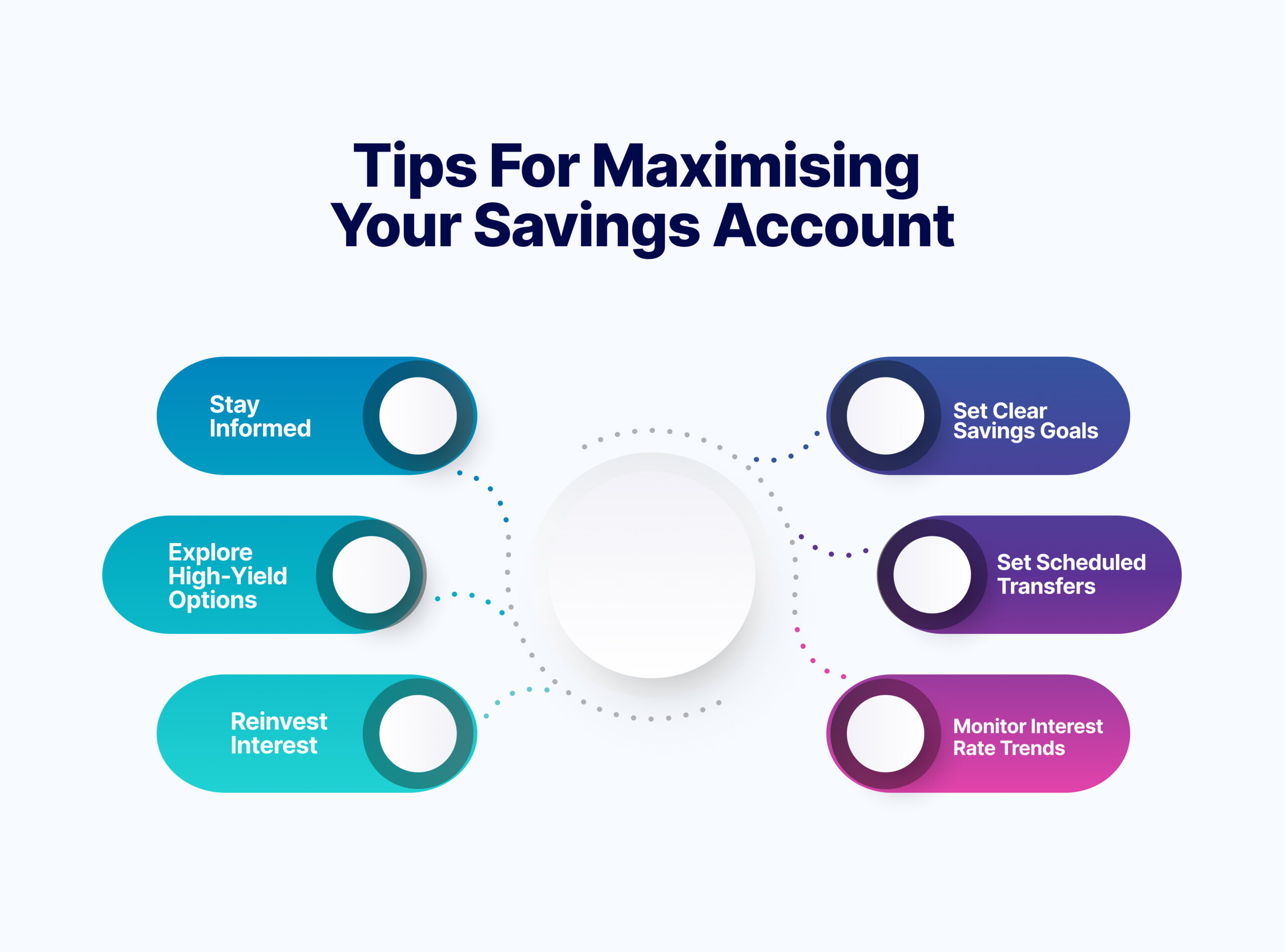
The primary advantage of a regular savings account is its proximity to your checking account. To fight the inertia that leads to low returns, set up an automatic transfer. Every payday, have a specific amount moved from your checking account directly to an external high-yield account or a brokerage account. This bypasses the low-interest regular savings account entirely.
Frequently Asked Questions
Is my money still safe in a regular savings account despite low interest?
Yes, your money is functionally safe from a loss of principal. In the United States, as of 2026, accounts at FDIC-insured banks are protected up to $250,000 per depositor. The risk is not that you will lose the dollars you deposited, but that those dollars will lose their value relative to the cost of living.
Why don't big banks offer higher interest rates on regular savings?
Big banks often have "sticky" customers who are unlikely to move their money even if rates are low. These institutions have high overhead costs (branches, marketing) and a massive base of deposits, meaning even a small increase in the interest rate they pay would cost them billions in profit. Smaller online banks, with lower overhead, compete by offering much higher rates.
Can I lose money in a regular savings account?
You cannot lose your nominal balance unless the bank fails and you are over the FDIC insurance limit. However, you do "lose" money in terms of purchasing power whenever the interest rate is lower than the inflation rate. Additionally, some regular savings accounts charge monthly maintenance fees if a minimum balance is not met, which can physically reduce your balance.
Should I close my regular savings account?
Not necessarily. It is often useful to keep a small balance in a regular savings account for convenience and to maintain a relationship with your primary bank. The goal should be to minimize the amount of "idle" cash sitting in that account and move any excess funds to vehicles that offer a better rate of return.
What is the difference between a regular savings account and a high-yield savings account?
The primary difference is the interest rate. High-yield savings accounts (HYSAs) are typically offered by online banks and can pay 10 to 100 times more interest than a regular savings account. HYSAs usually do not have physical branches, which is how they afford to pay higher rates to their customers.
Final Recommendation
The drawback of low interest in a regular savings account is a significant hurdle to financial health in 2026. While the security and accessibility of these accounts are beneficial for minor, short-term needs, they are a poor choice for any substantial amount of capital. To protect your wealth from the silent erosion of inflation, audit your accounts today. Limit your regular savings balance to what you might need for an immediate, one-week emergency, and migrate the rest of your cash to high-yield alternatives or diversified investments that align with your long-term goals.