In 2026, curved TVs are generally not worth it for traditional living room environments, as the technology has largely transitioned into the niche gaming monitor market. While they offer enhanced immersion for solo viewers and desktop gamers, their limited viewing angles and reflection issues make them impractical for communal family viewing.
The concept of the curved television first entered the mainstream market around 2013, spearheaded by manufacturers like Samsung and LG. At the time, it was marketed as the next logical evolution of the viewing experience, promising a cinematic "wrap-around" feel similar to IMAX theaters. However, over a decade later, the consumer electronics landscape has shifted significantly. As we evaluate the market in 2026, the question of whether a curved panel is worth your investment depends heavily on your specific use case, seating arrangement, and tolerance for geometric distortion.
The Science and Psychology of Curved Displays
To understand if a curved TV is worth the investment, one must first understand the engineering intent behind the design. The primary goal of a curved screen is to cater to the natural curvature of the human eye. Our eyes perceive the world in a slightly arc-like field of vision rather than a flat plane.
When you look at a large flat-screen TV, the distance from your eyes to the center of the screen is shorter than the distance from your eyes to the far corners. In theory, a curved screen maintains a more uniform distance between your eyes and every pixel on the display. This uniformity is intended to create a sense of depth and peripheral engagement that flat panels lack.
The "R" Rating: Understanding Curvature Radius
When shopping for curved displays in 2026, you will encounter measurements like 1000R, 1500R, or 1800R. The "R" stands for radius, and the number represents the radius of the circle the curve would form if it were extended fully, measured in millimeters.
- 1000R: A more aggressive curve (1 meter radius). This is common in high-end gaming monitors because it matches the human field of view most closely at a desktop distance.
- 1800R: A more subtle curve (1.8 meter radius). This was the standard for most curved television sets before they were phased out of mass production.
The effectiveness of the curve is entirely dependent on the viewer’s distance from the screen. If you sit too far back, the benefits of the curve vanish, and the screen begins to look like a small, distorted flat panel.
The Advantages of Curved TVs and Monitors
While the general market has moved back toward flat OLED and MicroLED panels, the curved format still holds specific advantages that keep it relevant for a subset of users.
Enhanced Immersion and Field of View
The "wrap-around" effect is the most cited benefit. By curving the edges of the screen toward the viewer, the display occupies more of the peripheral vision. This is particularly effective for content with high "flow," such as racing simulators, flight simulators, or first-person shooters. In 2026, high-end ultrawide monitors have perfected this, offering a level of immersion that flat screens cannot replicate without being significantly larger and more expensive.
Reduced Eye Strain at Close Proportions
For users who spend eight to ten hours a day in front of a screen, a curved display can actually reduce ocular fatigue. Because the corners of the screen are brought closer to the eye’s natural focal point, the eye muscles do not have to work as hard to adjust focus when moving from the center of the screen to the edges. This "ciliary muscle" relief is a major selling point for professional editors and gamers who utilize large 40-inch+ displays.
Perceived Depth
Curved screens can create a subtle 3D-like effect without the need for specialized glasses. By curving the image, the brain perceives more depth in the landscape of the content. While this doesn't replace true stereoscopic 3D, it adds a layer of "pop" to high-quality 4K and 8K HDR footage.
The Drawbacks: Why the Trend Faded
Despite the advantages, curved TVs faced significant practical hurdles that eventually led most manufacturers to discontinue them for living room use.
The "Sweet Spot" and Viewing Angles
The most significant drawback of a curved TV is the narrow viewing angle. To get the intended benefit, you must sit directly in the center of the curve’s radius. If you are sitting off to the side—which is common in a family living room—the geometry of the image becomes distorted. The near side of the curve looks compressed, while the far side looks stretched. This makes curved TVs a poor choice for social viewing, hosting sports events, or any scenario where more than two people are watching simultaneously.
The Funhouse Mirror Effect: Reflections and Glare
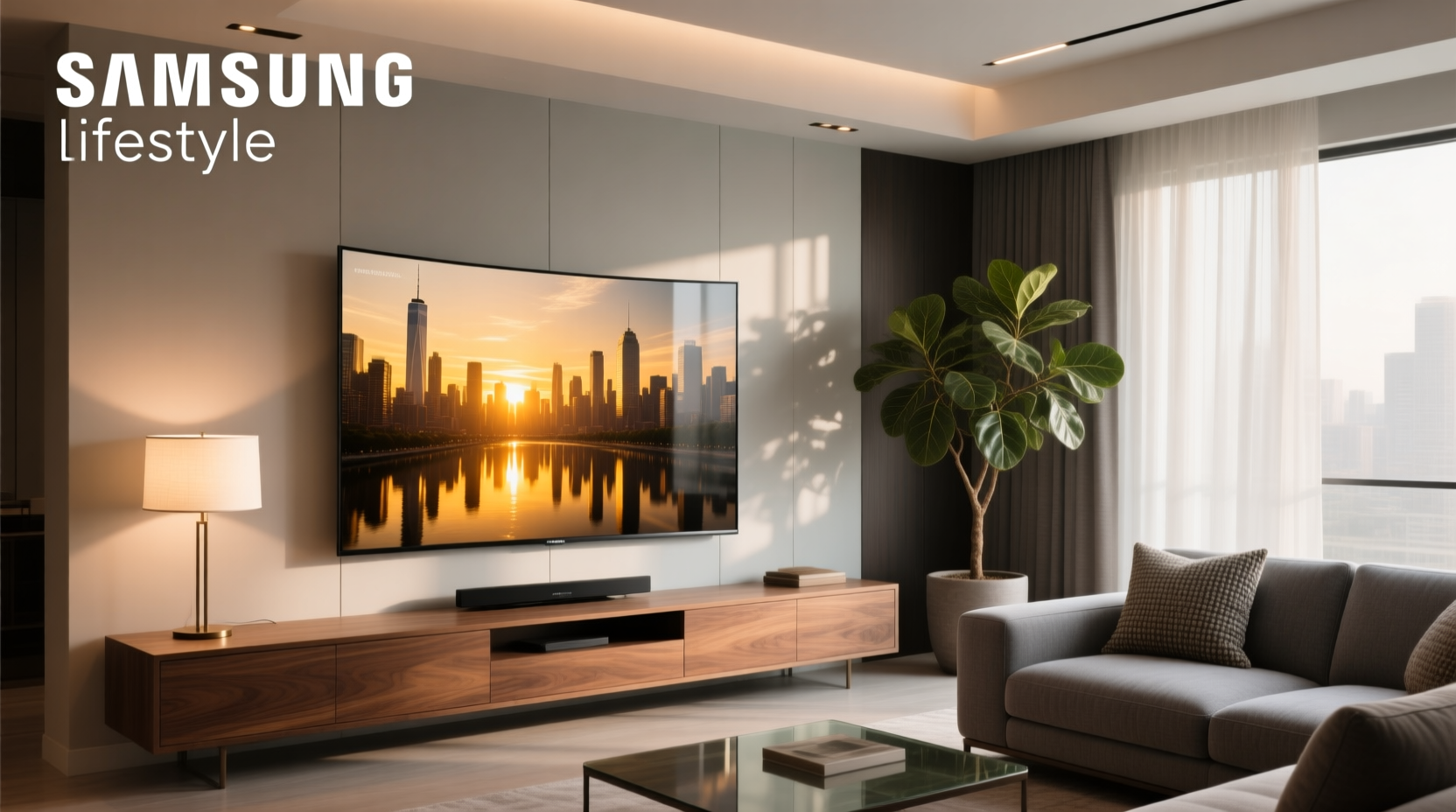
Because of their concave shape, curved TVs act like a magnifying glass for ambient light. If there is a window or a lamp behind the seating area, the curve catches that light and stretches the reflection across a larger portion of the screen. Unlike a flat TV, where a reflection is usually a distinct, localized point, a curved TV creates a "smear" of light that can obscure significant parts of the image.
Aesthetics and Wall Mounting
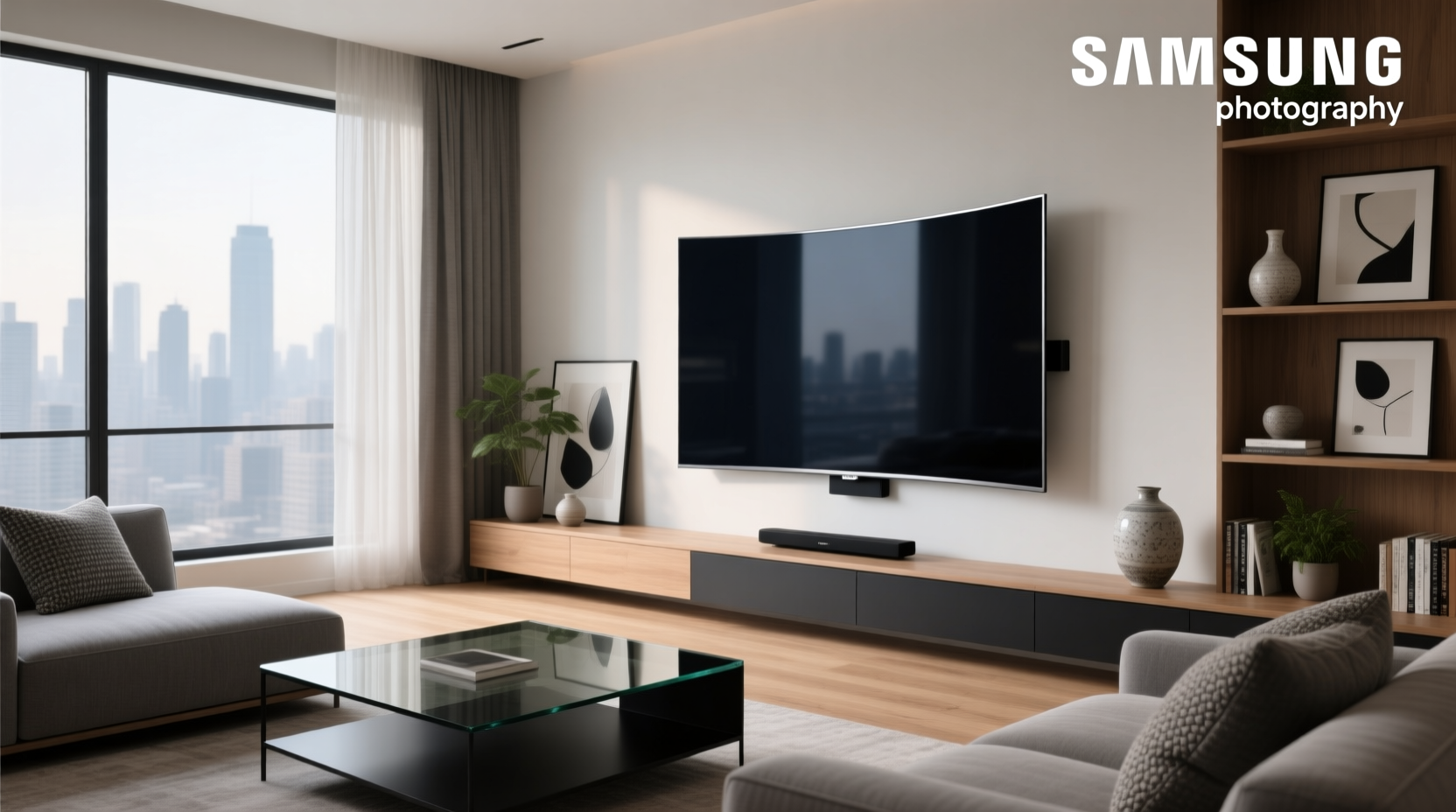
From a design perspective, curved TVs are significantly bulkier than modern ultra-thin flat panels. When wall-mounted, the edges of a curved TV protrude away from the wall, creating an awkward aesthetic gap. In an era where "Gallery Design" and "Wallpaper TVs" are the standard for high-end home decor, the physical footprint of a curved set is often seen as a disadvantage.
Technical Comparison: Curved vs. Flat Panels
| Feature | Curved TV / Monitor | Flat Panel TV |
|---|---|---|
| Immersion | High (for solo viewing) | Standard |
| Viewing Angles | Narrow (requires "Sweet Spot") | Wide (especially OLED/IPS) |
| Reflection Handling | Poor (stretches reflections) | Good (localized reflections) |
| Wall Mounting | Difficult/Bulky | Ideal/Flush |
| Gaming Performance | Excellent (Ultrawide support) | Standard |
| Price (2026) | Premium (due to niche production) | Competitive |
| Eye Strain | Lower at close distances | Standard |
Is It Worth It for Gaming in 2026?
While curved TVs have largely vanished from the "television" category, they are thriving in the gaming monitor category. In 2026, if you are looking for a display for a dedicated gaming rig, a curved panel is often the superior choice.
For gaming, you are almost always the sole viewer, sitting at a fixed distance from the screen. This eliminates the "viewing angle" problem entirely. Furthermore, the rise of 21:9 and 32:9 aspect ratios makes curving almost a necessity. On a 49-inch super-ultrawide monitor, a flat panel would be so wide that the edges would be nearly impossible to see clearly without turning your entire head. A 1000R curve brings those edges into your peripheral vision, allowing for faster reaction times in competitive play.
Assessing Value and Availability in 2026
If you are hunting for a curved TV in 2026, your options are limited compared to five years ago. Most major manufacturers (Samsung, Sony, LG) have shifted their curved R&D entirely toward the "Odyssey" or "UltraGear" monitor lines.
Buying a Used or Refurbished Curved TV
Because new curved TV models are rare, many consumers look toward the secondary market. While a used curved TV might seem like a bargain, you must verify the backlight health and panel uniformity. Early curved LED models were prone to "flashlighting"—where light leaks from the corners—because the physical stress of the curve could cause the layers of the panel to separate slightly over time.
Pricing Considerations
In 2026, a curved display usually carries a price premium of 15-25% over a flat panel with similar specifications (refresh rate, resolution, and panel type). This premium is due to the more complex manufacturing process required to bend glass and substrate layers without damaging the pixels.
Maintenance and Long-Term Care
Curved screens require slightly more care than their flat counterparts. The tension of the curve makes the panel more sensitive to physical pressure.
- Cleaning: When cleaning a curved screen, use only a microfiber cloth and avoid applying any downward pressure on the center of the arc.
- Placement: Avoid placing a curved screen directly opposite a large window. The geometry of the curve will exacerbate glare more than a flat screen would.
- Moving: If you move homes, keep the original box. Curved TVs are notoriously difficult to pack safely without the custom-molded foam that accounts for their arc.
Common Mistakes to Avoid
Before finalizing a purchase, ensure you aren't falling into these common traps:
- Buying for a Group: Do not buy a curved TV if your primary goal is family movie night. Someone will always be stuck in the "distorted" seat.
- Ignoring the Radius: Buying an 1800R curve for a desktop where you sit very close will feel like the screen is flat. Conversely, buying a 1000R curve for a living room where you sit 10 feet away will make the image look unnaturally pinched.
- Overestimating the "3D" Effect: The curve adds immersion, but it does not make 2D content look like a Hollywood 3D production.
Frequently Asked Questions
Does a curved TV cause more reflections than a flat one?
Yes, curved TVs are more susceptible to reflection issues. Because of their concave shape, they act like a focal mirror, capturing light from a wider range of angles and stretching it across the screen. This is often referred to as the "funhouse mirror" effect. To mitigate this, you need a room with highly controlled lighting.
Are curved TVs better for your eyes?
At close distances (less than 3 feet), curved monitors can reduce eye strain because they maintain a more consistent focal distance from the eye to the screen. For traditional TV viewing distances (7-12 feet), the benefit to eye strain is negligible and does not provide a significant health advantage over a high-quality flat panel.
Why did Samsung and LG stop making most curved TVs?
The manufacturing costs were higher, and the consumer demand didn't justify the logistical challenges. Most consumers preferred the sleek, wall-mountable profile of flat OLEDs. Additionally, the viewing angle limitations meant that curved TVs were often returned by customers who found the image distorted when watching with others.
Can you wall-mount a curved TV?
Yes, you can wall-mount a curved TV using standard VESA mounts, but it rarely looks as good as a flat panel. The curved edges will stick out from the wall, making the TV look much thicker than it actually is. There are specialized mounts designed to minimize this, but the aesthetic is still generally considered inferior to flush-mounted flat screens.
Is the curve "permanent" or can it be adjusted?
In 2026, most curved displays have a fixed radius. However, there are a few high-end "bendable" OLED models (like the LG Flex series) that allow you to change the screen from flat to curved with a motor. These are very expensive and are targeted at users who want a flat screen for movies and a curved screen for gaming.
Final Recommendation
Whether a curved TV is "worth it" in 2026 depends on your role as a viewer. If you are a solo gamer or a professional looking for a massive desktop display to increase productivity and immersion, a curved panel (specifically in the 21:9 or 32:9 format) is an excellent investment. The ergonomic benefits and the wrap-around field of view provide a tangible upgrade to the experience.
However, for general home entertainment, the era of the curved TV has passed. The limitations regarding viewing angles, the difficulty of wall mounting, and the distracting reflections outweigh the minor gains in immersion. For the same price as a niche curved model, you can typically purchase a superior flat OLED or Mini-LED TV that offers better color accuracy, wider viewing angles, and a more modern aesthetic.