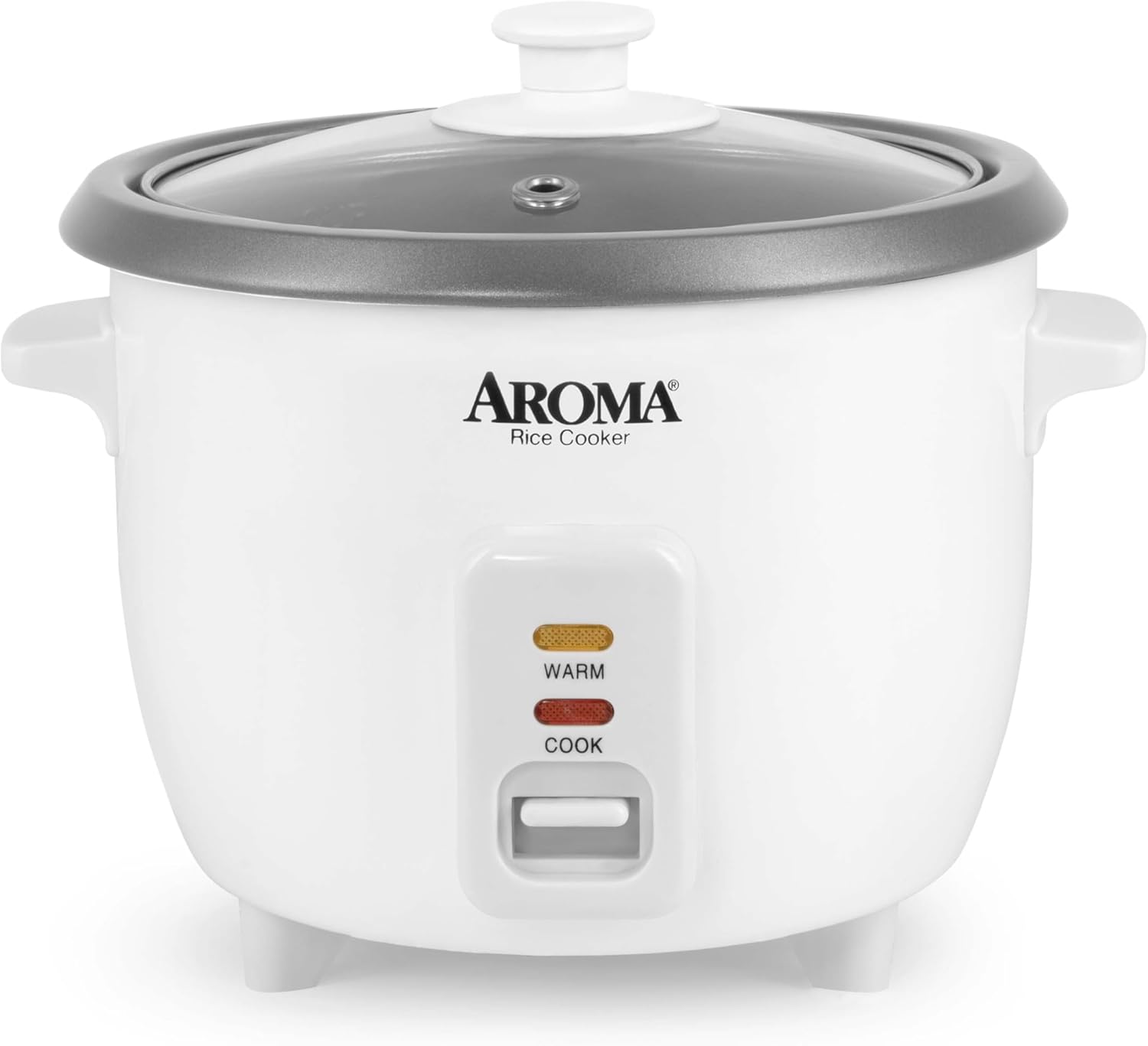
Aroma rice cookers offer the best price-to-performance ratio for home cooks seeking reliable, multi-functional kitchen appliances. From basic 6-cup pot-style models to advanced digital versions with specialized "Flash Rice" and steaming capabilities, Aroma provides durable options that excel at consistent grain texture without the premium cost of high-end brands.
The Landscape of Aroma Housewares in 2026
For decades, Aroma Housewares has occupied a specific niche in the culinary market: providing accessible, high-capacity rice cookers that bridge the gap between low-end manual pots and ultra-premium induction heating systems. In 2026, the brand remains a dominant force, particularly for families and students who require versatility without a three-figure price tag. While high-end Japanese competitors focus on pressurized GABA brown rice cycles and micro-computerized precision, Aroma focuses on "set-it-and-forget-it" simplicity.
The current lineup is divided into three primary categories: the Select Stainless series, the Digital Cool-Touch series, and the Professional series. Each serves a distinct user need. The Select Stainless series caters to health-conscious users wary of non-stick coatings, utilizing food-grade 304 stainless steel. The Digital Cool-Touch series is the brand's workhorse, featuring intuitive menus and thick insulation. The Professional series introduces more complex features like Saute-then-Simmer (STS), which allows users to brown aromatics before adding liquid—a game-changer for pilafs and risottos.
In-Depth Analysis of Key Models
The Digital Cool-Touch (ARC-914D / ARC-954SBD)
The 8-cup (cooked) Digital Cool-Touch model remains one of the most reviewed kitchen appliances in history. Its primary appeal is the balance of size and functionality. It is large enough for a family of four but compact enough for a dorm room.
Performance and Features: The digital interface provides dedicated buttons for white rice and brown rice. This is crucial because brown rice requires a longer soaking period and a different temperature curve to break down the tough outer bran layer. In testing, the white rice cycle typically finishes in 25–30 minutes, while the brown rice cycle takes approximately 65–70 minutes. The "Flash Rice" function is a standout for those in a hurry, cutting white rice cook times by about 10 minutes by skipping the pre-soak phase, though it results in a slightly firmer grain.
The Select Stainless Series (ARC-753SG / ARC-757SG)
This is a "pot-style" cooker, meaning it operates with a simple one-touch lever. The defining feature is the 304 stainless steel inner pot. Most budget rice cookers use aluminum with a PTFE (Teflon) or ceramic coating. Over time, these coatings can flake or scratch. The Select Stainless model eliminates this concern, offering a non-reactive cooking surface that is exceptionally durable.
However, stainless steel is not naturally non-stick. Users often report a thin layer of "socarrat" or crispy rice at the bottom. While some cultures prize this, others find it difficult to clean. To mitigate this, adding a teaspoon of oil or butter to the water before cooking is a standard recommendation for this specific model.
The Professional Series: Saute-then-Simmer (STS)
The Professional models are designed for "one-pot meals." The Saute-then-Simmer technology is proprietary to Aroma and addresses a major limitation of traditional rice cookers. In a standard cooker, you cannot reach high enough temperatures to sauté onions or brown meat. With STS, the cooker reaches a high heat for sautéing; once the liquid is added and the sensor detects the change in temperature/viscosity, it automatically switches to the simmer mode to finish the rice.
Technical Specifications and Capacity Clarification
One of the most frequent points of confusion in any Aroma rice cooker review is the "cup" measurement. Aroma uses a standard plastic measuring cup that is approximately 180ml (6.1 oz), based on the traditional Japanese gou measurement. This is smaller than a standard US 240ml measuring cup.
| Model Type | Uncooked Capacity | Cooked Capacity | Best For | Inner Pot Material |
|---|---|---|---|---|
| Basic Pot Style | 3 Cups | 6 Cups | Singles/Couples | Non-stick Aluminum |
| Select Stainless | 3-7 Cups | 6-14 Cups | Health-conscious | 304 Stainless Steel |
| Digital Cool-Touch | 4-10 Cups | 8-20 Cups | Families | Non-stick Aluminum |
| Professional STS | 10 Cups | 20 Cups | Large Groups/Meal Prep | Heavy-duty Non-stick |
Performance Evaluation: Consistency and Grain Quality
The primary metric for any rice cooker is the consistency of the finished product. Aroma cookers utilize a thermal sensor at the base of the unit. This sensor is spring-loaded and makes contact with the bottom of the inner pot. As the water boils away and is absorbed by the rice, the temperature of the pot begins to rise above 212°F (100°C). The sensor detects this jump in temperature and triggers the "Keep Warm" mode.
White Rice Performance
For long-grain white rice (Basmati or Jasmine), Aroma units perform exceptionally well. The grains are usually distinct, fluffy, and fully hydrated. The key to success is a thorough rinse of the rice to remove excess surface starch, which prevents the "boil-over" issues common in smaller units.
Brown Rice and Grains
Brown rice is notoriously difficult to cook because the bran layer resists water penetration. Aroma's digital models address this with a pre-set delay or soaking period. The result is a grain that is chewy but not hard. For specialized grains like quinoa or farro, the "White Rice" setting usually suffices, though the water-to-grain ratio must be adjusted manually based on the grain's specific requirements rather than the markings on the inner pot.
Steaming Functionality
The inclusion of a BPA-free steam tray in almost all Aroma models allows for dual-level cooking. You can steam broccoli, fish, or dumplings while the rice cooks below. This is an efficient use of energy and time. However, users must be mindful of timing; vegetables often steam much faster than rice (usually 5–10 minutes), meaning you must open the lid mid-cycle to insert the tray, which can release steam and slightly affect the rice's final texture.
Longevity and Build Quality
In 2026, the durability of small kitchen appliances is a frequent concern. Aroma cookers are built with a mix of high-impact plastic and thin-gauge metal. While they do not feel as "tank-like" as a Zojirushi or a high-end Breville, they are remarkably resilient.
The most common failure point is the non-stick coating of the inner pot. If users use metal utensils or abrasive scrubbers, the coating will degrade within 1–2 years. However, Aroma sells replacement inner pots on their official website, which is a sustainable alternative to replacing the entire unit. The heating element and internal circuitry are generally robust, often lasting 5 to 7 years with daily use.
Maintenance and Troubleshooting
Keeping an Aroma rice cooker in peak condition requires minimal effort but specific techniques:
- The Condensation Collector: Many digital models have a small plastic reservoir on the side. This must be emptied after every use to prevent mold and "old rice" smells.
- The Steam Vent: The removable steam vent on the lid can become clogged with starchy residue. If the cooker is "spitting" water during the cycle, the vent likely needs a deep clean in warm, soapy water.
- The Inner Lid: On Cool-Touch models, the inner lid is often removable. It is essential to clean behind this lid, as trapped starch can become a breeding ground for bacteria.
- Burnt Bottom (The "Crust"): If the rice is consistently burning, it is usually due to one of two things: either the rice wasn't rinsed well enough (the starch settles at the bottom and sugars caramelize), or the sensor at the base of the heating plate is dirty, preventing it from accurately reading the temperature.
Comparative Value: Aroma vs. The Competition
When comparing Aroma to other brands, the value proposition is clear. A high-end Zojirushi or Cuckoo induction cooker can cost between $200 and $600. These units use Induction Heating (IH), which heats the entire pot rather than just the bottom plate, leading to more even cooking.
However, for the vast majority of home users, the difference in rice quality is marginal compared to the massive price difference. An Aroma cooker typically retails for $30 to $80. While it may lack the musical notifications or "Umami" settings of its Japanese rivals, it produces high-quality rice that is indistinguishable to the average palate. Compared to the Instant Pot, Aroma is superior for rice because it is specifically calibrated for the delicate evaporation process, whereas the Instant Pot’s pressure-cooking method can sometimes result in "mushy" or overly compressed grains.
Addressing Common Mistakes
Many negative reviews of Aroma rice cookers stem from user error rather than mechanical failure.
- Wrong Ratios: Following the bag of rice's instructions rather than the cooker's lines. The cooker is designed to account for evaporation; using external ratios often leads to wet rice.
- Opening the Lid: Every time the lid is opened, the internal temperature drops and the steam pressure is lost. This is particularly detrimental to the "Keep Warm" phase, which is when the rice finishes its final structural set.
- Not Fluffing: Rice should be fluffed with the provided plastic paddle immediately after the "Keep Warm" light turns on. This releases excess steam and prevents the bottom grains from being crushed by the weight and moisture of the top layers.
FAQ
Why is my Aroma rice cooker boiling over?
Boil-over is almost always caused by excess starch. If you do not rinse the rice until the water runs clear, the starch creates a thick foam that blocks the steam vent. Additionally, check that you aren't exceeding the maximum capacity of the cooker. For small batches in large cookers, the risk of boil-over is actually higher due to the increased surface area for foam production.
Can I cook oatmeal or soup in my Aroma rice cooker?
Yes, digital models often have a "Slow Cook" or "Oatmeal" setting. For pot-style models, you can cook soup, but you must monitor it closely. Since soups do not "boil dry" like rice, the cooker will never automatically switch to "Keep Warm" based on temperature. You must manually flip the switch when the soup is finished.
Is the inner pot dishwasher safe?
While Aroma states that many of their inner pots are dishwasher safe (top rack), hand-washing is strongly recommended. The harsh detergents and high heat of a dishwasher can accelerate the degradation of the non-stick coating. The stainless steel pots are the only ones that truly withstand years of dishwasher cycles without any aesthetic or functional loss.
What should I do if the "Keep Warm" light is on but the rice is cold?
This usually indicates a failure in the secondary heating element. Aroma cookers use a primary element for cooking and a lower-wattage secondary element to maintain warmth. If the unit is under warranty, contact Aroma Housewares support. If not, it is often more cost-effective to replace the unit, as the internal wiring for the "Keep Warm" circuit is not easily user-serviceable.
How long does the "Keep Warm" function last?
Most Aroma models can safely keep rice at a food-safe temperature (above 140°F) for up to 12 hours. However, for the best quality, it is recommended to consume or refrigerate the rice within 3 to 4 hours. Beyond that, the rice begins to yellow and dry out at the edges.
Final Recommendation
The Aroma rice cooker remains the gold standard for budget-conscious utility in 2026. If you are looking for a straightforward, reliable tool that handles white rice, brown rice, and steamed vegetables with minimal fuss, the Aroma 8-Cup Digital Cool-Touch is the most logical choice. It offers enough sophistication to handle different grain types while remaining simple enough for any family member to operate. For those who prioritize longevity and health-conscious materials over non-stick convenience, the Select Stainless series is a peerless alternative in the sub-$50 price bracket. Avoid the Professional series unless you specifically plan to use the Saute-then-Simmer feature, as the standard digital models provide nearly identical rice-cooking performance for a lower cost.