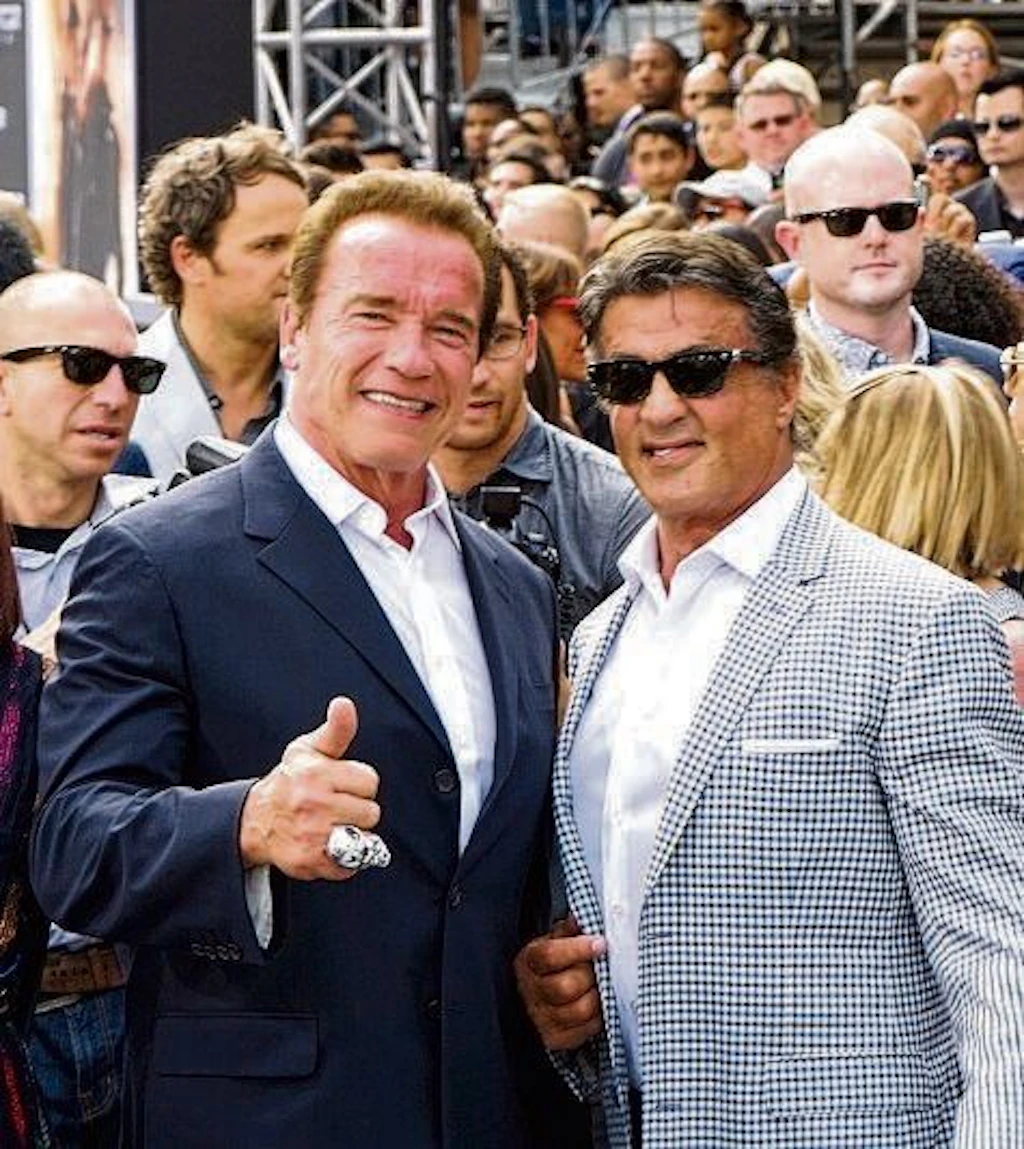
The cinematic legacy of Arnold Schwarzenegger and Sylvester Stallone represents a foundational pillar of 20th-century global popular culture. By defining the hyper-masculine, muscle-bound action hero archetype of the 1980s and 1990s, these two figures transformed the economics and aesthetics of the blockbuster film, shifting the focus of Hollywood toward international box office dominance and spectacle-driven storytelling.
The Evolution of the Archetype
To understand the combined legacy of Arnold Schwarzenegger and Sylvester Stallone, one must view them not merely as individual performers, but as specific responses to the cultural anxieties and aspirations of their respective eras.
Sylvester Stallone’s rise to prominence began with the critical and commercial success of Rocky (1976). Stallone pioneered the "everyman underdog" narrative, a blue-collar protagonist defined by struggle, physical endurance, and a refusal to yield. This character template provided an emotional resonance that anchored his subsequent work, such as the Rambo series. Unlike the stoic, machine-like figures that would dominate later, Stallone’s early characters were deeply flawed and vulnerable, which grounded the burgeoning action genre in human stakes.
Arnold Schwarzenegger, conversely, brought a background in competitive bodybuilding that translated into a visual language of "invincibility." In films like Conan the Barbarian (1982) and The Terminator (1984), Schwarzenegger was often cast as an elemental force. His contribution to the cinematic landscape was the normalization of the superhuman protagonist. Through his collaborations with directors like James Cameron and John McTiernan, Schwarzenegger redefined the limits of physical presence on screen, turning the action star into a brand of lethal efficiency and calculated humor.
Structural Comparison of Iconic Franchises
While both actors are synonymous with the action genre, their paths to franchise success differed in their thematic foundations. Stallone often explored themes of lingering trauma and societal transition, particularly in the Rambo franchise, where the character of John Rambo served as a lightning rod for post-Vietnam War discourse. Schwarzenegger’s franchise work, most notably the Terminator cycle, explored the intersection of technology and humanity, often positioning him as a robotic protagonist whose growth into humanity provided the central narrative arc.
The following table summarizes key attributes that distinguish their most significant contributions to the cinematic action canon:
| Feature | Sylvester Stallone | Arnold Schwarzenegger |
|---|---|---|
| Primary Archetype | The Reluctant Warrior / Underdog | The Invincible Force / Outsider |
| Defining Series | Rocky, Rambo, The Expendables | The Terminator, Predator, Total Recall |
| Thematic Focus | Personal redemption and social grit | Sci-fi existentialism and tactical dominance |
| Acting Style | Emotional intensity and method-influence | Physical performance and dry charisma |
| Directorial Scope | Frequent writer/director of own material | Primarily performance-based collaboration |
The Economics of Global Stardom
By 2026, the legacy of these actors is measured not just by film reviews, but by the fundamental shifts they forced in the Hollywood business model. In the 1980s, the "Star-as-Franchise" model was solidified by these two figures. Prior to their peak, film marketing focused heavily on directors or concepts; Schwarzenegger and Stallone transitioned this to a model where the actor’s physique and brand identity were the primary drivers of international distribution deals.
They were among the first to exploit the global market potential of non-verbal storytelling. Because their films relied heavily on physical action and clear, archetypal motivations, they were easily dubbed and exported, paving the way for the contemporary trend of the "Global Blockbuster." This shift necessitated the growth of massive merchandising, international press junkets, and the strategic cultivation of celebrity personas that mirrored the larger-than-life characters on screen.
Navigating the Legacy: FAQs
How did the rivalry between Schwarzenegger and Stallone influence their career choices? The highly publicized rivalry of the 1980s and 1990s served as a sophisticated marketing tool. By competing for top billing and attempting to outdo each other in terms of muscle mass, stunt complexity, and box-office returns, both actors pushed each other toward better film selections and higher-budget productions. This competition effectively raised the bar for the entire action genre, forcing studios to allocate more resources to production design and visual effects.
Which film is considered the most significant intersection of their legacies? While they appeared together in The Expendables series, the most significant intersection occurred in the cultural consciousness of the 1990s. They were the two dominant "titans" who defined the era, and their eventual transition into lighter, self-aware action comedies—such as Kindergarten Cop for Schwarzenegger and Demolition Man for Stallone—signaled the conclusion of the "hard" action era and the beginning of the post-modern blockbuster.
Are there specific technical requirements for viewing their early work in high definition? Much of their early work was shot on 35mm film. As of 2026, most of their seminal titles have been restored in 4K resolution. For the best viewing experience, consumers should look for releases that utilize HDR (High Dynamic Range) to preserve the intended contrast ratios of the gritty, often darkly lit cinematographic styles of 1980s action cinema.
How do their later roles impact their overall legacy? Both actors have successfully navigated the transition to "legacy" roles. By embracing their status as icons of a bygone era in films like Creed or their various returns to the Terminator franchise, they have demonstrated a capacity for self-reflection. Their later work serves as a commentary on the aging process and the nature of legacy, grounding their earlier, more exaggerated portrayals in a sense of earned, retrospective gravitas.
The Cultural Impact on Modern Action
The modern action movie, dominated by the serialized comic book adaptation, owes its structure to the groundwork laid by the Schwarzenegger-Stallone era. The concept of the "shared universe" and the development of long-running, character-driven sequels are direct descendants of the Rocky and Terminator methodologies.
For students of cinema and fans alike, the study of their careers is a study of how to maintain relevance in a fickle industry. Their ability to pivot from the hyper-masculine icons of the Cold War era to the self-deprecating elder statesmen of the 2010s and 2020s remains a masterclass in professional longevity.
Recommendation for Further Exploration
To fully appreciate their cinematic legacy, observers should prioritize a chronological viewing of Rocky (1976) through Rambo: First Blood (1982), juxtaposed against Schwarzenegger’s The Terminator (1984) and Predator (1987). This specific sequence allows one to trace the evolution of the "Action Hero" from a character-based, grounded struggle to a high-concept, stylized spectacle. When analyzing these films, focus on the editing techniques of the time—specifically the transition from long takes emphasizing physical capability to faster, rhythmic cutting that defines the modern action aesthetic. This progression provides a comprehensive understanding of how these two men did not just act in films, but actively authored the language of modern action cinema.