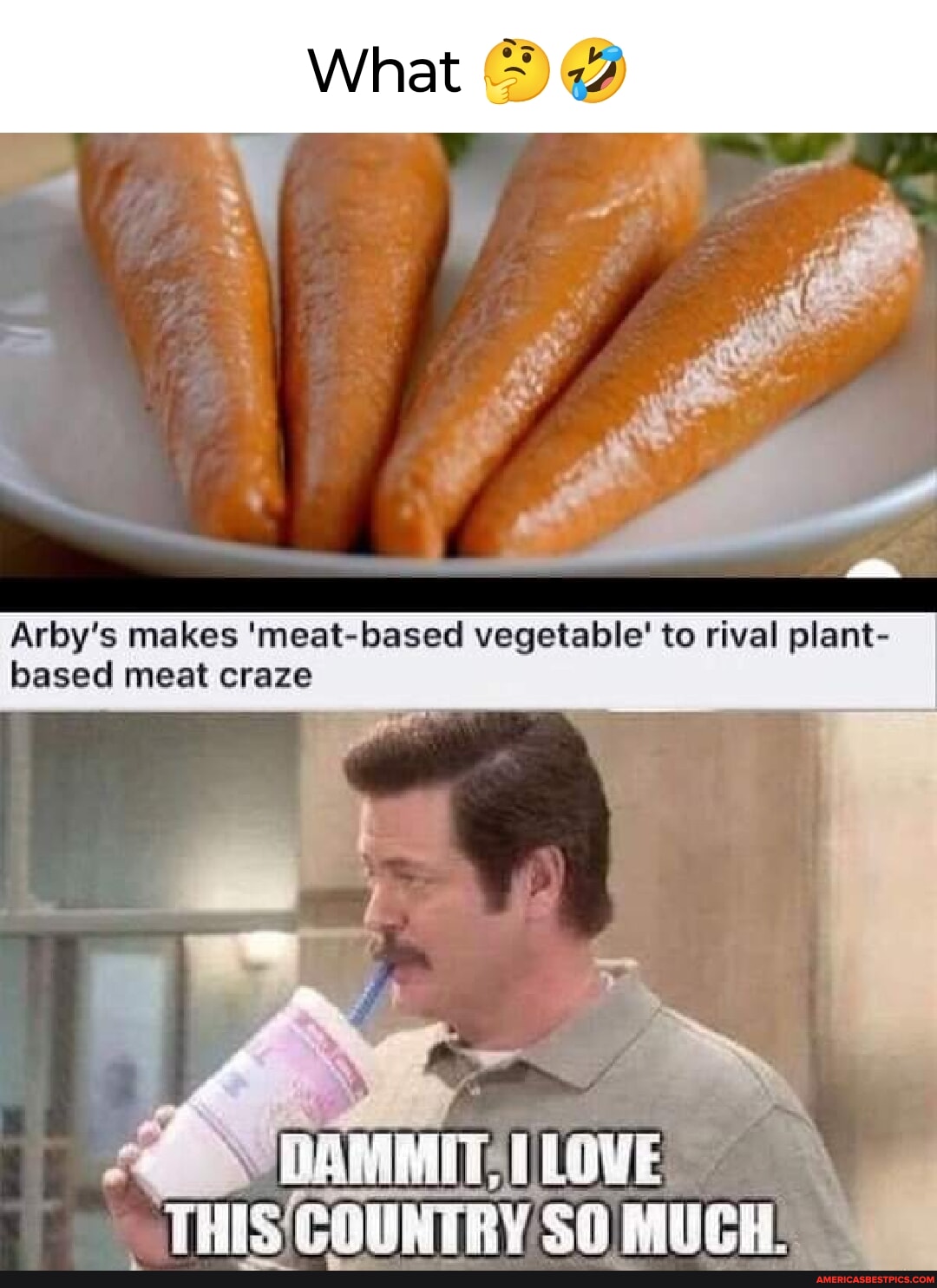
Arby’s "meat-based vegetable" refers to the "Marrot"—a carrot made from turkey breast infused with carrot juice and sous-vide cooked to mimic the texture and appearance of a roasted vegetable. Developed in 2019 as a creative marketing response to the rising popularity of plant-based meat substitutes, it served as a tongue-in-cheek demonstration of Arby’s commitment to its "We Have the Meats" brand identity.
The Origin and Concept of the Marrot
In the late 2010s, the quick-service restaurant (QSR) industry experienced a massive influx of plant-based "meat" products. Competitors and various food startups began introducing burgers and sausages formulated from peas, soy, and wheat proteins designed to replicate the sensory experience of beef or pork. This trend, while catering to an increasing demographic of flexitarians and vegetarians, presented a distinct marketing challenge for Arby’s, a brand whose identity is anchored in roast beef and deli meats.
The "Marrot" was unveiled in June 2019 as a direct, satirical counter-narrative to the plant-based protein movement. The name—a portmanteau of "meat" and "carrot"—was intentionally designed to be provocative. Rather than attempting to appeal to the meat-free market, Arby’s aimed to highlight the absurdity of meat-mimicking vegetables by reversing the process: creating a vegetable-mimicking meat product.
Technical Composition and Culinary Process
The Marrot was not a commercially available menu item in the traditional sense; it was a conceptual culinary project designed by Arby’s research and development team. The production process involved a sophisticated approach to texture modification and flavor infusion.
- Base Protein: The core ingredient was turkey breast, specifically chosen for its lean structure and ability to absorb liquid seasonings effectively.
- Flavor Infusion: The turkey was marinated in a blend of carrot juice, sugar, and various aromatic spices. This served to color the meat and impart the earthy, sweet profile characteristic of a cooked carrot.
- Sous-Vide Cooking: The turkey was vacuum-sealed and cooked using the sous-vide method, which allowed for precise temperature control. This technique ensured that the moisture content remained high while the protein fibers softened to a consistency similar to that of a roasted root vegetable.
- The "Stem": To complete the illusion, Arby’s attached a carrot top (the green, leafy stem) to the processed turkey, giving it the visual appearance of a freshly pulled vegetable from the garden.
The result was a high-protein, meat-based item that looked like a carrot, tasted like a mild savory turkey with hints of carrot sweetness, and provided a structural bite reminiscent of a roasted vegetable.
Why Arby’s Pursued This Marketing Strategy
The decision to showcase a meat-based vegetable was primarily a marketing and brand-loyalty exercise. By 2019, the dialogue surrounding meat alternatives had become polarized. Arby’s, having built its brand on the slogan "We Have the Meats," faced potential brand dilution if it pivoted to compete directly with plant-based startups.
By creating the Marrot, Arby’s accomplished three strategic objectives:
- Cultural Commentary: They engaged in the conversation surrounding food technology without changing their core business model.
- Brand Reinforcement: The project reaffirmed their status as a meat-centric restaurant, reminding customers that their focus remained on traditional protein sources.
- Virality: The unusual nature of a "meat-carrot" generated significant earned media coverage, social media discussion, and brand visibility, which often holds more value in the digital age than traditional advertising.
Marketing vs. Menu Reality
It is essential for consumers to understand that the Marrot was never a mass-produced item found at Arby’s drive-thrus. It functioned as a piece of creative marketing content. Unlike plant-based burgers, which require significant supply chains, food safety testing for broad consumption, and long-term shelf-stability planning, the Marrot was created in a limited, controlled environment.
While some test markets for other products (like venison or elk sandwiches) have occurred in Arby’s history, the Marrot remained a proof-of-concept for its marketing campaigns. It does not exist on current 2026 store menus, nor was it ever intended for national retail rollout. This distinction is critical: the "meat-based vegetable" was a commentary on the food industry, not a shift in the company’s culinary strategy.
Comparing Meat-Based Vegetables to Plant-Based Meats
To better understand the niche this concept occupied, we can compare the underlying philosophies of traditional menu engineering versus the experimental marketing of the Marrot.
| Feature | Plant-Based Meat Alternatives | The Marrot (Conceptual) |
|---|---|---|
| Primary Intent | Replace meat in the diet | Satirize the replacement trend |
| Main Ingredient | Legumes, grains, vegetable oils | Turkey breast |
| Target Market | Vegetarians, vegans, flexitarians | Core meat-eating demographic |
| Distribution | Widespread in retail/QSR | Experimental/Limited marketing |
| Culinary Goal | Mimic texture/flavor of meat | Mimic appearance of vegetable |
This table illustrates the fundamental disconnect between the two. While plant-based companies seek to convince meat-eaters that their products are "just as good as the real thing," Arby’s used the Marrot to suggest that consumers shouldn't be seeking vegetables disguised as meat in the first place.
The Role of Food Innovation in QSRs
The Marrot highlights a broader trend in the food industry where quick-service brands use experimental "food art" to signal their brand values. In 2026, we see many major chains releasing limited-time, bizarre, or highly niche products to maintain engagement on social media platforms.
The success of such campaigns is measured not by sales of the item itself, but by the "share of voice" in public discourse. When people discuss the Marrot, they are implicitly discussing Arby’s position as the purveyor of high-quality meat. By leaning into the absurdity of the "meat-vegetable," Arby’s successfully navigated a cultural shift that was putting pressure on traditional fast-food establishments.
FAQs Regarding the Marrot and Arby’s Menu
Was the Marrot ever sold in Arby's restaurants? No. The Marrot was a marketing campaign project designed to capture media attention and highlight the brand's commitment to meat. It was never available for purchase at any Arby’s location.
Can I make a "Marrot" at home? Technically, yes. The process involves deconstructing turkey breast, seasoning it with carrot juice and aromatics, and using a sous-vide machine to achieve the desired texture. However, it is an intensive culinary project rather than a simple recipe, and it serves more as a novelty than a practical dinner component.
Does Arby’s offer any actual plant-based options? Arby’s has historically maintained its focus on animal proteins. While they occasionally offer limited-time menu items, their core identity is centered on deli-style meats and roast beef. They have not made a shift toward permanent plant-based meat substitutes in their national menu lineup.
What was the inspiration behind the name "Marrot"? The name is a portmanteau. It combines "Meat" (Arby's core product) and "Carrot" (the vegetable being mimicked). It was designed to be memorable and immediately signal the product's satirical nature to the consumer.
Why does this topic surface in 2026? The Marrot remains a notable case study in food marketing and brand positioning. It is frequently cited in discussions about how legacy brands respond to market disruption and the rise of social media-driven marketing campaigns.
Practical Considerations for Consumers
If you are interested in the evolution of food technology or the history of marketing stunts in the restaurant industry, the Marrot remains a landmark example. For those seeking food options, it is important to verify the current menu at your local Arby’s, as the brand continues to focus on its traditional meat offerings rather than the experimental concepts seen in its advertising campaigns.
If you find yourself discussing meat-based alternatives, remember that the Marrot was never a competitor to plant-based proteins; it was a satirical response to them. Understanding the difference between a mass-marketed product and a conceptual marketing piece helps clarify the landscape of the modern food industry.
Final Recommendation
For those interested in the culinary craftsmanship behind such projects, the key lesson is the power of brand identity. Arby’s did not need to offer a plant-based product to stay relevant; they simply needed to remind their audience of what they do best. When evaluating future "novelty" food items from major brands, always distinguish between items intended for general consumption and those created for brand-building and viral marketing.