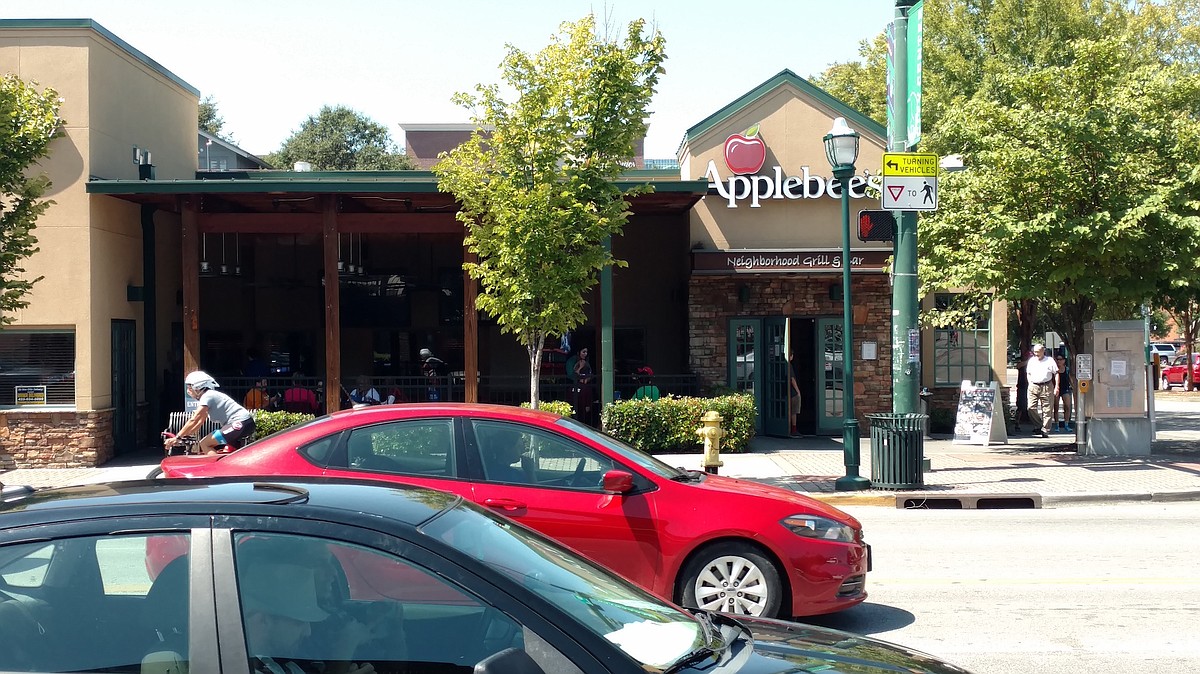
The wave of Applebee’s closures observed through 2026 is part of a strategic "footprint optimization" plan managed by its parent company, Dine Brands Global. Rather than a total brand collapse, these closures represent the systematic pruning of underperforming, legacy locations to favor higher-margin, modernized outlets and "dual-branded" restaurants.
For several years, news of Applebee’s Grill + Bar shuttering storefronts has sparked concern among loyal diners and local communities. However, the narrative of a brand "going out of business" is often a simplification of a complex corporate restructuring. To understand why your local Applebee’s may have vanished or why the brand appears to be shrinking, one must look at the convergence of franchise economics, shifting consumer habits, and the rise of the dual-brand model.
The Long-Term Optimization Strategy of Dine Brands
Dine Brands Global, the parent organization for both Applebee’s and IHOP, has been transparent about its strategy since the late 2010s. The company shifted from a growth-at-all-costs mindset to one of "profitable unit health." In business terms, this means it is better for the parent company and its franchisees to operate 1,500 highly profitable restaurants than 2,000 restaurants where 500 are barely breaking even.
As of 2026, this strategy has reached its mature phase. Many of the locations that closed over the last 24 months were "legacy" sites. These were often restaurants opened in the 1990s or early 2000s with long-term 20-year leases that finally expired. Instead of renewing these leases at significantly higher market rates, Dine Brands and its franchisees have chosen to walk away from older buildings that would require millions of dollars in renovations to meet modern brand standards.
The Role of Franchisee Autonomy
It is important to remember that Applebee’s is almost 100% franchised. This means that individual business owners or large investment groups own and operate the restaurants. When a location closes, it is usually a decision made by the franchisee based on local P&L (Profit and Loss) statements.
Common reasons for franchisee-led closures include:
- Rising Labor Costs: In many jurisdictions, minimum wage increases and the competitive market for hospitality staff have made older, labor-intensive service models unsustainable.
- Real Estate Value: In some cases, the land a suburban Applebee’s sits on has become more valuable for high-density housing or medical offices than for a casual dining restaurant.
- Declining Foot Traffic: Changes in local shopping patterns—such as the decline of a nearby "anchor" mall—can decimate the lunch and dinner crowd that Applebee’s relies on.
Economic Pressures Facing Casual Dining in 2026
The casual dining sector (which includes competitors like Chili’s and TGI Fridays) has faced a "perfect storm" of economic pressures over the last several years. By 2026, the industry has settled into a new reality where the cost of doing business is fundamentally higher than it was in the pre-2020 era.
Inflation and the "Value Gap"
Applebee’s has historically built its brand on "value"—the idea that a family can have a sit-down meal for a reasonable price. However, as the "Commodity Super-cycle" of the mid-2020s increased the price of protein (beef and chicken) and energy, maintaining that value proposition became difficult. When a "2 for $25" deal has to become "2 for $35" to maintain margins, some customers naturally migrate back to fast-casual or quick-service alternatives.
The Delivery and Off-Premise Revolution
One of the primary reasons for the "closing down" of traditional layouts is that they were designed for 100% capacity in-house dining. In 2026, off-premise sales (delivery, catering, and "Carside To Go") account for a massive percentage of Applebee’s revenue. A 6,000-square-foot dining room is an expensive liability if 40% of your customers are picking up their food at a window. Consequently, Dine Brands is closing these oversized "dinosaur" locations in favor of smaller, more efficient footprints.
The Rise of the Dual-Branded Restaurant
Perhaps the most significant "explanation" for the closing of standalone Applebee's locations is the transition to dual-branded Applebee’s/IHOP locations. This is a strategic pivot that Dine Brands has been testing and scaling globally, reaching significant momentum by 2026.
By combining an Applebee's and an IHOP under one roof with a shared kitchen, the company solves the "daypart" problem. IHOP dominates the morning and afternoon (breakfast/brunch), while Applebee’s dominates the evening and late-night (dinner/bar).
- Kitchen Efficiency: One back-of-house staff can manage two different menus, reducing labor waste.
- Reduced Overhead: Only one lease, one property tax bill, and one set of utility connections are required.
- Higher ROI: These dual-branded sites often see higher revenue per square foot than standalone units of either brand.
In many markets where an Applebee’s "closed down," it was actually a precursor to the brand reappearing six months later in a newly renovated dual-branded format nearby.
Comparing the Old vs. New Applebee's Model
To understand why the "old" Applebee's is disappearing, it is helpful to compare the operational metrics of a legacy site versus the modernized units being opened in 2026.
| Feature | Legacy Applebee's (Pre-2024) | Modern/Dual-Brand Model (2026) |
|---|---|---|
| Average Square Footage | 5,500 – 6,500 sq. ft. | 3,500 – 4,500 sq. ft. |
| Primary Service Focus | In-person dining / Bar | Multi-channel (Dine-in, To-Go, Delivery) |
| Menu Complexity | Broad, high-inventory waste | Streamlined, cross-utilization of ingredients |
| Technology Integration | Manual ordering / Pagers | QR ordering, AI-assisted kitchen displays |
| Kitchen Operations | Brand-specific kitchen | Shared "Ghost Kitchen" capabilities |
| Typical Location | Standalone suburban pads | High-density retail or dual-brand shells |
How to Verify if Your Local Applebee's is Closing
Because the brand is not shutting down nationally, closures happen on a case-by-case basis. If you are concerned about a specific location, there are several ways to verify its status beyond social media rumors.
- The Official Store Locator: The most accurate source is the Applebee’s Store Locator. If a location is removed from the map, it is typically permanently closed or undergoing major renovation.
- Local Real Estate Filings: Closures are often preceded by "Change of Use" permits or "For Lease" signs appearing on commercial real estate databases like LoopNet or CoStar.
- Dine Brands Investor Relations: For those interested in the macro-trends, Dine Brands Investor Relations publishes quarterly reports that detail exactly how many units were closed and how many new units (especially dual-branded ones) were opened.
- WARN Act Notices: In the United States, the Worker Adjustment and Retraining Notification (WARN) Act requires many employers to provide notice 60 days in advance of plant closings and mass layoffs. Check your state's Department of Labor website for these filings.
Impact on Employees and Consumers
When an Applebee's closes, the immediate impact is felt by the "team members"—the servers, cooks, and managers. In 2026, the labor market remains tight enough that many franchisees offer staff the opportunity to transfer to nearby locations or to the sister brand, IHOP.
For consumers, the "closing down" often means a temporary loss of a community staple. Applebee's has long positioned itself as a "neighborhood" grill. However, the closures are often the only way to ensure the long-term survival of the brand. By cutting the "dead wood" of unprofitable stores, Dine Brands ensures that the remaining restaurants have the capital to invest in food quality and service technology.
Practical Recommendations for Loyal Customers
If your favorite Applebee's is among those closing in 2026, here is how you should proceed:
- Check Your Gift Cards: Applebee’s gift cards are generally issued by the corporation or large franchise groups and remain valid at any open location in the country. They do not expire if one specific restaurant closes.
- Monitor the Club Applebee's App: If you are a member of their loyalty program, your points and rewards are tied to your account, not a specific building. You can redeem them at the next closest location.
- Look for the Dual-Brand Reopening: Keep an eye on local business news. Many closures are tactical, with the brand intending to return in a smaller, more modern "Express" format or as part of an IHOP/Applebee's hybrid.
FAQ: Understanding the 2026 Applebee’s Landscape
Is Applebee’s going out of business?
No. While many individual locations are closing, the brand remains profitable at a corporate level. Dine Brands Global continues to report billions in system-wide sales. The closures are a strategic reduction of the total number of stores to improve the average profit per store.
Why did my local Applebee's close without warning?
In the restaurant industry, "quiet closures" are standard to prevent staffing shortages in the final weeks. If employees know a store is closing, they often find new jobs immediately, making it impossible to run the restaurant for the final 30 days.
How many Applebee’s are left in 2026?
While exact numbers fluctuate, the brand has stabilized around 1,400 to 1,500 units in the U.S., down from its peak of over 2,000 units. This "right-sizing" is consistent with other casual dining brands like Denny’s or Ruby Tuesday.
Will Applebee’s eventually become a delivery-only brand?
Unlikely. While off-premise sales are growing, the "Bar" aspect of Applebee’s (Happy Hour, Late Night) is a significant driver of high-margin alcohol sales. The brand is shifting toward a hybrid model rather than an exclusively digital one.
Are Applebee's and IHOP the same company?
Yes, they are both owned by Dine Brands Global. This relationship is why you are seeing more "dual-branded" restaurants that serve both menus from a single kitchen.
The Path Forward: A Leaner Neighborhood Grill
The explanation for Applebee’s closing down locations in 2026 is ultimately one of corporate evolution. The "neighborhood" has changed; consumers now demand faster service, more digital integration, and higher quality for their dollar. The massive, dark-wood-and-brass dining rooms of the 1990s are no longer the most efficient way to deliver that experience.
By closing underperforming stores, Applebee’s is positioning itself to survive in an era where "casual dining" must compete with both high-end delivery and "fast-casual" giants. The brand isn't disappearing; it is simply shedding its older skin to adapt to the economic realities of the late 2020s.