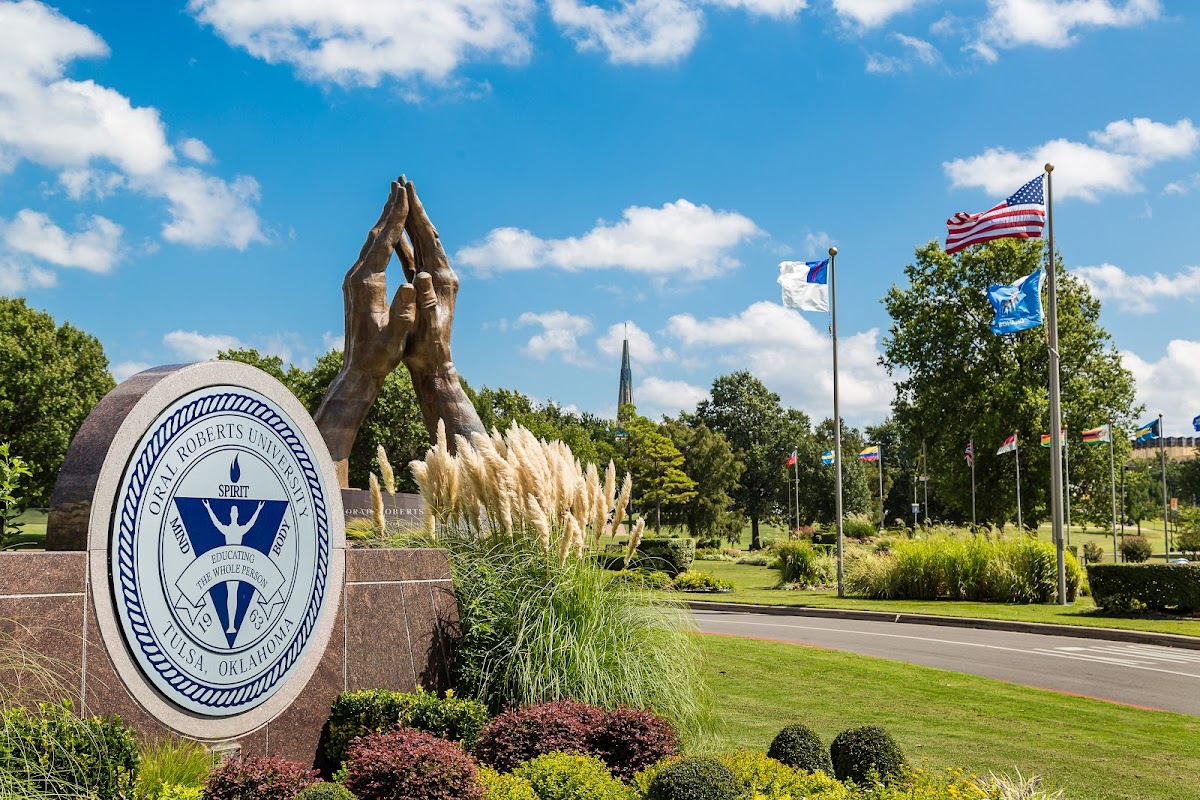
Oral Roberts University (ORU), located in Tulsa, Oklahoma, is a private, interdenominational Christian university. While it maintains a strong foundational alignment with the Pentecostal and Charismatic movements, it operates as an independent institution rather than being governed by or exclusively affiliated with a single specific denomination. Its identity is rooted in the vision of its founder, Oral Roberts, emphasizing a Spirit-empowered approach to higher education that bridges various Christian traditions.
The Interdenominational Foundation of ORU
To understand the religious landscape of Oral Roberts University, one must look at the vision established by its founder. When Oral Roberts opened the university in 1963, his intent was to create a place where students could receive a high-quality academic education integrated with the power of the Holy Spirit. This vision was not intended to be confined to a single ecclesiastical organization.
Instead, the university describes itself as "interdenominational," meaning that it draws its support, faculty, and student body from a wide spectrum of Christian backgrounds. This approach allows ORU to serve as a hub for students who share a common commitment to the Christian faith, specifically within the Charismatic and evangelical spheres, regardless of whether they identify as Assemblies of God, Baptist, Methodist, Non-denominational, or from other traditions.
By operating as an independent entity, ORU maintains control over its mission, its statement of faith, and its academic culture without being subject to the governing board or the doctrinal shifts of a specific mainline denomination. This autonomy is crucial to how the university preserves what it refers to as the "ORU mission," which focuses on the "Whole Person" approach—educating the spirit, mind, and body.
Historical Context and the Pentecostal Connection
While ORU is legally interdenominational, it is historically and culturally inseparable from the Pentecostal and Charismatic movements of the 20th century. Oral Roberts was a prominent figure in these movements, and the university was built upon a theology that emphasizes the personal experience of the Holy Spirit, the practice of spiritual gifts, and the importance of divine healing.
This historical tethering means that while a Baptist student might find a home at ORU, the campus culture—including chapel services, faculty expectations, and the "Holy Spirit Research Center"—is heavily influenced by the Pentecostal tradition. For prospective students and families trying to categorize the school, it is most accurate to describe it as a university with an interdenominational structure that functions under a distinctly Charismatic theological framework.
The "Whole Person" Educational Philosophy
The mission of Oral Roberts University is frequently summarized by its focus on the "Whole Person." This is not merely a pedagogical term but a theological commitment. The university asserts that education is incomplete if it does not address the spiritual development of the student alongside their intellectual and physical health.
This philosophy manifests in several practical ways that define the student experience:
- Chapel Attendance: Students are required to attend chapel services, which are central to the university’s mission. These services are diverse in style but generally reflect the Charismatic tradition.
- Spirit-Empowered Leadership: The university aims to develop leaders who are not only professionally competent but also guided by a life of prayer and reliance on the Holy Spirit.
- The Honors Program and Academic Rigor: ORU integrates its faith-based mission with professional degree programs, including business, engineering, and nursing, ensuring that students are prepared for global influence.
Because this framework is rooted in a shared Christian mission rather than a specific denominational creed, it creates a unique atmosphere where students from varying backgrounds interact. The focus remains on shared core beliefs—such as the divinity of Christ, the authority of the Bible, and the necessity of the Holy Spirit—rather than the minor theological differences that often separate denominations.
Institutional Governance and Autonomy
The governance of Oral Roberts University is managed by a Board of Trustees. This board is responsible for maintaining the university’s vision, overseeing fiscal operations, and ensuring that the institution remains true to its founding mission.
Unlike denominational schools, where a bishop, a synod, or a national denominational office might appoint board members or set theological standards, ORU’s Board of Trustees operates independently. This structure allows the university to remain agile in its response to educational trends and social issues, provided those responses align with the university’s established statement of faith.
The autonomy of the board is a safeguard for the university’s specific theological culture. For example, if a specific denomination were to shift its stance on a major theological issue, an affiliated university might be forced to navigate that change. ORU, by contrast, is anchored to the specific, static values established at its inception. This provides a level of institutional consistency that is highly attractive to families looking for a traditional, faith-based environment.
Comparison Table: Understanding Academic Affiliations
To help differentiate between types of Christian higher education institutions, the following table compares ORU’s status with other common models.
| Institution Model | Governing Body | Theological Stance | Primary Demographic |
|---|---|---|---|
| Interdenominational | Independent Board | Broadly Evangelical/Charismatic | Diverse Christian backgrounds |
| Denominational | Denominational Office/Synod | Defined by Church Creed | Members of that specific church |
| Non-denominational | Independent Board | Varies (often non-creedal) | General Evangelical |
| Secular Private | Board of Directors | Generally Neutral | Secular/General Public |
How to Evaluate ORU for Your Academic Goals
If you are considering ORU, it is important to look beyond the "denomination" label and evaluate the environment based on your own needs. Because the school is interdenominational but heavily influenced by Charismatic theology, potential students often ask how they will fit in if they come from a more liturgical or non-Charismatic background.
- Review the Statement of Faith: The university publishes a formal statement of faith. Read this document thoroughly. It outlines the foundational tenets that all faculty and students are expected to respect and operate under during their time at the university.
- Assess the Culture: Watch recordings of chapel services or university events. These are windows into the daily reality of the campus. They will show you the tone of the community, which is often more expressive than that of a mainline denominational university.
- Check Academic Accreditation: ORU is regionally accredited by the Higher Learning Commission (HLC). This is the gold standard for American universities and ensures that your degree will be recognized by employers and graduate schools, regardless of the school’s denominational status.
- Consider the Student Life: From residence hall requirements to the "Honor Code," the university maintains strict community standards. These are reflective of its religious commitments and are an integral part of the student experience.
Frequently Asked Questions
Is ORU a Catholic university? No, ORU is not a Catholic university. It is a Protestant, interdenominational university with strong roots in the Charismatic and Pentecostal traditions. It does not operate under the authority of the Catholic Church and does not adhere to Catholic theology or liturgy.
Do I have to be a specific denomination to attend ORU? No, you do not need to belong to a specific denomination to attend ORU. The university welcomes students from a wide range of Christian backgrounds. However, all students are expected to abide by the university’s student code of conduct and respect its statement of faith, which is grounded in evangelical and Charismatic principles.
How does the "Interdenominational" label impact my degree? The "interdenominational" status ensures that the university is not tied to the political or theological baggage of a single denomination. Your degree is accredited by the Higher Learning Commission, making it a recognized, professional credential that holds value across all sectors, both within the ministry and in secular corporate environments.
Is ORU a "Bible College"? While ORU offers robust biblical and theological studies, it is a comprehensive university offering a wide range of undergraduate and graduate degrees in fields such as engineering, business, nursing, and education. It is not exclusively a Bible college; it is a full-scale academic institution that integrates faith into professional and liberal arts curricula.
Does the university receive funding from a church? ORU does not receive funding from a specific church or denomination. It is supported through student tuition, private donations, grants, and its own endowment. This financial independence is a major reason why it remains free to operate according to its unique mission rather than the mandates of an external religious organization.
Next Steps for Prospective Students
If you are satisfied with the university’s mission and are interested in pursuing a degree at ORU, the best next step is to initiate a conversation with an admissions counselor. Ask specifically about how your background might integrate with the university’s culture. Visiting the campus in Tulsa—often referred to as an "Educational Pilgrimage"—is highly recommended, as it allows you to see firsthand the interaction between the academic environment and the spiritual life of the campus.
By grounding your decision in an understanding of the university’s interdenominational but Spirit-empowered identity, you can better determine if ORU aligns with your personal, professional, and spiritual aspirations for your higher education journey.