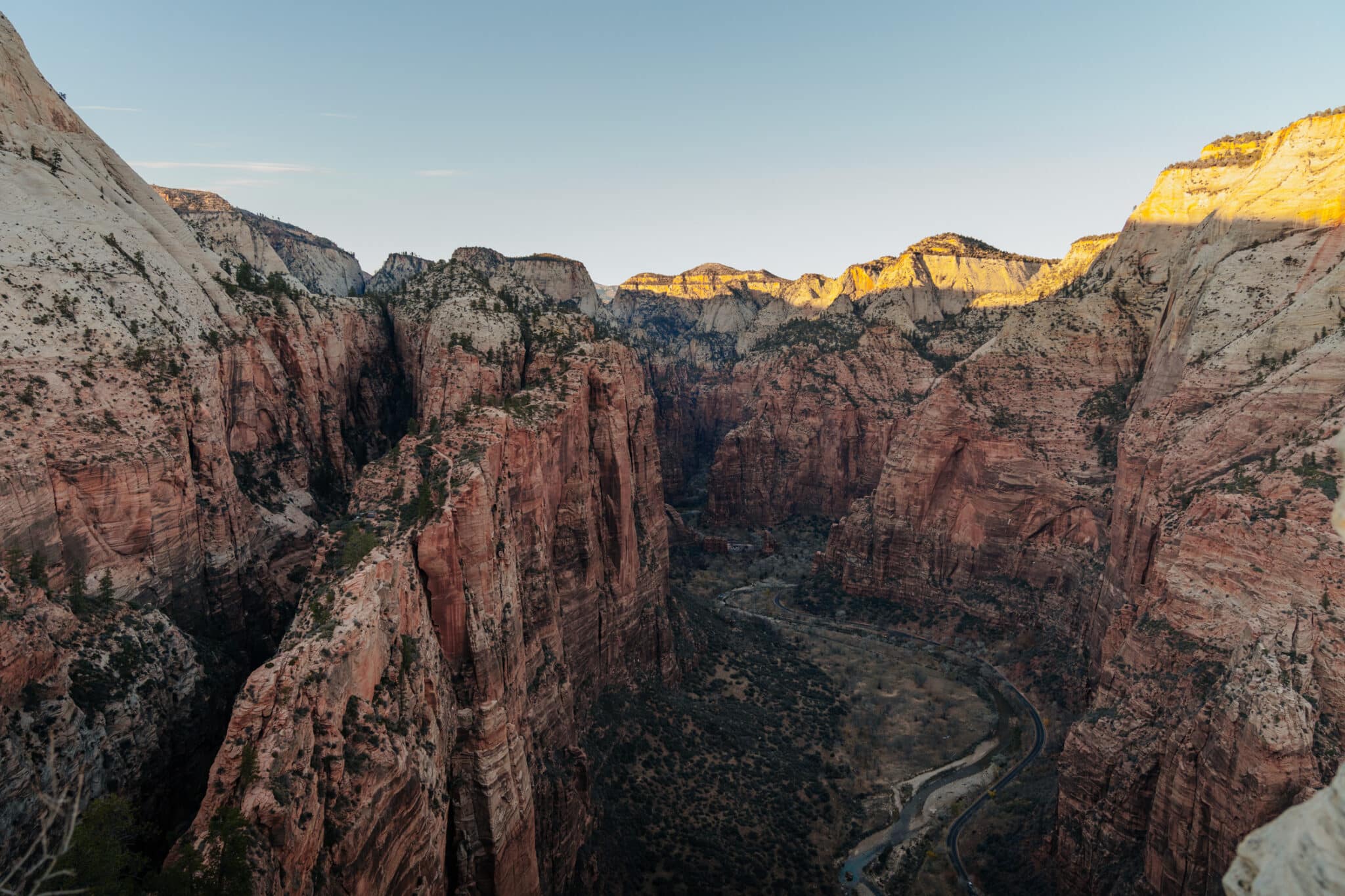
To hike the chain-assisted section of Angels Landing in Zion National Park, you must obtain a permit through a lottery system hosted on Recreation.gov. Permits are required year-round and 24 hours a day. You can apply via the Seasonal Lottery months in advance or the Day-before Lottery for last-minute trips.
Angels Landing is arguably the most iconic hike in the United States National Park System. Rising 1,488 feet above the Virgin River, this sandstone fin offers unparalleled views of Zion Canyon. However, its popularity historically led to dangerous overcrowding on the narrow, cliff-side sections where hikers must grip heavy chains to ascend. To preserve the visitor experience and enhance safety, the National Park Service (NPS) implemented a permanent permit system that remains the standard for all hikers in 2026.
The Necessity of Permits for Angels Landing
The implementation of the permit system was a response to decades of increasing foot traffic. Before the permit era, it was common for hundreds of hikers to be bottlenecked on the "spine" of the ridge, leading to long wait times on exposed ledges and increased risk of falls. By 2026, the permit system has successfully regulated the flow of hikers, ensuring that the number of people on the chains at any given time remains within a manageable safety threshold.
Permits are specifically required for the portion of the trail that begins at Scout Lookout and proceeds to the summit. This is the final half-mile of the hike, characterized by steep switchbacks, narrow ridges, and the famous chain handrails. Hikers do not need a permit to trek from the Grotto trailhead up to Scout Lookout via Walter’s Wiggles. This means that if you are unsuccessful in the lottery, you can still enjoy a significant portion of the hike and view the canyon from Scout Lookout, but you cannot legally step onto the final ridge leading to the Angels Landing summit.
Understanding the Two-Tiered Lottery System
The National Park Service utilizes a fair-access lottery system divided into two distinct categories: the Seasonal Lottery and the Day-before Lottery. Understanding the timing and mechanics of each is crucial for planning a successful trip to Zion National Park.
The Seasonal Lottery
The Seasonal Lottery is designed for travelers who plan their trips months in advance. These lotteries occur four times a year, with each application window opening approximately two to three months before the hiking season begins.
- Application Windows: Each window typically stays open for 20 days. It does not matter if you apply on the first day or the last day of the window; all applications are pooled and selected randomly after the window closes.
- Selection Process: When applying, you can select up to seven ranked "choices" for dates or date ranges and preferred times of day (Before 9:00 AM, 9:00 AM to 12:00 PM, or After 12:00 PM).
- Notification: Successful applicants are notified via email shortly after the lottery closes. If selected, you must then claim your permit and pay the per-person fee.
The Day-before Lottery
For those who missed the seasonal window or are planning a spontaneous visit, the Day-before Lottery provides a second chance. This lottery opens daily at 12:01 AM Mountain Time and closes at 3:00 PM Mountain Time on the day before your intended hike.
- Timing is Critical: You must apply within the 12:01 AM to 3:00 PM window. Results are sent out via email at 4:00 PM Mountain Time that same day.
- Flexibility: This lottery is highly competitive, especially during peak seasons like spring break, Memorial Day, and autumn. Having a flexible schedule or being willing to hike during less popular times of day can slightly improve your outlook, though the selection remains entirely random.
| Lottery Type | Application Window | Notification Time | Best For |
|---|---|---|---|
| Seasonal Lottery | 1-3 months in advance | Within days of window closing | Long-term planning, groups |
| Day-before Lottery | 12:01 AM – 3:00 PM MT daily | 4:00 PM MT day before hike | Last-minute trips, missed windows |
Step-by-Step Application Process on Recreation.gov
All permit transactions for Zion National Park are handled exclusively through Recreation.gov. The park does not issue permits at the Visitor Center or via phone.
- Create an Account: Before the lottery opens, ensure you have a verified account on Recreation.gov. Ensure your contact information and email address are current, as this is how you will receive permit confirmations.
- Search for Angels Landing: Navigate to the "Angels Landing Seasonal Lottery" or "Angels Landing Day-before Lottery" pages.
- Choose Your Dates and Times: Select your preferred dates and time slots. In 2026, the three time slots are designed to spread out the crowds:
- Before 9:00 AM: Ideal for beating the heat and the midday rush.
- 9:00 AM to 12:00 PM: The most popular slot, often coinciding with peak shuttle activity.
- After 12:00 PM: Best for late starters, but requires careful attention to the final shuttle times of the evening.
- Pay the Application Fee: There is a non-refundable application fee (approximately $6 USD per application). This fee covers the administrative costs of running the lottery and is not returned even if you are not selected.
- Confirm and Pay the Permit Fee: If you are successful, you will be prompted to pay an additional per-person fee (approximately $3 USD per person). Failure to pay this by the deadline will result in the forfeiture of your permit.
Permit Costs and Refund Policies
The National Park Service keeps the costs relatively low to maintain accessibility, but the fees are structured to discourage "placeholder" applications.
- Application Fee: This is a flat fee per application, regardless of whether you are applying for one person or a group of six. It is non-refundable.
- Permit Fee: This is a per-person fee charged only to those who win the lottery.
- Group Size: You can apply for a group of up to six people. One person is designated as the "Permit Holder" and must be present with a valid ID at the time of the hike. You can also designate an "Alternate Leader" during the application process. This is highly recommended; if the primary leader cannot attend, the alternate can still lead the group. If neither is present, the permit is invalid.
- Refunds: While the application fee is non-refundable, the per-person permit fee may be refundable if cancelled within a specific timeframe (usually 48 hours) before the hike. However, check current 2026 guidelines on Recreation.gov for the exact cancellation policy.
Hiking Logistics and Permit Verification
Once you have secured your permit, the logistics of the hike itself require preparation. The Angels Landing trail begins at The Grotto (Shuttle Stop 6).
Getting to the Trailhead
In 2026, the Zion Canyon Shuttle system remains the primary way to access the trailhead for most of the year. During the peak season, private vehicles are not allowed on Zion Canyon Scenic Drive. You should plan to arrive at the park early, as parking at the Visitor Center often fills up by 8:00 AM.
The Checkpoint at Scout Lookout
Park Rangers are stationed at Scout Lookout to verify permits. You must have a printed copy of your permit or a digital version downloaded to your mobile device. Because cellular service is non-existent in much of Zion Canyon, taking a screenshot of your permit or saving it to an offline folder is mandatory. Rangers will also ask to see a government-issued photo ID that matches the name on the permit.
The Hike Experience
The hike is approximately 5.4 miles round-trip and is rated as strenuous. The first section consists of paved switchbacks known as Walter’s Wiggles, which lead you to Scout Lookout. Once your permit is verified, you begin the final climb. This section is a narrow sandstone ridge with drops of 1,000 feet on one side and 800 feet on the other. Steel chains are bolted into the rock to provide handholds.
Safety Considerations and Best Practices
Securing a permit is only the first step; completing the hike safely is the ultimate goal. Angels Landing is physically demanding and mentally taxing for those with a fear of heights.
- Weather Awareness: Check the forecast at the National Weather Service before heading out. High winds, rain, or snow make the rock surface incredibly slick. If lightning is in the area, the ridge is the most dangerous place to be.
- Footwear: Wear sturdy hiking boots or shoes with excellent grip (Vibram soles or similar). Avoid sandals or smooth-soled sneakers.
- Hydration: Zion is a high-desert environment. Even in 2026, many hikers underestimate the heat. Carry at least two to three liters of water per person.
- Patience on the Chains: Even with the permit system, there will be other hikers. Practice "trail etiquette"—let ascending hikers pass, and communicate clearly when moving around others on narrow sections.
Alternative Hikes in Zion (No Permit Required)
If you are unable to secure an Angels Landing permit, Zion National Park offers several world-class alternatives that provide similar views and physical challenges without the lottery requirement.
- Observation Point: Accessible via the Stave Spring or East Mesa trailheads, this hike takes you to a point higher than Angels Landing, looking down upon it. It offers the most expansive view of the canyon.
- The Narrows: Hiking in the Virgin River between thousand-foot walls. While it requires a different type of preparation (water gear), it is Zion's other "bucket list" hike.
- West Rim Trail: You can continue past Scout Lookout onto the West Rim Trail. This provides incredible views of the backcountry and is much less crowded, requiring no permit unless you are camping overnight.
- Canyon Overlook Trail: A shorter, easier hike near the Zion-Mt. Carmel Tunnel that offers a spectacular view of the lower canyon for minimal effort.
Frequently Asked Questions
Can I give my permit to someone else?
No. Permits for Angels Landing are non-transferable. The permit holder or the designated alternate must be present with a valid photo ID. This rule is strictly enforced by rangers at Scout Lookout to prevent a secondary market for permits.
What is the best time of year to apply for a permit?
Spring (April to May) and Fall (September to October) are the most popular times due to mild temperatures, but they are also the most competitive. Winter (December to February) offers the best chance of winning a permit, but the trail can be covered in ice, requiring traction devices like crampons.
Are children allowed on the permitted section of Angels Landing?
There is no official age limit for the permitted section. However, the National Park Service advises that the hike is not suitable for young children or anyone who cannot safely grip the chains while maintaining their balance. Parents are encouraged to use extreme caution and recognize that they are responsible for their children's safety on the cliff edges.
What happens if I am caught on the trail without a permit?
Hiking the permitted section of Angels Landing without a valid permit is a federal misdemeanor. If caught by a ranger, you may be subject to a fine of up to $5,000 and/or six months in jail. More commonly, you will simply be turned around at Scout Lookout and potentially banned from future lottery applications.
Do I need a permit if I am just going to Scout Lookout?
No. The permit requirement only begins at the start of the chain-assisted section. You can hike from the Grotto to Scout Lookout, enjoy the views, and use the restrooms there without any permit. This is a great option for groups where some members are uncomfortable with the heights of the final ridge.
Final Recommendations for 2026 Hikers
To maximize your chances of a successful Angels Landing experience in 2026, apply for the Seasonal Lottery as soon as your travel dates are confirmed. If you are unsuccessful, set an alarm for the Day-before Lottery at 12:01 AM MT. Always have a "Plan B" hike ready, such as Observation Point or the West Rim Trail, so that your trip to Zion remains memorable regardless of the lottery outcome. Most importantly, respect the terrain and the weather; the mountain will always be there, and safety must remain your highest priority.