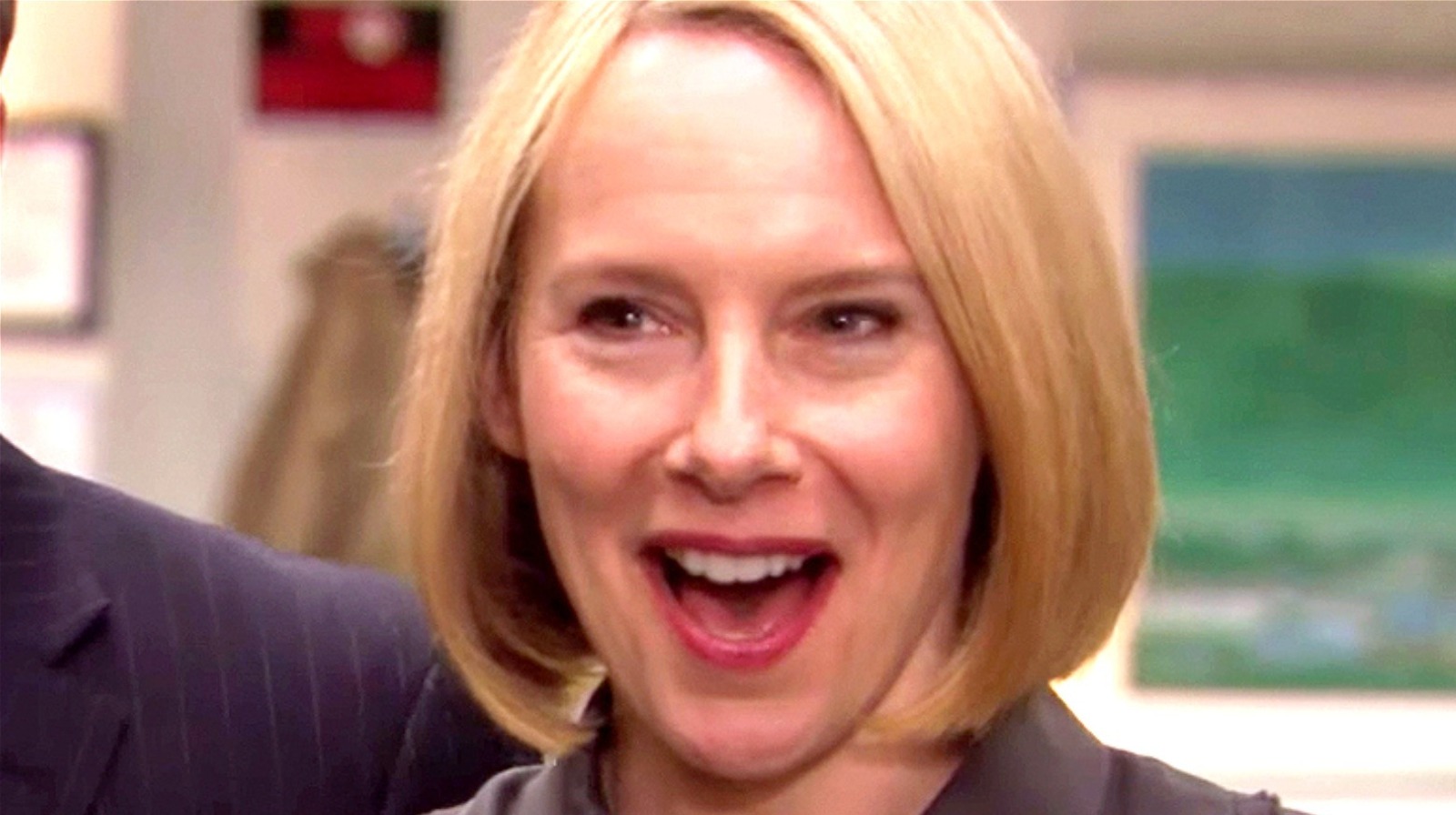
Amy Ryan’s portrayal of Holly Flax in the long-running NBC sitcom The Office remains one of the most celebrated examples of guest-star integration in modern television history. Joining the series in the final episodes of the fourth season, Ryan provided the emotional anchor that defined the show’s central protagonist, Michael Scott, during his final seasons. By examining her character’s trajectory, the specific narrative choices made by writers, and the chemistry between Ryan and Steve Carell, one can better understand why this specific character remains a benchmark for ensemble comedy development.
The Introduction of Holly Flax in Season 4
When Amy Ryan first appeared as Holly Flax in the The Office episode "Goodbye, Toby," the show was at a narrative crossroads. The character was introduced as a replacement for the departing Human Resources representative, Toby Flenderson, who was moving to Costa Rica. Unlike the adversarial relationship Michael Scott (Steve Carell) held with Toby—a dynamic fueled by Michael's persistent, irrational hatred—Holly arrived with a temperament that was surprisingly compatible with Michael’s.
The narrative brilliance of her introduction lay in the "Mirror Effect." The writers positioned Holly not as a foil to Michael’s absurdity, but as a genuine peer who shared his specific brand of humor, his lack of situational awareness, and his earnest desire to be liked by his subordinates. For long-term viewers, this was a radical shift. The audience had spent four years watching Michael be the "odd man out," and suddenly, he found a person who genuinely appreciated his quirks. Amy Ryan brought a grounded, subtle performance to these interactions, ensuring that Holly never felt like a caricature, but rather a fully realized human being who happened to be just as eccentric as the branch manager.
Chemistry and the Evolution of the Michael-Holly Dynamic
The success of the Amy Ryan and Steve Carell pairing was predicated on a delicate balance of comedic timing and genuine pathos. Unlike other romantic interests in the series—such as Jan Levinson or Carol Stills—Holly Flax was written as Michael’s equal. In the office environment, Holly was tasked with the unenviable job of keeping the Scranton branch compliant with corporate policies, yet she frequently found herself complicit in Michael’s office antics.
This dynamic reached its zenith during their initial arc. The writers utilized Ryan’s background in dramatic acting to ensure that even when the scene was inherently silly, the emotional connection felt authentic. A primary example of this is the "PDA" (Public Display of Affection) arc, where the writers explored the discomfort of their office courtship. Through it all, Ryan maintained a sense of professional dignity that made her eventual decision to be with Michael feel like a choice based on mutual understanding rather than a plot-driven necessity.
Key Narrative Arcs and Character Milestones
To understand the scope of Amy Ryan’s contribution, one must analyze the specific narrative milestones she occupied within the Scranton branch.
- Arrival (Season 4): Establishing the "soulmate" connection. The writers utilized the "Goodbye, Toby" episode to show that Michael was capable of a mature, healthy connection if he simply met someone who spoke his "language."
- The Nashua Transfer (Season 5): The introduction of geographical conflict. By sending Holly to the Nashua branch, the writers created a realistic obstacle—the long-distance corporate shuffle. This established the tension that Holly was a professional first and a romantic partner second, a detail that kept the character grounded.
- The Return and Final Departure (Season 7): Holly’s permanent return to Scranton served as the catalyst for Michael Scott’s exit from the show. Her presence allowed Michael to finally "graduate" from the Dunder Mifflin environment. She provided him with the stability to realize that his life in the office was no longer his primary source of fulfillment.
Comparison of Romantic Interests in The Office
The table below outlines how Holly Flax differed from the other significant romantic partners of Michael Scott, emphasizing why she remains the gold standard for his character arc.
| Character | Nature of Relationship | Impact on Michael Scott | Duration/Complexity |
|---|---|---|---|
| Jan Levinson | Toxic/Power-Imbalanced | Increased instability; professional chaos | Multi-season; high toxicity |
| Carol Stills | Superficial/One-sided | Heightened insecurity; unrealistic expectations | Seasonal; brief impact |
| Helene Beesly | Misguided/Inappropriate | Social embarrassment; lack of self-awareness | Short-term; awkward |
| Holly Flax | Mutually supportive | Emotional maturity; life satisfaction | Recurring; series-defining |
Amy Ryan’s Performance and Technical Craft
Amy Ryan entered The Office with an Academy Award nomination already on her resume (for Gone Baby Gone). This pedigree was evident in her technical approach to the character. In a mockumentary format, where actors often rely on "breaking the fourth wall" or exaggerated reactions to the camera, Ryan’s performance was defined by restraint.
Her choice to play Holly as someone who was genuinely good at her job—despite her absurdity—allowed the character to survive the intense scrutiny of her colleagues, particularly during the various inter-office disputes. She utilized a soft, earnest tone of voice and a distinct physical mannerism style that separated Holly from the other women in the office. For fans and critics alike, this level of craft elevated the show during the later years, proving that the series could maintain its comedic sharpness while introducing more complex emotional stakes.
The Role of Human Resources as a Narrative Tool
The inclusion of Holly Flax also allowed the writers to explore the absurd bureaucracy of Dunder Mifflin from a new angle. Because Holly worked in HR, the office politics became more nuanced. When she had to enforce corporate policy, it wasn't just "The Man" coming down on the branch; it was a character we cared about navigating a rigid corporate structure.
This tension between the character’s personality and her professional obligations provided the series with some of its most high-stakes moments. For instance, the ethics of the office were constantly tested by Michael, and having Holly there to mediate these conflicts allowed the show to delve into the "Corporate vs. Branch" struggle with much more wit and irony than it had with Toby.
Addressing Common Questions About Holly Flax
Why did Holly Flax leave Scranton the first time?
Holly was transferred to the Nashua, New Hampshire branch by corporate following the discovery of her relationship with Michael. The show used this as a mechanism to force both characters to prove their commitment to one another, eventually leading to their reunion and subsequent engagement.
Was Holly Flax intended to be a long-term character?
Initially, the character was brought in as a temporary replacement, but the overwhelming chemistry between Amy Ryan and Steve Carell, combined with positive test audience feedback, prompted the writers to weave her into the long-term tapestry of Michael’s storyline.
How did Holly impact Michael’s exit from the show?
Holly provided the justification for Michael to leave. His departure was not framed as a firing or a failure, but as a conscious choice to prioritize his relationship and start a family. Without Holly, Michael’s exit would have lacked the emotional closure that fans required.
Did Amy Ryan continue to act in comedy after The Office?
Yes, while Amy Ryan is largely known for her dramatic work in film and theater, her performance as Holly Flax demonstrated a significant facility for comedy, which she has continued to integrate into her film roles throughout her career.
Why is Holly considered the best match for Michael?
Holly is the only character who fundamentally understands Michael’s humor, loves his eccentricities, and shares his core values regarding family and empathy. She is the "missing piece" that validates the evolution Michael underwent throughout the series.
Professional Considerations and Limitations
When analyzing the character of Holly Flax, it is essential to consider the limitations of the writing. While she remains a fan favorite, some critics have noted that her character development was heavily dependent on Michael’s needs. In the 2026 critical landscape, viewing the character through a modern lens, one might argue that Holly’s identity outside of her relationship with Michael was secondary. However, in the context of the series’ structure, this was a purposeful creative choice. The show functioned as an ensemble where specific characters were often defined by their specific relationships to the office environment. Holly’s "limitation" as a secondary character was, in many ways, the very factor that allowed her to be the perfect catalyst for the series' emotional resolution.
Next Actions for Fans and Viewers
For those interested in exploring the work of Amy Ryan further, or in revisiting the arc of Holly Flax, consider the following:
- The "Goodbye, Toby" to "Goodbye, Michael" rewatch: Focus specifically on the scenes where Ryan and Carell share the frame. Pay attention to how Ryan uses subtle micro-expressions to convey that Holly is the only one in the room who truly "gets" Michael.
- Performance Comparison: Watch Gone Baby Gone alongside The Office. Comparing her dramatic performance to her comedic work highlights her versatility as an actor and explains why she was able to bring such gravity to the character of Holly.
- Community Engagement: Engage with fan-run archives or critical retrospectives that analyze the "Michael Scott Evolution" arc. These resources often provide deep-dives into the script changes that occurred once Amy Ryan was added to the cast.
Ultimately, Holly Flax was more than just a romantic interest; she was the narrative engine that allowed The Office to conclude its most important character arc with grace and sincerity. Her presence reminded the audience that, despite the chaos of the Dunder Mifflin environment, the characters were capable of growth, empathy, and genuine connection. Amy Ryan’s nuanced performance ensured that the character remains an indelible part of television history, serving as a reminder that even in the most cynical of workplace comedies, there is always room for a story about finding one’s equal.