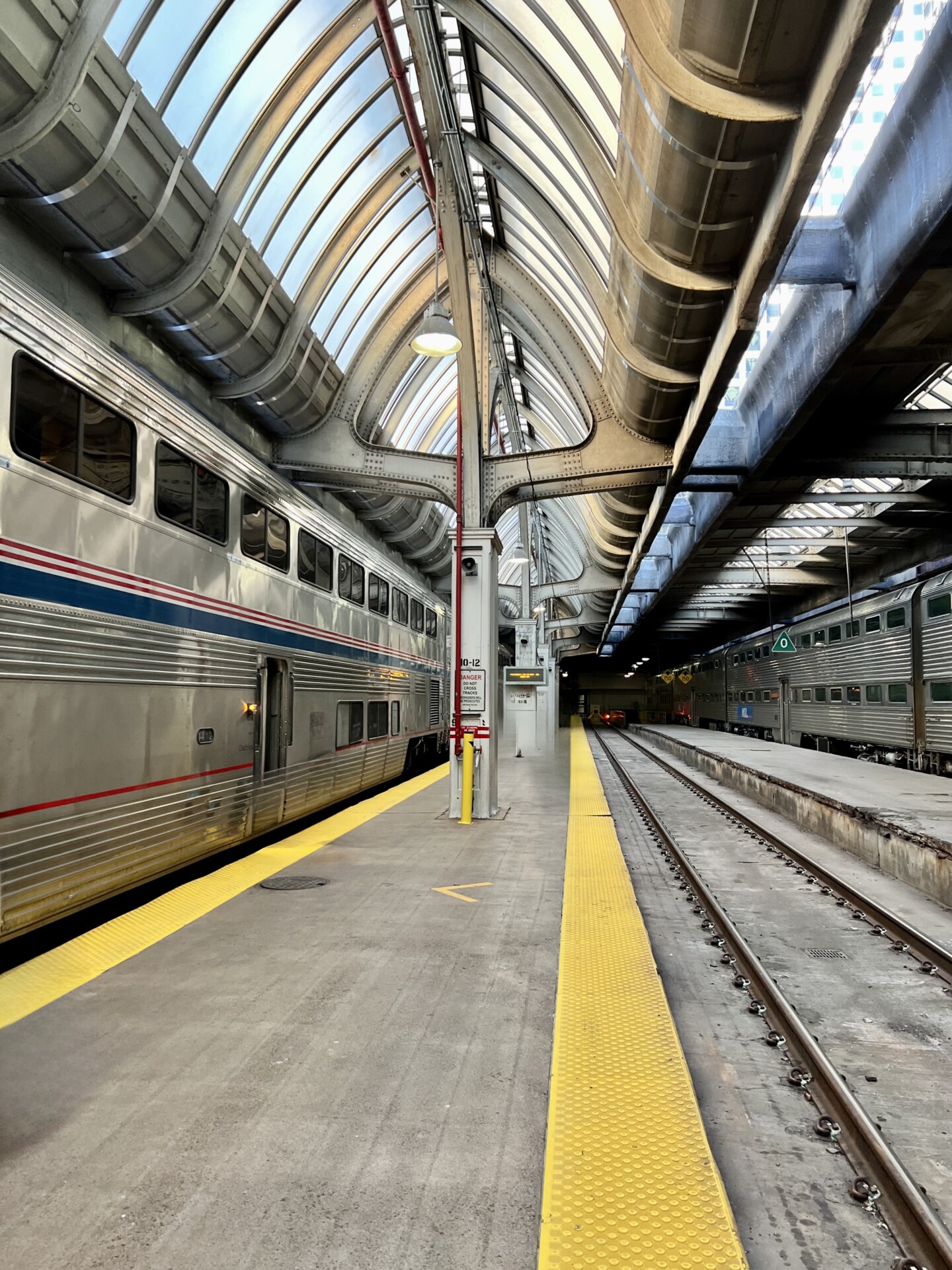
Traveling from East Lansing to Chicago via Amtrak is primarily served by the daily Blue Water line. The journey typically takes about 3 hours and 50 minutes, arriving at the historic Chicago Union Station. Tickets generally range from $25 to $85 depending on how far in advance you book and your choice of Coach or Business class.
For students at Michigan State University, business professionals, and leisure travelers alike, the rail link between the Capital City area and the Windy City represents one of the most efficient corridors in the Midwest. As of 2026, continued investments in the Michigan Accelerated Rail Bridge Development and track upgrades have solidified this route as a reliable alternative to the often-congested I-94 and I-96 corridors. This guide provides an exhaustive look at the logistics, costs, and onboard experience of taking the train from East Lansing (LNS) to Chicago Union Station (CHI).
The Blue Water Service: Your Primary Route
The Blue Water is one of three Amtrak "Michigan Services" routes, funded in part by the Michigan Department of Transportation (MDOT). Unlike the Wolverine service, which cuts through Ann Arbor and Jackson, the Blue Water serves the northern tier of the Michigan rail network, originating in Port Huron and stopping in East Lansing before heading southwest toward Chicago.
Why the Blue Water Matters
The Blue Water is specifically designed to cater to the mid-Michigan region. For residents of Lansing, East Lansing, and Okemos, it is the only direct rail service to Chicago. By 2026, the line has benefitted significantly from the completion of the "Gateway" projects, which reduced bottlenecks near the Indiana border. This means that while freight interference—a historical pain point for Amtrak—still exists, passenger trains now enjoy higher priority on several key segments of the track.
The service runs once daily in each direction. The westbound train (Train 365) typically departs East Lansing in the mid-morning, making it ideal for midday arrivals in Chicago. The eastbound return (Train 364) usually departs Chicago in the late afternoon, arriving back in East Lansing by mid-evening.
Speed and Infrastructure
One of the technical highlights of this route is the segment between Kalamazoo, Michigan, and Porter, Indiana. This stretch of track is owned by Amtrak rather than a private freight company, allowing for speeds of up to 110 mph. This "higher-speed rail" capability is what allows the train to remain competitive with driving times, especially when factoring in Chicago’s notorious traffic and the high cost of downtown parking.
Navigating the East Lansing Station (LNS)
The departure point for this journey is the East Lansing Capital Area Multimodal Gateway, located at 1240 Harrison Road. This facility is a modern hub that serves as a shining example of integrated transit.
Station Facilities and Accessibility
The East Lansing station is not just for Amtrak; it also hosts Greyhound, Indian Trails bus lines, and local CATA (Capital Area Transportation Authority) buses. This makes it incredibly easy to reach the station without a car. If you are coming from the Michigan State University campus, the station is located on the southwest edge, easily accessible via the Route 15 or Route 30 CATA buses.
- Parking: The station offers both short-term and long-term parking. As of 2026, rates remain affordable compared to airport parking, but the lot can fill up during MSU home football games or graduation weekends.
- Waiting Area: The terminal features a clean, climate-controlled waiting area with restrooms and vending machines.
- Ticketing: While most passengers use the Amtrak mobile app, the station does feature Quik-Trak kiosks for printing tickets or purchasing last-minute fares. Note that the station is "unstaffed" in the traditional sense of a ticket window, though building security and transit staff are often present.
Arrival and Boarding
Amtrak recommends arriving at least 30 to 45 minutes before departure. Because the Blue Water is a through-service coming from Port Huron and Flint, it is subject to minor delays before it even reaches East Lansing. However, boarding is generally a quick process. Once the train is announced, passengers head to the platform. There is no checked baggage service at the East Lansing station, so you must be able to carry all your luggage onto the train yourself.
Ticket Classes and Pricing Strategies
Amtrak’s pricing model is dynamic, similar to airline pricing. The earlier you book, the lower the fare. By 2026, Amtrak has streamlined its fare structures into two primary categories: Value and Flexible, alongside the distinction between Coach and Business Class.
| Feature | Coach Class | Business Class |
|---|---|---|
| Seat Pitch | 39 inches (Ample legroom) | 42+ inches (Extra legroom) |
| Pricing | $25 – $65 (Typical range) | $50 – $110 (Typical range) |
| Refundability | Varies by fare type (Value vs. Flex) | Fully refundable / Changeable |
| Amenities | Fold-down tray, power outlets | Priority boarding, free non-alcoholic drinks |
| Seating Config | 2-2 configuration | 2-1 or 2-2 (depending on car) |
Coach Class
Coach class on the Blue Water is surprisingly comfortable compared to economy class on an airplane. The seats are wide, recline significantly, and feature a footrest. Every pair of seats has access to at least two 120V power outlets, which are essential for students or professionals working during the four-hour trip.
Business Class
Upgrading to Business Class is often a marginal expense—sometimes as low as $20 extra. For this price, you receive a dedicated car with fewer passengers, more legroom, and complimentary non-alcoholic beverages (water, soda, or juice) available from the Cafe Car. Business class also offers priority boarding in Chicago, which is a major advantage given the crowds at Union Station.
How to Save on Fares
- Book Early: Aim for at least 14 days in advance to secure the "Value" fares.
- Student Discounts: Amtrak offers a 15% discount for students aged 17-24 with a valid ID. Given the proximity to MSU, this is the most common way passengers save on this route.
- Amtrak Guest Rewards: If you travel this route more than twice a year, joining the rewards program is highly recommended. Points accrue quickly and can be redeemed for future trips.
The Onboard Experience
Modern rail travel is defined by the ability to remain productive or relaxed while in transit. The Blue Water service utilizes a mix of Horizon and Amfleet cars, and by 2026, many of the newer Siemens Venture cars have been integrated into the Michigan service rotations.
Wi-Fi and Connectivity
Amtrak offers complimentary Wi-Fi on the Blue Water. However, it is important to manage expectations. The system relies on cellular towers along the track. While it is perfectly adequate for checking emails, browsing the web, or using messaging apps, it is generally not robust enough for high-definition video streaming or large file uploads. In 2026, coverage has improved in the rural stretches between East Lansing and Battle Creek, but "dead zones" still exist.
The Cafe Car
Located in the middle of the train, the Cafe Car is the social hub of the journey. It serves a variety of light snacks, microwaveable meals (such as pizza, breakfast sandwiches, and burgers), and beverages.
- Alcohol: A selection of beer, wine, and spirits is available for purchase.
- Payment: Amtrak is largely "cashless" in 2026; ensure you have a credit card, debit card, or mobile payment (Apple Pay/Google Pay) ready.
- Seating: The Cafe Car usually has booth seating where you can sit to eat or work if you need a change of scenery from your ticketed seat.
Scenic Highlights
While much of the journey through mid-Michigan is flat farmland, the stretch between New Buffalo, Michigan, and the Indiana border offers glimpses of the Lake Michigan dunes. As you approach Chicago, the industrial landscape of Gary, Indiana, gives way to a spectacular view of the Chicago Skyline as the train curves into Union Station from the south.
Arrival at Chicago Union Station (CHI)
The journey concludes at Chicago Union Station, a masterpiece of Beaux-Arts architecture located at 225 South Canal Street. Union Station is the primary rail hub of the Midwest, and its location is unbeatable for those visiting the city.
Connecting to the City
Once you disembark, you are in the West Loop, just across the river from the main financial district.
- The "L" (CTA): The nearest CTA stations are Quincy (Brown, Orange, Pink, and Purple lines) and Clinton (Blue Line). Both are about a 5-10 minute walk from the station.
- Metra: Union Station is a major hub for Metra commuter rail, allowing you to reach the Chicago suburbs easily.
- Taxis and Rideshare: There is a dedicated rideshare pickup zone on South Canal Street. Follow the overhead signs to avoid getting lost in the massive station complex.
- Walking: Many major attractions, including the Willis (Sears) Tower, are within a 10-minute walk.
The Metropolitan Lounge
If you traveled in Business Class, you have the option to purchase a day pass for the Metropolitan Lounge at Union Station, though it is usually reserved for Sleeper Class passengers on long-distance routes. The lounge provides a quiet space to wait, complimentary snacks, and private restrooms.
Comparison: Train vs. Driving vs. Bus
Choosing the right mode of transport depends on your priorities: cost, time, or productivity.
- Amtrak vs. Driving: Driving from East Lansing to Chicago takes about 3 hours and 15 minutes without traffic. However, traffic on I-94 through Indiana and I-90 into Chicago can easily add an hour or more. Furthermore, parking in downtown Chicago can cost $40–$70 per day. Amtrak removes these stressors.
- Amtrak vs. Bus (Greyhound/Indian Trails): The bus is often the cheapest option, sometimes as low as $15. However, buses are subject to the same traffic as cars and offer significantly less legroom and mobility. The train allows you to stand up, walk to the Cafe Car, and use a proper restroom.
- Amtrak vs. Flying: Flying from Lansing (LAN) to O'Hare (ORD) is technically faster in the air, but once you factor in security, bag check, and the trek from O'Hare to downtown, Amtrak is often faster and much cheaper.
Important Considerations and Troubleshooting
The "Time Zone Trap"
East Lansing is in the Eastern Time Zone, while Chicago is in the Central Time Zone. When traveling to Chicago, you "gain" an hour. If your train departs East Lansing at 10:00 AM, you will arrive in Chicago around 12:50 PM local time. When returning, you "lose" an hour. Always double-check your calendar invites and hotel check-in times to account for this change.
Delays and "Track Status"
While Amtrak has improved its on-time performance by 2026, the Blue Water still shares tracks with Norfolk Southern freight trains in certain sections. Freight trains are legally supposed to yield to passenger rail, but logistics issues can cause sidetracking. Use the Amtrak App or the "Track Your Train" feature on their website for real-time GPS updates.
Baggage Policy
Amtrak is quite generous with baggage. You are allowed two personal items (25 lbs each) and two carry-on bags (50 lbs each). These can be stored in the overhead racks or the large luggage bins at the end of each car. Because the East Lansing station does not have a checked bag counter, do not bring items that exceed the carry-on size limits (28 x 22 x 14 inches).
Frequently Asked Questions
Is there a student discount for MSU students?
Yes, students can consistently save 15% on Amtrak fares by booking through the Amtrak California or national student discount portal. You will need to verify your student status through a third-party service like ID.me or by showing your MSU ID if requested by the conductor. It is highly recommended to book at least three days in advance to apply this discount.
Can I bring a bicycle on the train from East Lansing?
Yes, the Blue Water service offers Carry-On bicycle service. You must reserve a space for your bike when you book your ticket; it usually costs an additional $10 to $20. You are responsible for lifting your bike onto the train and securing it in the designated bike racks located in the Cafe Car or specific passenger cars.
What should I do if the train is sold out?
The Blue Water is a popular route, especially during MSU's "Move-In" week, Thanksgiving, and Spring Break. If the train is sold out, your next best rail-based option is to drive or take a bus to Kalamazoo. The Kalamazoo station is served by both the Blue Water and the more frequent Wolverine service, providing three to four additional daily departure times to Chicago.
Is there food included in the ticket price?
Food is not included in the price of a standard Coach or Business Class ticket. However, Business Class passengers receive complimentary non-alcoholic beverages. All passengers have access to the Cafe Car to purchase meals, snacks, and drinks.
How far is the East Lansing Amtrak station from the MSU Union?
The station is approximately 2.5 miles from the MSU Union. While it is a bit far for a comfortable walk with luggage, it is a very short ride via Uber, Lyft, or the CATA Route 15 bus, which runs frequently between the station and the heart of campus.
Practical Recommendation for Travelers
For the best experience, book your trip at least three weeks in advance to lock in the lowest "Value" fare, which can be as low as $25. If you are traveling for a special occasion or need to get work done, the $20–$30 upgrade to Business Class is well worth the investment for the quieter atmosphere and extra legroom.
Always download the Amtrak app before you head to the station. It serves as your digital ticket, provides gate information at Union Station, and offers the most accurate real-time tracking for your train’s arrival. If you are heading to Chicago for a day trip, the Blue Water’s morning departure and evening return allow for nearly six hours of time in the city—enough for a business meeting or a visit to the Art Institute—without the need for an overnight hotel stay.