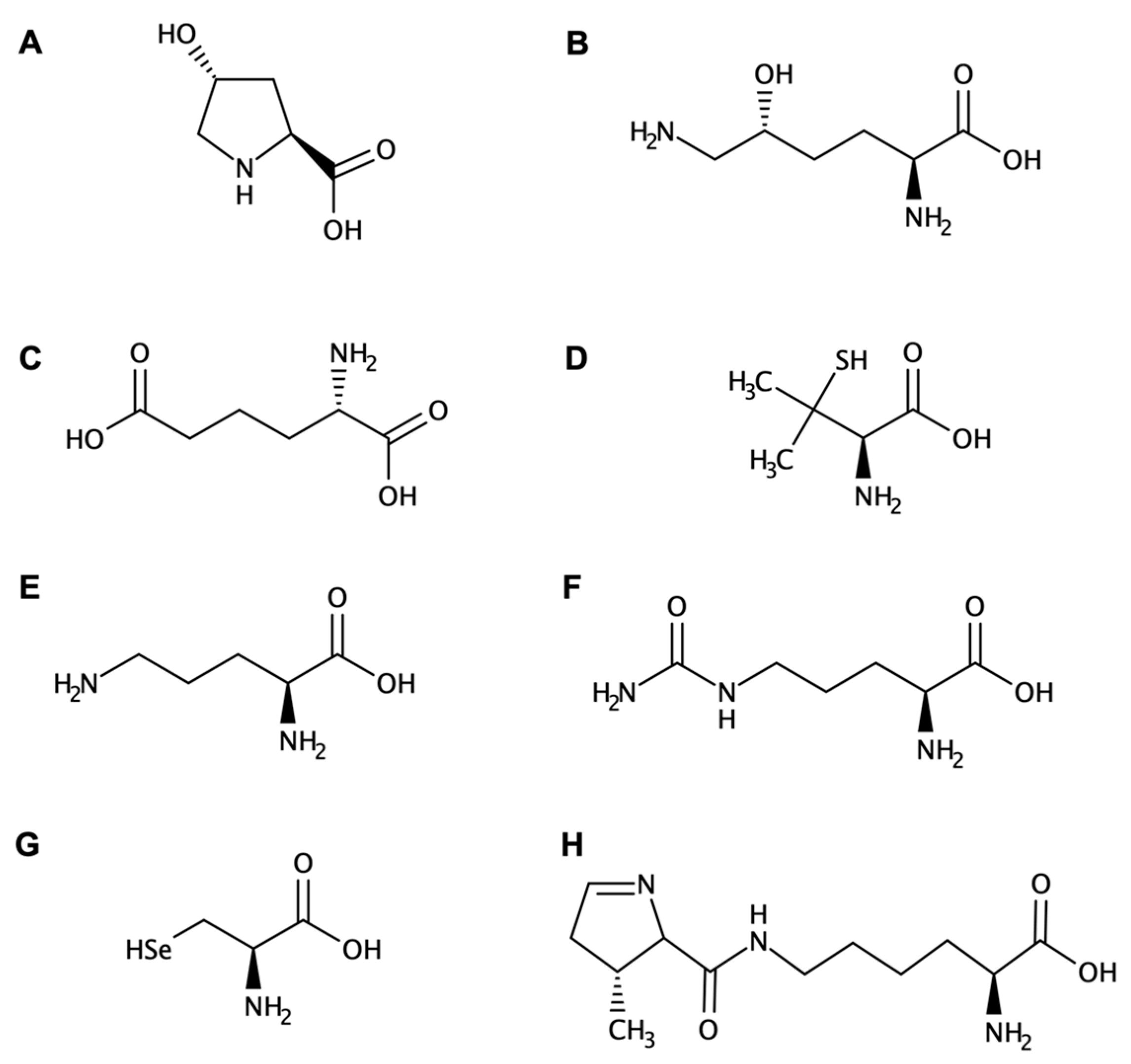
Amino acids serve as the fundamental structural units of proteins, functioning as the primary molecular alphabet for all living organisms. By understanding their specific chemical structures—characterized by a central alpha-carbon, an amino group, a carboxyl group, and a unique side chain—and their corresponding one-letter and three-letter abbreviations, researchers and students can accurately translate genetic sequences into functional biological components.
The Molecular Architecture of Amino Acids
At the heart of every amino acid is a consistent chemical scaffold, which provides the stability required for protein synthesis. Every standard proteinogenic amino acid contains a central carbon atom, known as the alpha-carbon ($C_\alpha$). This central atom is covalently bonded to four distinct groups: a hydrogen atom, an amino group ($-NH_2$), a carboxyl group ($-COOH$), and a variable side chain known as the R-group.
The R-group is the critical differentiator. While the amino and carboxyl groups allow for the formation of peptide bonds—the backbone of protein chains—the R-group dictates the chemical personality of the amino acid. These side chains vary in size, shape, charge, and hydrophobicity. It is this diversity that allows proteins to fold into intricate, three-dimensional shapes, enabling them to catalyze reactions, transport molecules, and provide structural support within cells.
Chirality and Isomerism
In biological systems, almost all amino acids utilized in protein synthesis are of the L-configuration. The alpha-carbon is a chiral center, meaning it can exist in two mirror-image forms: L-amino acids and D-amino acids. Because enzymes that synthesize proteins are stereospecific, they exclusively incorporate L-amino acids into polypeptide chains. Understanding this distinction is vital for synthetic biology and pharmacology, as D-amino acids often behave differently in physiological environments and are frequently used in the design of metabolic-resistant therapeutic peptides.
Standard Amino Acid Classification and Abbreviations
To streamline scientific communication, the International Union of Biochemistry and Molecular Biology (IUBMB) established a standardized system of abbreviations. There are twenty standard amino acids encoded directly by the genetic code. Each possesses a three-letter code (e.g., Gly for Glycine) and a one-letter code (e.g., G for Glycine).
The use of one-letter codes is particularly essential in bioinformatics, where large sequences of proteins are stored and analyzed. These codes allow for the rapid computational scanning of genomes and proteomes.
Table: Classification of Standard Amino Acids
| Amino Acid | 3-Letter Code | 1-Letter Code | Side Chain Properties |
|---|---|---|---|
| Alanine | Ala | A | Nonpolar, Aliphatic |
| Arginine | Arg | R | Positively Charged (Basic) |
| Asparagine | Asn | N | Polar, Uncharged |
| Aspartic Acid | Asp | D | Negatively Charged (Acidic) |
| Cysteine | Cys | C | Polar, Sulfur-containing |
| Glutamic Acid | Glu | E | Negatively Charged (Acidic) |
| Glutamine | Gln | Q | Polar, Uncharged |
| Glycine | Gly | G | Nonpolar, Aliphatic |
| Histidine | His | H | Positively Charged (Basic) |
| Isoleucine | Ile | I | Nonpolar, Aliphatic |
| Leucine | Leu | L | Nonpolar, Aliphatic |
| Lysine | Lys | K | Positively Charged (Basic) |
| Methionine | Met | M | Nonpolar, Sulfur-containing |
| Phenylalanine | Phe | F | Nonpolar, Aromatic |
| Proline | Pro | P | Nonpolar, Aliphatic |
| Serine | Ser | S | Polar, Uncharged |
| Threonine | Thr | T | Polar, Uncharged |
| Tryptophan | Trp | W | Nonpolar, Aromatic |
| Tyrosine | Tyr | Y | Polar, Aromatic |
| Valine | Val | V | Nonpolar, Aliphatic |
Functional Significance of R-Group Properties
The behavior of a protein is essentially an emergent property of the arrangement of its amino acids. Categorizing them by their chemical characteristics provides deep insights into why proteins fold the way they do in an aqueous cellular environment.
Hydrophobic vs. Hydrophilic Interactions
Nonpolar amino acids, such as Leucine and Valine, are hydrophobic. In the crowded, water-based environment of the cytoplasm, these amino acids tend to cluster toward the interior of the protein. This "hydrophobic collapse" is a primary driver of protein folding, shielding nonpolar groups from water. Conversely, polar and charged amino acids, such as Serine or Lysine, are hydrophilic and typically populate the protein surface, where they interact with the surrounding water or other polar molecules.
Charged Amino Acids and pH
The charged status of acidic (Aspartic and Glutamic Acid) and basic (Lysine, Arginine, and Histidine) amino acids is highly sensitive to the local pH. Histidine, in particular, is frequently found in the active sites of enzymes because its pKa is near physiological pH (approximately 6.0). This allows it to act as either a proton donor or acceptor during complex biochemical reactions, making it an essential component for many enzymatic mechanisms.
The Peptide Bond: Creating the Chain
The primary structure of a protein is defined by the sequence of amino acids linked by peptide bonds. A peptide bond forms through a dehydration reaction (or condensation reaction) where the carboxyl group of one amino acid reacts with the amino group of another, releasing a water molecule.
This bond has a partial double-bond character due to resonance, which makes the peptide bond planar and relatively rigid. This rigidity limits the number of ways a polypeptide chain can rotate, which significantly influences the secondary structures, such as the alpha-helix and the beta-sheet, that the chain can adopt.
Specialized Amino Acids and Post-Translational Modifications
While the twenty standard amino acids are encoded by the genetic code, nature expands the chemical repertoire of proteins through post-translational modifications (PTMs). For example, Cysteine residues can form disulfide bridges with other Cysteine residues, providing significant structural stability to extracellular proteins like insulin.
Additionally, amino acids can be modified by the addition of phosphate, methyl, or acetyl groups. Phosphorylation, commonly occurring on Serine, Threonine, and Tyrosine, acts as a molecular "on/off" switch for signaling pathways. Understanding the base amino acid structure is the first step toward recognizing how these modifications alter protein function in health and disease.
Frequently Asked Questions
What is the difference between essential and non-essential amino acids?
Essential amino acids cannot be synthesized by the human body in sufficient quantities and must be obtained through the diet. These include Histidine, Isoleucine, Leucine, Lysine, Methionine, Phenylalanine, Threonine, Tryptophan, and Valine. Non-essential amino acids can be produced by the body from metabolic precursors.
Why does the one-letter code for some amino acids not match their names?
The three-letter codes are generally derived from the first three letters of the amino acid name. However, when multiple amino acids begin with the same letters, one-letter codes were assigned based on phonetic cues or historical consensus (e.g., Asparagine is 'N' because the sound "n" is prominent, and Tryptophan is 'W' because of its bulky "double-ring" structure).
How do disulfide bonds stabilize protein structure?
Disulfide bonds are covalent linkages between the sulfur atoms of two Cysteine residues. Because they are covalent, they are significantly stronger than the non-covalent interactions (like hydrogen bonding) that maintain most protein folds, providing extra rigidity to proteins designed for harsh external environments.
Can L-amino acids be converted into D-amino acids in the body?
Yes, this process is known as racemization. While it occurs very slowly under physiological conditions, it is a significant factor in aging research. As organisms age, some L-amino acids in long-lived proteins—such as those in the eye lens or teeth—spontaneously convert to D-amino acids, which can disrupt protein function and contribute to the accumulation of damaged proteins.
What is the most versatile amino acid?
Glycine is considered the most versatile due to its simplicity. Its R-group is merely a hydrogen atom, making it the smallest amino acid. Because it is so small, it can fit into tight spaces within the interior of a protein where larger side chains would cause steric hindrance. This allows proteins to fold into tighter turns and more compact shapes.
Recommendation for Further Exploration
For those looking to master the identification of amino acids, focus on learning them in groups based on their chemical properties rather than rote memorization. Start by identifying the four nonpolar aliphatic amino acids, then move to the aromatic ones. Using online protein structure databases, such as the Research Collaboratory for Structural Bioinformatics (RCSB) Protein Data Bank (PDB), allows you to visualize how these specific structures dictate the complex three-dimensional reality of the proteins that sustain your biological functions.