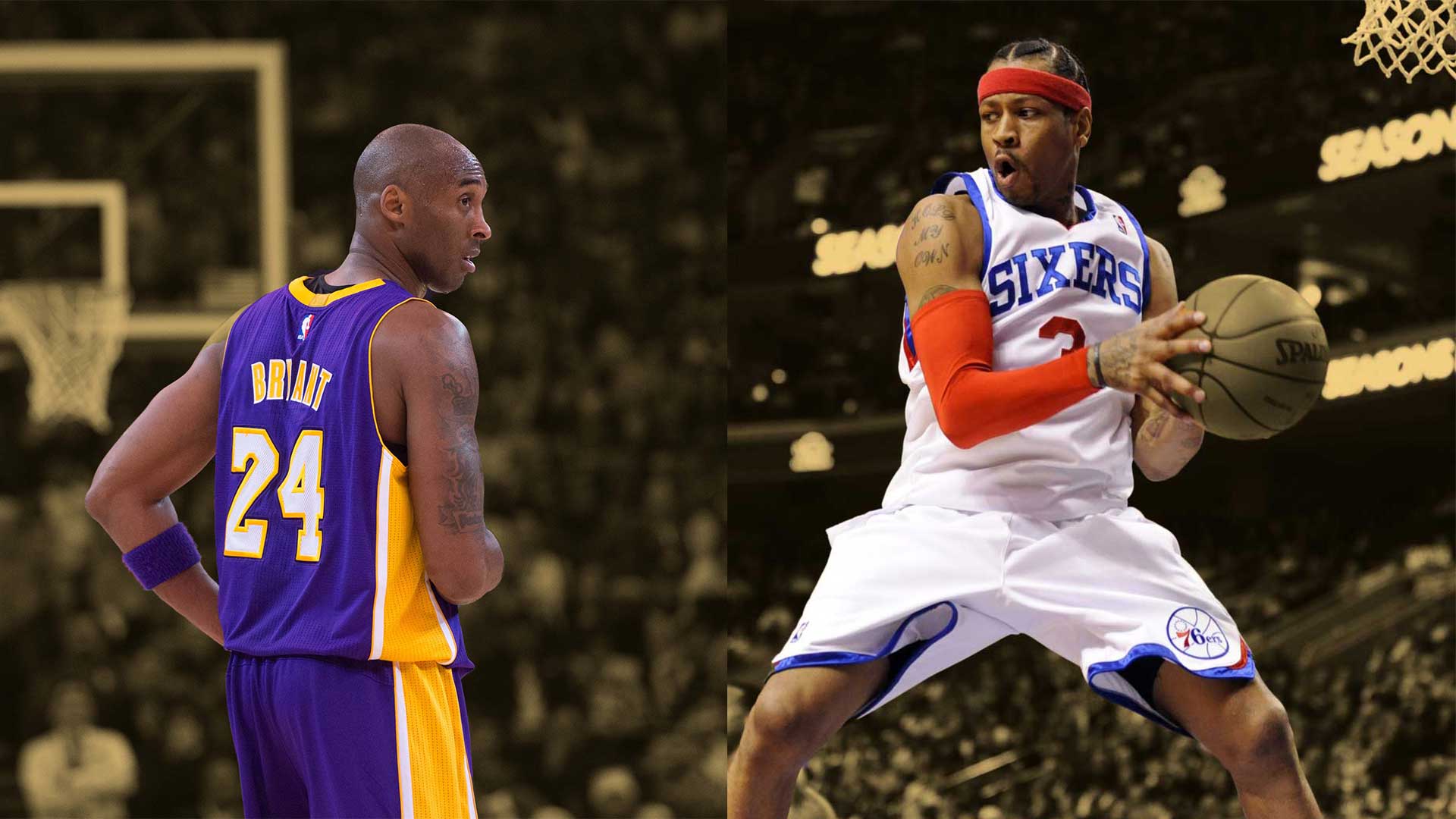
As of 2026, the financial landscapes of Allen Iverson and the estate of Kobe Bryant represent two polar opposite trajectories of post-NBA wealth management. While Allen Iverson’s net worth remains stable at approximately $1 million to $10 million in liquid assets—bolstered by a unique deferred trust fund—the estate of Kobe Bryant has soared to a valuation nearing $1 billion, primarily due to the historic exit of his BodyArmor investment and a diversified venture capital portfolio.
The comparison between these two icons of the 1996 NBA Draft class provides more than just celebrity gossip; it serves as a masterclass in the difference between high-earning professional athletes and long-term institutional wealth building. To understand how two players who earned comparable on-court salaries ended up in vastly different financial stratospheres, we must examine their career earnings, endorsement structures, and investment philosophies.
The On-Court Earnings: A Level Playing Field
During their active years in the NBA, both Allen Iverson and Kobe Bryant were among the highest-paid athletes in the world. The disparity in their 2026 net worth does not stem from their team contracts, as both maximized their earning potential under the salary cap rules of their respective eras.
Allen Iverson’s NBA Salary History
Allen Iverson, "The Answer," played 14 seasons in the NBA. According to Spotrac’s historical archives, Iverson earned approximately $154.5 million in cumulative salary. His peak earning years occurred with the Philadelphia 76ers and the Denver Nuggets, where he consistently earned between $16 million and $20 million per season.
Iverson was a cultural phenomenon whose jersey sales and ticket-drawing power were immense. However, much of this liquid income was spent during his playing days on a lavish lifestyle, a massive entourage, and significant legal and personal expenses.
Kobe Bryant’s NBA Salary History
Kobe Bryant, the "Black Mamba," played 20 seasons, all with the Los Angeles Lakers. His total career earnings from NBA salaries totaled approximately $323.3 million. While this is more than double Iverson’s total, the gap in their current 2026 wealth cannot be explained by this $170 million difference alone. Kobe’s salary peaked at over $30 million per season toward the end of his career, benefiting from the league’s rising revenue and his status as the face of the NBA’s most profitable franchise.
Allen Iverson’s Financial Lifeline: The Reebok Trust
The most critical component of Allen Iverson’s 2026 financial status is his lifetime deal with Reebok. Signed in 2001 at the height of his MVP powers, this contract is often cited as one of the most brilliant "forced savings" mechanisms in sports history.
The $32 Million Trust Fund
The centerpiece of the Reebok agreement is a $32 million trust fund. Under the terms of the contract, Iverson cannot touch the principal of this fund until he turns 55 years old, which will occur in 2030.
In 2026, Iverson is 51 years old. He is currently four years away from accessing this windfall. This structured settlement was reportedly designed by his representatives and Reebok executives who were concerned about his high burn rate of cash. By deferring this payment, they ensured that Iverson would have a multi-million dollar "pension" in his later years.
The Annual Stipend
In addition to the deferred trust, the lifetime deal pays Iverson an estimated $800,000 per year. This annual payment serves as his primary source of liquidity, allowing him to maintain a comfortable lifestyle without depleting his future assets. While Iverson has faced numerous reports of financial distress over the decades—including a famous 2012 court hearing where he reportedly told a judge he didn't have money for a cheeseburger—this Reebok income provides a floor that prevents total insolvency.
The Bryant Estate: From Athlete to Venture Capitalist
The estate of Kobe Bryant, managed by Vanessa Bryant and a team of financial advisors, has seen exponential growth since his passing in 2020. By 2026, the estate has transitioned from a collection of sports assets into a powerful investment vehicle.
The BodyArmor Exit
The single most significant contributor to the Bryant wealth was his 2013 investment in the sports drink BodyArmor. Kobe invested roughly $6 million for a 10% stake in the company. In 2021, Coca-Cola acquired the remaining stake in BodyArmor for $5.6 billion.
This transaction netted the Bryant estate approximately $400 million before taxes. This single investment outcome exceeded Kobe’s entire 20-year NBA salary earnings. It remains a gold standard for athlete-led venture capital, demonstrating the power of equity over traditional endorsement fees.
Bryant Stibel and Diversified Holdings
Kobe Bryant did not stop at sports drinks. He co-founded Bryant Stibel, a venture capital firm with partner Jeff Stibel. As of 2026, the firm’s portfolio includes successful stakes in technology, media, and data companies such as Dell, Alibaba, and Epic Games. The firm manages over $2 billion in assets, and the estate’s share of these institutional investments continues to generate passive growth that dwarfs the earnings of almost any other retired athlete.
| Financial Metric | Allen Iverson (2026) | Estate of Kobe Bryant (2026) |
|---|---|---|
| Total NBA Salary | ~$154.5 Million | ~$323.3 Million |
| Primary Endorsement | Reebok (Lifetime) | Nike, Hublot, Panini |
| Key Asset | $32M Trust (Accessible 2030) | BodyArmor Exit / Bryant Stibel |
| Liquid Income Source | $800k Annual Reebok Stipend | Dividends, Royalties, VC Exits |
| Estimated Net Worth | $1M - $10M (Liquid) | ~$800M - $1 Billion |
| Financial Strategy | Managed Trust / Direct Income | Venture Capital / Equity Stakes |
The "Burn Rate" vs. The "Build Rate"
The comparison between Iverson and Bryant is often framed as a cautionary tale of spending versus saving, but the reality is more nuanced. It is a comparison of spending for the moment versus investing for the future.
The Iverson Entourage and Lifestyle
During the early 2000s, Iverson famously supported an entourage of over 50 people at various times. He spent millions on jewelry, clothing, and travel for friends and family from his hometown. This "burn rate" meant that even as he earned $20 million a year, his net savings remained low. By 2026, Iverson’s financial narrative is one of recovery and protection through structured settlements.
The Mamba Mentality in Boardrooms
Kobe Bryant’s post-career focus was "Granity Studios," a media company, and his venture firm. He applied his legendary work ethic to understanding cap tables and market valuations. Unlike Iverson, who sought the security of a lifetime paycheck, Bryant sought the leverage of ownership. By the time of his passing, he had moved away from being a "spokesperson" to being a "partner." This shift is why his estate is competing with the wealth of business moguls rather than just former players.
The Impact of Brand Longevity in 2026
Both players continue to generate revenue through their iconic brands, though the scale differs.
- The Reebok Iverson Line: In 2026, retro sneaker culture remains obsessed with the "Question" and "Answer" lines. While Iverson receives a percentage of these sales, much of the profit remains with Reebok (now owned by Authentic Brands Group).
- The Nike Kobe Line: Following a brief hiatus, the partnership between Nike and the Bryant estate was renewed. The "Kobe Brand" operates similarly to the Jordan Brand, with limited releases of "Protro" models. The estate receives significant royalties from these sales, which contribute tens of millions annually to the estate’s liquidity.
Common Financial Mistakes and Successes
Analyzing these two figures reveals several key takeaways for high-net-worth individuals and fans alike:
- The Power of Equity: Kobe Bryant’s wealth was cemented by ownership (BodyArmor), not his salary. Ownership allows for exponential growth that salary cannot match.
- Structured Protection: Iverson’s Reebok trust is a perfect example of "protecting the athlete from themselves." Without that $32 million safety net waiting in 2030, his financial situation in 2026 would be much more precarious.
- Tax and Management Fees: High earners often lose 50% or more of their gross income to taxes, agents, and managers. Kobe’s team focused on tax-efficient growth through his VC firm, while Iverson’s early income was largely subject to standard high-bracket income taxes without the benefit of long-term capital gains offsets.
FAQs: Allen Iverson vs. Kobe Bryant Wealth
How much money will Allen Iverson get from Reebok in 2030?
Allen Iverson will gain access to a $32 million trust fund when he turns 55 in 2030. However, it is important to note that as part of a divorce settlement, Iverson reportedly agreed to forfeit half of that trust to his ex-wife, Tawanna. Therefore, his personal windfall will likely be approximately $16 million plus any accrued interest or dividends allowed by the trust structure.
Did Allen Iverson actually go bankrupt?
No, Allen Iverson never filed for Chapter 7 or Chapter 11 bankruptcy. While he faced severe liquidity issues—meaning he did not have cash on hand to pay specific debts or legal judgements—his lifetime deal with Reebok provided a steady stream of income that prevented total bankruptcy. His "struggle" was a cash-flow problem, not a total lack of assets.
Who is the richest player from the 1996 NBA Draft?
As of 2026, the Estate of Kobe Bryant is the wealthiest, with a valuation near $1 billion. Following Kobe, Kevin Garnett (who was drafted in 1995 but is of the same era) and Ray Allen maintain high net worths, but Kobe remains in a tier of his own, comparable only to Michael Jordan, LeBron James, and Magic Johnson in terms of NBA-related wealth.
How does Vanessa Bryant manage Kobe's wealth in 2026?
Vanessa Bryant serves as the executor of the estate and the head of Mamba & Mambacita Sports Foundation. She oversees the Nike partnership and the Bryant Stibel investments with the help of professional wealth managers. The strategy remains focused on long-term sustainability for her daughters and philanthropic efforts.
Does Allen Iverson still make money from the 76ers?
Iverson does not receive a salary from the Philadelphia 76ers in 2026, but he maintains an unofficial role as a franchise ambassador. Most of his team-related income comes from appearance fees, memorabilia signings, and the NBA's pension plan, which all retired players with his years of service are eligible to receive.
Final Recommendation for Financial Analysis
When comparing Allen Iverson’s net worth to Kobe Bryant’s wealth, the data highlights that income is not wealth. For those tracking athlete finances, the primary lesson of 2026 is that the transition from "player" to "owner" is the only way to achieve billionaire status. While Iverson’s Reebok deal is a fascinating study in financial security and "saving for a rainy day," the Bryant estate is a blueprint for generational wealth creation.
Observers should look toward 2030 as the next major milestone for Iverson, while the Bryant estate will likely continue to grow as their venture capital holdings mature.