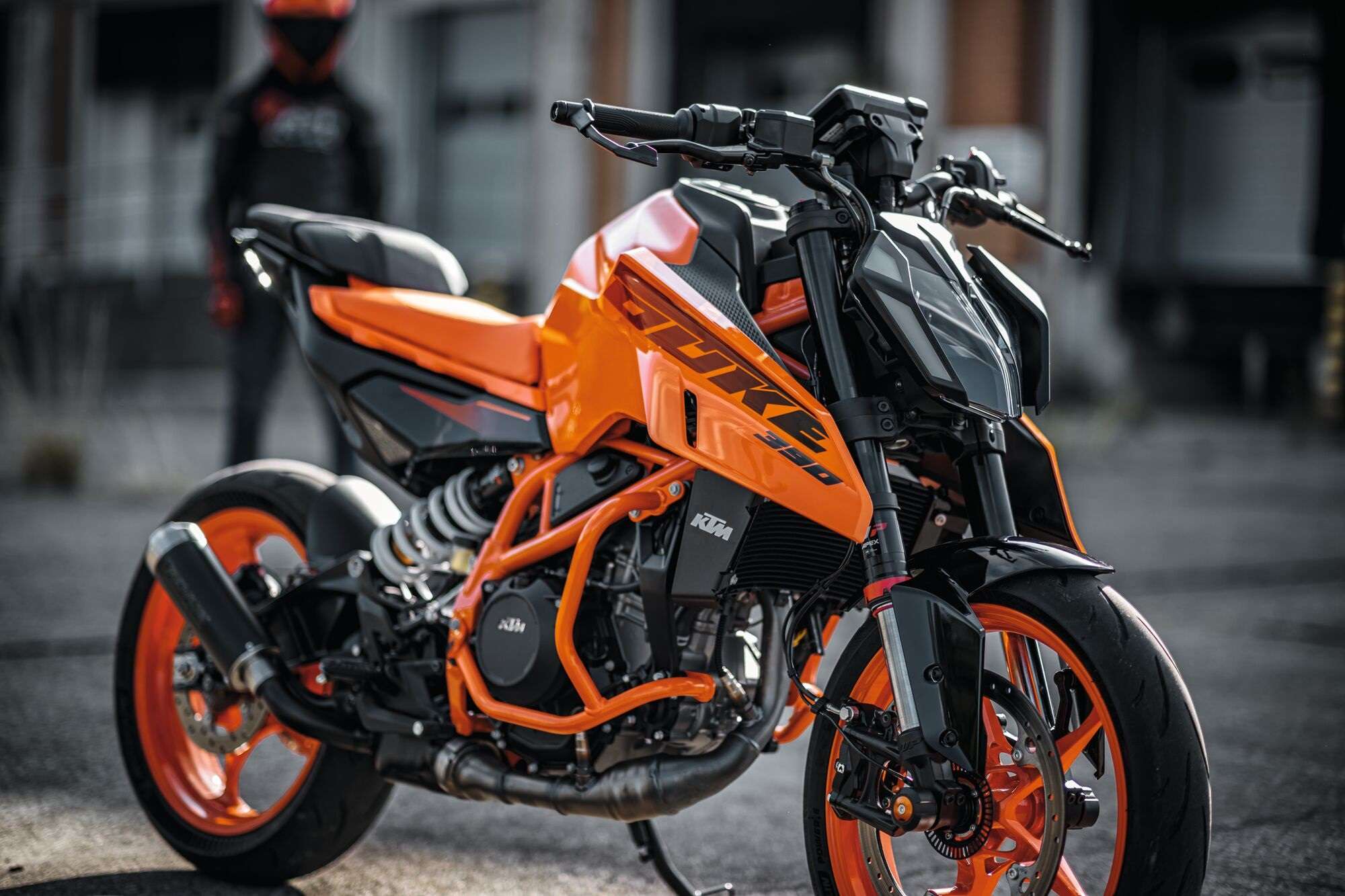
The KTM Duke range comprises a diverse lineup of "naked" motorcycles spanning from 125cc entry-level machines to the 1,350cc "Super Duke" flagship. Known for their aggressive trellis frames, lightweight construction, and high-torque LC4 and LC8 engines, these models represent KTM’s core street-performance identity across global markets in 2026.
KTM’s Duke series has long been the benchmark for the "naked bike" or "streetfighter" category. By stripping away fairings and focusing on a high power-to-weight ratio, KTM created a family of motorcycles that prioritizes agility and rider engagement. Whether you are a novice rider looking for an A1-compliant commuter or a veteran seeking a track-ready powerhouse, the Duke lineup offers a specific tool for every level of experience.
The Evolution of the "Naked" Philosophy
The Duke nameplate debuted in 1994 with the Duke 620. At that time, it was more of a supermoto with street tires than a traditional naked bike. However, it set the blueprint for what was to come: a single-cylinder engine, a lightweight chrome-molybdenum steel trellis frame, and top-tier components from WP Suspension and Brembo.
As we look at the lineup in 2026, the Duke family has branched into two distinct engine architectures: the LC4 (Liquid-cooled, 4-valve) single-cylinder engines used in the small-displacement models and the LC8c (Compact) and LC8 (V-twin) engines used in the mid-weight and heavy-weight classes. The design language has also evolved, characterized by the iconic "split" LED headlight and sharp, muscular tank spoilers that have become synonymous with the brand.
Small-Displacement Dukes: The Entry-Level Scalpels
The small-displacement Duke models are designed for urban environments and younger riders. Despite their smaller engines, they share the premium DNA of their larger siblings, including high-quality TFT displays and sophisticated electronics.
KTM 125 Duke
The 125 Duke is the entry point into the KTM street family, specifically engineered for the European A1 license category. In its 2026 iteration, the 125 Duke utilizes a refined version of the single-cylinder engine producing the maximum legal 15 hp (11 kW).
A major update in the recent generation was the transition to a new curved cast-aluminum subframe and a side-mounted rear shock absorber. This change wasn't just aesthetic; it allowed for a larger airbox and a lower seat height, making the bike more accessible to shorter riders while improving mid-range torque.
KTM 200 Duke
Primarily targeting markets in Asia and Latin America, the 200 Duke serves as a bridge between the 125 and the 250. It offers a significant bump in torque compared to the 125 without the weight penalty of the larger blocks. It remains a favorite for riders who need a lightweight, high-revving machine for dense city traffic where agility is the primary requirement.
KTM 250 Duke
The 250 Duke occupies a unique space, often featuring the premium styling of the 390 but with a more manageable power delivery. By 2026, the 250 Duke has adopted the "Streetfield" design language, featuring an updated LED headlight assembly and a refined slipper clutch that prevents rear-wheel hop during aggressive downshifts.
KTM 390 Duke: The Global Benchmark
The 390 Duke is arguably the most important model in the lineup. In its current generation, the engine displacement was increased to 399cc to meet stricter emission standards while actually increasing power output to approximately 45 hp.
Key features that define the current 390 Duke include:
- Launch Control: A rarity in this displacement class, allowing for optimized starts.
- Adjustable Suspension: WP APEX 43mm forks with adjustable compression and rebound.
- Supermoto ABS: Allows the rider to disable ABS on the rear wheel for controlled slides.
Mid-Weight Dukes: The Precision Scalpels
The mid-weight segment is where KTM transitioned from single-cylinder engines to the LC8c parallel-twin platform. These bikes are designed for riders who demand liter-bike performance in a chassis that weighs significantly less.
KTM 790 Duke (The "Original Scalpel")
Reintroduced as a value-oriented mid-weight option, the 790 Duke continues to be produced to satisfy the A2-licensed market (in restricted form) and riders looking for a pure, mechanical feel. It lacks some of the high-end suspension adjustability of the 890 or 990, but its 799cc twin-cylinder engine remains one of the most charismatic in the segment.
KTM 890 Duke R
The "R" designation signifies a track-focused orientation. The 890 Duke R features upgraded Brembo Stylema brakes, Michelin Power Cup 2 tires, and fully adjustable WP APEX suspension. In 2026, it remains a favorite for club racers and canyon carvers who prioritize braking precision and cornering speed over outright horsepower.
KTM 990 Duke: The New Era
Launched to replace the standard 890, the 990 Duke (often referred to as "The Sniper") features a 947cc engine. This model represented a total redesign, including a new frame with increased lateral stiffness and a swingarm designed for better traction under hard acceleration.
The 990 Duke is equipped with a 5-inch bonded glass TFT dashboard and a sophisticated 6-axis IMU (Inertial Measurement Unit) that manages:
- Cornering Traction Control (MTC)
- Cornering ABS
- Motor Slip Regulation (MSR)
The Super Dukes: High-Performance Flagships
At the top of the hierarchy sits the "Beast" family. These motorcycles are engineered to compete with the world's most powerful super-nakeds, combining massive V-twin torque with cutting-edge aerospace-grade electronics.
KTM 1390 Super Duke R / EVO
By 2026, the 1390 Super Duke R has firmly established itself as the pinnacle of the Duke range. Replacing the 1290, the 1390 features a 1,350cc V-twin engine utilizing Camshift technology. This system allows for two different inlet valve timings depending on the RPM range, ensuring smooth low-end delivery and a violent top-end rush.
The "EVO" variant is distinguished by its WP Semi-Active Technology (SAT). This system adjusts the damping in real-time based on road conditions and rider input. It also includes "Pro" modes that can lower the rear of the bike at a standstill (similar to MotoGP holeshot devices) to improve ergonomics or launch stability.
KTM 1390 Super Duke GT
While technically a "Grand Tourer," the GT model is built on the Super Duke platform. It adds a windscreen, integrated pannier mounts, and a larger fuel tank, making it the choice for riders who want Duke performance but need to cover thousands of miles in comfort.
Technical Specifications Comparison
The following table compares the primary specifications for the 2026 KTM Duke lineup. These figures represent the standard European/Global configurations.
| Model | Engine Displacement | Engine Configuration | Max Power (Approx.) | Curb Weight (Approx.) |
|---|---|---|---|---|
| 125 Duke | 124.7 cc | Single-Cylinder | 15 hp (11 kW) | 154 kg (340 lbs) |
| 250 Duke | 249.1 cc | Single-Cylinder | 31 hp (23 kW) | 163 kg (359 lbs) |
| 390 Duke | 398.7 cc | Single-Cylinder | 45 hp (33 kW) | 165 kg (364 lbs) |
| 790 Duke | 799.0 cc | Parallel-Twin | 105 hp (77 kW) | 188 kg (414 lbs) |
| 990 Duke | 947.0 cc | Parallel-Twin | 123 hp (90 kW) | 190 kg (419 lbs) |
| 1390 Super Duke R | 1,350.0 cc | V-Twin (LC8) | 190 hp (140 kW) | 212 kg (467 lbs) |
Core Technologies in the Duke Range
KTM differentiates the Duke models through a specific suite of electronic and mechanical features that focus on "Ready to Race" performance. Understanding these terms is essential for any prospective owner.
WP Suspension
KTM owns WP Suspension, allowing for a level of integration rarely seen in the industry. Most Duke models use the APEX line, which is split into:
- Open Cartridge Forks: Found on the 390 and 790, offering a balance of comfort and sportiness.
- Split Function Forks: Found on the 990, where compression is handled by one leg and rebound by the other.
- Semi-Active Suspension: Found on the Super Duke R EVO, using magnetic valves to change damping characteristics in milliseconds.
The Trellis Frame
Every KTM Duke uses a trellis frame made from chrome-molybdenum steel. This design is chosen for its high torsional rigidity and lightweight properties. By 2026, these frames have become more specialized, with the 990 and 1390 models using the engine as a stressed member to further reduce weight and sharpen handling.
Electronics and Connectivity
The KTMconnect app allows riders to sync their smartphones to the Duke’s TFT display. This provides turn-by-turn navigation, music control, and the ability to answer calls. On higher-end models, the electronics suite includes "Track Mode," which allows for the customization of throttle mapping and the disabling of anti-wheelie controls.
Choosing the Right Duke Model
Selecting the appropriate Duke depends on three primary factors: license restrictions, riding environment, and experience level.
- The Commuter: If your riding is 90% city-based, the 125 Duke or 200 Duke offers the best fuel economy and easiest lane-filtering capabilities. Their light weight makes them incredibly forgiving.
- The A2 Graduate: For those limited by tiered licensing but wanting a "big bike" feel, the 390 Duke is the gold standard. It is powerful enough for highway speeds but light enough for technical mountain roads.
- The Weekend Warrior: The 990 Duke is the sweet spot of the range. It provides enough power to keep up with liter-bikes in the corners without the intimidating maintenance costs or physical fatigue associated with the Super Duke.
- The Track Enthusiast: The 1390 Super Duke R is designed for those who want to dominate track days. Its advanced electronics allow riders to shave seconds off lap times while maintaining a safety net that was unavailable a decade ago.
Maintenance and Reliability
KTM motorcycles are high-performance machines that require diligent maintenance. Owners should pay close attention to:
- Valve Clearance Checks: Particularly important on the high-revving single-cylinder models (125/390).
- Chain Tension: The long-travel suspension on the Duke range means chain slack must be set precisely according to the manual to avoid premature wear on the countershaft sprocket.
- Software Updates: Since the 2026 models are heavily reliant on ECUs (Engine Control Units), visiting an authorized dealer for firmware updates is as important as an oil change.
Frequently Asked Questions
Are KTM Dukes reliable for long-distance touring?
While the Duke is a naked street bike, models like the 390 Duke and 990 Duke can be equipped with windscreens and luggage for touring. However, for serious distance, the 1390 Super Duke GT is the preferred choice as it features improved wind protection and a more relaxed seating geometry.
What is the difference between the Duke and the RC models?
The Duke series consists of "naked" bikes with upright handlebars and a standard seating position. The RC series (like the RC 390) uses the same engines but features full fairings, clip-on handlebars, and rear-set footpegs for a committed supersport riding position.
Does the KTM 390 Duke have a quickshifter?
Yes, most 390 Duke models from 2024 onwards come with Quickshifter+ as either standard equipment or a software-enabled option. This allows for clutchless upshifts and downshifts, significantly enhancing the riding experience during spirited use.
Is the Super Duke too powerful for the street?
The 1390 Super Duke R produces nearly 190 horsepower, which is more than can be legally used on public roads. However, its sophisticated ride modes (Rain, Street, Sport) can limit power delivery and increase traction control intervention, making it manageable for experienced riders in daily conditions.
What is "Supermoto Mode" on the Duke?
Supermoto Mode is a specific ABS setting that keeps the anti-lock braking active on the front wheel while completely disabling it on the rear wheel. This allows experienced riders to lock the rear brake to "pivot" the bike into corners, a technique commonly used in supermoto racing.
Next Steps for Prospective Buyers
If you are considering a KTM Duke in 2026, your first action should be to visit an authorized KTM dealer for a test ride. Because the Duke range is characterized by its unique "ready to race" ergonomics—which are more aggressive than many Japanese naked bikes—it is vital to ensure the seat height and peg position suit your physique. Additionally, check local licensing laws, as many Duke models can be "de-tuned" or restricted at the dealership to meet A2 license requirements.