The Albany-Schenectady-Troy television market, identified as the Capital Region DMA (Designated Market Area), consists of approximately 15 counties across New York, Massachusetts, and Vermont. As of 2026, the market is served by five major commercial network affiliates—WRGB (CBS), WTEN (ABC), WNYT (NBC), WXXA (Fox), and WCWN (The CW)—alongside the prominent public broadcaster WMHT. These stations utilize powerful transmitters located primarily on the Helderberg Escarpment to reach over 500,000 households through over-the-air signals, cable providers, and digital streaming platforms.
Understanding the Albany-Schenectady-Troy DMA (Market 60)
The Albany-Schenectady-Troy media market is currently ranked as the 60th largest television market in the United States. Its geographic footprint is unusually wide for its ranking, spanning from the southern Adirondacks down to the northern Hudson Valley, and extending eastward into the Berkshire Mountains of Massachusetts and Bennington County, Vermont.
For viewers and advertisers in 2026, the "reach" of an Albany station is defined by two factors: the physical propagation of the signal and the digital availability via Must-Carry rules on cable and satellite. The topography of the region—characterized by the deep Hudson and Mohawk River valleys surrounded by the Adirondacks, Catskills, and Green Mountains—creates unique challenges for terrestrial reception. To combat this, many stations employ a network of translators to ensure signal penetration in "shadowed" areas like Pittsfield, MA, or Glens Falls, NY.
The market serves as a political and cultural hub, meaning news coverage often prioritizes state legislative developments in Albany while balancing local community reporting across three different states. This makes the reach of these stations critical for regional identity and emergency management.
Profiles of Major Broadcast Stations in Albany
WRGB (CBS 6) – The Pioneer
Owned by Sinclair Broadcast Group, WRGB is one of the oldest television stations in the world, with roots tracing back to General Electric’s experimental broadcasts in 1928. Operating on virtual channel 6, it remains a dominant force in the Capital Region.
In 2026, WRGB’s reach is bolstered by its secondary station, WCWN. The station provides extensive news coverage, often focusing on "The Westchester-to-Albany" corridor. Their transmitter, located in the Helderbergs, provides a robust signal that carries well into Saratoga and Washington counties. WRGB’s subchannels, including TBD and Comet, offer niche programming that appeals to a younger demographic, expanding their total audience share beyond traditional CBS viewers.
WNYT (NBC 13) – NewsChannel 13
WNYT, owned by Hubbard Broadcasting, has long held a reputation for high-quality investigative journalism and consistent news ratings. As an NBC affiliate, it leverages the network’s sports and primetime dominance.
WNYT’s signal reach is particularly strong in the northern reaches of the DMA. They operate a satellite station, WNYB (not to be confused with Buffalo signals), or utilize translators to ensure that viewers in the Adirondack Park receive a clear signal. WNYT also operates WNYA (MyNetworkTV 51), which serves as a secondary outlet for local sports and syndicated content, effectively doubling the station’s footprint in local advertising markets.
WTEN (ABC 10) – News10 ABC
WTEN is the Nexstar Media Group flagship in the region. It is notable for its "shared services agreement" with WXXA (Fox 23), meaning both stations operate out of the same facility on Northern Boulevard in Albany.
WTEN’s reach is comprehensive, with a signal that is often the easiest to pick up in the southern part of the market, including Greene and Columbia counties. Because Nexstar is a national powerhouse, WTEN benefits from high-end technological infrastructure, including advanced weather radar systems that provide granular coverage for the hilly terrain of the Berkshires.
WXXA (Fox 23)
While technically owned by Mission Broadcasting, WXXA is operated by Nexstar alongside WTEN. Fox 23 caters to a diverse audience, focusing heavily on NFL football and high-energy local morning news. Its reach is identical to WTEN’s in terms of physical infrastructure, but its brand identity targets a slightly younger, suburban demographic. WXXA is often the primary choice for "cord-cutters" in the region who use digital antennas to access live sports.
WMHT (PBS 17)
As the region’s primary public broadcaster, WMHT serves a vital role in education and the arts. Its reach extends deeply into the educational institutions of the Capital Region, including RPI, SUNY Albany, and Union College. WMHT’s signal is also one of the most widely distributed on cable systems across the border in Vermont and Massachusetts, where it serves as the primary PBS member station for many rural communities.
Signal Strength and the Helderberg Escarpment
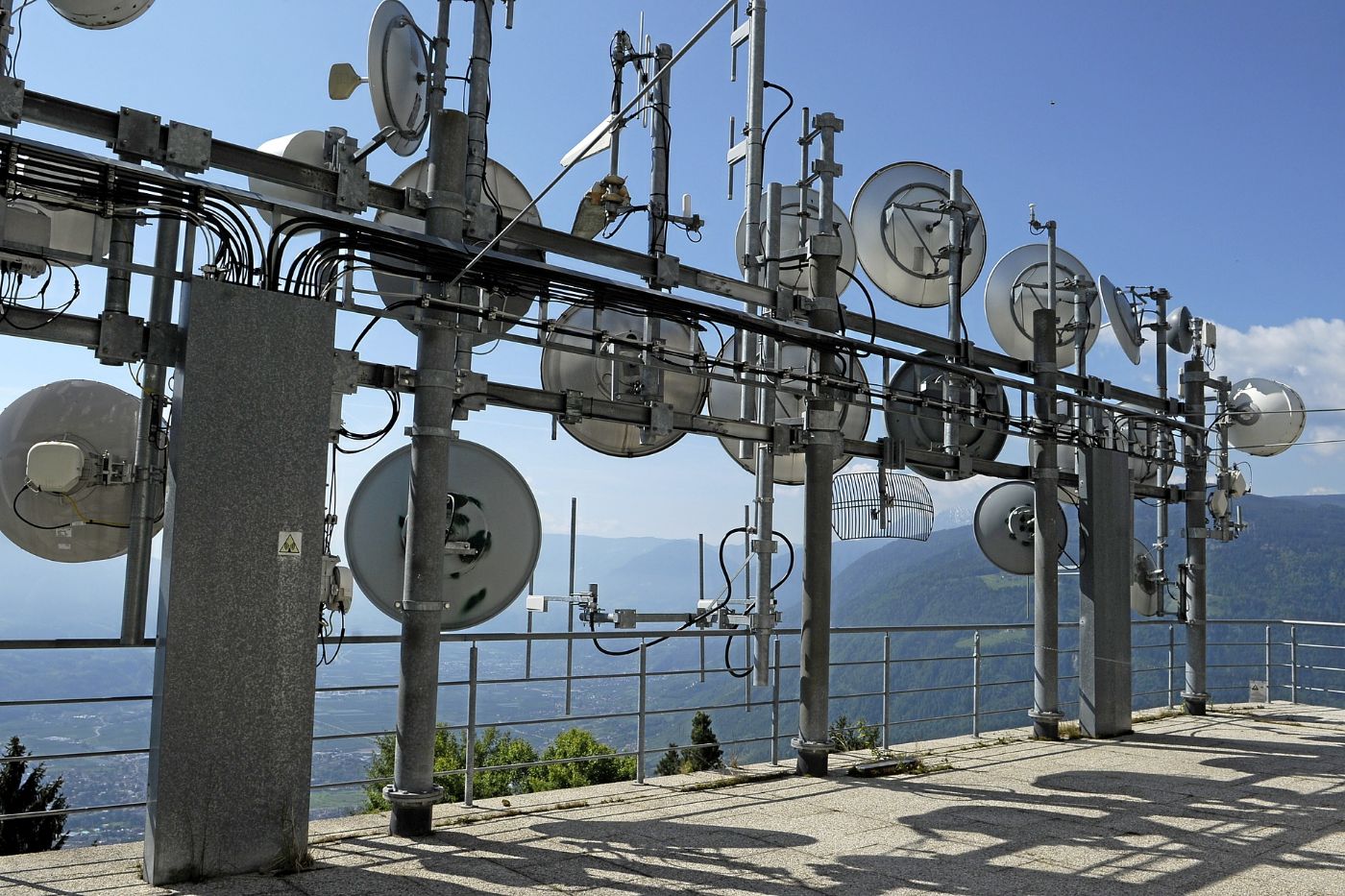
The "reach" of Albany TV stations is a matter of physics. Most major transmitters are located on the Helderberg Escarpment in New Scotland, NY. This geological formation provides an elevation of approximately 1,800 feet above sea level, allowing signals to "look down" into the Hudson and Mohawk valleys.
However, the transition to digital broadcasting (DTV) and the subsequent repack of airwaves have changed how these signals behave. Unlike the old analog signals that would "ghost" or fade, digital signals either work perfectly or not at all (the "cliff effect").
Regional Reception Variables:
- The Adirondack Shadow: Communities like Lake George and Bolton Landing often struggle with direct reception from Albany due to the intervening mountains. In 2026, many residents in these areas rely on low-power translators or high-speed fiber internet to stream local news.
- The Berkshire Barrier: While the Helderberg signals travel east effectively, the steep drops in the Berkshires can create dead zones in towns like Lenox or Stockbridge.
- The Capital Core: Residents in Albany, Troy, and Schenectady typically enjoy "overloaded" signal strength, often requiring only a simple indoor "leaf" antenna to pull in 40+ channels including subchannels.
The Impact of ATSC 3.0 (NextGen TV) in 2026
By 2026, the rollout of ATSC 3.0, marketed as NextGen TV, has significantly altered the reach and capabilities of Albany stations. This new broadcast standard uses OFDM modulation, which is much more robust than the previous 8-VSB standard used in ATSC 1.0.
Advantages for Capital Region Viewers:
- 4K and HDR: Stations like WNYT and WRGB now broadcast select events in 4K resolution, providing a "theatrical" reach for home theaters.
- Mobile Reception: ATSC 3.0 allows for signal reception on moving devices. Commuters on the Northway (I-87) or the New York State Thruway can now receive stable TV signals on tablets or automotive infotainment systems.
- Deep Indoor Penetration: One of the historic complaints in Albany’s older brick buildings (especially in the Center Square neighborhood) was the inability of TV signals to penetrate walls. NextGen TV has largely solved this, extending the effective reach of stations into dense urban environments.
- Targeted Emergency Alerts: The reach is no longer just "all or nothing." Stations can now send hyper-local emergency alerts to specific zip codes within the DMA, which is invaluable during the region’s frequent winter storms.
Digital Subchannels: Expanding the Content Reach
The reach of a station is no longer limited to its primary network affiliation. Through multicasting, Albany stations provide a "bouquet" of channels that cater to specific interests. This has allowed broadcasters to reclaim audiences that had previously migrated to cable.
| Station | Primary | Subchannel 2 | Subchannel 3 | Subchannel 4 |
|---|---|---|---|---|
| WRGB | CBS (6.1) | TBD (6.2) | Comet (6.3) | Charge! (6.4) |
| WTEN | ABC (10.1) | GetTV (10.2) | Laff (10.3) | Rewind TV (10.4) |
| WNYT | NBC (13.1) | MeTV (13.2) | Start TV (13.3) | Movies! (13.4) |
| WXXA | Fox (23.1) | Antenna TV (23.2) | Grit (23.3) | Ion Mystery (23.4) |
| WMHT | PBS (17.1) | Create (17.2) | World (17.3) | PBS Kids (17.4) |
| WCWN | CW (45.1) | Charge! (45.2) | Stadium (45.3) | Dabl (45.4) |
These subchannels significantly increase the "utility reach" of each station. For example, a viewer may rarely watch ABC on WTEN but may be a daily viewer of Laff or Rewind TV, keeping the station's total household reach high.
Streaming, Cable, and the "Cord-Cutting" Landscape
In 2026, the definition of a station’s "reach" must include its digital presence. Spectrum (Charter Communications) remains the dominant cable provider in the Albany market, carrying all local stations in high definition. However, the shift toward Virtual Multichannel Video Programming Distributors (vMVPDs) has changed the game.
OTT (Over-the-Top) Availability
Albany stations are now fully integrated into streaming services such as:
- YouTube TV & Hulu + Live TV: Provide full access to WRGB, WNYT, WTEN, and WXXA.
- Paramount+: Direct reach for WRGB (CBS) content and live local feeds.
- Peacock: Direct reach for WNYT (NBC) local news and primetime.
- Local Now & NewsON: These apps have expanded the reach of local news to viewers who do not pay for a full cable or streaming package but want to stay informed about Capital Region events.
Broadcasters have also invested in their own apps. The "News10" and "WNYT NewsChannel 13" apps are staples for residents, providing live-streamed newscasts that extend the station's reach globally, allowing former residents or traveling businesspeople to stay connected to the Albany area.
Advertising and Audience Reach
For businesses, the reach of Albany TV stations is a primary metric for marketing spend. The market is unique because of its high concentration of state employees and healthcare professionals (centered around Albany Med and St. Peter’s).
Advertisers often use a "blended reach" strategy. Because WNYT tends to perform well in the 5:00 PM to 6:30 PM news slots, and WRGB carries a strong daytime audience with soap operas and game shows, a diversified ad buy is necessary to cover the entire DMA. WXXA (Fox) is the go-to for reaching the male 18-49 demographic, particularly during the NFL season, where the reach peaks significantly.
Furthermore, the "reach" into Western Massachusetts is a lucrative niche. Residents in Pittsfield and North Adams are technically in the Albany DMA, meaning they see Albany commercials. This creates a cross-border economic flow where Massachusetts residents are encouraged to shop at the Colonie Center or Crossgates Mall in New York.
Troubleshooting Reception in the Hudson Valley and Beyond
Despite the technological advances of 2026, some viewers still struggle with "reaching" these stations via antenna. This is often due to the "multi-path interference" caused by signals bouncing off the many hills and tall buildings in the region.
Expert Tips for Maximizing Reach:
- Antenna Height: In the Capital Region, height is more important than raw power. Mounting an antenna in an attic or on a roof usually doubles the number of receivable channels compared to a window-mounted unit.
- Directional Aiming: Since almost all transmitters are on the Helderberg Escarpment (southwest of Albany), residents in Troy or Clifton Park should aim their antennas toward the southwest.
- LTE/5G Filters: With the proliferation of 5G towers in 2026, interference with TV frequencies is common. Using a high-quality LTE filter can often "clean up" a signal that appears to be dropping out.
- Amplification Cautions: In downtown Albany or Schenectady, a signal amplifier might actually hurt reception by "overdriving" the tuner. Amplifiers are best used in distant locations like Saranc Lake or southern Columbia County.
Frequently Asked Questions
Which Albany TV station has the largest geographic reach?
WNYT (NBC) and WTEN (ABC) generally have the largest geographic reach due to their extensive network of translator stations in the Adirondacks and the Berkshires. While the primary transmitters for all stations are located in the same general area, the use of these "repeaters" allows WNYT and WTEN to reach deep into valleys that WRGB or WXXA might miss.
Can I get Albany TV stations in Bennington, Vermont?
Yes. Bennington is part of the Albany-Schenectady-Troy DMA. Most residents receive these stations via cable or satellite. Over-the-air reception is possible with a high-gain outdoor antenna aimed west/southwest, though the Green Mountains can present significant obstacles depending on your specific elevation.
Do Albany stations broadcast in 4K?
As of 2026, several Albany stations have transitioned to ATSC 3.0 (NextGen TV), which supports 4K broadcasting. While not all programming is produced in 4K, major sporting events and high-profile network shows are increasingly available in this format to viewers with compatible tuners and antennas.
Why do I see Albany news in Pittsfield, Massachusetts?
Pittsfield is officially assigned to the Albany DMA by Nielsen. Because of this, cable companies in the Berkshires are required by law to carry Albany stations rather than Boston or Springfield stations, as Albany is considered the "local" market for that area.
What happened to the "snowy" picture on my TV?
With the total transition to digital signals, "snow" is a thing of the past. If a signal is weak in 2026, the picture will either "pixelate" (break into small squares) or disappear entirely with a "No Signal" message. This is known as digital drop-out and is usually fixed by repositioning the antenna.
Summary and Next Actions
The television landscape in Albany for 2026 is a sophisticated mix of traditional broadcast power and modern digital accessibility. With the Helderberg Escarpment serving as the primary launchpad, stations like WRGB, WNYT, and WTEN reach deep into three states, providing essential news, weather, and entertainment.
To maximize your access to these stations, consider upgrading to an ATSC 3.0-compatible tuner or television. If you are a cord-cutter, an outdoor, multi-directional antenna remains the most cost-effective way to harness the full reach of the Capital Region’s vibrant media market. For those in remote areas, investigating local news streaming apps is the most reliable way to bypass topographical interference and stay connected to the heart of New York’s Capital District.