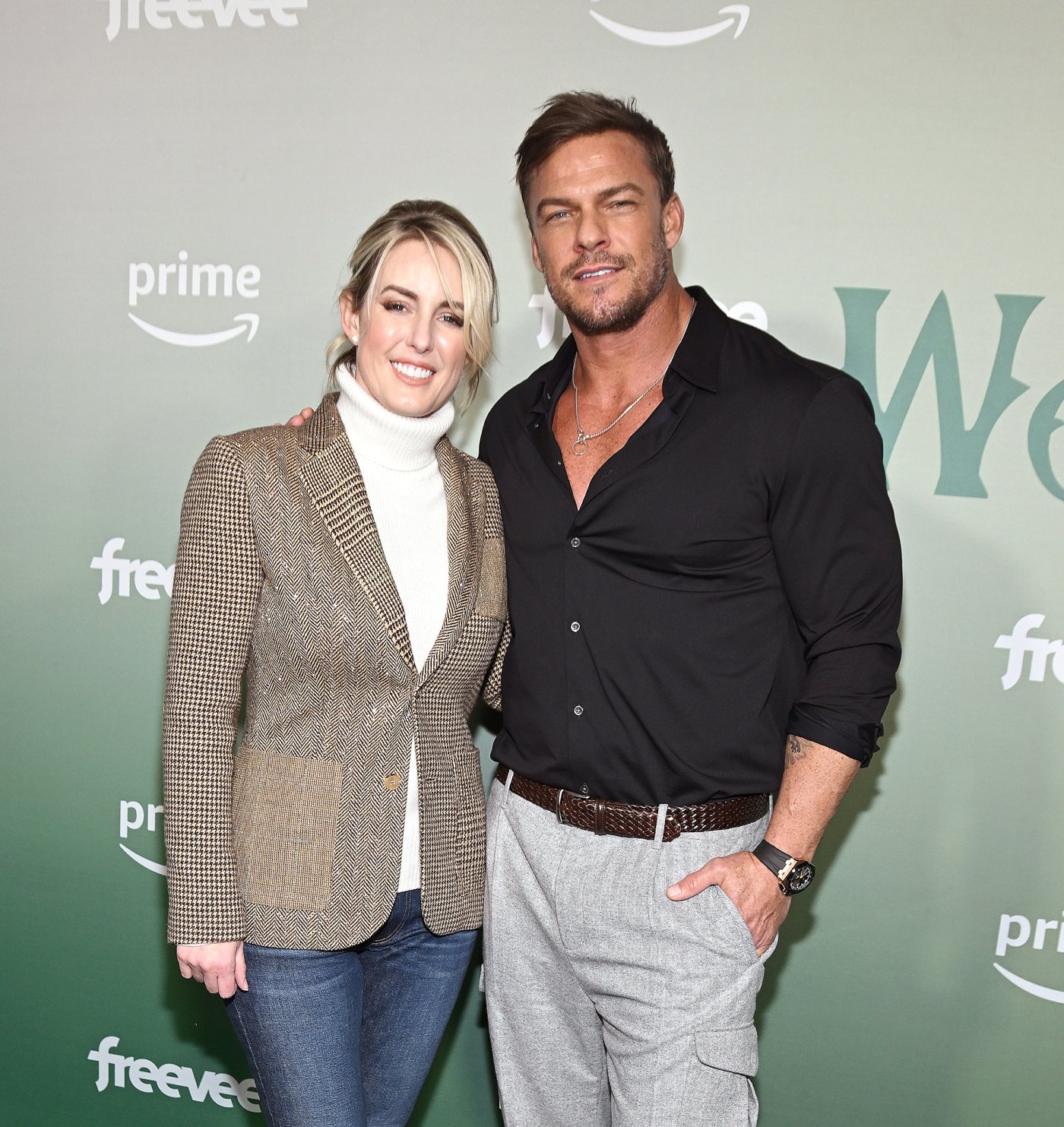
Alan Ritchson portrayed the character Raphael in the 2014 live-action reboot Teenage Mutant Ninja Turtles and its 2016 sequel, Teenage Mutant Ninja Turtles: Out of the Shadows. He provided both the physical motion-capture performance and the voice for the character, bringing a gritty, physically imposing presence to the team’s resident "hot-head" under the production of Michael Bay’s Platinum Dunes.
As of 2026, Alan Ritchson has become one of the most recognizable action stars in Hollywood, largely due to his breakout success in the Reacher series. However, long before he was Jack Reacher, Ritchson was navigating the complex and often grueling world of high-budget performance capture as Raphael. His time as the sai-wielding Ninja Turtle remains a fascinating chapter in his career, marked by impressive technical work and significant behind-the-scenes challenges that Ritchson has since spoken about with remarkable candor.
The Casting and Vision for Raphael
The casting of Alan Ritchson as Raphael in the early 2010s was a strategic move by Paramount Pictures and director Jonathan Liebesman. At the time, Ritchson was known for his role as Aquaman (Arthur Curry) on Smallville and his comedic turn as Thad Castle in Blue Mountain State. He possessed a unique combination of elite athleticism, significant physical stature, and the ability to project a volatile yet protective temperament—the hallmark traits of Raphael.
In this iteration of the franchise, the goal was to differentiate the four brothers not just by their colored bandanas, but by their physical silhouettes. Raphael was designed to be the "muscle" of the group. Standing taller and broader than Leonardo, Michelangelo, and Donatello, the 2014 version of Raphael was a literal powerhouse. Ritchson’s own 6'3" frame provided the perfect foundation for this "tank" version of the character. The creative team wanted a Raphael who felt like a brawler, someone whose physical presence alone could intimidate the Foot Clan.
Mastering the Motion Capture Technology
Unlike the 1990s TMNT films, which utilized practical animatronic suits created by Jim Henson’s Creature Shop, the 2014 and 2016 films utilized "integrated performance capture." This meant that Ritchson and his co-stars (Noel Fisher, Jeremy Howard, and Pete Ploszek) had to perform on set in gray motion-capture suits covered in sensors, often wearing bulky "turtle shells" on their backs to ensure they moved with the correct weight and took up the appropriate amount of space in the frame.
The technical depth required for this role was immense. Ritchson wasn't just a voice actor; he was a physical performer who had to master the movements of a master martial artist while burdened by gear. Industrial Light & Magic (ILM), the visual effects powerhouse, used the data from Ritchson’s facial expressions and body movements to render the CGI version of Raphael.
The Nuance of the Performance
Ritchson’s Raphael was characterized by a deep-seated anger that masked a profound love for his brothers. This required more than just shouting; it required a physicality that suggested constant tension. Ritchson utilized his background in athletics to give Raphael a heavy, grounded fighting style. When Raphael strikes, it isn't the fluid grace of Leonardo; it is the explosive power of a street fighter. This distinction was vital in making the four brothers feel like distinct individuals sharing a screen.
Characterization: The Rebel with a Heart of Steel
In both Teenage Mutant Ninja Turtles (2014) and Out of the Shadows (2016), Raphael’s character arc revolves around his struggle with the hierarchy of the team and his desire for independence. Ritchson brought a specific vocal grit to the role, choosing a voice that sounded weathered and aggressive, yet capable of breaking during moments of vulnerability.
One of the standout sequences in the first film involves Raphael's solo attempt to save his brothers from Shredder’s compound. This sequence highlights the "loner" aspect of the character that Ritchson played so effectively. In the sequel, Out of the Shadows, the character’s depth is explored further through his reaction to the "Purple Ooze," which offers the turtles a chance to become human. Ritchson’s portrayal of Raphael’s inner conflict—the desire to be accepted by the world versus the loyalty to his identity as a mutant—is often cited as the emotional core of the second film.
Comparing the Two Films: Production and Reception
The two films Ritchson starred in had different directorial styles and critical receptions. The 2014 film was a massive commercial success but faced criticism for its dark tone and the "human-like" facial designs of the turtles. The 2016 sequel, directed by Dave Green, attempted to course-correct by leaning into the "Saturday morning cartoon" aesthetics, introducing fan-favorite characters like Casey Jones, Bebop, and Rocksteady.
| Feature | Teenage Mutant Ninja Turtles (2014) | TMNT: Out of the Shadows (2016) |
|---|---|---|
| Director | Jonathan Liebesman | Dave Green |
| Raphael's Primary Conflict | Conflict with Leonardo's leadership | The temptation to become human |
| Visual Style | Gritty, high-contrast, Michael Bay-esque | Bright, colorful, traditional TMNT feel |
| Key Action Set-Piece | The mountainside snowy chase | The skydiving/river sequence |
| Critical Reception | Mixed/Negative (22% Rotten Tomatoes) | Improved/Mixed (37% Rotten Tomatoes) |
| Box Office | $493.3 Million | $245.6 Million |
Despite the commercial dip of the second film, Ritchson’s performance remained a highlight. He managed to maintain consistency in Raphael’s character growth, showing a turtle who was slowly learning to trust his brothers and embrace his role as the team’s protector.
The "Inside of You" Revelation: Behind-the-Scenes Struggles
In the years following the release of the films, Alan Ritchson has been candid about the difficulties he faced during the production. Speaking on podcasts such as Michael Rosenbaum’s Inside of You, Ritchson detailed a lack of respect for the motion-capture actors on set.
The Reality of Mocap Acting
Ritchson revealed that despite being the primary performers who spent the most time on set, the "turtle actors" were often treated as secondary to the human stars. He cited instances where they were told they wouldn't have to do press, were paid significantly less than their live-action counterparts, and were even denied basic set amenities at times.
One of the most poignant criticisms Ritchson made was regarding the promise of "making the actors the stars." He felt that the studio used the actors' physical labor and emotional performances to build the characters, but then pushed them into the background once the marketing phase began. These revelations provided a rare look at the labor issues within high-end VFX-heavy productions and explained why Ritchson (along with his fellow turtle actors) was hesitant to return to the franchise in later years.
From Raphael to Jack Reacher: A Career Evolution
There is a clear evolutionary line between Ritchson’s Raphael and his iconic role as Jack Reacher. Both characters are defined by their immense physicality and a "speak softly but carry a big stick" (or in Raphael’s case, two sai) mentality.
- Physical Presence: The experience of playing a massive CGI character taught Ritchson how to use his body to tell a story. In Reacher, he uses that same "heavy" movement to convey a sense of unstoppable momentum.
- Internalized Rage: Raphael’s struggle to control his temper is mirrored in Reacher’s cold, calculated violence. Ritchson learned how to portray a character who is a "ticking time bomb" during his years as a Ninja Turtle.
- The Loner Archetype: Both Raphael and Reacher are characters who often feel they don't fit into conventional society. Ritchson has mastered the art of playing the "outsider" who nonetheless fights for the greater good.
As of 2026, Ritchson’s portrayal of Raphael is seen as a crucial stepping stone. It proved he could lead a multi-million dollar franchise and handle the technical demands of modern filmmaking, even if the experience itself was fraught with personal and professional challenges.
The Technical Legacy of the Bay-Era Turtles
While the 2014 and 2016 films remain polarizing among TMNT purists, their technical achievements cannot be denied. The work Ritchson did with ILM pushed the boundaries of facial performance capture. Raphael’s face in the films is capable of extreme micro-expressions, allowing Ritchson’s actual performance to shine through the digital mask.
The use of "sub-surface scattering" (a rendering technique that mimics how light penetrates skin) and the intricate detailing on Raphael’s shell and gear set a new standard for how non-human characters could be integrated into a live-action environment. Even a decade later, the visual fidelity of Raphael’s character model in Out of the Shadows remains impressive by 2026 standards.
How to Revisit Alan Ritchson’s Raphael Today
For fans of Alan Ritchson who only know him from Reacher or The Ministry of Ungentlemanly Warfare, revisiting the TMNT films offers a new perspective on his range.
- Watch for the Physicality: Pay attention to how Raphael moves compared to the other turtles. Ritchson gives him a distinct "weight" and a brawler’s stance that is absent from the more acrobatic Michelangelo.
- Listen to the Vocal Performance: Ritchson avoids a generic "tough guy" voice, instead opting for a rasp that suggests a character who has been through significant trauma.
- The Emotional Peaks: The "elevator scene" in the 2014 film and the rooftop argument in the 2016 film are perhaps the best examples of Ritchson’s ability to find the humanity within a giant CGI reptile.
FAQ: Alan Ritchson and the TMNT Franchise
Did Alan Ritchson do his own stunts as Raphael?
Ritchson performed the majority of the physical movements captured for the film, including the fighting stances and character-specific motions. However, for the high-level martial arts, wirework, and dangerous acrobatics, professional stunt doubles and specialized martial artists were used to ensure the safety of the actors and the quality of the choreography.
Why didn't Alan Ritchson return for more TMNT movies?
The 2016 sequel, Out of the Shadows, did not perform well enough at the box office to justify a third film in that specific continuity. Furthermore, Ritchson’s public comments regarding the poor treatment of the actors on set suggested he was unlikely to return to that production environment even if a third film had been greenlit.
Did Alan Ritchson only provide the voice for Raphael?
No. This is a common misconception. Ritchson provided the full "performance capture," meaning his body movements, facial expressions, and voice were all recorded simultaneously on set to create the digital character. He was physically present in every scene where Raphael appeared.
How does Ritchson's Raphael compare to the version in "Mutant Mayhem"?
The version of Raphael in the 2023 animated film Mutant Mayhem (and its 2026 sequel) is portrayed as a younger, more "teenage" version of the character, voiced by Shamon Brown Jr. Ritchson’s version was significantly older, more physically intimidating, and leaned more into the "dark and gritty" interpretation of the Mirage Comics.
What has Alan Ritchson said about the TMNT fans?
Despite his issues with the production and the studio, Ritchson has always expressed great love for the TMNT fanbase. He has frequently noted that he took the role because he grew up a fan of the turtles and wanted to do justice to the character of Raphael for the people who loved him.
Practical Recommendation for Fans
If you are interested in the evolution of performance capture or Alan Ritchson’s career, the best way to experience his work as Raphael is to watch Teenage Mutant Ninja Turtles: Out of the Shadows in 4K. This sequel allows more room for Ritchson’s performance to breathe and features significantly better visual integration than the 2014 original. Additionally, seeking out his interviews regarding the production provides a valuable lesson in the "human cost" of big-budget VFX filmmaking.