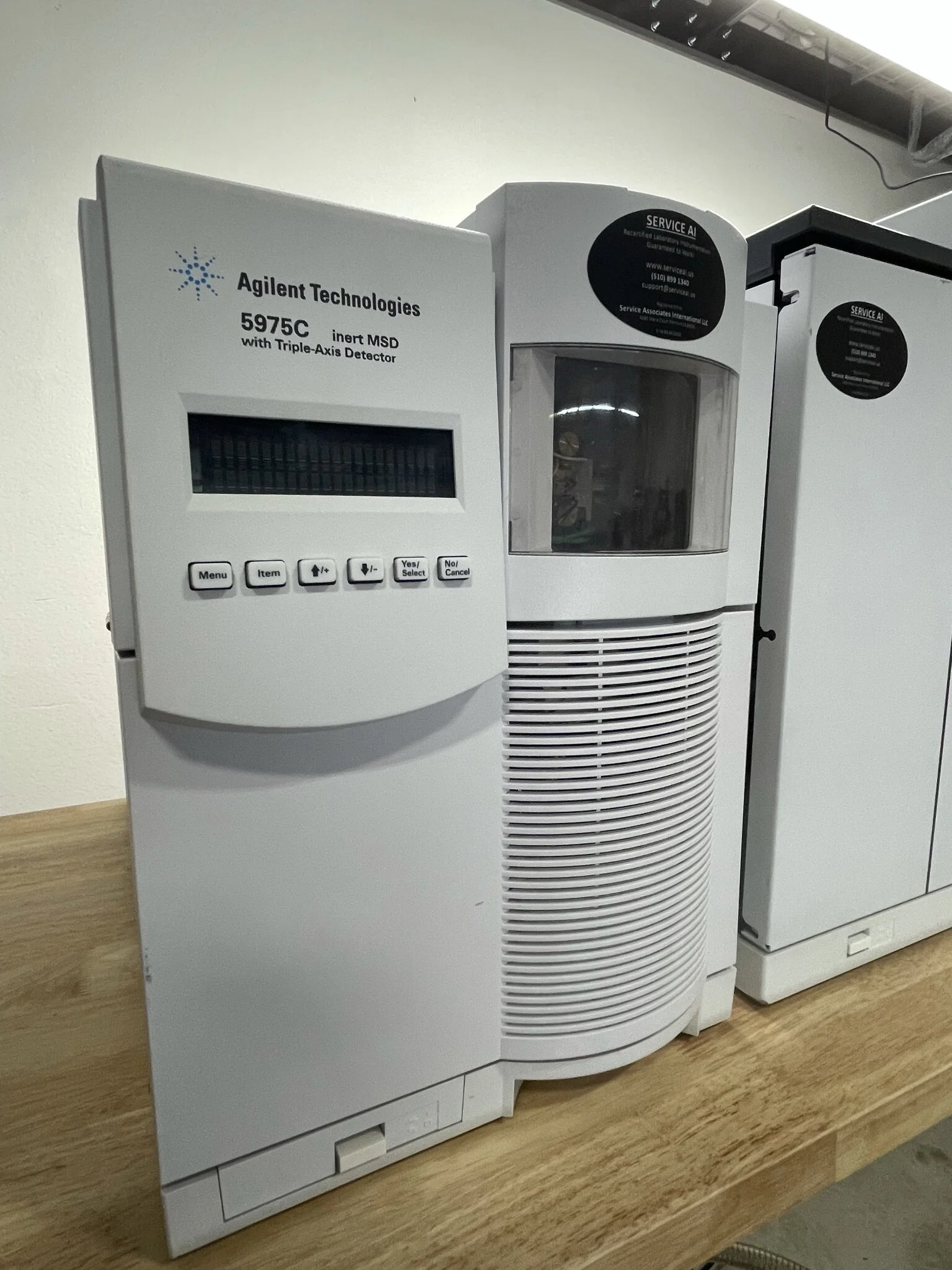
Agilent service, primarily delivered through the Agilent CrossLab framework, provides comprehensive maintenance, repair, and compliance solutions for analytical laboratory instrumentation. These services ensure peak instrument performance, minimize unplanned downtime, and maintain strict regulatory compliance through expert technical support, genuine replacement parts, and advanced digital diagnostic tools tailored for liquid and gas chromatography, mass spectrometry, and spectroscopy.
Understanding Agilent CrossLab: The Framework of Modern Lab Service
In 2026, the landscape of laboratory operations demands more than just occasional repairs; it requires a holistic approach to instrument lifecycle management. Agilent CrossLab is the primary service brand under which Agilent Technologies provides its support ecosystem. It is designed to bridge the gap between simple technical support and full-scale laboratory asset management.
The core philosophy of Agilent service has shifted from a "break-fix" reactive model to a proactive, data-driven strategy. This evolution is necessitated by the increasing complexity of analytical workflows in pharmaceuticals, environmental testing, and clinical research. When a laboratory invests in Agilent service, they are not merely purchasing a repair contract; they are securing a commitment to operational continuity.
The Shift Toward Proactive Maintenance
The cost of downtime in a high-throughput laboratory can range from thousands to tens of thousands of dollars per day. Agilent service addresses this through Preventive Maintenance (PM) protocols. PM is not a generic cleaning; it is a specialized technical procedure where high-wear components (such as pump seals, gold seals, and liners) are replaced before they fail. By scheduling these interventions, labs can transition from emergency repairs to planned, manageable service windows.
Digital Integration and CrossLab Connect
As of 2026, Agilent has fully integrated its CrossLab Connect digital suite into its service offerings. This platform uses Internet of Things (IoT) sensors to monitor instrument health in real-time. Service technicians can often diagnose a failing turbomolecular pump or a degrading detector lamp remotely, often before the laboratory staff notices a shift in data quality. This "smart" service layer is a prerequisite for labs aiming for Industry 4.0 standards.
Types of Agilent Service Plans and Coverage Levels
Agilent offers tiered service plans to accommodate different budgetary constraints and operational risks. Choosing the right plan requires an analysis of the instrument’s "criticality"—how much the lab suffers if that specific machine goes offline.
1. CrossLab Platinum: The Gold Standard for Mission-Critical Systems
The Platinum plan is designed for labs where downtime is not an option. It typically includes the fastest on-site response times (often 24 to 48 hours) and covers all parts, labor, and travel costs. In 2026, Platinum coverage often includes advanced features like on-demand remote assistance via augmented reality (AR) headsets, allowing lab staff to perform basic troubleshooting guided by a remote Agilent expert.
2. CrossLab Gold: The Balanced Approach
The Gold plan is the most common choice for standard R&D and quality control laboratories. It covers all repair costs and includes an annual Preventive Maintenance visit. This plan provides a predictable annual expenditure, shielding the lab from the high costs of expensive components like mass spectrometer boards or complex optical assemblies.
3. CrossLab Silver: Essential Coverage
Silver plans focus on protecting the lab against major repair costs while allowing for more flexible scheduling. While it includes labor and parts for repairs, it may not include the annual PM as a standard feature, or it may have a slower guaranteed response time compared to Gold or Platinum tiers.
4. Bronze and Basic Repair Services
For laboratories with lower usage rates or non-critical backups, Agilent provides Bronze plans or "Per-Incident" repair services. These are billed based on time and materials. While the hourly rates for a certified Agilent field service engineer (FSE) are significant, the use of genuine parts and factory-level diagnostics ensures the repair is performed correctly the first time.
Comparative Analysis of Agilent CrossLab Service Tiers
| Feature | Platinum | Gold | Silver | Bronze / Per-Incident |
|---|---|---|---|---|
| Response Time | 1-2 Business Days | 2-3 Business Days | Best Effort | No Guarantee |
| Parts & Labor | Fully Included | Fully Included | Included | Billed Separately |
| Preventive Maintenance | Included (Priority) | Included | Optional Add-on | Billed Separately |
| Remote Support | Priority / AR Enabled | Standard | Standard | Basic |
| Consumables | Select Discounts | Standard | Standard | Standard |
| Compliance (IQ/OQ) | Optional Add-on | Optional Add-on | Optional Add-on | Billed Separately |
Analytical Instrument Qualification (AIQ) and Compliance Services
For laboratories operating under GxP (Good Laboratory Practice, Good Manufacturing Practice), the technical repair of an instrument is only half the task. The other half is proving that the instrument is still fit for its intended use. Agilent service specializes in Analytical Instrument Qualification (AIQ), which is essential for regulatory audits.
Navigating USP <1058> and Regulatory Requirements
Agilent’s compliance services are built around the USP <1058> framework, which categorizes instruments based on complexity and risk. Agilent service engineers use automated qualification tools (such as the Agilent Automated Compliance Engine or ACE) to perform:
- Installation Qualification (IQ): Verifying that the instrument is delivered and installed according to manufacturer specifications.
- Operational Qualification (OQ): Testing the instrument’s functional parameters (e.g., temperature accuracy, flow rate precision) in the actual lab environment.
- Performance Qualification (PQ): Periodic testing to ensure the system consistently performs within defined limits for specific applications.
In 2026, these reports are typically delivered digitally in a secure, audit-ready format that includes electronic signatures, complying with FDA 21 CFR Part 11.
Technical Support and Remote Assistance Technologies
The modern Agilent service experience is heavily augmented by remote technology. This reduces the carbon footprint of service operations and provides immediate answers to lab personnel.
Virtual Support and Augmented Reality Integration
One of the most significant advancements in Agilent service is the use of CrossLab Virtual Assist. Using a smartphone or a dedicated AR headset, a lab technician can share their "field of vision" with an Agilent engineer. The engineer can then overlay digital instructions onto the physical instrument, pointing to specific valves or cables that need adjustment. This technology has successfully resolved approximately 30-40% of common hardware issues without the need for an on-site visit.
Knowledge Portal and Self-Service
Agilent maintains an extensive online knowledge base. For users under a service contract, access to advanced troubleshooting guides, video tutorials, and firmware updates is streamlined. This empowers internal "super-users" to handle minor issues, keeping the lab running during off-hours or weekends when an FSE might not be immediately available.
The Importance of Genuine Agilent Parts
A critical component of Agilent service is the exclusive use of OEM (Original Equipment Manufacturer) parts. While third-party alternatives exist for common consumables like vials or septa, critical internal components—such as detector lamps, electron multipliers, and high-pressure valves—are engineered to specific tolerances.
Using non-genuine parts can lead to:
- Reduced Sensitivity: Minor variations in glass quality or metal purity can increase noise in a chromatogram.
- Voided Warranties: Repairs necessitated by the failure of a third-party part are generally not covered under Agilent service contracts.
- Shortened Lifespan: An incorrectly specced pump seal can cause premature wear on the ceramic pistons, leading to a much more expensive repair later.
Agilent service ensures that every part used is a certified match for the specific instrument serial number, maintaining the integrity of the original factory specifications.
Lifecycle Management: Beyond the Repair
Agilent service in 2026 also encompasses the "end-of-life" phase for instrumentation. As technology advances, older models become more difficult to support because components become obsolete.
Transition Services and Trade-Ins
Agilent provides a clear "End of Guaranteed Support" (EGS) timeline for its products. When an instrument approaches EGS, Agilent service includes consultation on migration paths. This might involve:
- Refurbished Programs: Agilent Certified Pre-Owned instruments offer a way to expand capacity with a limited budget, backed by the same service guarantees as new equipment.
- Trade-in Credits: Leveraging the residual value of an old GC or LC toward the purchase of a next-generation system.
- Recycling Programs: Ensuring that decommissioned instruments are disposed of in an environmentally responsible manner, recovering precious metals and safely handling hazardous materials.
Troubleshooting and Common Agilent Service Scenarios
While Agilent instruments are known for their robustness, certain scenarios frequently trigger a service call. Understanding these can help lab managers better utilize their service contracts.
Baseline Noise and Drift in LC/GC
Often caused by contaminated mobile phases or a degrading detector lamp. Agilent service engineers utilize specialized diagnostic software to run "intensity tests" on lamps, determining if the issue is the hardware or the chemistry.
Pressure Fluctuations
In HPLC systems, pressure fluctuations often point to a failing check valve or a leak in the injector. Agilent service includes the replacement of these high-pressure components during a standard PM visit, which is why labs with PM contracts see significantly fewer "pressure shutdown" errors.
Communication Errors
In the modern networked lab, instruments frequently lose "handshake" connectivity with the Data System (e.g., OpenLab CDS). Agilent service extends to the software interface, helping resolve driver conflicts or network configuration issues that prevent the instrument from reporting data.
Factors Influencing Agilent Service Costs in 2026
The cost of an Agilent service contract is not a flat fee; it is calculated based on several variables:
- Instrument Age: Older instruments require more frequent parts replacement, leading to higher premiums.
- Usage Intensity: A mass spec running 24/7 in a clinical lab will have a higher service cost than one used twice a week in an academic setting.
- Location: Remote laboratories may face higher travel fees if they are outside of major metropolitan service hubs.
- Multi-Vendor Requirements: Interestingly, through CrossLab Multi-Vendor Services, Agilent can provide service for non-Agilent equipment (such as Waters, Shimadzu, or Thermo Fisher instruments). Consolidating these under one Agilent contract can often lead to volume discounts.
Frequently Asked Questions
How do I request an Agilent service visit?
You can request service through the Agilent CrossLab online portal, the Agilent mobile app, or by calling the regional technical support center. You will need your instrument's serial number and a brief description of the error code or symptom. Users with Platinum or Gold contracts receive priority in the scheduling queue.
What is the difference between a PM and an OQ?
A Preventive Maintenance (PM) visit focuses on the physical health of the instrument (replacing worn parts and cleaning). An Operational Qualification (OQ) is a documented testing procedure to prove the instrument meets specific performance criteria. While often performed together, a PM is about reliability, while an OQ is about regulatory compliance.
Can Agilent service non-Agilent instruments?
Yes, Agilent CrossLab offers Multi-Vendor Services (MVS). Agilent engineers are trained to maintain and repair analytical equipment from other major manufacturers. This allows laboratories to have a single point of contact for their entire instrument fleet, simplifying administrative overhead and service scheduling.
Are software updates included in Agilent service contracts?
Most Agilent service plans include access to minor software updates and patches (firmware). However, major version upgrades of Chromatography Data Systems (like moving from an older version of ChemStation to the latest OpenLab CDS) may require a separate software maintenance agreement (SMA).
Is remote support as effective as an on-site visit?
For software issues, configuration problems, and initial diagnostics, remote support is often faster and just as effective. For physical hardware failures, remote support serves as a diagnostic phase that ensures the engineer arrives on-site with the correct replacement parts, significantly increasing the "First-Time Fix" rate.
Final Recommendation for Lab Managers
To maximize the value of Agilent service, it is recommended to conduct an annual audit of your laboratory assets. Identify which instruments are critical for your primary revenue-generating workflows and place them under a CrossLab Gold or Platinum plan. For secondary or aging equipment, consider a Silver plan or a pooled "On-Demand" service budget. Always ensure that Preventive Maintenance is scheduled during low-demand periods to avoid peak-season bottlenecks. By treating service as an investment in data integrity rather than a recurring expense, laboratories can ensure long-term success and minimal operational disruption.