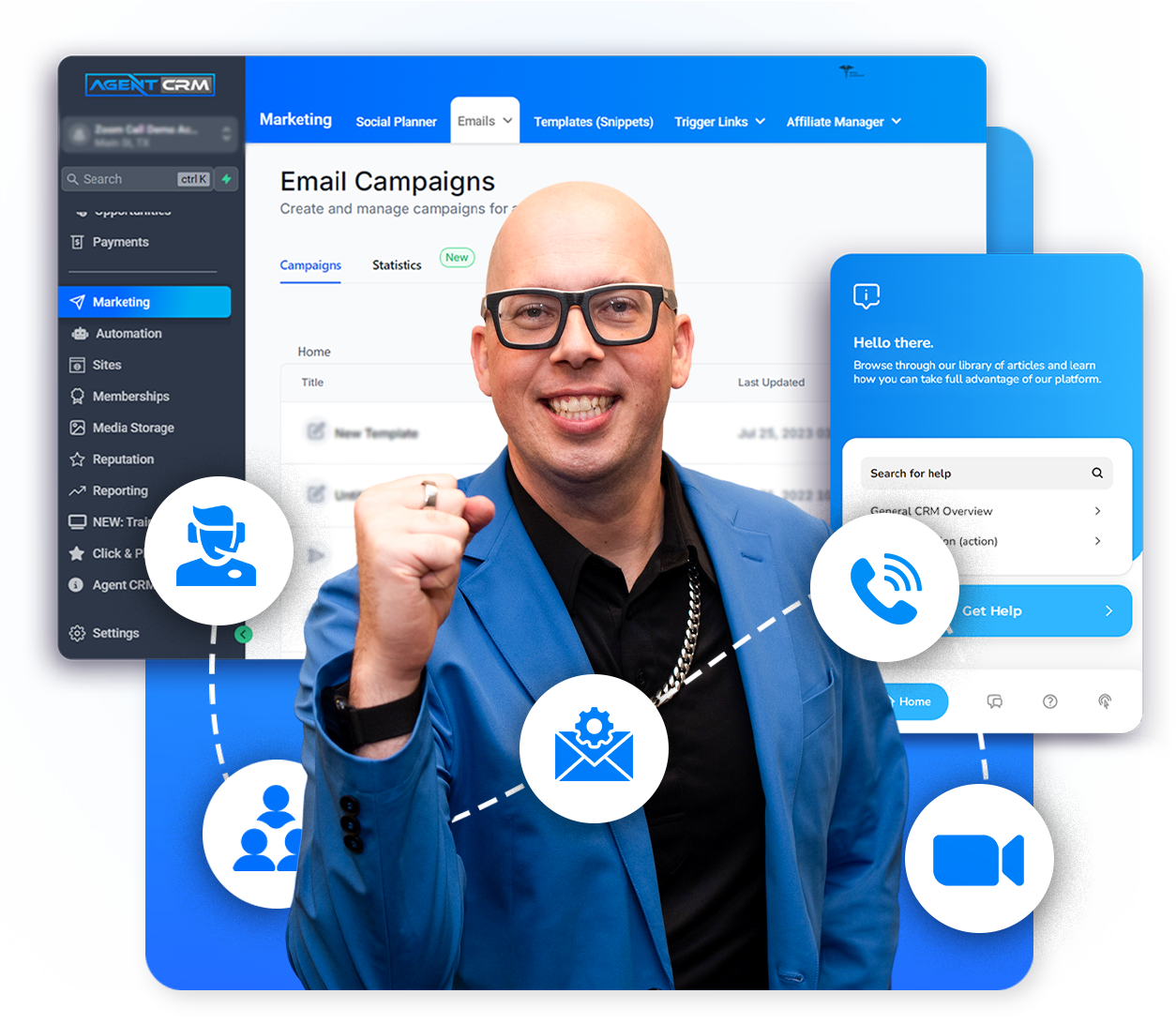
AgentExpress insurance CRM software serves as a specialized tool for lead management and sales automation, but it is not a universal solution for every agency. Its effectiveness depends heavily on an agency's specific niche, production volume, and technical requirements. While it excels at high-velocity sales, agencies requiring deep policy lifecycle management or complex commercial underwriting workflows often find it lacks the necessary modularity.
The insurance landscape in 2026 is more fragmented than ever. As digital transformation matures, agencies are discovering that the "all-in-one" promise of many software platforms frequently falls short when confronted with the unique operational realities of different insurance lines. AgentExpress, while a formidable contender in the CRM space, is built upon a specific logic that favors certain workflows over others. To determine if this software aligns with your business, you must look beyond the marketing surface and analyze how its architecture interacts with your specific organizational needs.
The Architectural Philosophy of AgentExpress
AgentExpress was designed with a primary focus on speed-to-lead and sales pipeline efficiency. In the context of 2026 technology, this means the software is optimized for high-volume environments where the goal is to convert prospects into policyholders as quickly as possible. Its interface and backend logic are streamlined to minimize the clicks required to move a lead through the funnel.
However, this focus on "velocity" creates a specialized environment. If your agency operates on a consultative basis—where a single sale might take six months and involve multiple stakeholders, complex risk assessments, and extensive document iterations—the streamlined nature of AgentExpress might feel restrictive. The software prioritizes the "now," which is excellent for individual life, health, or personal auto lines, but potentially insufficient for complex commercial brokerage operations that require deep multi-year data histories and intricate policy servicing tools.
Why One-Size-Fits-All Fails in the Insurance Niche
The insurance industry is not a monolith. A solo agent selling Medicare Supplements has almost nothing in common, operationally speaking, with a 50-person firm handling captive insurance programs or workers' compensation for construction fleets. Because of this diversity, no single CRM can claim to be the perfect fit for everyone.
Niche-Specific Data Requirements
Different insurance lines require different data fields. A CRM optimized for Property and Casualty (P&C) needs to track VIN numbers, property coordinates, and replacement costs. A Life and Health CRM needs to manage HIPAA-compliant medical histories and beneficiary data. While AgentExpress allows for some customization, it has a "core" data structure. If your agency’s primary data needs deviate significantly from that core, you end up using "custom fields" for everything, which can break reporting functionality and slow down the system.
Workflow Divergence
The workflow for a renewal-heavy agency is different from a new-business-heavy agency. If your 2026 revenue is driven 80% by renewals, you need a system that prioritizes automated touchpoints and policy expiration alerts. If AgentExpress is configured primarily as a sales hunter's tool, your account managers might find the renewal tracking cumbersome or hidden behind layers of sales-centric menus.
Evaluating Scalability and Agency Size
A common mistake in software procurement is failing to account for how the CRM handles growth. AgentExpress is often lauded for its accessibility for small to mid-sized agencies. However, as an organization scales toward the enterprise level, the requirements for User Permissions and Data Siloing become much more complex.
Large agencies often require hierarchical permissions where regional managers can see everything, but local agents can only see their assigned leads. They may also need "Team" views that allow for collaborative selling. While AgentExpress provides these features, the complexity of managing them increases exponentially as you add more users. In a high-growth environment, an agency might outgrow the management interface of a mid-market CRM, requiring a move to a more "Lego-like" modular system like Salesforce or a highly customized Microsoft Dynamics 365 instance.
The Integration Gap: AMS vs. CRM
In 2026, the distinction between an Agency Management System (AMS) and a Customer Relationship Management (CRM) tool remains a point of confusion. AgentExpress is fundamentally a CRM. Its job is to manage relationships and sales activities. It is not, by default, a full-scale AMS designed to handle trust accounting, carrier downloads (IVANS), and detailed claims tracking.
Agencies that try to use AgentExpress as a one-size-fits-all solution often run into trouble when they realize they still need an AMS to handle the "back-office" side of the business. The "fit" of AgentExpress then depends on its ability to talk to your AMS.
- Synchronous Integration: Does data flow both ways in real-time?
- Data Integrity: Does the CRM overwrite carrier-verified data in the AMS?
- User Experience: Do agents have to log into two different systems to see a full picture of the client?
If the integration isn't seamless, the CRM becomes a "silo," creating more work rather than less.
Comparative Capability Matrix
The following table compares AgentExpress against the general requirements of three distinct agency profiles to illustrate why it is not a universal fit.
| Feature / Requirement | High-Volume Life/Health Agency | Commercial Lines Brokerage | Independent P&C Agency |
|---|---|---|---|
| Lead Distribution Speed | Essential (High Performance) | Moderate Importance | Moderate Importance |
| Document Management | Basic (Applications) | Advanced (Risk Surveys/COIs) | Standard (Policies/ID Cards) |
| Automated Marketing | High Need (Drip Campaigns) | Low Need (Personalized) | High Need (Renewals) |
| API Connectivity | Essential for Lead Aggregators | Essential for Carrier Portals | Useful for Raters |
| Accounting Integration | Minimal Need | High (Direct/Agency Bill) | Moderate (Commission Tracking) |
| AgentExpress Suitability | Excellent Fit | Potential Mismatch | Conditional Fit |
Technical Depth and Customization Constraints
Every CRM has a "ceiling" for customization. AgentExpress is designed to be relatively "out-of-the-box" ready. For many agents, this is a benefit—they don't want to hire a full-time developer to set up their software. However, for agencies with unique proprietary processes, this "ready-to-wear" approach becomes a limitation.
In 2026, the use of AI-driven workflows and Proprietary Algorithms is a competitive advantage. If your agency has developed a specific way of scoring leads or a unique multi-channel outreach sequence that requires deep API hooks into third-party tools, you might find AgentExpress's API (Application Programming Interface) limits frustrating. A "one-size-fits-all" tool usually restricts how much you can tinker with the underlying engine to prevent users from breaking the system. If you need a "High-Code" environment, AgentExpress may not be the right choice.
The Human Factor: Training and Adoption
A software's "fit" isn't just about code; it's about the people using it. AgentExpress has a specific User Experience (UX) design. Some agents find it intuitive and easy to navigate, while others—particularly those used to legacy green-screen systems or highly visual kanban boards—may struggle.
When a CRM is marketed as a one-size-fits-all solution, it often results in "feature bloat." To try and please everyone, the developer adds hundreds of buttons and menus that the average user doesn't need. This creates a steep learning curve. AgentExpress has managed to avoid some of this by staying focused on sales, but if your team is looking for a pure "service" tool, they may find the sales-heavy interface distracting or confusing.
Cost Considerations and ROI
Pricing is the final area where the "one-size" philosophy fails. AgentExpress typically uses a per-user subscription model. For a small agency, this is predictable and manageable. However, for a large agency with 200+ employees, many of whom are support staff who only need limited access to the CRM, a flat per-user fee can become prohibitively expensive.
Furthermore, the Return on Investment (ROI) varies by use case.
- Lead Conversion: If you buy 1,000 leads a month, the ROI on a CRM that improves conversion by 2% is massive.
- Retention: If you have 5,000 existing clients, the ROI on a CRM that improves retention by 1% via automated birthday cards is different.
- Efficiency: If you are a solo agent, the ROI is measured in hours saved per week.
AgentExpress is priced for the value it provides in the sales and lead-management arena. If you aren't using those specific features, you are paying for "size" that doesn't fit your business model.
Common Implementation Mistakes to Avoid
- Buying for the Features, Not the Process: Do not choose AgentExpress because it has a "cool" feature you saw in a demo. Choose it because it matches the way your agents actually work.
- Neglecting Data Migration: Many agencies assume they can just "plug in" their old data. Insurance data is messy. If your old data doesn't map to the AgentExpress structure, the software will feel broken from day one.
- Skipping the Pilot Phase: Before rolling it out to 50 agents, test it with a small "Power User" group. This is where you will discover the specific ways the software isn't a "fit" for your unique workflows.
Frequently Asked Questions
Is AgentExpress better for independent agents or captive agents?
AgentExpress is generally more beneficial for independent agents who manage multiple lead sources and carriers. Independent agents require the flexibility to track different products and commissions, whereas captive agents often have company-provided tools that already handle basic CRM functions. However, an independent agent focusing on commercial lines may find it less suitable than one focusing on personal lines.
Can AgentExpress replace my Agency Management System (AMS)?
Generally, no. While AgentExpress handles front-end sales and relationship management exceptionally well, most agencies still require an AMS for back-office functions like IVANS downloads, policy dec-page storage, and trust accounting. In 2026, the best practice is to use them in tandem through a robust integration rather than trying to make one do the job of both.
Does AgentExpress support HIPAA compliance for health insurance agents?
AgentExpress provides features that support HIPAA compliance, such as data encryption and access controls. However, compliance is as much about how the agency uses the tool as the tool itself. Agents must ensure they are following proper procedures for handling Protected Health Information (PHI) within the CRM environment.
What are the main alternatives to AgentExpress in 2026?
The primary alternatives depend on your needs. For high-level customization, many turn to Salesforce Financial Services Cloud. For P&C-focused agencies, Better Agency or Insureio are common competitors. For those needing a deep AMS/CRM hybrid, Applied Epic or Vertafore remain industry standards, though they often come with a higher price tag and more complexity.
How long does the typical implementation of AgentExpress take?
For a small agency with clean data, basic setup can take 2 to 4 weeks. For larger agencies requiring custom API integrations and extensive staff training, the process can take 3 to 6 months. The "one-size" myth often leads agencies to rush this process, resulting in poor user adoption later on.
Final Recommendation
To determine if AgentExpress is the right fit, you must first document your "Ideal Customer Journey." Trace a lead from the moment it enters your system to the third year of renewal. If that journey is primarily a high-speed race to the first sale, AgentExpress is likely an excellent candidate. If that journey involves complex navigational turns through commercial underwriting, multi-state compliance, and heavy back-office accounting, you should look for a more modular or industry-specific AMS/CRM hybrid. Do not force your agency to fit the software; select the software that fits your agency.