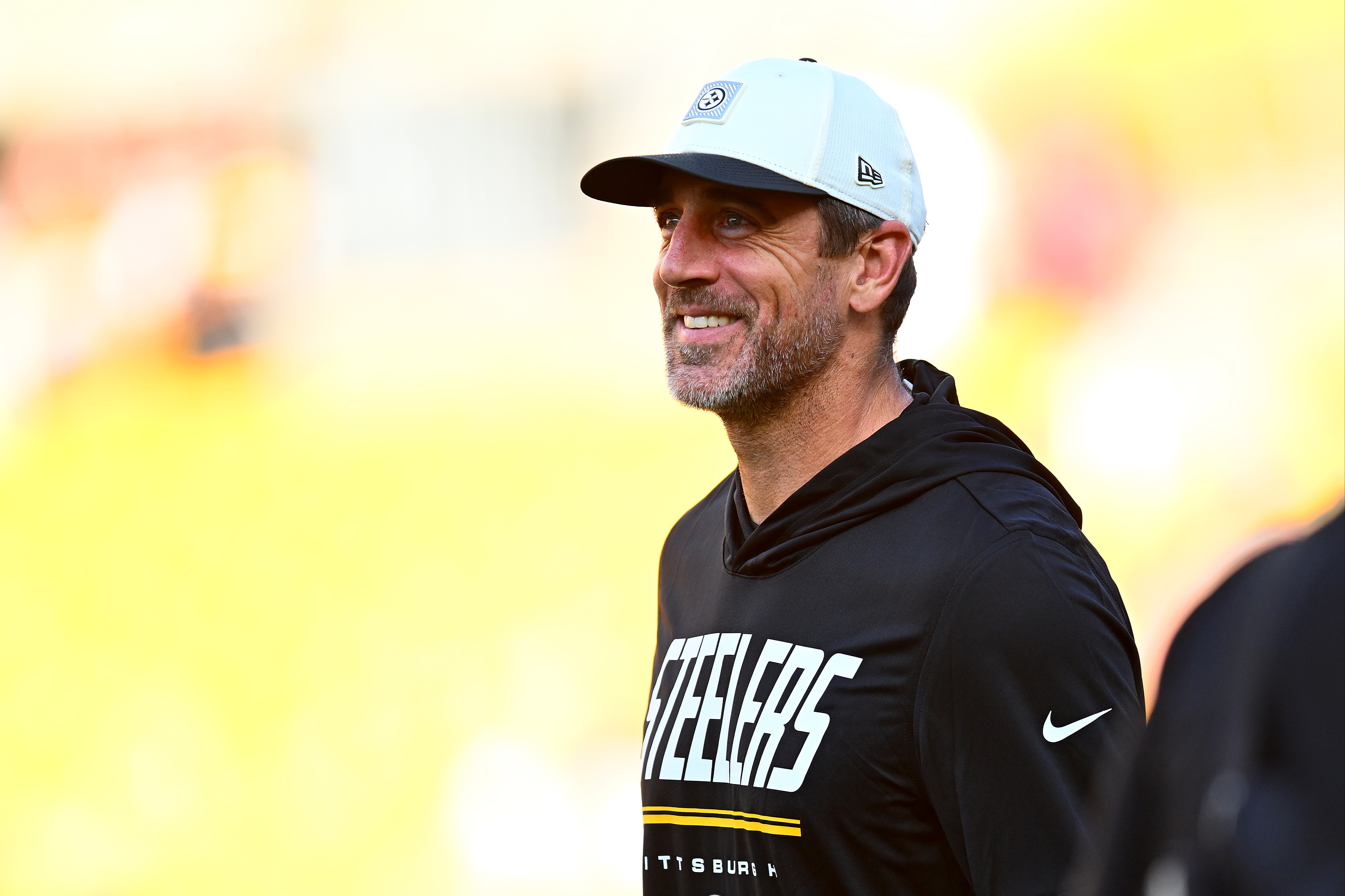
As of the 2026 NFL offseason, Aaron Rodgers continues to deliberate on his professional future, with persistent reports indicating he is weighing the physical demands of another season against his enduring commitment to the New York Jets. This decision-making process has become an annual hallmark of his late-career tenure, reflecting a cautious approach to health, team competitive status, and personal motivation.
The Evolution of the Retirement Narrative
For the past several years, the question of Aaron Rodgers’ retirement has shifted from a speculative sports media trope into a documented, cyclical part of the NFL calendar. Since his departure from the Green Bay Packers and his subsequent move to the New York Jets, Rodgers has consistently utilized the post-season window to evaluate his physical condition and mental resolve.
In 2026, the context is defined by a longer career trajectory and the increasing frequency of lower-body injuries across the league for veteran signal-callers. The primary driver for his consideration is not a lack of capability, but rather a calculation of the "cost" of playing. Rodgers has often spoken about the "all-in" mentality required to compete at a championship level. When he questions his future, he is rarely signaling a sudden drop in talent, but rather a high-level assessment of whether he can maintain the elite standard he sets for himself while enduring the rigors of an 17-game season.
Physical Conditioning and Performance Benchmarks
At his age, Aaron Rodgers approaches physical preparation with a specialized methodology. Unlike younger players who rely on general conditioning, Rodgers employs a regimen focused on mobility, core stability, and injury prevention. The uncertainty surrounding his return often stems from his own internal benchmarks. If he feels that his mobility is hampered or that his recovery time between games exceeds his satisfaction, he tends to lean toward retirement.
Observers often look to the final weeks of the 2025 season as a primary indicator of his trajectory. Performance metrics—specifically completion percentage under pressure, quarterback rating, and yards per attempt—remain high relative to the league average for veterans. However, Rodgers has historically prioritized the feeling of the game over cold statistics. His decision-making process involves a comprehensive review of his body’s response to the contact experienced during the most recent campaign.
The New York Jets Organization and Roster Dynamics
The current status of the New York Jets plays an undeniable role in Rodgers’ decision. When he signed with the franchise, the objective was clear: a pursuit of a Super Bowl championship. His continued participation is intrinsically linked to his belief in the team’s roster construction, coaching staff continuity, and the front office's commitment to immediate success.
If the team enters the 2026 offseason with significant holes in the offensive line or a lack of depth at the wide receiver position, these factors become variables in his retirement calculus. Rodgers has made it clear in past press engagements that he does not wish to be part of a rebuilding project. Therefore, his potential return is often contingent upon the team's ability to demonstrate a "win-now" strategy during the pre-draft and free agency periods.
Comparison of Annual Retirement Considerations
| Year | Primary Decision Variable | Outcome |
|---|---|---|
| 2023 | Trade dynamics and team fit | Traded to Jets |
| 2024 | Recovery from Achilles injury | Returned to play |
| 2025 | Consistency and team performance | Returned to play |
| 2026 | Longevity and championship window | Under deliberation |
The "Darkness Retreat" and Mental Preparation
A notable aspect of Aaron Rodgers' retirement deliberation has been his focus on mental clarity. While the "darkness retreat" of 2023 garnered significant mainstream attention, it represented a broader commitment to introspection. Rodgers approaches these decisions away from the immediate pressure of the locker room. By physically separating himself from the facility, he aims to reach a conclusion untainted by the "sunken cost" of team loyalty or the pressure of fan expectations.
This method is often misunderstood by analysts who view retirement purely as a business decision. For Rodgers, the decision is holistic. It involves his relationships with coaches, his legacy, and his desire to explore interests outside of football. Consequently, the silence that often accompanies his decision-making period is intentional, allowing him to weigh the emotional and psychological weight of retirement against the competitive fire that has defined his career.
Contractual Implications and Financial Considerations
From a technical standpoint, Aaron Rodgers’ contract contains specific provisions that complicate the retirement process. The financial structure of his deal with the New York Jets involves significant guarantees that become subject to negotiation should he decide to walk away.
Typically, a player of his status has a salary cap impact that the team must manage. If Rodgers decides to retire, the team must account for "dead money" and bonus prorations that could limit their ability to sign other players. This creates a feedback loop: the team needs to know his plans to manage the salary cap effectively, but Rodgers needs to see how they manage the cap to decide if he wants to return. This mutual dependence creates the tense, drawn-out atmosphere that characteristically defines his offseasons.
Common Misconceptions Regarding Retirement
One of the most persistent misconceptions is that the NFL retirement process is binary or sudden. In reality, it is a legal and administrative process involving formal filings with the league office and the Players Association (NFLPA).
- Misconception 1: "He’s just seeking attention." In reality, the professional delay is largely dictated by contract timelines and medical evaluation cycles.
- Misconception 2: "The team decides when he retires." While the team can influence a player through roster construction, the final decision remains the prerogative of the athlete under the terms of the Collective Bargaining Agreement (CBA).
- Misconception 3: "A player can't change his mind." Players have historically retired and returned, though the administrative hurdles (reinstatement, physical exams) become more complex the longer a player stays away.
External Factors: Legacy and Life After Football
As a future Hall of Famer, Aaron Rodgers’ legacy is already cemented. However, elite athletes often struggle with the transition to life after the game. His career has been the central pillar of his existence for over two decades. Retirement is not just about stopping work; it is about the end of an identity.
Observers noting that he is "still considering" retirement are often observing the tension between his desire to maintain that identity and the natural pull of a life no longer dictated by injury reports, mandatory minicamps, and travel schedules. His exploration of media, investment, and advocacy roles suggests a man who is actively building a secondary career, which logically complicates the decision to close the door on the primary one.
Frequently Asked Questions
What are the primary factors Aaron Rodgers considers when contemplating retirement? Rodgers typically evaluates his physical health, the competitive viability of his current team, and his own personal desire to continue the intense daily routine required by the NFL.
Does the New York Jets' salary cap situation influence his decision? Yes. Because his contract carries significant financial weight, his decision impacts the team's ability to sign other players, which in turn influences his assessment of the team's ability to contend for a title.
How does a player officially "retire" in the NFL? Retirement is finalized through a formal communication from the player to the team, which is then submitted to the NFL League Office. Once processed, the player is moved to the "Retired" list, and their contract is tolled or voided depending on specific clauses.
Why does this process take so long every year? The timeline is largely dictated by the NFL offseason calendar. Players often wait for medical evaluations, free agency results, and draft outcomes before making a final commitment, as these events drastically change the landscape of the upcoming season.
Is it possible for Rodgers to retire and then return to the NFL later? Yes. While it requires formal reinstatement, NFL players can come out of retirement. However, the process involves a new physical examination and potentially a renegotiation of remaining contractual obligations.
Recommended Next Steps for Following the Situation
For fans and analysts looking to track the most accurate information, it is essential to monitor official press releases from the New York Jets and statements provided by authorized representatives. Avoid speculative headlines that rely on "anonymous sources" or "insider rumors." When official news arrives, it will be communicated through the team’s media portal or directly by the athlete himself. Until such a statement is released, any reporting on his retirement status should be treated as conjecture.