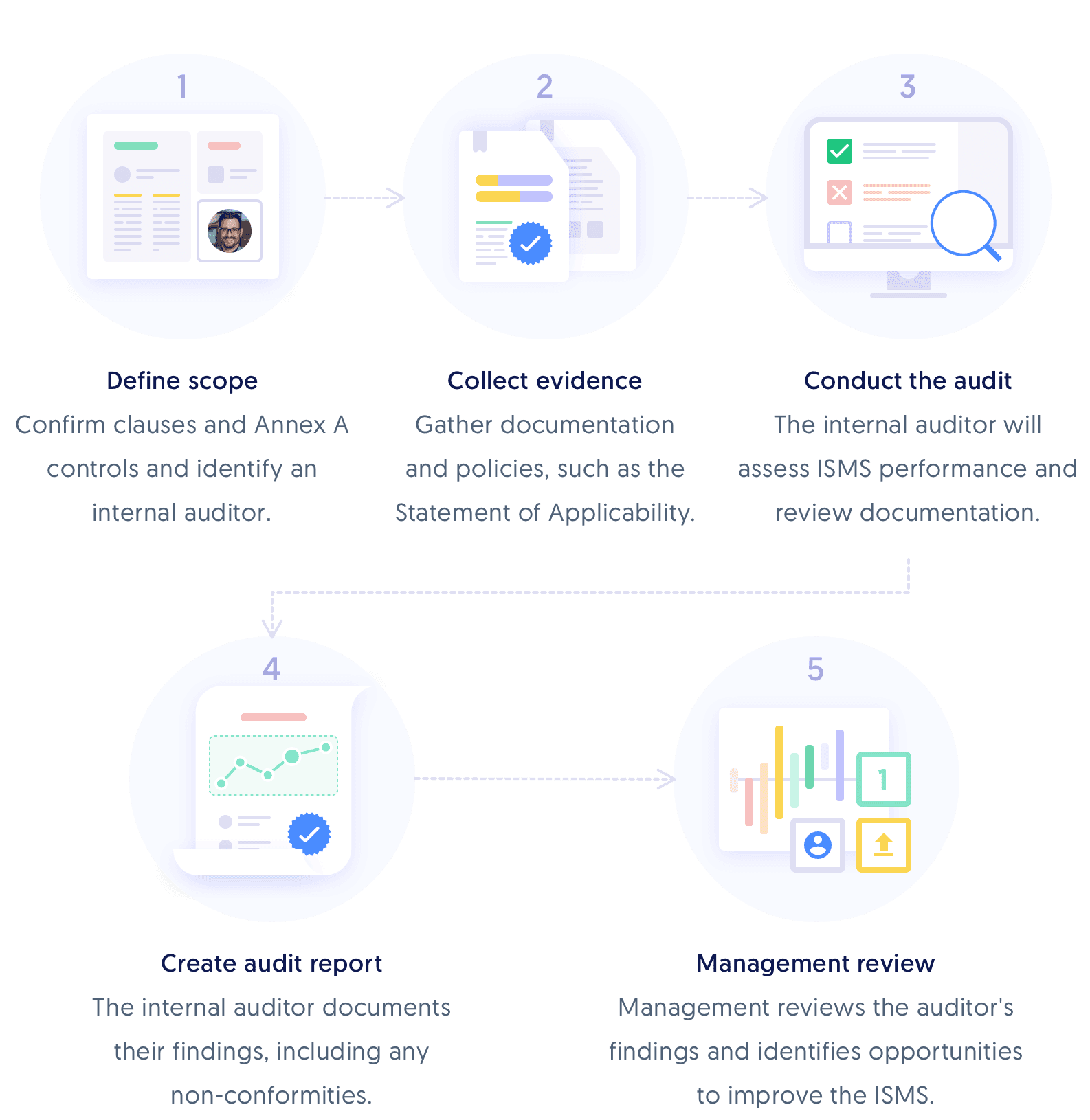
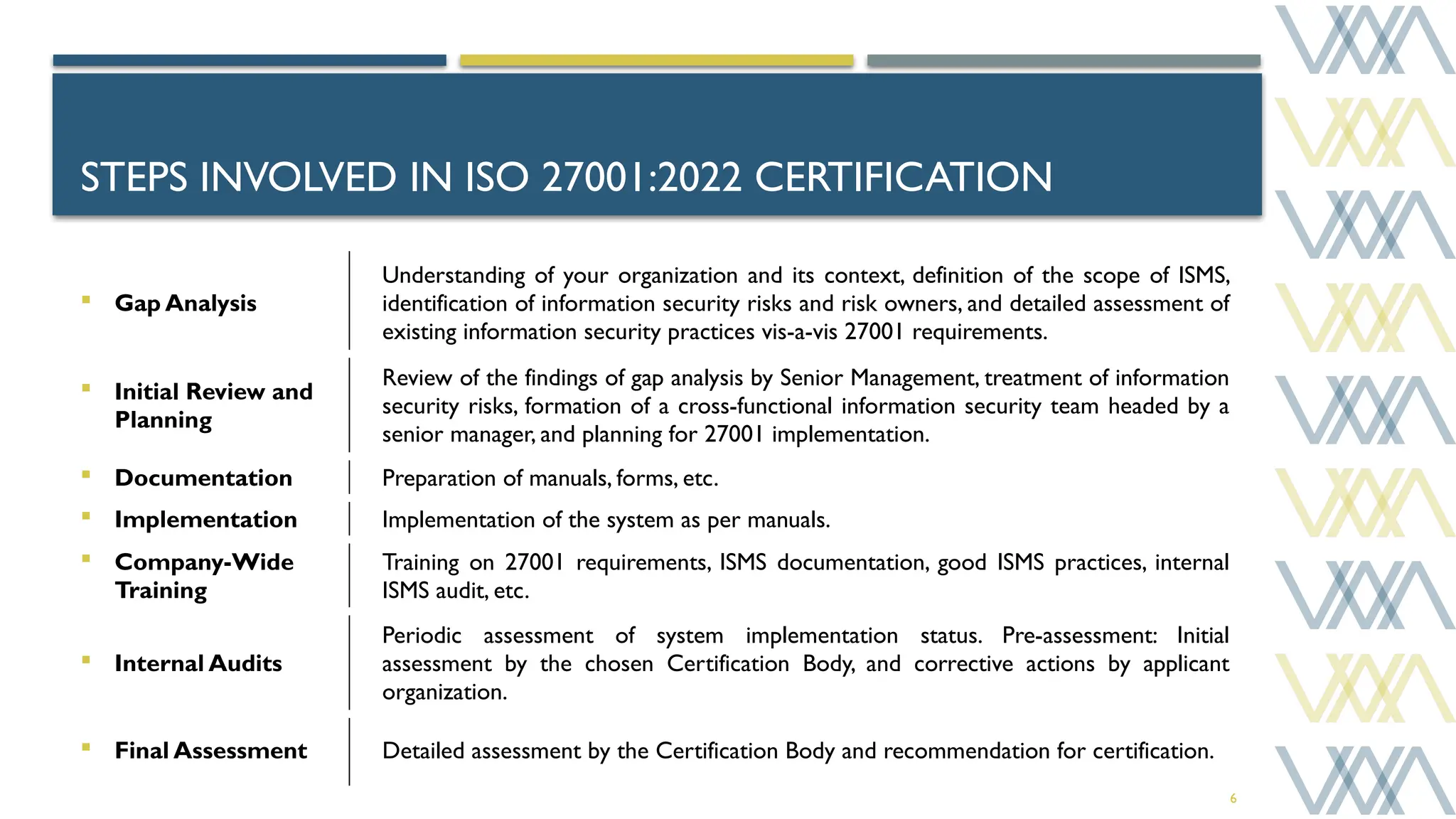
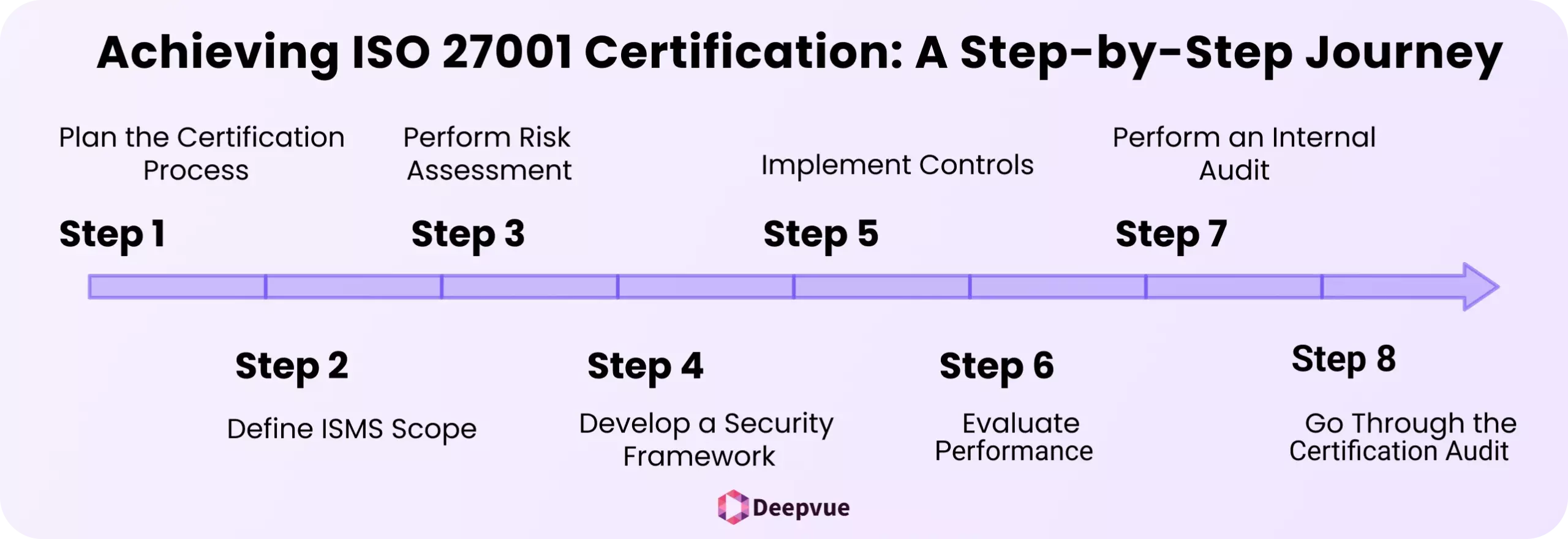
A successful ISO 27001 audit is achieved through a structured seven-step process: defining the ISMS scope, conducting a thorough risk assessment, implementing Annex A controls, documenting the system, performing a rigorous internal audit, conducting a management review, and completing the two-stage external certification assessment. This systematic approach ensures compliance with the ISO/IEC 27001:2022 standard while strengthening organizational data security.
The ISO/IEC 27001:2022 standard remains the global benchmark for Information Security Management Systems (ISMS). In 2026, as organizations navigate increasingly complex regulatory environments and sophisticated cyber threats, achieving this certification is no longer just a "badge of honor"—it is a fundamental business requirement for establishing trust with stakeholders. An audit is the process of verifying that your organization’s ISMS meets the requirements of the standard and is being followed effectively.
Success in an ISO 27001 audit depends heavily on preparation and a deep understanding of the "Plan-Do-Check-Act" (PDCA) cycle. While the prospect of an external auditor scrutinizing your security posture can be daunting, following a proven roadmap mitigates risk and ensures that your documentation, processes, and technical controls are aligned.
1. Defining the ISMS Scope and Context
The first step toward a successful audit is defining exactly what is being audited. Without a clearly defined scope, an organization may waste resources securing non-critical areas or, more dangerously, leave vital assets outside the protected perimeter. This stage involves understanding the "Context of the Organization" as required by Clause 4 of the standard.
Understanding Internal and External Issues
Organizations must identify external factors (such as data protection laws like GDPR or CCPA and emerging AI regulations in 2026) and internal factors (such as corporate culture, existing infrastructure, and business objectives) that affect their ability to manage information security. This analysis ensures the ISMS is tailored to the specific environment in which the company operates.
Setting Boundaries
The scope statement should define the physical locations, organizational units, and specific information assets included in the ISMS. For many modern organizations, this includes defining cloud-based environments and remote work policies. A narrow scope might be easier to certify but may not satisfy the security requirements of large enterprise clients. Conversely, a scope that is too broad can lead to implementation delays. Documenting the scope is a mandatory requirement that auditors will verify during the very first stage of the audit.
2. Risk Assessment and Treatment Methodology
Risk management is the heart of ISO 27001. A successful audit requires a repeatable, documented risk assessment process. Organizations must identify threats to the confidentiality, integrity, and availability (CIA) of their information assets.
Identifying and Analyzing Risks
In 2026, risk assessments must account for modern vulnerabilities, including supply chain attacks and AI-driven social engineering. The methodology should involve:
- Asset Identification: Listing all assets (software, hardware, people, and intellectual property) within the scope.
- Threat and Vulnerability Mapping: Determining what could go wrong and how vulnerable the asset is.
- Impact and Likelihood Scoring: Using a consistent scale (e.g., 1-5) to calculate the total risk level.
Developing the Risk Treatment Plan (RTP)
Once risks are identified, the organization must decide how to handle them: avoid, transfer, accept, or mitigate. Mitigation involves selecting controls from Annex A of the ISO 27001:2022 standard. The result of this process is the Statement of Applicability (SoA), one of the most critical documents in the audit. The SoA lists all 93 controls from the 2022 version, identifying which are included and why, as well as providing justifications for any exclusions.
3. Implementing Controls and the Statement of Applicability
After identifying the necessary security measures, the organization must move from theory to practice. This "Do" phase involves the actual implementation of the controls selected during the risk treatment phase.
Modern Control Categories
The 2022 update of ISO 27001 reorganized controls into four distinct themes:
- Organizational controls (e.g., policies for information security).
- People controls (e.g., remote working and screening).
- Physical controls (e.g., storage media and physical security monitoring).
- Technological controls (e.g., secure coding and configuration management).
Evidence of Implementation
Implementation is not just about turning on a firewall or encrypting a database. An auditor will look for evidence that these controls are integrated into daily operations. This includes logs, signed policies, training records, and incident reports. For example, if your policy states that access reviews happen quarterly, the auditor will expect to see the documented results of those reviews for the past year.
4. Documentation and Record-Keeping
A frequent cause of audit failure is insufficient documentation. In the world of ISO standards, "if it isn't documented, it didn't happen." The standard requires specific "documented information" to ensure that the ISMS is consistent and repeatable.
Mandatory Documents
The auditor will expect to see a comprehensive set of documents, including but not limited to:
- Information Security Policy: The high-level commitment from management.
- Access Control Policy: Defining who has access to what and why.
- Incident Management Procedure: How the organization responds to breaches.
- Business Continuity Plans: How operations continue during a disaster.
Record Retention
Beyond policies, you must maintain records of activities. This includes the results of risk assessments, training attendance lists, and the logs from your technical monitoring tools. In 2026, many organizations use GRC (Governance, Risk, and Compliance) platforms to centralize this documentation, making it easier for auditors to review evidence remotely or on-site.
5. The Internal Audit: The "Dress Rehearsal"
Clause 9.2 of the standard requires organizations to conduct an internal audit at planned intervals. This is perhaps the most important step in preparing for the external certification body. The internal audit must be objective and impartial; the person auditing a department should not be the person who manages it.
Objectives of the Internal Audit
The goal is to identify "non-conformities"—areas where the ISMS does not meet the requirements of the standard or the company's own policies. By finding these gaps early, the organization has time to implement corrective actions before the external auditor arrives.
The Internal Audit Report
A formal report must be generated, detailing the findings. This report is a key input for the management review. It should categorize findings into:
- Major Non-conformity: A total breakdown of a requirement or a high-risk security gap.
- Minor Non-conformity: A partial failure that does not jeopardize the entire system.
- Opportunity for Improvement (OFI): A suggestion for better performance that is not currently a violation.
6. Management Review and Continuous Improvement
ISO 27001 is a management standard, not just a technical one. Leadership must be actively involved. The Management Review (Clause 9.3) is a formal meeting where top management reviews the performance of the ISMS.
Inputs for the Review
Management must review:
- Status of actions from previous reviews.
- Changes in external/internal issues relevant to the ISMS.
- Feedback on information security performance (including trends in non-conformities and audit results).
- Results of risk assessments and the status of the risk treatment plan.
Outcomes and Commitment
The output of this meeting must include decisions related to continual improvement and any changes needed to the ISMS. This proves to the auditor that the leadership is providing the necessary resources and is committed to the security of the organization. This "top-down" approach is a frequent area of focus for auditors, who will often interview senior executives to gauge their level of involvement.
7. The External Certification Audit (Stage 1 and Stage 2)
The final step is the external audit conducted by a registered Certification Body (CB). This process is divided into two distinct stages.
Stage 1: Documentation Review
This is essentially a "readiness review." The auditor examines your documentation, including the scope, SoA, and key policies, to ensure the framework of the ISMS is in place. They will also verify that you have conducted an internal audit and a management review. If the auditor finds significant gaps, they will recommend delaying Stage 2 until those gaps are closed.
Stage 2: Evidence and Effectiveness
The Stage 2 audit occurs several weeks or months after Stage 1. This is a deep dive where the auditor tests the effectiveness of the controls. They will interview staff, observe processes in action, and sample records to ensure that what is written in the policies is actually happening in practice.
| Audit Phase | Focus Area | Primary Goal | Typical Duration |
|---|---|---|---|
| Stage 1 | Documentation & Design | Verify that the ISMS is designed according to the standard. | 1-2 Days |
| Stage 2 | Implementation & Results | Verify that the ISMS is operating effectively with evidence. | 3-7 Days |
| Surveillance | Maintenance | Annual check to ensure the system remains compliant. | 1-3 Days |
| Recertification | Full Re-assessment | Comprehensive review every three years for certificate renewal. | 3-5 Days |
Common Mistakes to Avoid
Even with a solid plan, many organizations stumble during the audit process. Avoiding these pitfalls is essential for a smooth certification:
- Buying "Template Only" Solutions: While templates are helpful, simply changing a logo on a generic policy is not enough. Auditors want to see policies that reflect your actual operations.
- Neglecting Training: Security is a human issue. If an employee is interviewed and cannot describe the information security policy or how to report a breach, it can lead to a non-conformity.
- Poor Asset Management: If you don't know what assets you have, you cannot prove you have secured them. A robust asset inventory is the foundation of the risk assessment.
- Treating it as a "One-Time Event": ISO 27001 requires a culture of continuous improvement. If you stop maintaining the system the day after the audit, you will fail the surveillance audit the following year.
Frequently Asked Questions
How much does an ISO 27001 audit cost?
The cost of an ISO 27001 audit varies significantly based on the size of the organization, the complexity of the scope, and the chosen certification body. Generally, for a small to mid-sized company, the certification fees can range from $10,000 to $30,000. This does not include internal costs such as staff time, consultant fees, or the cost of implementing new security tools.
How long does it take to prepare for an ISO 27001 audit?
Preparation usually takes between 6 and 12 months. This timeframe allows for the completion of the risk assessment, policy development, at least three months of generated logs/evidence, the internal audit, and the management review. Rushing the process often leads to major non-conformities during the Stage 2 audit.
What is the difference between a major and a minor non-conformity?
A major non-conformity occurs when a requirement of the ISO 27001 standard is completely missing or has fundamentally failed, posing a significant risk to the ISMS. This will prevent certification until it is fixed. A minor non-conformity is a localized or single instance of failure that does not jeopardize the overall system. You can still be certified with minor non-conformities, provided you submit an acceptable plan to fix them.
Is ISO 27001:2022 different from the older version?
Yes, the 2022 version updated the controls in Annex A to reflect modern technology, such as cloud services and data masking. It reduced the number of controls from 114 to 93 and grouped them into four themes. Organizations certified under the 2013 version had a transition period to upgrade their systems to the 2022 requirements, which is now the standard requirement in 2026.
Can we fail the ISO 27001 audit?
Yes, an organization can fail if the auditor identifies one or more major non-conformities. However, "failure" is usually a temporary state. The organization is given a specific timeframe to implement corrective actions and provide evidence to the auditor. Once the auditor is satisfied that the major gaps are closed, the certification can be granted.
Who should be involved in the audit process?
While the IT and Security teams lead the technical implementation, a successful audit requires involvement from HR (for onboarding/offboarding controls), Legal (for regulatory compliance), and Senior Management (for resource allocation and leadership). Information security is an organizational responsibility, not just an IT task.
Next Steps for a Successful Audit
To begin your journey toward ISO 27001 certification in 2026, start by conducting a formal gap analysis. This will provide a clear picture of how your current security posture compares to the standard’s requirements. From there, secure a commitment from senior leadership to ensure you have the budget and personnel necessary for a multi-month implementation project.
Once your ISMS is designed and operational, choose a reputable, accredited certification body. Engaging with them early can help you understand their specific scheduling and documentation requirements, ensuring that when your Stage 1 audit begins, you are fully prepared to demonstrate your organization's commitment to information security excellence.