A 401(a) is a defined contribution plan where your final retirement benefit depends on contribution levels and market performance, whereas a traditional pension is a defined benefit plan providing a guaranteed monthly payment based on your salary and years of service. The 401(a) places investment risk on the employee, while the pension places it on the employer.
Navigating retirement options in the public and non-profit sectors often involves choosing between or managing two distinct vehicles: the 401(a) money purchase plan and the traditional defined benefit pension. As we move through 2026, understanding the technical nuances between these two is critical for long-term financial security, especially as inflationary pressures and market volatility change how we view "guaranteed" income.
While both serve the goal of providing income after your working years, they operate on fundamentally different mechanical and legal frameworks. This comparison breaks down the seven most critical distinctions to help you evaluate your current standing or make an informed election during an enrollment period.
1. Benefit Structure and Calculation Methodology
The most significant difference between a 401(a) and a pension is how your ultimate benefit is calculated. This distinction defines whether you are looking at an "account balance" or a "promised stream of income."
In a 401(a) plan, the benefit is "defined" by the contributions made into the account. It functions similarly to a 401(k). Your retirement nest egg is the sum of all employer and employee contributions, plus or minus the investment gains or losses over time. When you retire, you have a specific dollar amount (e.g., $500,000) that you must manage or draw down.
In a traditional pension (Defined Benefit), the benefit is "defined" by a specific formula, usually involving your years of service and your final average salary. A common formula might look like:2% x Years of Service x High-3 Average Salary.If you worked for 30 years and your average salary was $100,000, your annual pension would be $60,000 ($5,000 per month) for life, regardless of how the stock market performs on the day you retire.
2. Investment Risk and Responsibility
Who loses money if the stock market crashes? The answer to this question identifies where the investment risk lies.
Under a 401(a) plan, the employee bears 100% of the investment risk. You are typically responsible for selecting your investment portfolio from a menu of mutual funds, target-date funds, or stable value funds. If your investments underperform or the market enters a prolonged bear market, your retirement account balance will shrink, potentially forcing you to delay retirement or live on less.
In a pension plan, the employer (or the pension fund) bears the investment risk. The employer is legally obligated to pay the promised monthly benefit. If the pension fund's underlying investments perform poorly, the employer must contribute more money to the fund to ensure it can meet its future obligations. As a participant, your monthly check remains the same regardless of market cycles, provided the plan remains solvent.
3. Funding and Contribution Requirements
The "money purchase" aspect of the 401(a) refers to the fact that contributions are often a mandatory condition of employment.
- 401(a) Contributions: These plans are often used by government entities to mandate savings. Contributions can be employer-only, or a combination of employer and employee. In many 401(a) setups, the contribution rates are fixed by the employer (e.g., the employer puts in 10% and the employee is required to put in 5%). Participants usually cannot change these percentages once they are established by the plan document. For 2026, the IRS Section 415(c) limit for total defined contributions is indexed for inflation; ensure you verify the specific dollar cap for the current tax year.
- Pension Contributions: Traditionally, many private-sector pensions were funded entirely by the employer. However, in the public sector (teachers, firefighters, state employees), employees often contribute a mandatory percentage of their paycheck to the pension system. Unlike the 401(a), these contributions do not go into a personal account you control; they go into a massive collective pool managed by professional institutional investors.
4. Portability and Job Mobility
In the modern workforce, portability is a high-priority feature. This is where the 401(a) typically outshines the traditional pension.
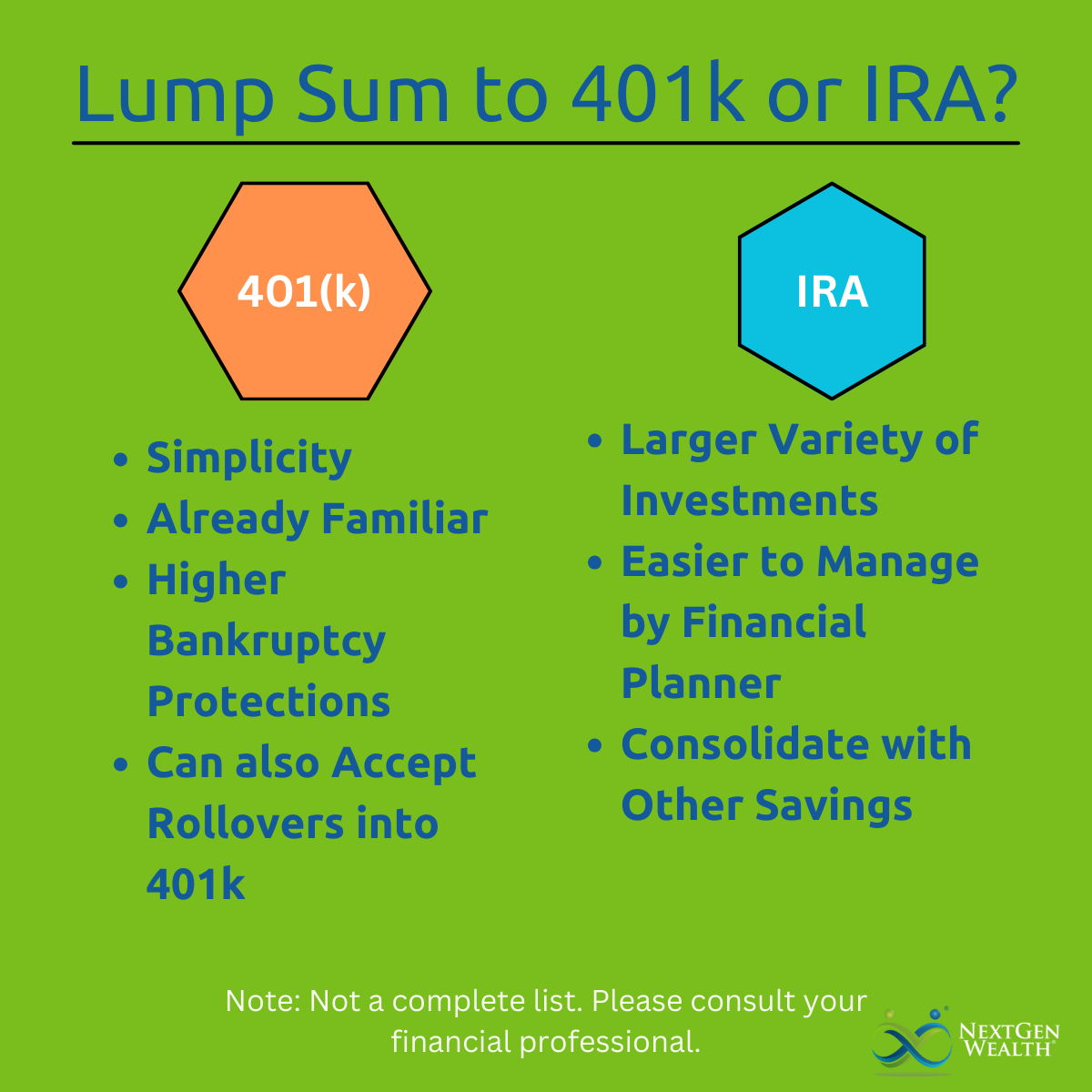
A 401(a) plan is highly portable. If you leave your employer, you can generally roll your vested balance into a Traditional IRA or a new employer's 401(k) or 403(b) plan. This allows your retirement savings to continue growing tax-deferred without interruption.
Pensions are less portable. While you are "vested" in a pension after a certain number of years (meaning you have a right to a future benefit), you usually cannot "take the pension with you" to a new private-sector job. If you leave before retirement age, you may have the option to take a "lump-sum payout" of your own contributions plus minimal interest, but doing so often means forfeiting the much more valuable lifetime monthly benefit.
5. Vesting Schedules
Vesting refers to the percentage of the employer's contributions that you "own." If you are 100% vested, all the money the employer put in belongs to you, even if you quit tomorrow.
- 401(a) Vesting: These plans often feature shorter vesting cycles. Some are "immediate," meaning you own the employer's match from day one. Others use "graded" vesting (e.g., 20% per year over five years) or "cliff" vesting (e.g., 0% for three years, then 100% after year three).
- Pension Vesting: Pensions almost always use cliff vesting, and the timelines are generally longer. In the public sector, it is common to see 5-year or 10-year vesting periods. If you leave the employer after 4 years and 11 months in a 5-year vesting system, you may receive nothing from the employer’s portion of the pension fund, though you are always entitled to a return of your own contributions.
6. Payout Options and Longevity Protection
Longevity risk—the risk of outliving your money—is a central concern in 2026 as life expectancies continue to fluctuate and healthcare costs rise.
Pensions provide built-in longevity protection. The standard payout is a "Life Annuity," which guarantees payments for as long as you live. Many pensions also offer "Joint and Survivor" options, which continue payments to a spouse after your death. Because the benefit is guaranteed for life, you do not have to worry about "running out" of money at age 90.
401(a) plans require self-management of longevity. When you retire, you have a pile of money. You must decide how much to withdraw each year. If you withdraw too much, or if the market performs poorly in the early years of your retirement (sequence of returns risk), you could deplete the account while still healthy. To get the same "guaranteed" feel as a pension, a 401(a) participant would typically have to use their balance to purchase a commercial annuity, which may have higher fees than a subsidized employer pension.
7. Inflation Protection (COLA)
Inflation can erode the purchasing power of a fixed retirement income over twenty or thirty years.
Many public sector pensions include a Cost-of-Living Adjustment (COLA). This means your monthly check increases slightly each year (often 1% to 3%) to keep up with inflation. This is a massive advantage that is rarely found in the private sector.
401(a) plans do not have COLAs. Your "protection" against inflation is the growth of your investments. If your 401(a) is invested in equities, the hope is that the stocks will outpace inflation over time. However, once you begin withdrawing funds, there is no automatic mechanism to increase your "paycheck" unless your investment returns specifically allow for it.
Comparison Summary Table: 401(a) vs. Pension
| Feature | 401(a) Plan (Defined Contribution) | Traditional Pension (Defined Benefit) |
|---|---|---|
| Primary Goal | Accumulate a total account balance. | Provide a lifetime monthly check. |
| Who Manages Investments? | The Employee (Individual choice). | The Employer (Institutional pros). |
| Investment Risk | Borne by the Employee. | Borne by the Employer. |
| Benefit Formula | Contributions + Market Performance. | Salary x Years of Service x Multiplier. |
| Portability | High (Roll over to IRAs/401ks). | Low (Usually stays with the system). |
| Vesting | Often 0–5 years (Graded or Cliff). | Often 5–10 years (Cliff). |
| Inflation Protection | None (Depends on market growth). | Often includes a COLA (Public sector). |
| Longevity Risk | You might outlive your money. | Guaranteed income for life. |
Technical Considerations for 2026
By 2026, several legislative updates from the SECURE Act 2.0 have fully integrated into the retirement landscape. For 401(a) participants, the Required Minimum Distribution (RMD) age has stabilized, but it is essential to monitor how "catch-up" contribution rules for those aged 60-63 apply to your specific plan document.
Furthermore, many 401(a) plans in 2026 are increasingly offering "Institutional Annuity" options within the plan. This is an attempt to bridge the gap between the two types of plans, allowing 401(a) holders to convert a portion of their balance into a pension-like stream of income without leaving the plan's lower-fee environment.
Common Pitfalls to Avoid
- Over-Concentration in 401(a): Many participants in 401(a) plans default to "Safe" or "Stable Value" funds that barely keep pace with inflation. Without the guaranteed formula of a pension, a 401(a) requires a more aggressive growth strategy in the early and middle stages of a career.
- Leaving the Pension Early: If you are in a pension system and are close to your vesting date (e.g., 4 years into a 5-year vest), leaving for a slightly higher-paying job can be a massive financial mistake. The "present value" of a lifetime pension often far outweighs a small salary bump.
- Ignoring the "Hybrid" Option: Some employers offer a choice between the two. Young workers often choose the 401(a) for portability, while older workers prefer the pension for security. If your employer offers a "Hybrid" plan, ensure you understand how the two components interact before committing.
Frequently Asked Questions (FAQ)
Can I have both a 401(a) and a pension?
Yes, it is common in many government and university settings to have both. In some "Hybrid" systems, the employer provides a smaller guaranteed pension and a mandatory 401(a) component to supplement it. This diversifies your retirement, giving you both a guaranteed floor (pension) and growth potential with portability (401(a)).
Is a 401(a) the same as a 401(k)?
Technically, no, though they are very similar. A 401(k) is primarily for private-sector, for-profit companies and allows for voluntary elective deferrals. A 401(a) is usually for government, educational, or non-profit entities and often involves mandatory employer or employee contributions. The "money purchase" nature of the 401(a) makes it less flexible regarding how much you choose to contribute each month.
What happens to my 401(a) if my employer goes bankrupt?
Your 401(a) assets are held in a trust for the benefit of the participants and are generally protected from the employer's creditors. In 2026, ERISA and similar state-level protections for public employees ensure that your account balance is yours. However, the value of that balance still depends on the market performance of your chosen investments.
What happens to my pension if the plan is underfunded?
For private-sector pensions, the Pension Benefit Guaranty Corporation (PBGC) provides a level of insurance that pays a portion of your benefits if the plan fails. Public-sector pensions (state and local) are generally not covered by the PBGC but are protected by state constitutions or statutes. However, an underfunded public pension may see future benefit cuts for new employees or changes to COLA adjustments for retirees.
Can I withdraw money from my 401(a) early?
Generally, withdrawals before age 59½ are subject to a 10% IRS penalty in addition to regular income tax. However, if you "separate from service" (leave your job) in or after the year you turn 55, you may be able to access 401(a) funds without the 10% penalty under the "Rule of 55." Traditional pensions rarely allow for early withdrawals; they typically only offer monthly payments once you reach the plan's defined retirement age.
Recommendation for Next Actions
To determine which plan (or combination) is right for your 2026 financial goals, follow these steps:
- Request your "Annual Benefit Statement": For your pension, this will show your projected monthly benefit at different retirement ages. For your 401(a), it will show your current balance and vesting status.
- Calculate your "Gap": Estimate your retirement expenses. If your pension only covers 60% of your needs, use your 401(a) or a supplemental 457(b) plan to bridge the 40% gap.
- Check Vesting Status: Before changing jobs, verify exactly how many months you have left until you are 100% vested. In a pension system, hitting that vesting "cliff" is often worth tens of thousands of dollars in future value.
- Review Beneficiary Designations: Ensure your beneficiaries are up to date on both accounts. Pension survivor benefits often require specific forms that are different from 401(a) beneficiary designations.