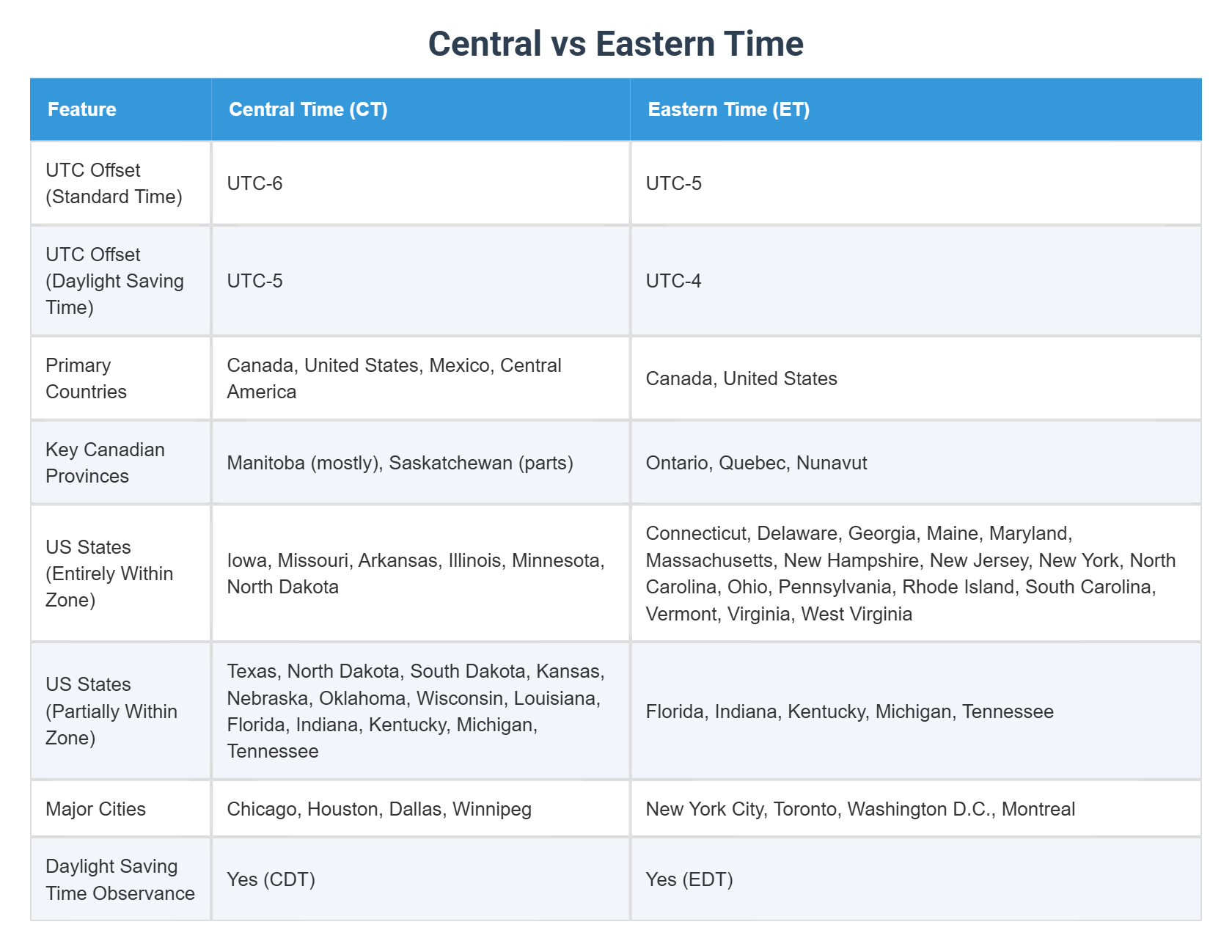
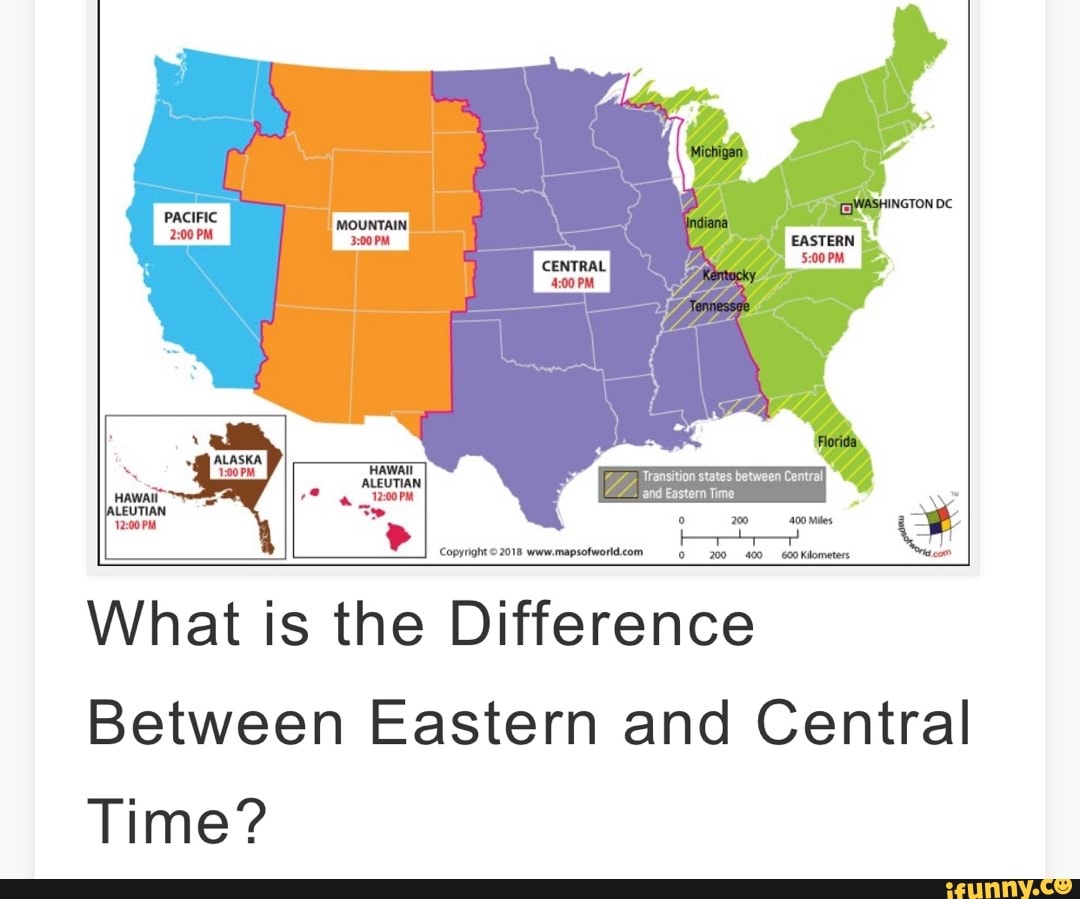
When scheduling a meeting for 5:00 PM Eastern Time (ET), the corresponding time for participants in the Central Time (CT) zone is 4:00 PM. This one-hour difference remains consistent throughout the year, whether both regions are observing Standard Time or Daylight Saving Time, as the transition typically occurs simultaneously across most of North America.
Understanding this conversion is fundamental for professional coordination in 2026, where distributed teams and remote work environments are the standard. While the calculation itself is straightforward—subtracting one hour from the Eastern time to arrive at the Central time—the implications for scheduling, productivity, and professional etiquette are multifaceted.
The Geographic and Temporal Logic of North American Time Zones
The North American continent is divided into several distinct time zones to account for the rotation of the Earth and the progression of sunlight across the landmass. The Eastern Time Zone (ET) encompasses a significant portion of the Atlantic coast and the eastern United States and Canada. Major hubs include New York City, Washington D.C., Toronto, and Atlanta.
The Central Time Zone (CT) sits immediately to the west of the Eastern zone. It includes major business centers like Chicago, Dallas, Houston, Mexico City, and Winnipeg. Because the sun rises in the east, the Eastern zone is "ahead" of the Central zone. When the clock strikes 5:00 PM in New York, the sun is still higher in the sky in Chicago, where it is only 4:00 PM.
Eastern Standard Time (EST) vs. Eastern Daylight Time (EDT)
In 2026, as in previous years, the terminology used often depends on the season. From the second Sunday in March to the first Sunday in November, most of the Eastern and Central regions observe Daylight Saving Time.
- EDT (Eastern Daylight Time): UTC -4
- CDT (Central Daylight Time): UTC -5
During the winter months, they revert to Standard Time:
- EST (Eastern Standard Time): UTC -5
- CST (Central Standard Time): UTC -6
Regardless of whether it is "Standard" or "Daylight" time, the one-hour gap persists. Therefore, 5 PM ET is always 4 PM CT, provided both locations follow the same seasonal clock-change schedule.
The Implications of a 5 PM Eastern Meeting
Scheduling a meeting at 5 PM Eastern creates a unique set of circumstances for participants depending on their location. In a professional context, 5 PM is traditionally viewed as the "close of business" (COB) for the Eastern Time Zone.
For Eastern Time Participants
For those located in the Eastern Time Zone, a 5 PM meeting represents the final hour of the standard 9-to-5 workday—or perhaps the start of overtime. Because this meeting occurs at the very end of their day, participants may be dealing with "decision fatigue" or may be eager to wrap up tasks to transition to personal time. Meeting organizers should consider if a 5 PM ET slot is necessary, as it may conflict with commuting schedules or end-of-day administrative duties.
For Central Time Participants
For those in the Central Time Zone, 4 PM is often a highly productive window. It is late enough in the day that most "deep work" or primary tasks have been addressed, but early enough that there is still a full hour of the standard workday remaining after a 60-minute meeting. This often makes the 4 PM CT (5 PM ET) slot a convenient time for "wrap-up" calls or status updates before the Central employees also hit their own COB.
The Impact on Other Zones
When scheduling a meeting for 5 PM ET / 4 PM CT, it is crucial to remember the other North American zones:
- Mountain Time (MT): 3:00 PM
- Pacific Time (PT): 2:00 PM
A 5 PM ET meeting is often the latest possible time a nationwide "all-hands" call can occur while still falling within the traditional working hours of West Coast employees.
Professional Etiquette for Late-Afternoon Cross-Zone Meetings
In 2026, the etiquette surrounding time zone management has become a core competency for project managers and executives. Following specific "golden rules" ensures that scheduling 5 PM ET meetings does not negatively impact morale or productivity.
- Check Local Holidays: While the time conversion remains the same, a 4 PM CT meeting might land on a regional holiday that doesn't exist in the Eastern zone, or vice versa.
- Acknowledge the Time Difference: When sending an invite, it is best practice to include both time zones in the subject line or body (e.g., "Weekly Sync - 5pm ET / 4pm CT"). This reduces the cognitive load on the recipient and prevents errors.
- Duration Management: A 5 PM ET meeting should ideally not exceed 60 minutes. Pushing into the 6 PM ET hour can lead to resentment from Eastern-based staff who may have family or evening commitments.
- Recording for Inclusion: If the meeting involves participants further west (e.g., Hawaii-Aleutian Time) for whom the time might be significantly earlier or later, always provide a recording and a shared document for asynchronous input.
Technical Tools for Seamless Conversion
Manually calculating time zones is prone to human error, especially when dealing with complex international teams. In 2026, several integrated tools have made this process nearly invisible.
Calendar Software Settings
Most modern calendar applications (Google Calendar, Microsoft Outlook, Apple Calendar) allow users to display multiple time zones side-by-side in the "Day" or "Week" view.
- In Outlook: Go to File > Options > Calendar > Time Zones. You can add a second time zone (Central) so that when you look at a 5 PM slot in Eastern, the 4 PM slot in Central is clearly visible.
- In Google Calendar: Click the gear icon (Settings) > World Clock. Here, you can select "Central Time" to show as a sidebar widget.
Automated Scheduling Platforms
Tools like Calendly or Microsoft Bookings automatically detect the invitee's local time zone. If a recruiter in New York (ET) sends a link for a 5 PM interview, a candidate in Chicago (CT) will automatically see that slot as 4 PM on their booking page.
Comparison Table: Eastern to Central Business Day Conversion
The following table provides a quick reference for standard business hours, demonstrating how the one-hour offset functions throughout a typical 2026 workday.
| Eastern Time (ET) | Central Time (CT) | Context / Impact |
|---|---|---|
| 8:00 AM | 7:00 AM | Early start for ET; very early for CT. |
| 9:00 AM | 8:00 AM | Standard start for ET; CT is just beginning. |
| 10:00 AM | 9:00 AM | Core collaboration hours begin. |
| 12:00 PM (Noon) | 11:00 AM | Lunch break for ET; CT still working. |
| 1:00 PM | 12:00 PM (Noon) | ET returns from lunch; CT starts lunch. |
| 3:00 PM | 2:00 PM | High productivity window for both zones. |
| 5:00 PM | 4:00 PM | Close of business for ET; final hour for CT. |
| 6:00 PM | 5:00 PM | Post-work for ET; close of business for CT. |
Why the One-Hour Difference Matters for Project Deadlines
In the world of contracts, legal filings, and project submissions, "5:00 PM" is a common deadline. However, without a specified time zone, this can lead to disputes.
If a contract states a deadline of "5:00 PM" without a zone, an Eastern-based company might expect the document by 5:00 PM EST. A Central-based vendor might assume they have until 5:00 PM CST, which is actually 6:00 PM EST. In 2026, the standard for professional documentation is to always use the three-letter code (EST, EDT, CST, CDT) or the broader "ET/CT" designation to avoid "End of Day" (EOD) ambiguity.
Historical Context of the Eastern-Central Boundary
The boundary between the Eastern and Central time zones is not a straight line. It is determined by the federal government (specifically the Department of Transportation in the United States) and often follows state lines or county borders to accommodate local economic needs.
For example, most of Indiana is in the Eastern Time Zone, but several counties in the northwest (near Chicago) and southwest (near Evansville) observe Central Time to stay aligned with the metropolitan areas they serve. Similarly, Michigan is primarily Eastern, but four counties in the Upper Peninsula bordering Wisconsin follow Central Time.
Knowing whether your meeting participants are in these "border" counties is vital. A 5 PM Eastern meeting for someone in Gary, Indiana (Central Time), is at 4 PM, but for someone in Indianapolis (Eastern Time), it is 5 PM, even though both are in the same state.
Frequently Asked Questions
Does 5 PM Eastern always equal 4 PM Central?
Yes, under normal circumstances. Both time zones observe Daylight Saving Time on the same schedule (starting the second Sunday in March and ending the first Sunday in November). Unless one region makes a legislative change to permanently stay on Standard or Daylight time—a topic often debated in various state legislatures as of 2026—the one-hour difference remains constant.
How does this affect international participants?
If you are hosting a meeting for participants in London (GMT/BST) or Paris (CET/CEST), a 5 PM ET meeting is quite late. For example, 5 PM ET is typically 10 PM in London. When coordinating globally, it is often better to find a morning slot in the Eastern/Central zones to accommodate European colleagues.
Is 5 PM Eastern the same as 4 PM Central in Mexico?
Much of Mexico used to follow Central Time, but in recent years, Mexico has made significant changes to its observance of Daylight Saving Time. As of 2026, most of Mexico no longer observes Daylight Saving Time, except for some border municipalities. This means that during the summer months, the time difference between New York and Mexico City may be two hours instead of one. Always verify the specific city when scheduling internationally.
What is the best way to invite someone to a cross-zone meeting?
Use a calendar invitation that allows the software to handle the conversion. If writing an email, use the format: "The meeting is at 5:00 PM ET (4:00 PM CT)." This prevents the recipient from having to do the math themselves and shows professional courtesy.
What if I am in a state that doesn't change clocks?
Most states in the Eastern and Central zones do change their clocks. However, if you are working with someone in Arizona (which does not observe Daylight Saving Time), the offset to Eastern or Central time will change twice a year. Arizona is essentially on Mountain Standard Time year-round.
Practical Recommendations for 2026 Professionals
To master the 5 PM Eastern to 4 PM Central conversion and its associated logistics, consider these final steps:
- Standardize Your Calendar: Ensure your primary digital calendar is set to your "Home" time zone and that "Automatic Time Zone Detection" is enabled on your mobile devices.
- Default to ET for National Meetings: In the United States, Eastern Time is often used as the "de facto" standard for national announcements and television broadcasts. When in doubt, state the Eastern time first, followed by the Central time.
- Buffer Your Meetings: Avoid scheduling a 5 PM ET / 4 PM CT meeting to end exactly on the hour. Aim for a 45-minute duration to allow participants to transition out of their workday smoothly.
By understanding that 5 PM Eastern is 4 PM Central, you are doing more than just reading a clock; you are managing the energy, availability, and work-life balance of your professional network.