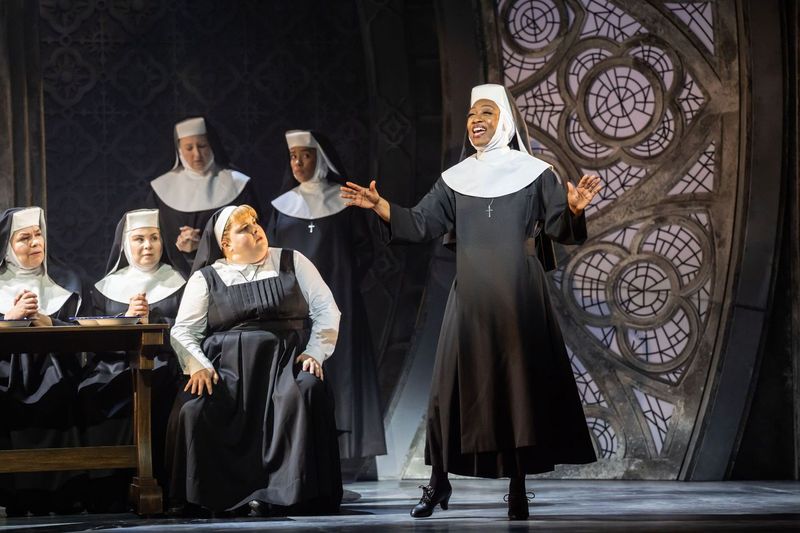
Watching Maria in Sister Act 2: Back in the Habit is worth it because her character, played by Alanna Ubach, represents the quintessential 1990s "tough-with-a-heart" teen archetype. Her journey from a skeptical, defensive student to a powerhouse vocalist in the St. Francis High School choir highlights the transformative power of arts education and ensemble chemistry.
The Underrated Impact of Maria in Sister Act 2
When audiences revisit Sister Act 2: Back in the Habit in 2026, the discussion often centers on the breakout performance of Lauryn Hill as Rita Watson or the comedic genius of Whoopi Goldberg. However, Maria, portrayed by the versatile Alanna Ubach, serves as a vital anchor for the student ensemble. Her character provides a necessary bridge between the defiant "too cool for school" attitude of the early acts and the disciplined, soaring harmony of the finale.
Maria is more than just a background singer; she is a character who reflects the anxieties and potential of a generation. In 1993, when the film was released, the depiction of inner-city youth was often monochromatic or overly tragic. Maria, with her distinctive red hair and sharp wit, offered a different flavor of teenage rebellion—one rooted in self-protection rather than malice. Seeing her find her voice remains a compelling reason to revisit the film decades later.
1. The Vocal Powerhouse of the Ensemble
While Rita Watson is the undisputed soloist of the film, Maria provides the essential vocal architecture that makes the choir's sound professional and "street-wise." In the world of Sister Act 2, the choir's success isn't just about one voice; it is about the blending of disparate personalities into a singular, wall-shaking sound.
Maria is a primary component of the soprano section. Her ability to hit the high notes during the "Joyful, Joyful" finale adds a layer of brightness to the arrangement that would be missing without her. For viewers who appreciate musical theory or choral arrangements, Maria’s contributions are a masterclass in how an ensemble singer supports a lead. She doesn't compete with Rita; she elevates her.
Furthermore, Alanna Ubach’s real-life musicality shines through. In a film where musical performances are the heartbeat of the plot, having actors who can convincingly portray the discipline of practice is crucial. Maria’s facial expressions during the rehearsals—moving from boredom to genuine engagement—track the audience's own emotional journey as the "rough" group of kids transforms into a cohesive unit.
2. A Masterclass in Character Archetypes
Maria represents the "tough girl" archetype that was prevalent in 90s cinema, but she avoids becoming a caricature. In the beginning of the film, she is one of the most vocal critics of Sister Mary Clarence’s (Whoopi Goldberg) teaching methods. She famously delivers lines that emphasize the students' desire to be seen as individuals rather than projects.
Her skepticism is grounded in a reality that many students face: the feeling that the system has already given up on them. Watching Maria realize that Sister Mary Clarence actually cares about their future is a subtle but powerful character arc. It isn't a sudden "lightbulb" moment; it is a slow thaw. This nuance makes Maria one of the more relatable characters for anyone who felt like an outsider during their high school years.
In 2026, we look back at these roles and see the foundation of modern teen dramas. The "defensive shield" Maria wears is a precursor to the complex characters we see in contemporary streaming series. By watching her, viewers can appreciate the evolution of how youth culture is portrayed on screen.
3. The Enduring Legacy of Alanna Ubach
For modern fans, watching Maria is a "before they were famous" moment for Alanna Ubach. While many know her from her more recent roles in Euphoria, Legally Blonde, or as a prolific voice actress, Sister Act 2 was one of her major breakout roles. Seeing her in this early stage of her career reveals the range and comedic timing that would later make her a Hollywood staple.
Ubach brings a specific energy to Maria that could have easily been lost in a cast filled with dozens of students. She manages to stand out through her physicality—the way she leans against a locker or the specific way she rolls her eyes. This performance demonstrates that there are no small roles. Every time the camera cuts to the choir, Maria is "in character," reacting to the dialogue and the music with a consistency that many young actors struggle to maintain.
Analyzing her performance in Sister Act 2 provides context for her later work. It shows her ability to handle both comedy and drama within a musical framework, a skill she has utilized throughout her decades-long career in the industry.
4. Representing the Diversity of the 1990s
Sister Act 2 was remarkably forward-thinking in its casting. It didn't present a monolithic view of a "troubled" school. The students in the choir represented a wide array of backgrounds, and Maria’s presence as a Latina character in a predominantly Black and white ensemble was a significant, if understated, piece of representation for the time.
Her character wasn't defined solely by her ethnicity, but her presence contributed to the film’s authentic "San Francisco" feel. The film captures a specific moment in American urban history where music was the universal language that bridged cultural gaps. Maria’s integration into the core group of students—alongside Rita, Ahmal, and Frankie—showcases a vision of multicultural collaboration that remains inspiring.
In the 2020s, as we continue to push for diverse storytelling, looking back at how Sister Act 2 handled its ensemble is educational. It didn't make a "point" of its diversity; it simply reflected the reality of the environment it was portraying. Maria was a vital part of that reality.
5. Participation in Iconic Musical Moments
You cannot discuss why Maria is worth watching without discussing the musical numbers. Specifically, "Oh Happy Day" and "Joyful, Joyful" have become legendary in the annals of movie musicals. Maria’s participation in these scenes is iconic.
In "Oh Happy Day," we see Maria’s transition into a supportive teammate. While the scene focuses on Ahmal (Ryan Toby) finding his confidence, the reactions of the students around him—including Maria’s look of pure shock and then joy—are what sell the emotion of the moment to the audience.
In "Joyful, Joyful," Maria is front and center during the choreographed segments. The fusion of gospel, hip-hop, and classical influences in that final performance was revolutionary in 1993. Maria’s energy during the dance breaks and her precision during the vocal harmonies contribute to the high-octane feeling of the scene. It is a moment of pure cinematic catharsis that still holds up under modern viewing standards.
| Key Aspect | Maria's Contribution | Impact on Film |
|---|---|---|
| Vocal Role | Soprano section support/harmonies | Provides the "bright" top end of the choir's sound. |
| Character Type | The Skeptical Outsider | Represents the student body's initial resistance to change. |
| Actor Pedigree | Portrayed by Alanna Ubach | Showcases early talent of a now-prolific Hollywood actress. |
| Cultural Value | Multicultural Representation | Adds to the authentic, diverse atmosphere of St. Francis High. |
| Highlight Scene | "Joyful, Joyful" Finale | Essential part of the choreography and vocal layering. |
The Enduring Appeal of St. Francis High School
The setting of St. Francis High School serves as a character in its own right, and Maria is the soul of that building. The school is slated for closure due to lack of funding and interest—a plot point that feels incredibly relevant even in 2026. Maria’s journey is tied to the survival of the institution. When she begins to care about the choir, she begins to care about her community.
The film tackles themes of budget cuts in the arts, the importance of mentorship, and the struggle of maintaining hope in a cynical environment. Maria is the audience's surrogate in this regard. Most people don't enter a difficult situation with the optimism of Sister Mary Clarence; they enter it with the suspicion of Maria. Watching her walls come down provides a roadmap for how we can find inspiration in our own lives.
Comparing Maria to Other Student Characters
To fully appreciate why Maria is worth watching, it is helpful to contrast her with the other students in the "inner circle":
- Rita Watson (Lauryn Hill): The star and the emotional core. Rita's struggle is with her mother’s disapproval. Maria’s struggle is more internal—a struggle with her own attitude.
- Ahmal (Ryan Toby): The "hidden" talent. Ahmal is shy and needs to be pushed. Maria is loud but needs to be channeled.
- Frankie (Devin Kamin): The comic relief. While Frankie provides the jokes, Maria provides the "cool factor" that makes the choir feel modern.
This dynamic creates a balanced ensemble. Without Maria’s "street-smart" persona, the choir might have felt too polished or too "churchy" for the film's urban setting. She keeps the group grounded.
Technical Brilliance in the Performances
From a technical standpoint, the performances in Sister Act 2 are impressive because they were largely performed by the actors themselves. In the 2020s, we are used to heavy "autotune" and studio polish. In 1993, while there was certainly post-production work, the raw energy of the kids in the room was palpable.
Maria’s vocal takes require a specific kind of "belting" that was popular in 90s R&B and Gospel-fusion. Alanna Ubach had to match the intensity of powerhouse singers like Lauryn Hill and Ryan Toby. Watching the film now, one can appreciate the vocal stamina required for those long rehearsal montages and the high-energy finale.
Common Misconceptions About Maria
One common misconception is that Maria is just a "background dancer." While she is part of the ensemble, her lines and her placement in the frame suggest she was always intended to be a primary supporting character. Another misconception is that she was "mean." In reality, her character is defensive. Re-watching the film with an adult perspective in 2026 allows viewers to see the vulnerability behind her sharp tongue.
She is also often confused with other students because of the large cast, but her red hair and distinct fashion—often involving oversized 90s jackets and boots—make her easy to track once you know who to look for. She is a vital part of the visual identity of the "new" St. Francis choir.
Frequently Asked Questions
Who played Maria in Sister Act 2?
Maria was played by Alanna Ubach. She is a well-known actress who has appeared in numerous films and television shows, including Legally Blonde, Meet the Fockers, Coco (as the voice of Mama Imelda), and the HBO series Euphoria.
Does Maria have a solo in the movie?
Maria does not have a full length solo like Rita or Ahmal, but she has several prominent lines and is a featured vocalist in the soprano section during the group numbers. Her voice is particularly audible during the "Joyful, Joyful" performance.
Why is Maria’s character important to the plot?
Maria represents the student body's transition from apathy to engagement. As one of the more "difficult" students initially, her eventual dedication to the choir signals to the audience that Sister Mary Clarence has successfully reached the kids.
What happened to the actress who played Maria?
Alanna Ubach has had one of the most successful and consistent careers of the Sister Act 2 cast. She transitioned from a child/teen star into a highly respected character actress and voice artist, remaining active in the industry through 2026.
Is Sister Act 2 worth watching for the music alone?
Yes. The musical arrangements by Marc Shaiman and Mervyn Warren are considered some of the best in 90s cinema. The blend of traditional gospel with contemporary R&B and hip-hop was pioneering and remains highly influential in musical theater and film today.
Final Recommendation
If you are looking for a dose of 90s nostalgia or an uplifting story about the power of music, Sister Act 2: Back in the Habit is a must-watch. Pay close attention to Maria; her performance is a masterclass in ensemble acting and character growth. Whether you are a fan of Alanna Ubach’s later work or simply love a good "underdog" story, Maria’s journey from a skeptical student to a joyful performer remains one of the highlights of the film.
To get the most out of the experience, watch the "Joyful, Joyful" sequence on the best sound system available to you to truly hear the intricate harmonies that Maria and her castmates worked so hard to perfect.