Choosing the right outdoor running shoes for men requires balancing rugged traction, durable upper materials, and responsive cushioning to protect your joints across uneven, unpredictable terrain. Trail runners face unique challenges compared to road runners, including loose gravel, mud, exposed roots, and steep elevation changes.
The process of selecting a high-performance trail shoe involves examining outsole lug patterns, midsole foam density, waterproofing membranes, and overall foot lockdown. This review analyzes five top-tier outdoor running shoes currently available to help you find the ideal match for your specific stride, climate, and terrain preferences.
Understanding Outdoor Running Shoes: Key Metrics and Terminology
Before evaluating specific models, it is essential to understand the technical components that differentiate a dedicated trail running shoe from a standard road running shoe. Outdoor terrain subjects footwear to intense lateral forces and sharp impacts, demanding specialized design elements.
Outsole Rubber and Lug Geometry
The outsole is the primary interface between your foot and the trail. Brands utilize specialized rubber compounds (such as Vibram or proprietary rubber blends) to ensure high friction coefficients on wet rock and dry soil alike. Lug depth dictates performance: shallow lugs (3mm to 4mm) excel on hard-packed dirt and mixed roads, while deep, aggressive lugs (5mm to 6mm) bite into deep mud, slush, and loose scree. Spacing matters as well; widely spaced lugs prevent mud from packing underneath the shoe, maintaining traction dynamically.
Midsole Cushioning and Rock Plates
Midsoles provide impact attenuation, utilizing foams like EVA, TPU, or nitrogen-infused compounds. While high cushioning maximizes comfort on long endurance runs, excessive stack height can reduce proprioception and increase the risk of ankle roll on technical terrain. Many outdoor shoes integrate a rock plate—a thin, flexible thermoplastic insert embedded in the midsole—to shield the forefoot from sharp stones and jagged roots without completely deadening ground feel.
Upper Construction and Protection
Trail shoe uppers use reinforced mesh, often fortified with TPU overlays or ballistic nylon panels, to resist abrasions from branches and rocks. Breathability is critical in warm weather, but wet conditions call for alternative treatments. Some models feature waterproof membranes like Gore-Tex, which keep water out at the expense of breathability and drying speed. Toe caps are another vital feature, offering structural protection against accidental impacts with hidden rocks.
Comprehensive Review of the 5 Best Outdoor Running Shoes
Evaluating top footwear requires balancing laboratory specifications with real-world trail performance. The following five models represent the pinnacle of current outdoor running shoe engineering, each tailored to distinct running styles and environments.
1. Salomon Speedcross 6
- Best For: Technical mud, soft trails, and wet, loose terrain.
- Weight: ~298g (10.5 oz) per shoe
- Drop: 10mm
The Salomon Speedcross lineage is legendary among mountain runners and fell runners. The Speedcross 6 continues this tradition by focusing on uncompromising grip in sloppy, soft conditions. The outsole features Salomon’s Mud Contagrip technology with deeply spaced, chevron-shaped lugs that act like cleats in mud and loose dirt.
The upper utilizes a snug, precise fit powered by the Quicklace system, a minimalist kevlar lace that pulls tight with a single pull and stows neatly in a tongue pocket. SensiFit construction cradles the foot from the midsole to the lacing system, ensuring zero lateral foot slippage during aggressive cornering or steep descents. EnergyCell+ midsole foam delivers high rebound and durable cushioning.
- Pros: Exceptional mud traction; secure, locked-in fit; quick-adjust lacing system.
- Cons: Aggressive lugs feel uncomfortable on paved transitions; narrow toe box may not suit wide feet.
2. Hoka Speedgoat 6
- Best For: Long-distance ultra running and maximum cushioning.
- Weight: ~278g (9.8 oz) per shoe
- Drop: 5mm
The Hoka Speedgoat series is a staple for endurance runners seeking maximal protection against impact fatigue over ultra distances. The Speedgoat 6 refines its predecessor with a lighter, more responsive midsole foam compound and a revamped breathable woven textile upper.
Despite its high stack height, the shoe maintains stability via a wider platform base and an active foot frame that cups the heel deeply. The outsole is equipped with Vibram Megagrip rubber featuring Traction Lug technology, adding micro-texture to the sides of the lugs to dramatically increase surface area and grip on slick surfaces. The 5mm lugs balance technical grip with smooth transitions over hard-packed sections.
- Pros: Outstanding cushioning-to-weight ratio; superior grip on wet rock via Vibram Megagrip; comfortable for all-day wear.
- Cons: High stack height can reduce agility on highly technical, uneven boulder fields; premium price point.
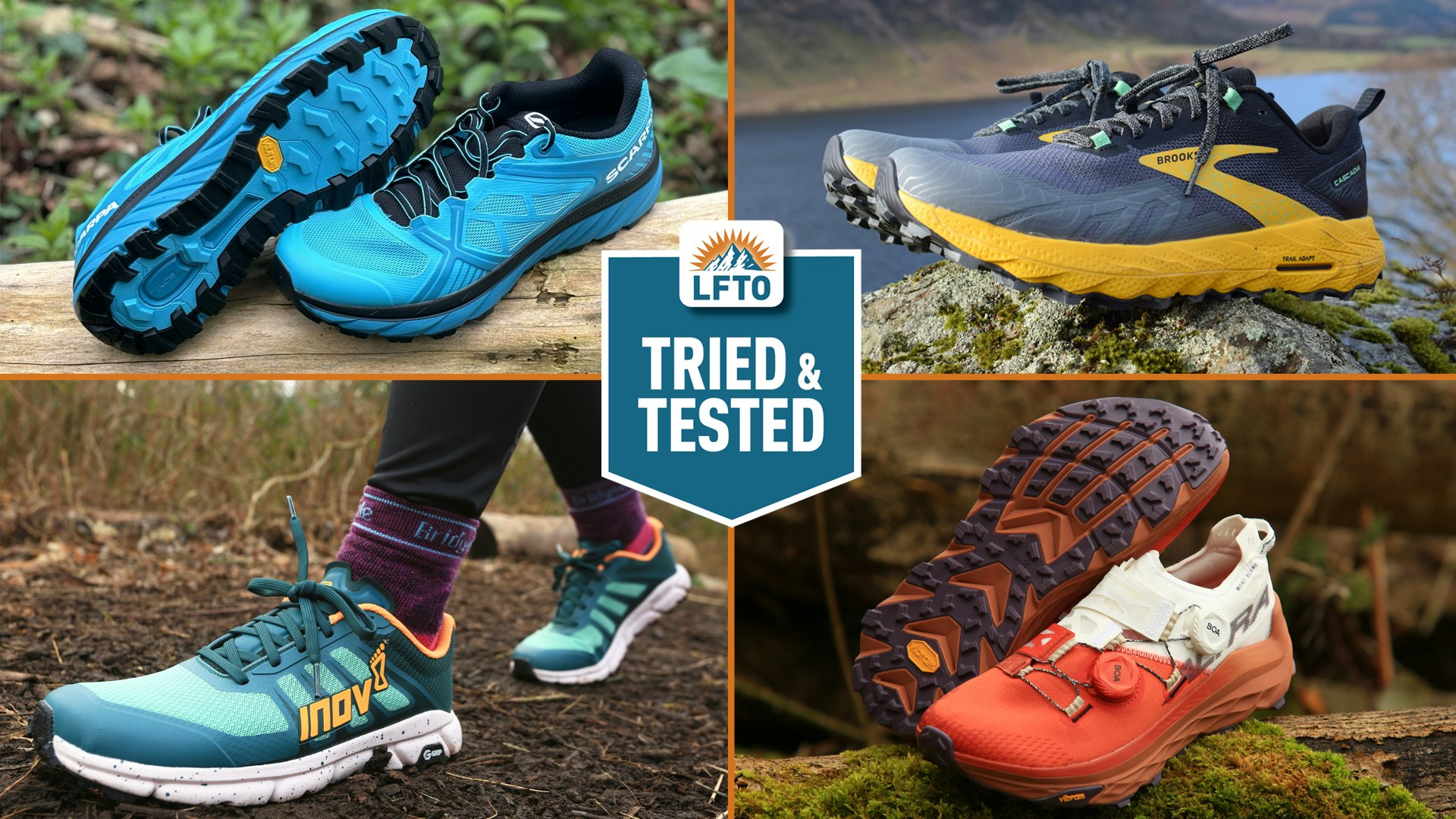
3. Brooks Cascadia 17
- Best For: All-terrain versatility, protection, and stability.
- Weight: ~312g (11.0 oz) per shoe
- Drop: 8mm
The Brooks Cascadia 17 is designed as a dependable workhorse capable of handling everything from forest fire roads to technical mountain passes. Brooks utilizes the Trail Adapt System, which integrates the midsole, a protective rock plate, and a split-outsole design. This architecture allows the shoe to adapt independently to uneven ground, enhancing stability without sacrificing flexibility.
The DNA LOFT v2 midsole offers a balanced, moderately plush ride that resists packing out over hundreds of miles. Ballistic rock shielding protects the forefoot, while the Green Rubber TrailTack outsole provides reliable traction across diverse moisture levels and substrate types. The upper features targeted drainage ports and a secure lace keeper to prevent snags.
- Pros: Highly versatile across mixed terrain; excellent underfoot protection; durable, long-lasting construction.
- Cons: Heavier than minimalist or race-focused alternatives; stiffness out of the box requires a brief break-in period.
4. Altra Lone Peak 8
- Best For: Natural foot splay, zero-drop preference, and wide-foot comfort.
- Weight: ~303g (10.7 oz) per shoe
- Drop: 0mm (Zero Drop)
For runners who prioritize a natural stride and maximal toe splay, the Altra Lone Peak 8 remains an industry benchmark. Built around Altra’s trademark Original FootShape fit, the shoe features a generous toe box that allows toes to spread naturally, reducing blisters and improving balance on descents.
The Lone Peak 8 utilizes Altra EGO midsole foam, offering a responsive yet well-cushioned ride that maintains good ground feedback. The MaxTrac outsole features optimized lug placement for multi-directional traction, while the StoneGuard insert provides underfoot rock protection. Notably, the upper features a hook-and-loop GaiterTrap for attaching strapless running gaiters to keep out sand and debris.
- Pros: Unmatched toe box room; natural zero-drop platform; lightweight and flexible.
- Cons: Zero-drop design requires an adaptation period for runners accustomed to high-heel-drop shoes; durability of the upper mesh can wear down at flex points over high mileage.
5. Nike Pegasus Trail 5
- Best For: Door-to-trail versatility and mixed-surface running.
- Weight: ~300g (10.6 oz) per shoe
- Drop: ~9.5mm
The Nike Pegasus Trail 5 bridges the gap for runners who must log road miles before reaching the trailhead. It utilizes full-length Nike ReactX foam cushioning, which offers a responsive stride while reducing the carbon footprint of the foam manufacturing process compared to standard EVA.
The outsole features a generative traction pattern designed without rubber in certain midfoot zones to smooth out road transitions, while maintaining high-traction rubber pods around the perimeter and forefoot for dirt paths. The mesh upper is engineered for high breathability, and Flywire cables integrate with the laces to secure midfoot lockdown.
- Pros: Excellent transition from pavement to light dirt trails; energetic, springy cushioning; stylish everyday aesthetic.
- Cons: Lacks the deep lug depth required for technical mud or steep, loose mountain descents; not suited for rugged mountaineering.
Comparative Specifications Table
| Model | Weight (Approx.) | Heel-to-Toe Drop | Outsole Technology | Primary Terrain Focus |
|---|---|---|---|---|
| Salomon Speedcross 6 | 298g / 10.5 oz | 10mm | Mud Contagrip | Deep mud, soft trails, technical climbs |
| Hoka Speedgoat 6 | 278g / 9.8 oz | 5mm | Vibram Megagrip with Traction Lugs | Ultra-distance, technical mountain runs |
| Brooks Cascadia 17 | 312g / 11.0 oz | 8mm | TrailTack Green Rubber | All-terrain versatility, rugged trails |
| Altra Lone Peak 8 | 303g / 10.7 oz | 0mm | MaxTrac | Natural foot splay, wide fit, general trails |
| Nike Pegasus Trail 5 | 300g / 10.6 oz | 9.5mm | Generative Rubber Pods | Door-to-trail, packed dirt, light gravel |
Key Factors to Consider Before Buying
Selecting the correct model requires evaluating physical requirements, local climate, and personal running biomechanics.
1. Assessing Your Local Environment
Match your shoe selection to the terrain you encounter 80% of the time. If your runs consist of dry fire roads and hard-packed park trails, an aggressive mud shoe like the Salomon Speedcross will wear down quickly and feel stiff. Conversely, tackling wet Pacific Northwest singletracks in the Nike Pegasus Trail 5 will result in slipping due to insufficient lug depth.
2. Heel-to-Toe Drop Preferences
Heel-to-toe drop measures the height difference between the heel and the forefoot. Traditional shoes (such as the Salomon Speedcross or Nike Pegasus Trail) feature a higher drop (8mm to 10mm), which reduces strain on the Achilles tendon and calves. Neutral or zero-drop shoes (like the Altra Lone Peak) encourage a midfoot or forefoot strike, distributing impact forces across different joints. Transitioning to zero-drop footwear should be done gradually to prevent injury.
3. Sizing and Foot Volume
Trail running causes feet to swell significantly over long distances. It is generally recommended to size up by a half-size compared to casual street shoes to prevent bruised toenails on steep descents. Runners with high foot volumes or wide arches should look toward brands offering dedicated wide widths or anatomically shaped toe boxes.
Frequently Asked Questions
Can I use road running shoes for outdoor trail running?
While you can wear road running shoes on smooth, dry dirt paths, they are not recommended for technical outdoor running. Road shoes lack protective toe caps, rock plates, and durable rubber outsoles with deep lugs. This leaves your feet vulnerable to sharp stones, and road rubber offers poor friction on wet roots and slick rock surfaces.
How often should outdoor running shoes be replaced?
Trail running shoes typically last between 300 and 500 miles, depending on your running style, body weight, and the abrasiveness of the terrain. However, the outsole rubber and midsole foam degrade faster under harsh off-road conditions. Inspect your shoes regularly for worn-down lugs, compressed midsole foam that no longer rebounds, and tears in the upper mesh.
Are waterproof trail running shoes worth buying?
Waterproof shoes (such as Gore-Tex variants) are beneficial for cold, wet, or snowy environments where keeping moisture out prevents hypothermia. However, they trap sweat more effectively than standard mesh uppers. If water enters the shoe from the top (such as via a deep puddle or stream crossing), waterproof membranes trap the water inside, significantly delaying drying time.
What is the advantage of a rock plate in a trail shoe?
A rock plate is a protective layer embedded between the midsole and outsole to disperse point impacts from sharp rocks and jagged roots. Without a rock plate, running over technical boulder fields can cause severe bruising on the soles of your feet. Shoes designed for smooth, groomed paths often omit rock plates to maintain flexibility and save weight.
How do I clean and maintain my outdoor running shoes?
After muddy runs, allow the mud to dry, then gently brush it off using a soft-bristled brush. Remove the insoles and store the shoes in a well-ventilated area at room temperature. Never machine wash or machine dry running shoes, as high heat degrades the adhesive bonding and breaks down the shock-absorbing properties of the midsole foam.
Final Recommendation
Choosing the best outdoor running shoe depends entirely on your primary trail conditions and foot shape. For technical, muddy mountain terrain where grip is paramount, the Salomon Speedcross 6 stands out. If you are logging ultra-distances and require plush protection, the Hoka Speedgoat 6 is the premier choice. For all-around versatility and durability, the Brooks Cascadia 17 handles nearly any environment with confidence. Assess your local trails, determine your cushioning preferences, and select the model that best matches your off-road ambitions.