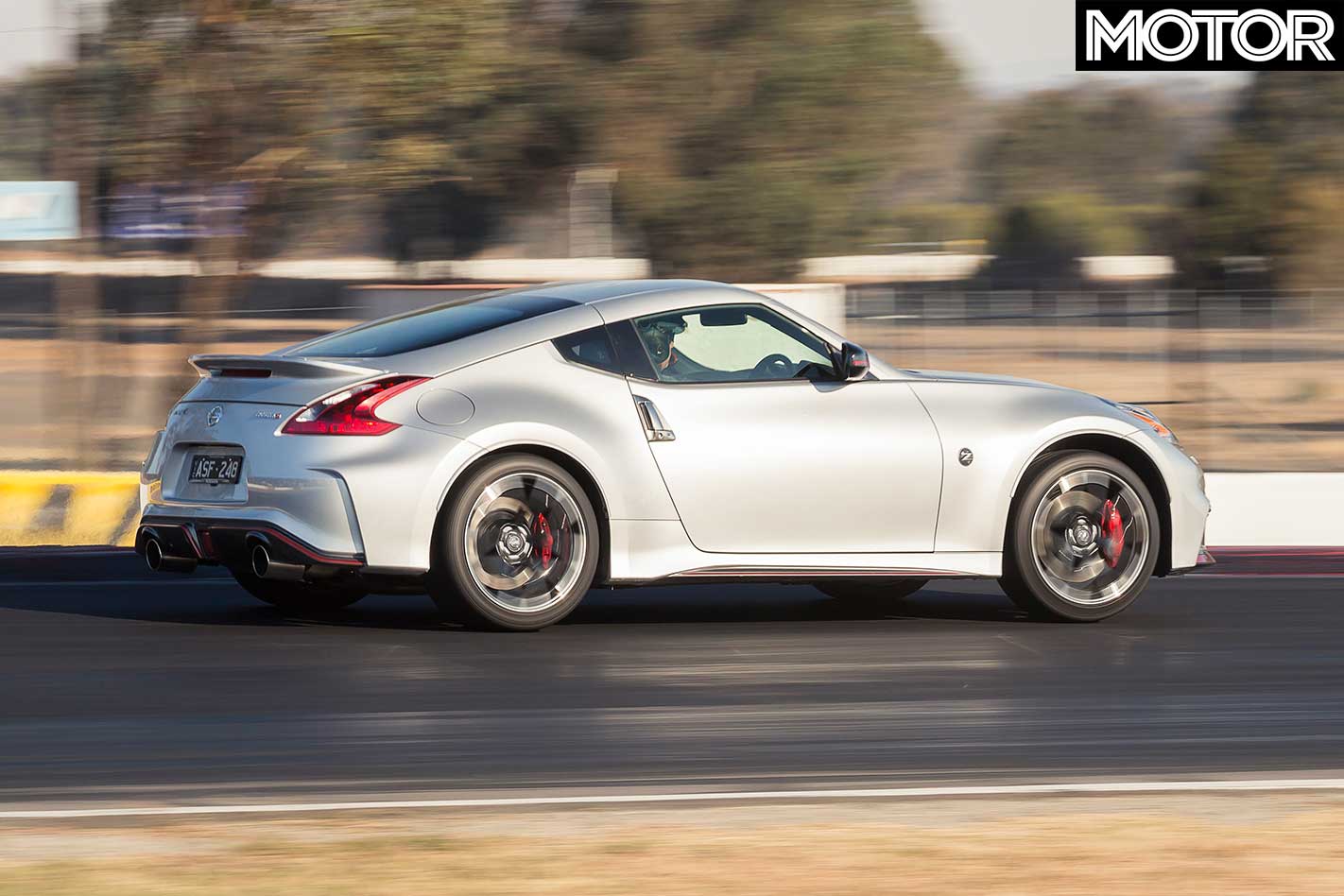
The Nissan 370Z (Z34) remains a premier choice for track enthusiasts in 2026, offering a balanced Front Midship (FM) chassis and a high-revving 3.7L V6 engine. While inherently capable, achieving consistent track performance requires addressing critical thermal management issues and upgrading specific drivetrain components to handle the stresses of high-speed cornering and repeated braking cycles.
The Foundation of 370Z Track Dynamics
The Nissan 370Z was engineered with a focus on structural rigidity and weight distribution. Utilizing the FM platform, Nissan positioned the engine behind the front axle line, resulting in a weight distribution of approximately 55/45 front-to-rear. This layout is designed to equalize toward 50/50 under acceleration, providing a stable platform for corner exit.
In 2026, the 370Z is appreciated for its hydraulic steering rack—a feature largely phased out in newer sports cars in favor of electric power steering (EPS). The hydraulic system provides granular feedback through the steering wheel, allowing drivers to feel the exact limit of the front tires. However, the short wheelbase (100.4 inches) that makes the car rotate eagerly also makes it sensitive to mid-corner throttle adjustments. On the track, this translates to a car that requires precise inputs; it is rewarding for skilled drivers but can be unforgiving to those who are abrupt with weight transfers.
The chassis itself features an extensive use of aluminum in the subframes and suspension components to reduce unsprung weight. For track use, this lightens the load on the dampers and allows the suspension to react more quickly to curbing and track imperfections. Despite these lightweight components, the 370Z is not a featherweight, typically tipping the scales between 3,250 and 3,450 pounds depending on the trim and transmission. Effective track performance, therefore, relies heavily on managing this mass through optimized suspension geometry and high-performance braking systems.
Thermal Management: The Essential First Step
The most significant hurdle to 370Z track performance is oil temperature. The VQ37VHR engine is known for generating immense heat during sustained high-RPM operation. From the factory, the 370Z lacks a dedicated air-to-oil cooler (with the exception of some NISMO models and later year updates which still proved insufficient for hard tracking).
Without modifications, a 370Z will often enter "limp mode" after only 10 to 15 minutes of hard driving on a warm day. Limp mode restricts the engine to approximately 5,000 RPM to prevent catastrophic failure, effectively ending the track session. To solve this, a 25-row or 34-row external oil cooler is considered a mandatory modification. These kits are typically mounted behind the front grille to receive direct airflow.
Beyond engine oil, the differential and transmission also require attention. The factory viscous limited-slip differential (VLSD) uses a fluid that shears and loses effectiveness as it heats up. After several laps, the VLSD often begins to act like an open differential, leading to "one-wheel peel" on corner exits. Upgrading to a mechanical clutch-type or helical LSD, paired with a high-capacity finned differential cover, is necessary for maintaining traction throughout a 20-minute session.
Power Delivery and the VQ37VHR Engine
The heart of the 370Z is the 3.7-liter V6 engine equipped with Variable Valve Event and Lift (VVEL). In stock form, it produces between 332 and 350 horsepower. What makes this engine suitable for the track is its linear power delivery. Unlike turbocharged engines that may suffer from lag or sudden surges of torque, the VQ37VHR provides predictable throttle response, which is crucial for balancing the car at the limit of adhesion.
To maximize track performance in 2026, many owners opt for "bolt-on" modifications paired with a custom ECU tune. Common upgrades include:
- High-flow intakes: Long-tube intakes that draw air from in front of the radiator support.
- Test pipes or High-flow cats: Reducing backpressure at the exhaust manifold level significantly improves mid-range torque.
- Cat-back exhaust: Specialized lightweight single or dual exits that reduce overall vehicle weight while improving flow.
A tuned 370Z can reliably produce 330–350 wheel horsepower. While this may seem modest compared to modern forced-induction vehicles, the focus for a track-ready 370Z is often on the "area under the curve" rather than peak numbers. Maintaining a broad torque curve allows the driver to stay in a higher gear through certain technical sections, reducing the number of shifts required and stabilizing the chassis.
Suspension Tuning and Alignment Specifications
The 370Z utilizes a double-wishbone front suspension and a multi-link rear. From the factory, the car is set up with significant understeer for safety on public roads. For track performance, the suspension must be neutralized.
The Need for Camber Adjustment
One of the primary limitations of the stock 370Z suspension is the lack of front camber adjustment. Under heavy cornering, the outer edge of the front tires takes the brunt of the load, leading to premature tire wear and reduced grip. Installing aftermarket front upper control arms (FUCA) allows for negative camber settings—typically between -2.5 and -3.5 degrees for track use. This ensures that the tire's contact patch is flat against the pavement when the suspension is compressed in a turn.
Spring Rates and Damping
While the Sport and NISMO trims offer stiffer springs, serious track use usually necessitates coilovers. High-quality coilovers provide adjustable damping, allowing the driver to stiffen the car for smooth tracks or soften it for bumpy circuits. In 2026, "True Rear" coilover conversions have become popular, moving the rear spring from the mid-link to the strut itself, which simplifies suspension geometry and allows for a wider range of spring rate choices.
Braking Systems and Reliability
Stopping a 3,400-pound car from 130 mph repeatedly requires a robust braking system. The "Sport" trim of the 370Z comes equipped with Akebono 4-piston front and 2-piston rear calipers. While these are excellent calipers, the factory pads and fluid are not rated for track temperatures.
To prepare the 370Z for the track, enthusiasts must transition to a high-boiling-point DOT 4 fluid (such as Motul RBF600 or Castrol SRF) and track-specific brake pads. These pads are designed to operate at temperatures exceeding 1,000°F without "fading." Furthermore, the 370Z suffers from poor airflow to the front brakes. Installing brake cooling ducts—which channel air from the front fascia directly to the center of the rotors—is a cost-effective way to extend the life of the braking components and prevent hub bearing failure due to excessive heat soak.
Transmission and Drivetrain Weak Points
The 6-speed manual transmission in the 370Z features "SynchroRev Match," which automatically blips the throttle during downshifts. While purists may disable it, the system is remarkably effective at stabilizing the car during heavy braking zones by ensuring the engine and transmission speeds are perfectly synchronized.
However, the manual transmission has a known failure point: the Concentric Slave Cylinder (CSC). The factory CSC is made of plastic and sits inside the transmission bell housing. Under the high heat of track use, the seals often fail, leaving the clutch pedal stuck to the floor. In 2026, the standard fix is either a "CSC Delete" kit, which moves the slave cylinder to the outside of the transmission, or a heavy-duty stainless steel replacement.
For those using the 7-speed automatic transmission, an auxiliary transmission cooler is non-negotiable. The automatic generates significant heat during rapid shifting, and like the engine oil, the transmission fluid will trigger a protective limp mode if it exceeds safe operating temperatures.
Track Performance Comparison: Trim Levels
| Feature | Base Model | Sport / Sport Tech | NISMO (Post-2015) |
|---|---|---|---|
| Brakes | 2-Piston Front / 1-Piston Rear | Akebono 4-Piston / 2-Piston | Akebono with High-Performance Pads |
| Differential | Open | Viscous Limited Slip (VLSD) | Viscous Limited Slip (VLSD) |
| Wheels | 18" Cast Aluminum | 19" RAYS Forged | 19" NISMO-Specific RAYS Forged |
| Suspension | Standard | Sport-Tuned | NISMO-Tuned (Stiffest) |
| Aerodynamics | Basic | Rear Spoiler | Full NISMO Aero (Functional Downforce) |
| Oil Cooling | None | Basic (Post-2012 only) | Basic (Inadequate for hard track) |
Aerodynamics and Weight Reduction
In 2026, the aftermarket for 370Z aerodynamics is mature, offering everything from subtle lip spoilers to full Under-body diffusers. At track speeds (80 mph+), aerodynamic lift becomes a factor. The 370Z has a natural tendency to become "light" at the rear during high-speed sweepers.
A functional rear wing, paired with a front splitter, can provide hundreds of pounds of downforce, significantly increasing cornering speeds. However, aerodynamics must be balanced; adding a massive rear wing without front-end grip will result in severe understeer.
Weight reduction is the "free" way to improve every aspect of performance: acceleration, braking, and cornering. Removing the interior (carpeting, sound deadening, and heavy power seats) can shed upwards of 200 pounds. Replacing the heavy factory seats with FIA-approved racing buckets not only saves weight but also holds the driver firmly in place, allowing for better control of the vehicle under high G-forces.
Maintenance Schedule for Tracked 370Zs
Regular maintenance is vital for a car subjected to the rigors of a race circuit. In 2026, with many 370Zs having higher mileage, the following intervals are recommended for cars seeing regular track time:
- Engine Oil: Change every 2–3 track days using a high-shear-strength synthetic oil (e.g., 5W-40 or 10W-60 depending on climate).
- Brake Fluid: Flush every 6 months or if the pedal starts to feel soft.
- Differential/Transmission Fluid: Change every 10–12 track hours.
- Wheel Bearings: Inspect for play after every event, as the 370Z's weight and high-grip tires put immense stress on the hubs.
- Suspension Bolts: Perform a "nut and bolt" check before every event to ensure nothing has vibrated loose.
FAQ
Can I track a completely stock 370Z?
You can, but it is not recommended for more than a few laps. The primary issue is the lack of an oil cooler, which will cause the car to enter limp mode quickly. Additionally, the stock brake pads will likely fade after a single session of hard braking. At a minimum, install an oil cooler, high-temp brake fluid, and track pads before your first event.
Is the NISMO version worth the extra cost for the track?
The NISMO offers a more rigid chassis (seam-welded in certain areas) and better factory aerodynamics. However, many of the parts you would change for a dedicated track build—such as the suspension and differential—are replaced anyway. For a dual-duty street/track car, the NISMO is excellent. For a dedicated track build, starting with a Sport trim is often more cost-effective.
What are the best tires for 370Z track performance?
In 2026, the 200-treadwear category remains the "sweet spot" for enthusiasts. Tires like the Bridgestone Potenza RE-71RS or the Hankook Ventus R-S4 offer a balance of extreme grip and heat cycle longevity. For those with dedicated track wheels, moving to a "square" setup (e.g., 285/35R18 on all four corners) helps reduce understeer and allows for tire rotation.
Does the 370Z have issues with fuel starvation?
Yes. The 370Z's fuel tank design is prone to starvation in long right-hand corners when the fuel level is below half a tank. This causes the engine to stumble as it loses fuel pressure. Installing a fuel surge tank or a specialized "road race" fuel pump assembly is a common solution for serious track drivers.
How does the 370Z compare to the newer Nissan Z on track?
The newer Nissan Z (RZ34) offers more power from its twin-turbo engine, but it also carries more weight and uses electric power steering. The 370Z is often preferred by purists for its more communicative hydraulic steering and the reliability of a naturally aspirated engine, which is generally easier to keep cool than a turbocharged setup.
Final Recommendation
For drivers seeking to maximize 370Z track performance in 2026, the most effective path is a staged approach. Begin by addressing the car's cooling and braking deficiencies, as these are the primary "session-killers." Once the car can survive a full 20-minute session without overheating or brake fade, focus on suspension geometry and seat time. The 370Z is a momentum-based car that rewards smooth inputs and correct lines. By prioritizing reliability first and power second, you will develop a consistent, formidable track machine capable of competing with much newer and more expensive sports cars.