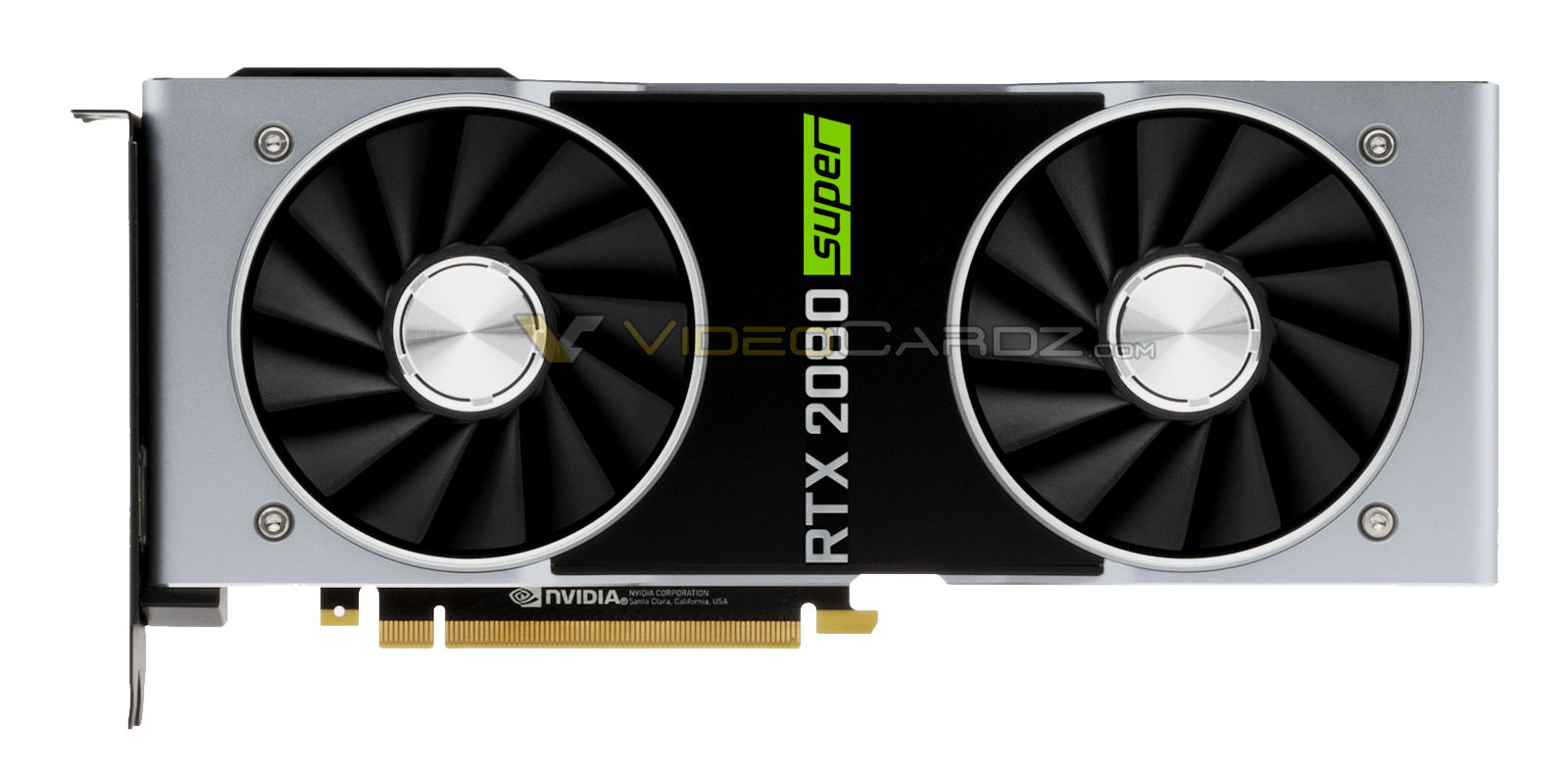
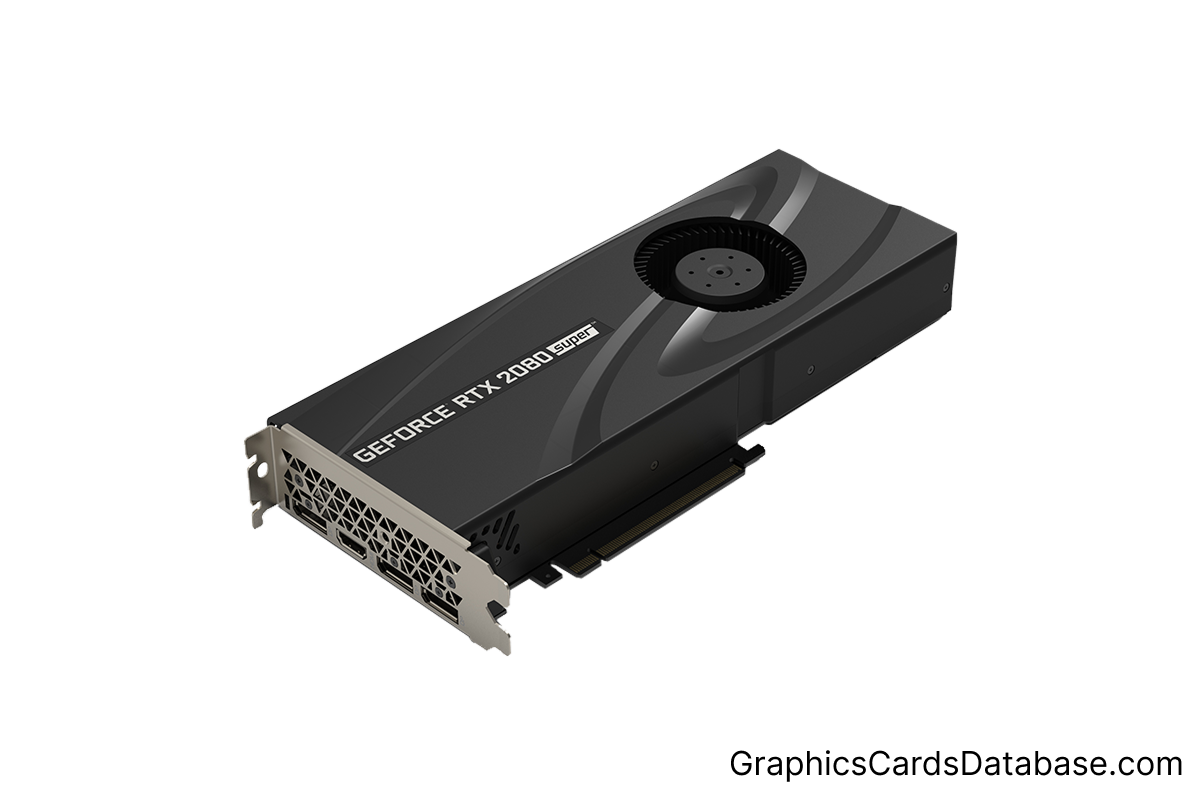
The NVIDIA GeForce RTX 2080 Super delivers robust 1440p gaming performance and capable 4K rendering, trading blows with later-generation mid-range hardware thanks to its 8GB of GDDR6 VRAM and Turing architecture. Understanding its benchmarks helps users evaluate its current capabilities in modern titles, ray tracing workloads, and productivity software.
Understanding the GeForce RTX 2080 Super Architecture
Released in July 2019 as a mid-cycle refresh to the Turing lineup, the NVIDIA GeForce RTX 2080 Super was designed to bridge the performance gap between the standard RTX 2080 and the enthusiast-tier RTX 2080 Ti. Built on the TU104 graphics processor using a 12-nanometer FinFET manufacturing process by TSMC, the card features 3,072 CUDA cores, 384 Tensor cores for artificial intelligence processing, and 48 RT cores dedicated to real-time ray tracing calculations.
Compared to its non-Super predecessor, the RTX 2080 Super received a bump in core counts, higher clock speeds—with a boost clock reaching 1,815 MHz—and faster GDDR6 memory operating at 15.5 Gbps across a 256-bit memory bus. This configuration yielded an effective memory bandwidth of 496 GB/s. These hardware revisions positioned the card as a premier high-refresh-rate 1440p solution and a capable entry point into 4K gaming, while introducing consumers to NVIDIA's first-generation hardware-accelerated ray tracing and DLSS (Deep Learning Super Sampling) ecosystem.
How Benchmarks Measure GPU Performance
GPU benchmarks are standardized tests, synthetic workloads, and real-world game scenarios used to quantify graphics processing power, thermal efficiency, and stability. Synthetics, such as UL Benchmarks' 3DMark suite (Time Spy, Port Royal, and Fire Strike), isolate specific computational tasks—like DirectX 12 performance, ray tracing intersection tests, or physics simulations—and output a numerical score. These scores allow for straightforward, repeatable comparisons between different graphics cards without variables like game engine optimizations skewing the data.
In-game benchmarks, conversely, execute scripted gameplay sequences to measure average frames per second (FPS), 1% low framerates, and 0.1% low framerates. Average FPS indicates general smoothness, while 1% and 0.1% lows expose sudden frame drops, stuttering, and pacing inconsistencies that impact visual fluidity. Evaluating the RTX 2080 Super requires looking at both synthetic metrics and real-world framerates across various resolutions to understand how its architectural strengths—and its 8GB VRAM limitation—manifest during active workloads.
2080 Super Performance Across Resolutions
Graphics performance scales significantly depending on the display resolution, shifting the computational bottleneck between the graphics processing unit and the central processing unit.
1080p Full HD Performance
At 1080p, the RTX 2080 Super often encounters a CPU bottleneck in modern titles, meaning the processor limits how many frames the graphics card can push. In competitive esports titles and demanding AAA games, the card easily sustains framerates well above 144 Hz, making it an exceptional pairing for high-refresh-rate 1080p monitors. However, running games at this resolution underutilizes the card's raw pixel-pushing capabilities, leaving performance headroom on the table.
1440p QHD Performance
Quad HD (1440p) represents the sweet spot for the RTX 2080 Super. At this resolution, the GPU operates near maximum capacity while maintaining high, stable framerates. Most demanding AAA titles run at Ultra or High settings well above the 60 FPS threshold, frequently hovering between 80 and 110 FPS depending on engine optimization and CPU pairing.
4K Ultra HD Performance
While marketed as a 4K-capable card upon release, modern 4K gaming pushes the RTX 2080 Super to its limits. Playing modern titles at native 4K usually requires lowering graphical settings from Ultra to Medium or High to maintain a stable 60 FPS. Furthermore, the 8GB frame buffer becomes a restrictive factor at 4K, as high-resolution textures and complex geometry quickly saturate the available VRAM, leading to stuttering if settings are left unchecked.
Ray Tracing and DLSS Integration
The Turing architecture introduced dedicated hardware for ray tracing and AI, making the RTX 2080 Super an early participant in modern lighting technology. However, first-generation RT cores impose a heavy performance penalty. Enabling ray-tracing reflections, shadows, or global illumination in demanding titles causes framerates to plummet by 30% to 50% when running natively.
To offset this performance tax, NVIDIA relied on DLSS 1.0 and subsequently DLSS 2.0. DLSS uses Tensor cores to render the game at a lower internal resolution and reconstruct the image using deep learning, recovering lost performance while maintaining visual fidelity. Because the RTX 2080 Super lacks support for DLSS 3 frame generation—a feature restricted to the later RTX 40-series architecture—users must rely entirely on DLSS Super Resolution to maintain playable framerates in heavy ray-traced environments.
Comparative Benchmarks: RTX 2080 Super vs. Modern Equivalents
Evaluating the RTX 2080 Super against contemporary hardware clarifies its position in the current hardware market. The following table contrasts raw rasterization performance tiers, memory configurations, and feature sets.
| GPU Model | Architecture | VRAM Capacity | Relative 1440p Rasterization | Ray Tracing Efficiency | DLSS Support Limit |
|---|---|---|---|---|---|
| NVIDIA RTX 2080 Super | Turing (12nm) | 8GB GDDR6 | Baseline (100%) | Moderate (1st Gen) | DLSS 2 (Super Resolution) |
| NVIDIA RTX 3060 Ti | Ampere (8nm) | 8GB GDDR6 | ~95% to 100% | Higher (2nd Gen) | DLSS 2 (Super Resolution) |
| NVIDIA RTX 4060 Ti | Ada Lovelace (5nm) | 8GB / 16GB GDDR6 | ~100% to 105% | High (3rd Gen) | DLSS 3 (Frame Generation) |
| AMD Radeon RX 6700 XT | RDNA 2 (7nm) | 12GB GDDR6 | ~100% | Moderate | FSR 3 (Upscaling) |
As shown in the comparison, the RTX 2080 Super matches the rasterization performance of mid-range current-generation cards like the RTX 3060 Ti and RTX 4060 Ti. However, it trails behind newer architectures in power efficiency, ray tracing execution speed, and the absence of frame generation capabilities.
Productivity, Content Creation, and Rendering Benchmarks
Beyond gaming, the RTX 2080 Super remains a capable workstation tool for video editing, 3D rendering, and artificial intelligence tasks, driven by NVIDIA’s robust CUDA ecosystem.
- Video Editing: In applications like Adobe Premiere Pro and DaVinci Resolve, the card leverages NVENC (NVIDIA Encoder) hardware acceleration for smooth timeline playback and accelerated export times. The 8GB VRAM buffer handles 4K video projects adequately, though heavy 8K workflows or complex color-grading nodes can exhaust memory resources.
- 3D Rendering: In software such as Blender (using CUDA/OptiX APIs) and Maxon Cinema 4D, the RTX 2080 Super's 3,072 CUDA cores deliver fast render times for ray-traced scenes via Cycles. OptiX ray-tracing acceleration speeds up viewport rendering significantly compared to CPU-only rendering.
- AI and Machine Learning: Running local artificial intelligence models, stable diffusion pipelines, or LLMs relies heavily on VRAM capacity. While the processing speed of the Tensor cores is sufficient for hobbyist projects, the 8GB VRAM limitation restricts the size of models that can be loaded into local memory without running out of space.
Power Consumption, Thermals, and System Requirements
Performance comes with thermal and electrical considerations. The RTX 2080 Super has a designated Total Board Power (TBP) rating of 250 watts. Under sustained gaming workloads, total system power consumption typically hovers around 350 to 400 watts when paired with a mid-range processor.
- Power Supply Unit (PSU): NVIDIA originally recommended a minimum 650-watt power supply for a standard system utilizing an RTX 2080 Super. Using a reputable, 80-Plus Gold certified unit ensures clean power delivery and prevents voltage drops during sudden transient spikes.
- Thermal Performance: Reference (Founders Edition) models utilize a dual-axial fan cooling design, while aftermarket cards from board partners (such as ASUS, MSI, or EVGA) feature triple-fan or large dual-fan heatsinks. Proper case ventilation is necessary to keep GPU temperatures under 80°C during extended gaming or rendering sessions, preventing thermal throttling and clock-speed reductions.
Common Bottlenecks and Optimization Strategies
Maximizing the benchmark performance of an RTX 2080 Super requires examining potential system bottlenecks that restrict the graphics card from reaching its full potential.
CPU Bottlenecks
Pairing the RTX 2080 Super with an older processor—such as an Intel Core i7-7700K or AMD Ryzen 5 1600—will result in frame stutters and lower average framerates, particularly at 1080p and 1440p. Upgrading to a modern CPU with high instructions-per-clock (IPC) performance ensures the graphics card receives data quickly enough to maintain high frame delivery.
VRAM Limitations
With 8GB of VRAM, modern games utilizing ultra-high-resolution texture packs, ray tracing, or uncompressed assets can exceed memory limits. When VRAM is exhausted, the system swaps data to system RAM over the PCIe bus, causing severe frame drops. Mitigate this by lowering texture quality settings from Ultra to High, reducing shadow map resolutions, or disabling ambient occlusion where necessary.
Frequently Asked Questions
Is the RTX 2080 Super still good for gaming in 2026?
Yes, the RTX 2080 Super remains a capable 1440p gaming card for esports titles, indie games, and optimized AAA releases. However, modern unoptimized games and heavy ray-tracing workloads require lowering graphical settings and utilizing upscaling technologies like DLSS to maintain smooth framerates.
Does the RTX 2080 Super support DLSS 3 Frame Generation?
No. Hardware-accelerated Frame Generation is exclusive to NVIDIA's RTX 40-series (Ada Lovelace) architecture and newer GPUs. The RTX 2080 Super supports up to DLSS 2 (Super Resolution), which renders lower internal resolutions to improve performance without generating synthetic intermediary frames.
What is the power supply requirement for an RTX 2080 Super?
A minimum 650-watt power supply unit of good quality is recommended for a system running an RTX 2080 Super. If paired with a power-hungry, high-end CPU, a 750-watt PSU provides a safer operational margin and accommodates power spikes.
How does the RTX 2080 Super compare to the RTX 3070?
The RTX 3070 generally outperforms the RTX 2080 Super by roughly 10% to 15% in standard rasterized games and offers significantly improved second-generation ray-tracing efficiency due to its Ampere architecture, though both cards share an 8GB VRAM limit.
Why is my RTX 2080 Super stuttering in modern games?
Stuttering is often caused by VRAM exhaustion when game settings exceed the 8GB frame buffer, or by thermal throttling due to dust accumulation or poor case airflow. Lowering texture settings, monitoring temperatures, and updating GPU drivers often resolve these performance hiccups.
Conclusion and Buying Guidance
The NVIDIA GeForce RTX 2080 Super remains a capable piece of hardware that punches above its age in rasterized 1440p gaming and content creation workloads. While modern demands—such as heavy ray tracing, frame generation, and expansive 8GB+ VRAM requirements—push the card toward its limits, intelligent setting adjustments and DLSS keep it viable. Users seeking an upgrade should evaluate whether current market pricing aligns with its mid-tier performance profile, balancing its strong CUDA ecosystem and solid build quality against the architectural advantages of newer generation hardware.