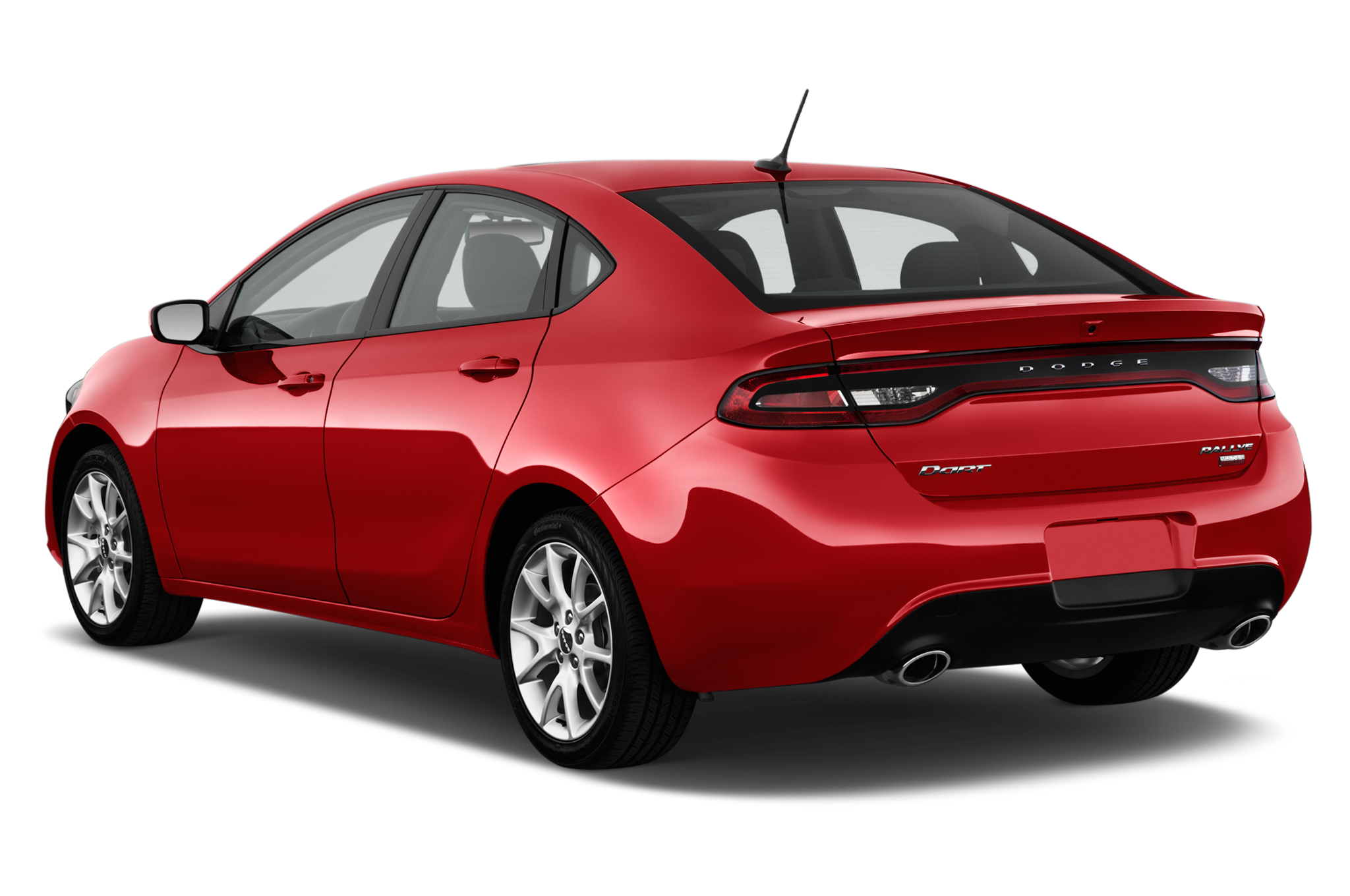
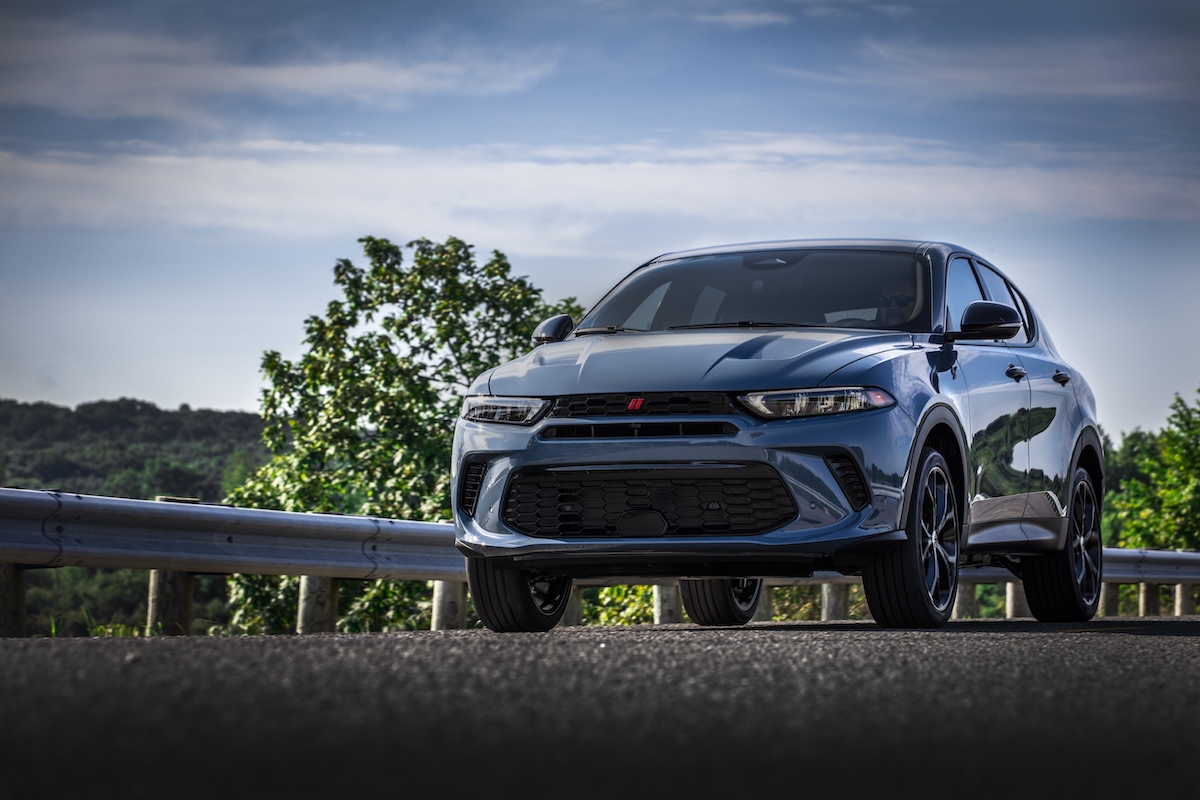
As of 2026, the 2023 Dodge Dart remains a subject of significant interest in the secondary market and among automotive enthusiasts, despite the fact that Dodge did not officially manufacture a "Dart" model for the 2023 model year. While the Dodge Dart nameplate was retired in 2016, the search for a 2023 version typically points toward its spiritual and mechanical successor: the 2023 Dodge Hornet. For those evaluating the performance of a Dodge compact in this era, the Hornet GT delivers a 0–60 mph time of approximately 6.5 seconds, while the R/T performance hybrid achieves the sprint in 5.6 seconds.
The Discontinuity of the Dodge Dart Nameplate
To understand the performance landscape of a "2023 Dodge Dart," one must first address the historical gap in the Dodge lineup. The original modern Dodge Dart, produced from 2013 to 2016, was a compact sedan built on the Fiat Compact platform. Despite its aggressive styling and association with the "Dart" heritage, it struggled to compete with established rivals like the Honda Civic or Toyota Corolla in terms of sales volume and reliability.
Following its discontinuation in 2016, rumors of a 2023 revival circulated for years. Enthusiasts expected a new sedan based on modern Stellantis platforms. However, Dodge pivoted its strategy to align with the growing consumer preference for compact utility vehicles (CUVs). Consequently, the vehicle that many anticipated as the "2023 Dart" actually debuted as the 2023 Dodge Hornet.
The Hornet occupies the exact market segment—compact, performance-oriented, and entry-level—that the Dart once held. Therefore, any performance overview for the 2023 model year must center on the Hornet, as it is the only vehicle in the Dodge portfolio that fulfills the compact performance requirements of that timeframe.
2023 Dodge Hornet: The Performance Successor
The 2023 Dodge Hornet was marketed as the "first electrified performance vehicle" from Dodge, specifically in its R/T trim. For drivers looking for the 0–60 mph performance they expected from a modern Dart, the Hornet provides a substantial leap forward compared to the sedans of the mid-2010s.
The Hornet GT: Entry-Level Turbocharged Power
The base model for the 2023 year is the Hornet GT. It features a 2.0-liter turbocharged inline-four engine, part of the "Hurricane" engine family. This powertrain produces 268 horsepower and 295 lb-ft of torque.
In real-world testing, the 2023 Hornet GT achieves a 0–60 mph time of 6.5 seconds. This is significantly faster than any stock version of the 2013–2016 Dodge Dart. The GT utilizes a nine-speed automatic transmission and comes standard with all-wheel drive (AWD), which aids in off-the-line traction, a common weak point for the front-wheel-drive Darts of the past.
The Hornet R/T: Hybrid Performance and "PowerShot"
The R/T trim represents the pinnacle of 2023 compact performance for Dodge. It utilizes a 1.3-liter turbocharged engine paired with a 90-kW electric motor on the rear axle. The total system output is 288 horsepower and a massive 383 lb-ft of torque.
The standout feature for the R/T is the "PowerShot" mode. By pulling both steering-wheel-mounted paddle shifters and flooring the accelerator, the vehicle provides a temporary 30-horsepower boost for 15 seconds. With PowerShot engaged, the 2023 Hornet R/T hits 0–60 mph in 5.6 seconds. This performance level places it well within the territory of modern "hot hatches" and surpasses the performance of the classic Dart GT models.
Historical Context: 2013–2016 Dodge Dart Benchmarks
For buyers who are specifically looking at the older Dodge Dart models (which are often mislabeled or categorized as "2023" models in some low-quality used car listings), it is vital to understand their actual performance capabilities. These vehicles are the baseline against which the 2023 Hornet was measured.
The 2016 Dodge Dart offered three main engine options, none of which approached the sub-7-second 0–60 mph threshold in stock configuration:
- 2.0L Tigershark I4: This was the base engine, producing 160 horsepower. It was widely considered underpowered for the Dart’s heavy chassis, resulting in a 0–60 mph time of approximately 9.9 seconds.
- 1.4L MultiAir Turbo: This engine, shared with the Fiat 500 Abarth, produced 160 horsepower but more torque than the 2.0L. With the manual transmission, it could reach 0–60 mph in roughly 8.2 to 8.4 seconds.
- 2.4L Tigershark I4: Found in the SXT, Limited, and GT trims, this engine produced 184 horsepower. The Dart GT, which was the most "performance-oriented" version of the original run, typically recorded a 0–60 mph time of 8.2 seconds.
When comparing these figures to the 2023 Hornet, it becomes clear why Dodge opted for a new platform. The Hornet GT is nearly two seconds faster to 60 mph than the fastest factory Dart ever produced.
Engineering and Dynamics: Why the 2023 Models Are Faster
The 0–60 mph performance of the 2023-era Dodge compacts is not just a result of higher horsepower; it is the result of a fundamental shift in engineering philosophy under the Stellantis umbrella.
Platform Integration
The 2023 Hornet is built on the "Small Wide 4x4 LWB" platform, which it shares with the Alfa Romeo Tonale. This platform was designed to handle higher lateral G-forces and provides a more rigid structure than the older Dart's architecture. This rigidity allows for more aggressive suspension tuning without compromising the car's stability during hard launches.
Traction and All-Wheel Drive
One of the primary limitations of the 2013–2016 Dodge Dart was its front-wheel-drive (FWD) layout. During hard acceleration, weight transfers to the rear of the vehicle, reducing the load—and therefore the traction—on the front tires. This often resulted in wheel spin and slower 0–60 mph times.
The 2023 Hornet models utilize standard AWD. In the GT, this is a mechanical system that can distribute torque between the front and rear axles. In the R/T, it is an "eAWD" system where the gas engine powers the front and the electric motor powers the rear. This immediate torque application from the electric motor is what allows the R/T to achieve a mid-5-second sprint.
Transmission Efficiency
The older Dodge Darts were often criticized for their transmissions, particularly the early Dual Dry Clutch Transmission (DDCT) which suffered from "hunting" and slow shifts. The 2023 Hornet GT uses a refined ZF nine-speed automatic, while the R/T uses a six-speed Aisin automatic optimized for hybrid integration. Both transmissions provide much crisper shifts and better gearing for low-end acceleration than the units found in the Dart.
Performance Comparison: Dodge Compact Models
The following table compares the 0–60 mph performance and engine specifications of the legacy Dodge Dart models against the 2023 Dodge Hornet models, which serve as the current market equivalent.
| Vehicle Model | Engine Type | Horsepower | Torque (lb-ft) | 0–60 mph (Est.) |
|---|---|---|---|---|
| 2016 Dodge Dart GT | 2.4L I4 | 184 hp | 171 lb-ft | 8.2 Seconds |
| 2016 Dodge Dart Turbo | 1.4L Turbo I4 | 160 hp | 184 lb-ft | 8.4 Seconds |
| 2023 Dodge Hornet GT | 2.0L Turbo I4 | 268 hp | 295 lb-ft | 6.5 Seconds |
| 2023 Dodge Hornet R/T | 1.3L Turbo PHEV | 288 hp* | 383 lb-ft | 5.6 Seconds |
| 2023 Dodge Hornet R/T (No PowerShot) | 1.3L Turbo PHEV | 258 hp | 383 lb-ft | 5.9 Seconds |
*Horsepower reflects the PowerShot temporary boost mode.
Modifications for Legacy Dart Owners
Because a factory 2023 Dodge Dart does not exist, many owners of 2013–2016 models look to the aftermarket to bring their vehicle’s performance up to modern 2023 standards. To achieve a 0–60 mph time comparable to the Hornet GT (6.5 seconds) in an older Dart, significant modifications are required.
Tuning and Induction
For the 1.4L Turbo Dart models, an ECU (Engine Control Unit) reflash is the most common starting point. Companies like EuroCompulsion and Madness Autoworks have historically offered tunes that increase boost pressure, potentially shaving 0.5 to 1.0 seconds off the 0–60 time. Pairing this with a cold air intake and a high-flow exhaust system helps the small turbocharger breathe more efficiently.
Weight Reduction
The Dodge Dart was notoriously heavy for its class, with some trims exceeding 3,200 lbs. To improve the power-to-weight ratio, enthusiasts often swap out the heavy factory battery for a lightweight lithium-ion version and replace heavy factory wheels with lightweight forged alloys. Every 100 lbs removed generally equates to a 0.1-second improvement in the 0–60 mph sprint.
Limitations of Modification
Even with heavy modifications, the FWD nature of the Dart remains a bottleneck. While a highly tuned 1.4L or 2.4L Dart might achieve a 0–60 mph time in the low 7-second range, reaching the 5.6-second mark of the 2023 Hornet R/T is virtually impossible without a complete powertrain swap and custom drivetrain engineering, which often exceeds the value of the car.
The Future of the "Dart" Identity
As of 2026, Dodge has fully leaned into the "Brotherhood of Muscle" branding, focusing on electrification and high-output internal combustion engines. The Dart nameplate exists in a state of nostalgia. While there are no indications that Dodge will revive the "Dart" name for a sedan in the near future, the 2023 Hornet has successfully taken over the role of the performance-oriented compact.
For consumers searching for "2023 Dodge Dart performance," the takeaway is clear: the car you are looking for is the 2023 Dodge Hornet. It provides the acceleration, technology, and aggressive "Dodge" DNA that the Dart attempted to establish a decade prior.
Frequently Asked Questions
Why can't I find a 2023 Dodge Dart for sale?
You cannot find a 2023 Dodge Dart because the model was discontinued after the 2016 model year. Any listings for a "2023 Dodge Dart" are either errors, mislabeled 2023 Dodge Hornets, or specialized imports of different models (like the Dodge Neon sold in some international markets) that do not carry the Dart name in the United States.
Is the 2023 Dodge Hornet faster than the Dodge Dart?
Yes, the 2023 Dodge Hornet is significantly faster than any stock Dodge Dart ever produced. The Hornet GT (6.5s) and R/T (5.6s) both outperform the fastest stock Dart (the 2016 GT), which took over 8 seconds to reach 60 mph.
What was the fastest 0–60 mph time ever recorded for a factory Dodge Dart?
The fastest factory-spec modern Dodge Dart was the 2013–2016 GT trim with the 2.4L engine, which recorded 0–60 mph times ranging from 8.2 to 8.5 seconds depending on the transmission and track conditions. The limited-production Dart Mopar '13 edition had similar performance specs.
Can a Dodge Dart be modified to be as fast as a 2023 Hornet?
While you can improve a Dart's acceleration through ECU tuning and bolt-on modifications, reaching the 5.6-second 0–60 mph time of a 2023 Hornet R/T is extremely difficult. The Hornet's advantage comes from its all-wheel-drive traction and instant electric motor torque, neither of which the Dart possesses.
Does the 2023 Dodge Hornet use the same engine as the Dart?
No. The 2023 Hornet uses the 2.0L Hurricane4 engine and a 1.3L Plug-in Hybrid system. These are newer engine architectures developed by Stellantis. The Dart used the older Tigershark and MultiAir engines, which have largely been phased out of Dodge's performance lineup.
Final Considerations for Buyers
If your goal is to own a modern Dodge with compact dimensions and quick 0–60 mph acceleration, you should focus your search on the 2023 Dodge Hornet GT or R/T. If you are a fan of the Dart's sedan styling, be prepared for 0–60 mph times in the 8-to-9-second range when shopping the used market. For those who prioritize performance, the technological leap from the 2016 Dart to the 2023 Hornet represents a nearly 30% improvement in acceleration, making the newer model the superior choice for performance enthusiasts.