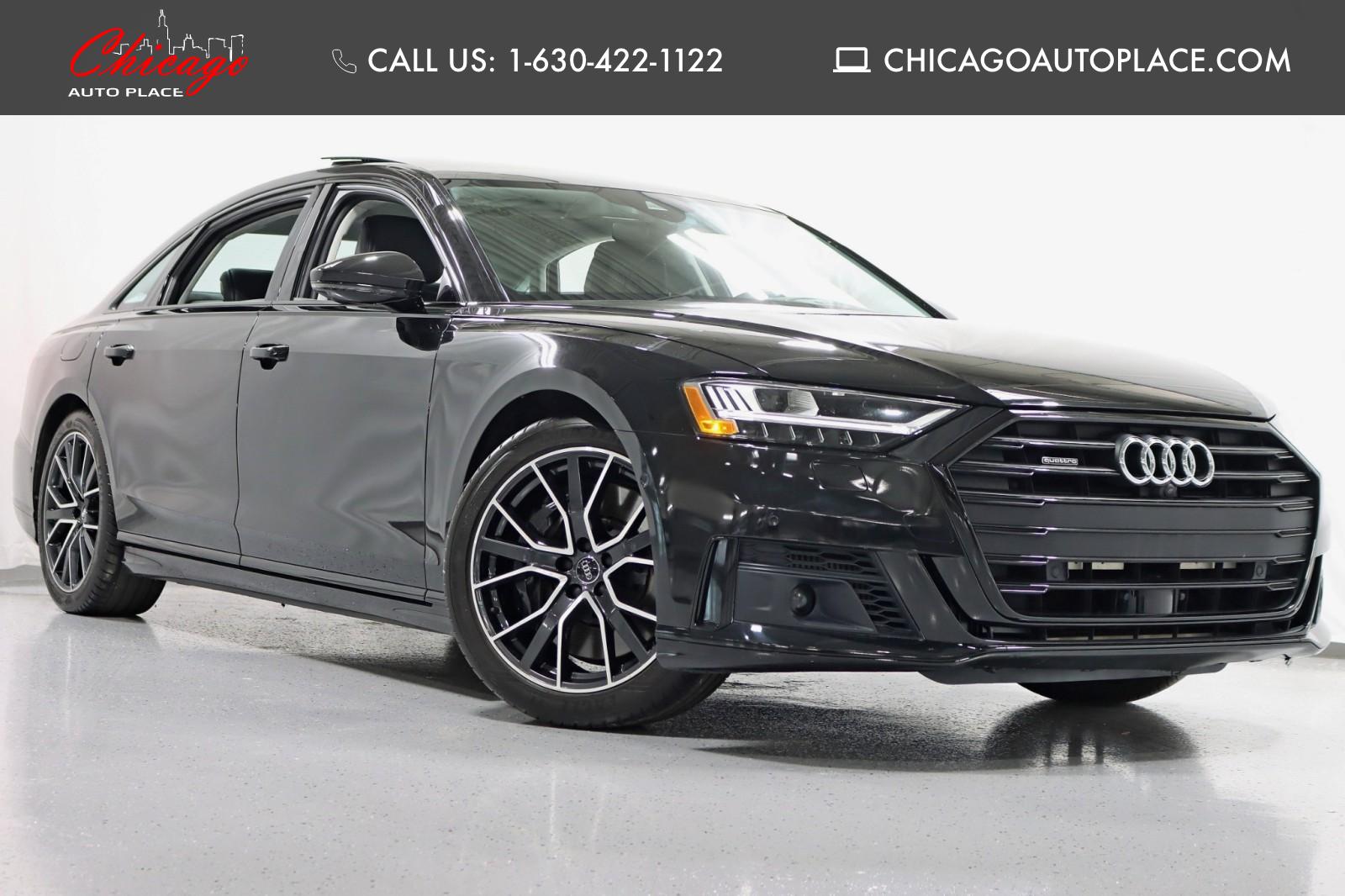
The 2020 Audi A8 V8 represents a pivotal chapter in the flagship sedan's lineage, marrying effortless eight-cylinder performance with advanced mild-hybrid architecture, state-of-the-art digital cockpits, and executive-tier refinement designed to compete at the absolute peak of the luxury automotive market.
Introduction to the 2020 Audi A8 V8 Flagship
When Audi reconfigured its premier luxury sedan lineup for the modern era, the reintroduction of a potent eight-cylinder engine variant marked a critical turning point. The 2020 Audi A8 V8—manifested primarily through the high-performance S8 and the later-introduced A8 60 TFSI variants depending on global market configurations—bridged the gap between traditional displacement-driven power and next-generation electrification. For decades, the Audi A8 served as a technological testbed for the Volkswagen Group, introducing aluminum space-frame construction, quattro all-wheel drive to the luxury segment, and advanced lighting systems.
By 2020, this evolution reached a sophisticated zenith. Buyers seeking a full-sized German luxury sedan faced a landscape dominated by the Mercedes-Benz S-Class and BMW 7 Series. Audi answered this challenge not merely by matching horsepower figures, but by integrating a holistic driving experience defined by predictive active suspension, dual-touchscreen MMI interfaces, and a sophisticated 48-volt mild-hybrid electric vehicle (MHEV) system. This comprehensive overview examines how the 2020 Audi A8 V8 balances raw engine output, chassis dynamics, interior craftsmanship, and technological evolution to maintain its standing among executive transport icons.
Powertrain Engineering: The V8 Engine and 48V Mild-Hybrid Integration
At the mechanical heart of the high-output 2020 Audi A8 V8 models—such as the sporty Audi S8—lies a heavily revised 4.0-liter twin-turbocharged V8 engine. This powerplant utilizes a "hot-V" configuration, placing the twin-scroll turbochargers inside the V-angle of the cylinder blocks to reduce turbo lag, optimize packaging, and ensure immediate throttle response.
| Powertrain Component | Specification & Functional Role |
|---|---|
| Engine Architecture | 4.0L Twin-Turbocharged V8 (Hot-V configuration) |
| Horsepower | 563 hp (S8 variant) / 453 hp (60 TFSI variants) |
| Torque | 590 lb-ft (800 Nm) available from low RPMs |
| Electrical System | 48-Volt Primary Electrical Architecture |
| Transmission | 8-speed Tiptronic automatic |
| Drivetrain | Quattro permanent all-wheel drive |
The integration of a 48-volt primary electrical system is central to the vehicle's character. Rather than serving as a traditional full hybrid, the 48V MHEV system incorporates a belt-alternator starter (BAS) connected to a lithium-ion battery. This configuration enables seamless start-stop operation, allowing the engine to shut down coasting at speeds between 34 and 99 mph to conserve fuel. Furthermore, the system powers the advanced electromechanical active suspension, ensuring instantaneous adjustments to road irregularities without relying solely on traditional 12-volt accessories.
Performance Metrics and Power Delivery
The sheer output of the V8 powerplant transforms a large executive cruiser into a remarkably rapid machine. In the S8 specification, the engine generates 563 horsepower and a massive 590 lb-ft of torque. Power is routed through a smooth-shifting 8-speed Tiptronic automatic transmission to Audi's legendary quattro permanent all-wheel-drive system, which features a self-locking center differential and is frequently paired with a sport differential on performance-oriented trims.
This mechanical union propels the heavy sedan from zero to 60 mph in roughly 3.8 seconds—a figure that rivals dedicated sports cars while maintaining the hushed interior ambiance of a rolling boardroom. Cylinder-on-demand (COD) technology further refines the engine's efficiency by deactivating four cylinders under light loads, transitioning invisibly back to eight cylinders the moment the driver demands acceleration.
Chassis Dynamics and Predictive Active Suspension
Luxury sedan buyers demand a ride quality that isolates occupants from harsh road imperfections, yet driving enthusiasts expect precise handling and minimal body roll. The 2020 Audi A8 V8 addresses this dichotomy through cutting-edge chassis control systems, most notably the predictive active suspension system available on select models.
| Chassis & Suspension Feature | Operational Benefit |
|---|---|
| Predictive Active Suspension | Uses front camera to anticipate bumps and pre-load individual wheel actuators for a flat ride. |
| Dynamic All-Wheel Steering | Counter-steers rear wheels at low speeds to shrink turning radius; turns in-phase at high speeds. |
| Adaptive Air Suspension | Automatically adjusts ride height and damping stiffness based on drive mode and road surface. |
| Quattro Sport Differential | Actively vector torque between rear wheels to eliminate understeer during aggressive cornering. |
The predictive active suspension works in tandem with the front-mounted camera system. As the vehicle approaches road anomalies—such as speed bumps or potholes—the camera scans the terrain milliseconds in advance. Electromechanical actuators at each wheel independently lift or push down the suspension struts to counteract pitch, roll, and vertical heave. The result is an eerie, magic-carpet-like glide over broken pavement.
Complementing this system is dynamic all-wheel steering. At low speeds, the rear wheels turn in the opposite direction of the front wheels, effectively shortening the wheelbase and giving the large sedan the turning radius of a compact car—crucial for tight urban parking garages. At higher speeds, the rear wheels turn in the same direction as the front wheels, enhancing lane-change stability and highway confidence.
Interior Craftsmanship, Ergonomics, and Executive Luxury
Stepping inside the cabin of the 2020 Audi A8 V8 reveals an interior philosophy centered on minimalist digital architecture, sustainable material selection, and uncompromising comfort. Audi banished traditional physical buttons in favor of haptic touchscreens, creating a clean, glass-dominated dashboard layout when the vehicle is powered down.
Front and rear occupants are treated to multi-way adjustable seats upholstered in Valcona leather, complete with extensive heating, ventilation, and pneumatic massage functions. For buyers prioritizing chauffeur-driven utility, the extended wheelbase (L) variant provides expansive rear legroom. Rear-seat passengers can specify the executive rear seat package, which introduces a center console with folding tables, a removable Audi tablet controller for vehicle functions, and a foot-massager built into the back of the front passenger seat.
Acoustic double-pane glass, active noise cancellation via the audio system speakers, and extensive sound-deadening materials ensure that wind and tire roar are virtually non-existent at highway speeds. Ambient LED interior lighting traces the lines of the dashboard and door panels, offering customizable color palettes that shift the cabin's mood from a focused workspace to a tranquil lounge.
Digital Cockpit and Infotainment Evolution
The technological centerpiece of the 2020 Audi A8 V8 is the dual-touchscreen MMI touch response system. Replacing the traditional rotary dial and cluttered console layout, the upper 10.1-inch screen manages navigation, media, and vehicle settings, while the lower 8.6-inch screen controls climate functions, seat adjustments, and provides a handwriting-recognition pad for address entry.
| Infotainment Subsystem | Core Functionality & Technology |
|---|---|
| Upper MMI Touch Display | 10.1-inch screen for navigation, media, and smartphone integration (Apple CarPlay/Android). |
| Lower MMI Touch Display | 8.6-inch screen for climate control, comfort features, and text input with haptic feedback. |
| Audi Virtual Cockpit | 12.3-inch configurable digital instrument cluster with high-resolution map display. |
| Bang & Olufsen 3D Sound | High-end acoustic system featuring 23 speakers and motorized tweeter lenses. |
The haptic and acoustic feedback on both screens simulates the physical click of a mechanical button, reducing driver distraction by confirming touch inputs without requiring constant visual checks. Positioned directly in front of the driver is the 12.3-inch Audi Virtual Cockpit, a high-definition digital instrument cluster that allows drivers to toggle between traditional dials, vehicle telemetry, and a full-screen Google Earth navigation map.
Audio fidelity is managed by available premium systems, most notably the Bang & Olufsen Advanced 3D Sound System. Featuring 23 speakers, a 1,920-watt amplifier, and acoustic lens tweeters that rise automatically from the dashboard upon startup, the system delivers an immersive soundstage tailored to the exact acoustic profile of the aluminum-and-glass cabin.
Driver Assistance Systems and Safety Architecture
Safety and semi-autonomous driving capabilities represent a major pillar of the A8's evolution. The 2020 model was engineered with hardware capable of Level 3 autonomous driving (Audi AI Traffic Jam Pilot), though regulatory hurdles in various markets meant certain advanced automation features were rolled out gradually or utilized as sophisticated Level 2 driver aids.
The vehicle employs a centralized driver assistance controller (zFAS) that fuses data from up to five radar sensors, six cameras, twelve ultrasonic sensors, and—on equipped models—a laser scanner (LiDAR). This sensor suite powers an exhaustive suite of safety technologies:
- Adaptive Cruise Assist: Combines adaptive cruise control with lane-guidance technology to maintain a set distance from preceding traffic while keeping the vehicle centered in its lane, even through gentle highway curves.
- Intersection Assistant: Monitors cross-traffic at intersections and can automatically apply the brakes if it detects an imminent collision when the driver is turning across oncoming traffic.
- Predictive Efficiency Assistant: Analyzes navigation data, speed limits, and upcoming topography to prompt the driver when to lift off the accelerator for optimal fuel economy.
- Emergency Assist: Detects if the driver has become incapacitated, safely bringing the vehicle to a halt within its lane while activating hazard lights and placing an emergency call.
Evolution of the A8 Lineage: Context and Market Positioning
To fully appreciate the 2020 Audi A8 V8, one must examine its trajectory through four generations of automotive history. Launched originally in the mid-1990s as Audi's bold statement against the Mercedes-Benz S-Class, the first-generation A8 introduced the Audi Space Frame (ASF), proving that an aluminum-bodied sedan could offer structural rigidity and weight savings without sacrificing crash safety.
| A8 Generation | Production Years | Defining Technological Milestone |
|---|---|---|
| First Gen (D2) | 1994–2002 | Introduction of the Audi Space Frame (ASF). |
| Second Gen (D3) | 2002–2009 | MMI infotainment system and aluminum chassis refinement. |
| Third Gen (D4) | 2009–2018 | Full LED headlights and lightweight V8 biturbo engines. |
| Fourth Gen (D5) | 2018–Present | 48V mild-hybrid architecture and digital haptics. |
The fourth generation (designated D5), debuting globally for the 2019 model year and cementing its identity into 2020 and beyond, shifted the design language sharply toward modern digital architecture. Exterior styling cues drawn from the Prologue concept car introduced a wider single-frame grille, sharper character lines, and OLED rear light strips that animate upon locking and unlocking the vehicle.
By re-centering the V8 engine within this generation's lifecycle, Audi carved out a distinct niche. While competitors leaned heavily on six-cylinder base engines or complex plug-in hybrids, the V8-powered A8 models catered squarely to traditionalists who demanded the linear power delivery and distinctive acoustic signature of an eight-cylinder motor, wrapped in a thoroughly modern technological package.
Ownership Considerations, Maintenance, and Common Challenges
Purchasing or maintaining a pre-owned 2020 Audi A8 V8 requires an understanding of luxury vehicle stewardship. High-performance flagship sedans depreciate significantly from their original six-figure MSRP, making them attractive on the secondary market, but maintenance and repair costs remain aligned with their original tier.
- Complex Electrical Architecture: The dual-screen MMI system and 48-volt electrical grid are robust, but software updates require specialized diagnostic equipment (ODIS) typically found at certified dealerships or specialist European independent shops.
- Suspension Maintenance: The sophisticated air suspension and electromechanical actuators provide unparalleled ride quality, but component replacement out-of-warranty can be costly compared to conventional steel-spring setups.
- Consumables: Due to the vehicle's substantial curb weight and high horsepower output, brake pads, rotors, and high-performance tires wear faster than in standard passenger cars. Budgeting for specialized rubber and braking components is essential.
- Engine Bay Packaging: The hot-V turbo layout leaves little room for DIY wrenching. Routine fluid changes are straightforward, but engine-out service for major repairs can involve significant labor hours.
Frequently Asked Questions
What is the primary difference between the 2020 Audi A8 V8 and the Audi S8?
While both models utilize the core 4.0-liter turbocharged V8 engine architecture, the Audi S8 is tuned for higher performance, generating 563 horsepower and 590 lb-ft of torque compared to the standard A8 V8 variants. The S8 also features sport-tuned predictive active suspension, distinct exterior body styling, quad exhaust outlets, and firmer chassis calibration.
Does the 2020 Audi A8 V8 feature a full hybrid system?
No. The 2020 Audi A8 V8 utilizes a 48-volt mild-hybrid electric vehicle (MHEV) system rather than a full hybrid or plug-in hybrid powertrain. The 48V system powers a belt-alternator starter that enables smooth start-stop functionality, extended coasting with the engine shut off, and energy recuperation, but it cannot drive the car on electricity alone.
How does the predictive active suspension work on rough roads?
The system utilizes a front-mounted camera to scan the road surface ahead for bumps and potholes. It then uses electromechanical actuators at each individual wheel to independently push down or lift the suspension struts milliseconds before the wheels reach the obstacle, virtually eliminating cabin disruption.
What fuel economy can be expected from a V8-powered A8?
Fuel economy varies depending on driving style and traffic conditions, but EPA estimates typically land around 15 to 17 mpg in city driving and 24 to 26 mpg on the highway for V8 variants. The cylinder-on-demand system and 48V coasting capability help optimize efficiency during steady highway cruising.
Is the 2020 Audi A8 V8 aluminum-bodied?
Yes. Continuing Audi's lightweight construction legacy, the fourth-generation A8 utilizes an advanced multi-material space frame that combines aluminum, steel, magnesium, and carbon-fiber-reinforced polymer to maximize torsional rigidity while managing vehicle weight.
Conclusion and Final Recommendation
The 2020 Audi A8 V8 stands as a remarkable achievement in executive transport, successfully balancing old-world mechanical satisfaction with forward-looking digital engineering. Its twin-turbocharged eight-cylinder engine provides effortless power, while the 48-volt mild-hybrid system, predictive active suspension, and minimalist cabin tech redefine what an executive sedan can offer. For buyers seeking a pre-owned flagship that delivers supreme comfort without sacrificing dynamic driving engagement, the V8-powered A8 and S8 variants represent a compelling pinnacle of modern automotive evolution.