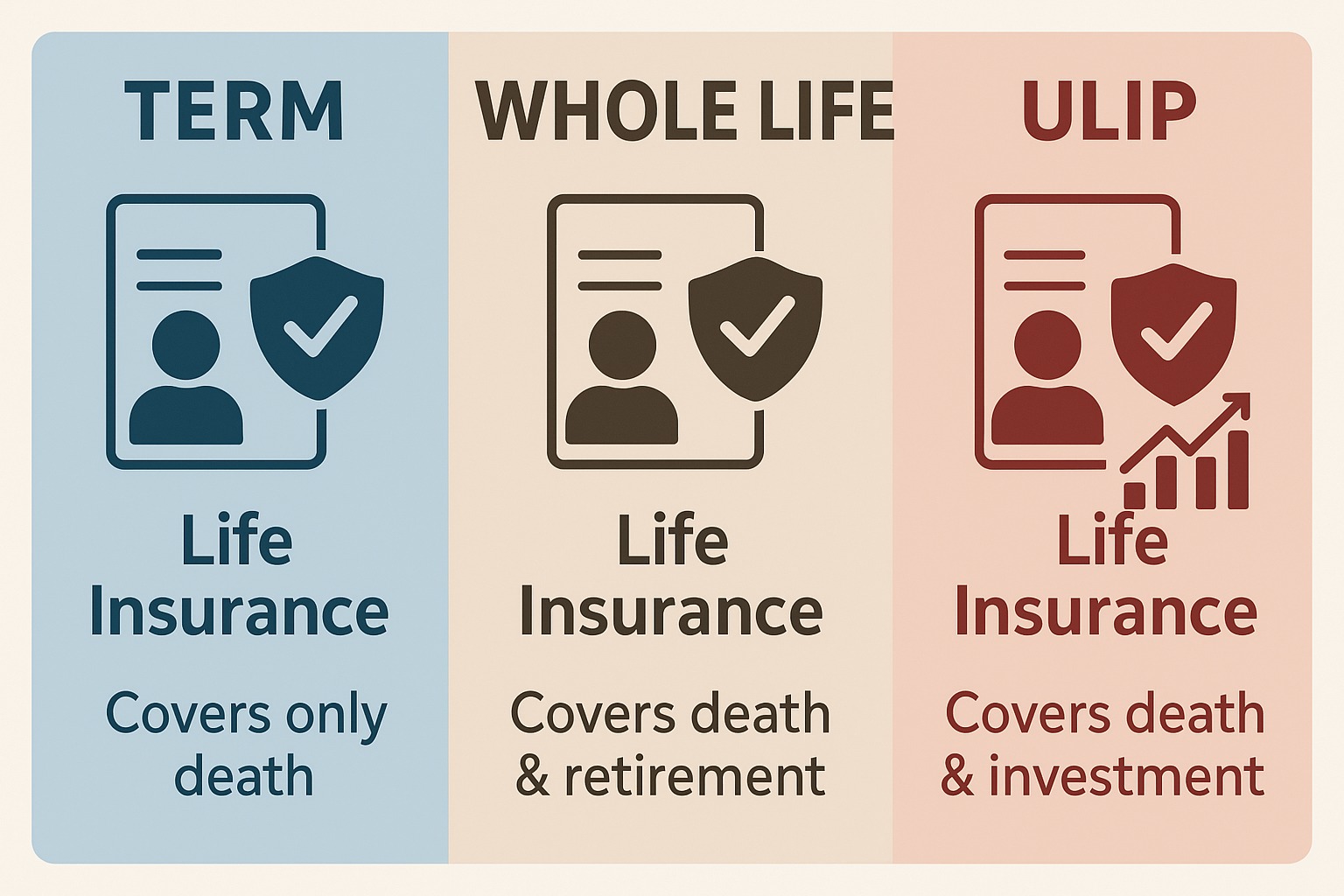
Choosing term life insurance over whole life insurance at age 60 often makes financial sense because term policies provide high-value, cost-effective coverage during peak earning and liability years, whereas whole life premiums at this age can be prohibitively expensive and frequently divert funds away from essential retirement savings.
Reaching the age of 60 is a significant milestone that often prompts a comprehensive reevaluation of financial health, estate planning, and risk management. For many individuals, children are finishing college, mortgages are shrinking or nearing payoff, and retirement is visible on the horizon. Despite these shifting milestones, the need for life insurance does not automatically disappear. Individuals at this stage frequently find themselves weighing the merits of different policy structures. The fundamental choice typically boils down to term life insurance, which provides pure protection for a specified duration, versus whole life insurance, which combines lifetime coverage with an accumulating cash value component. While permanent insurance is often marketed as a lifetime safety net, purchasing a new whole life policy at age 60 introduces distinct structural and economic challenges. Understanding the unique financial realities of sexagenarians helps clarify why term life insurance frequently emerges as the more pragmatic choice.
Understanding the Financial Landscape of Life Insurance at Age 60
To appreciate why term life insurance is often favored at age 60, one must first examine how life insurance pricing and risk assessment function. Insurance underwriting is fundamentally a mathematical calculation of mortality risk. As an applicant ages, the statistical probability of a claim increases, causing insurance premiums to rise correspondingly. Buying a policy at age 60 means the insurer is assuming this elevated risk profile from day one, which drastically impacts the cost of coverage regardless of the policy type selected.
Whole life insurance is a form of permanent coverage designed to last an entire lifetime, provided premiums are maintained. It features a cash-value account that grows on a tax-deferred basis, offering a forced savings element alongside a death benefit. However, because the insurer guarantees a payout eventually, the administrative fees, mortality charges, and premium loadings built into whole life policies are exceptionally high. When these costs are applied to a 60-year-old applicant, the baseline pricing becomes a massive financial burden.
In contrast, term life insurance operates on a pure indemnity model. It provides a stated death benefit for a fixed period—such as 10, 15, or 20 years—without any cash-value accumulation or investment features. Because the coverage expires after the term and the majority of term policies do not pay out a claim (since the insured often outlives the term), the underlying cost of pure protection is significantly lower. For a 60-year-old, this efficiency is critical, as it allows them to secure a substantial death benefit without severely disrupting their current cash flow or retirement contributions.
Reason 1: Substantial Cost Efficiency and Preservation of Retirement Capital
The single most compelling argument for choosing term life insurance at age 60 is the dramatic difference in premium costs compared to whole life insurance. Because whole life insurance guarantees a permanent payout and builds cash value, the annual premiums are exponentially higher than those of a term policy with an identical death benefit.
For example, a 60-year-old male in good health might purchase a $500,000 10-year or 20-year term policy for a predictable, manageable monthly or annual premium. That same $500,000 whole life policy could easily cost five to ten times more per month. At age 60, individuals are typically in their final decade of active wealth accumulation. Diverting thousands of dollars every month into a high-cost whole life policy directly reduces the amount of capital available to fund retirement accounts, such as 401(k)s, IRAs, or personal investment portfolios.
| Feature / Factor | Term Life Insurance (Age 60) | Whole Life Insurance (Age 60) |
|---|---|---|
| Primary Purpose | Temporary income replacement and debt protection | Lifetime estate planning and cash accumulation |
| Relative Premium Cost | Low to Moderate (Affordable pure protection) | Very High (Includes permanent risk and savings charges) |
| Cash Value Growth | None (Pure insurance) | Tax-deferred cash value account |
| Flexibility | Fixed terms (10, 15, 20 years); expires when needs end | Lifetime commitment; heavy penalties for early surrender |
| Impact on Retirement | Minimal disruption to monthly cash flow | Significant monthly drain on liquid savings |
This economic disparity forces a critical choice regarding opportunity cost. Money spent on inflated whole life premiums is money that cannot be invested in vehicles that offer liquidity, compound growth, and control. In retirement planning, liquidity and flexibility are paramount. Tying up large sums of money in a rigid permanent insurance contract can create financial vulnerability if unexpected medical expenses or long-term care needs arise. Term insurance leaves the policyholder with discretionary capital, enabling them to build a robust, diversified portfolio that they control directly, rather than outsourcing wealth management to an insurance carrier via a costly permanent policy.
Reason 2: Alignment of Coverage Duration with Temporary Financial Obligations
Life insurance is fundamentally designed to replace lost income and cover specific financial liabilities that would burden surviving dependents in the event of an untimely death. At age 60, the nature of these financial obligations changes dramatically compared to someone in their 30s or 40s. Understanding these shifting liabilities highlights why a temporary term policy is structurally better aligned with the actual needs of a sexagenarian.
When individuals are young, their financial responsibilities are long-term and expansive: a 30-year mortgage, young children needing financial support through college, and decades of projected future earnings that must be protected. Whole life insurance is frequently marketed as necessary because it addresses lifetime needs. However, by age 60, many of these obligations have either expired or have a definitive end date.
- Mortgages and Debts: Many 60-year-olds are in the final 5 to 15 years of paying off their primary home mortgage, or their home is entirely paid off. Other consumer debts are typically minimized or eliminated.
- Dependent Children: Children are generally independent, self-supporting adults, removing the need for long-term income replacement for dependents.
- Spousal Protection: The primary remaining concern is often ensuring a surviving spouse can maintain their standard of living and cover final expenses until their own retirement accounts or social security benefits are fully realized.
A term life insurance policy can be precisely calibrated to match these remaining, temporary windows of vulnerability. For instance, if a homeowner has 12 years left on a mortgage and wants to ensure their spouse can clear the debt if they pass away, a 15-year term policy provides a seamless bridge. Once the mortgage is paid off and retirement accounts have matured, the need for life insurance diminishes significantly. Purchasing a permanent whole life policy to cover temporary debts means paying perpetual, high-cost premiums long after the underlying financial risks have vanished.
Evaluating the Risks and Limitations of Term Life at 60
While term life insurance offers superior cost efficiency and targeted duration matching, selecting a term policy at age 60 requires careful planning and a realistic assessment of potential pitfalls. Navigating these factors ensures that the policy effectively serves its intended purpose without leaving gaps in later life.
One primary consideration is the expiration of the term. A 20-year term policy purchased at age 60 will expire when the insured reaches age 80. By that age, the statistical likelihood of needing life insurance shifts toward final expense coverage, and purchasing a brand-new policy would be extraordinarily expensive or practically impossible due to age limits and declining health. Therefore, buyers must ensure that their financial plan—such as building adequate retirement savings and eliminating debt—will be fully realized by the time the term expires.
Additionally, health underwriting becomes increasingly stringent at age 60. Insurance carriers evaluate height, weight, blood pressure, cholesterol levels, family medical history, and lifestyle factors. Underlying conditions such as mild hypertension, elevated glucose levels, or joint issues can shift an applicant from a "Preferred" rating to a "Standard" or "Substandard" tier, raising premium rates. Working with an independent insurance broker who can shop multiple carriers helps identify companies with more lenient underwriting guidelines for specific age-60 health profiles.
Another element to investigate is the convertibility clause. Many reputable term life policies include a conversion option, which allows the policyholder to convert their term policy into a permanent whole life or universal life policy without undergoing a new medical exam. This feature acts as an insurance policy on your insurance, providing flexibility if health status deteriorates unexpectedly and permanent coverage suddenly becomes desirable later in life.
Practical Steps for Choosing and Securing Coverage at 60
Securing the right life insurance policy at age 60 requires a methodical, step-by-step approach to assess needs, compare options, and lock in the most favorable rates.
- Conduct a Comprehensive Needs Analysis: Calculate remaining financial liabilities, including the balance of any mortgage, outstanding personal loans, final expense estimates, and the income gap a surviving spouse might face before qualifying for full social security or pension benefits.
- Determine the Ideal Term Length: Match the policy duration to the timeline of your financial obligations. If debt will be cleared in 10 years and your spouse's retirement income is secure thereafter, a 10-year term policy is more efficient than a 20-year term.
- Request Multiple Quotes: Obtain preliminary quotes from several top-rated insurance carriers. Rates for identical coverage can vary significantly between companies based on their internal underwriting tables.
- Prepare for Medical Underwriting: Gather medical history details, medication lists, and physician contact information. Maintain stable health habits prior to the exam, as blood pressure and lab results heavily influence pricing.
- Review Policy Riders: Evaluate optional endorsements, such as accelerated death benefit riders (which allow access to funds if diagnosed with a terminal illness) or conversion riders, to customize the policy to your long-term security strategy.
By systematically addressing these areas, a 60-year-old consumer can bypass the excessive costs of whole life insurance, secure a robust safety net through term coverage, and keep their retirement capital focused on wealth generation and financial independence.
Frequently Asked Questions
Can you easily qualify for term life insurance at age 60?
Yes, healthy individuals at age 60 can readily qualify for term life insurance, though approval depends heavily on medical history, lifestyle factors, and underwriting criteria. Insurers will require a medical exam and lab work to evaluate current health status, making proactive health management vital for securing competitive rates.
What happens when a term life insurance policy expires at age 80?
When a term policy expires, the coverage terminates completely, and no death benefit is paid if the insured is still living. To maintain protection, some policyholders exercise a conversion option if included in their contract, while others rely on accumulated retirement assets that have grown sufficiently to self-insure their final years.
Is it ever smart to choose whole life insurance at age 60?
Whole life insurance may be appropriate at age 60 for individuals with specialized estate planning needs, such as funding a permanent special needs trust or mitigating significant estate tax liabilities on a large legacy. However, for standard income replacement and debt protection, the high cost rarely justifies the investment compared to term coverage paired with independent retirement investing.
How does underwriting at age 60 differ from younger ages?
Underwriting at age 60 places greater emphasis on cardiovascular health, cancer screenings, and age-related biomarkers. Insurers are stricter because mortality risk increases more rapidly each year after age 50, meaning minor health anomalies that were overlooked at age 40 can impact premium tiers at age 60.
What is a conversion rider and why is it important for a 60-year-old?
A conversion rider allows a term life policyholder to switch their temporary policy into a permanent life insurance policy within a specified timeframe without undergoing a new medical exam. This is valuable for a 60-year-old because it preserves the option to secure lifetime coverage later if health declines unexpectedly.
Next Actions and Strategic Recommendations
If you are evaluating life insurance at age 60, begin by auditing your current financial liabilities and projecting your retirement income timeline to determine your precise coverage needs. Consult with an independent financial advisor or insurance professional to compare term quotes across multiple top-rated carriers, ensuring you secure the highest death benefit at the lowest possible cost. By keeping your insurance separate from your investments through a well-structured term policy, you protect your loved ones today while keeping your capital working for your future.