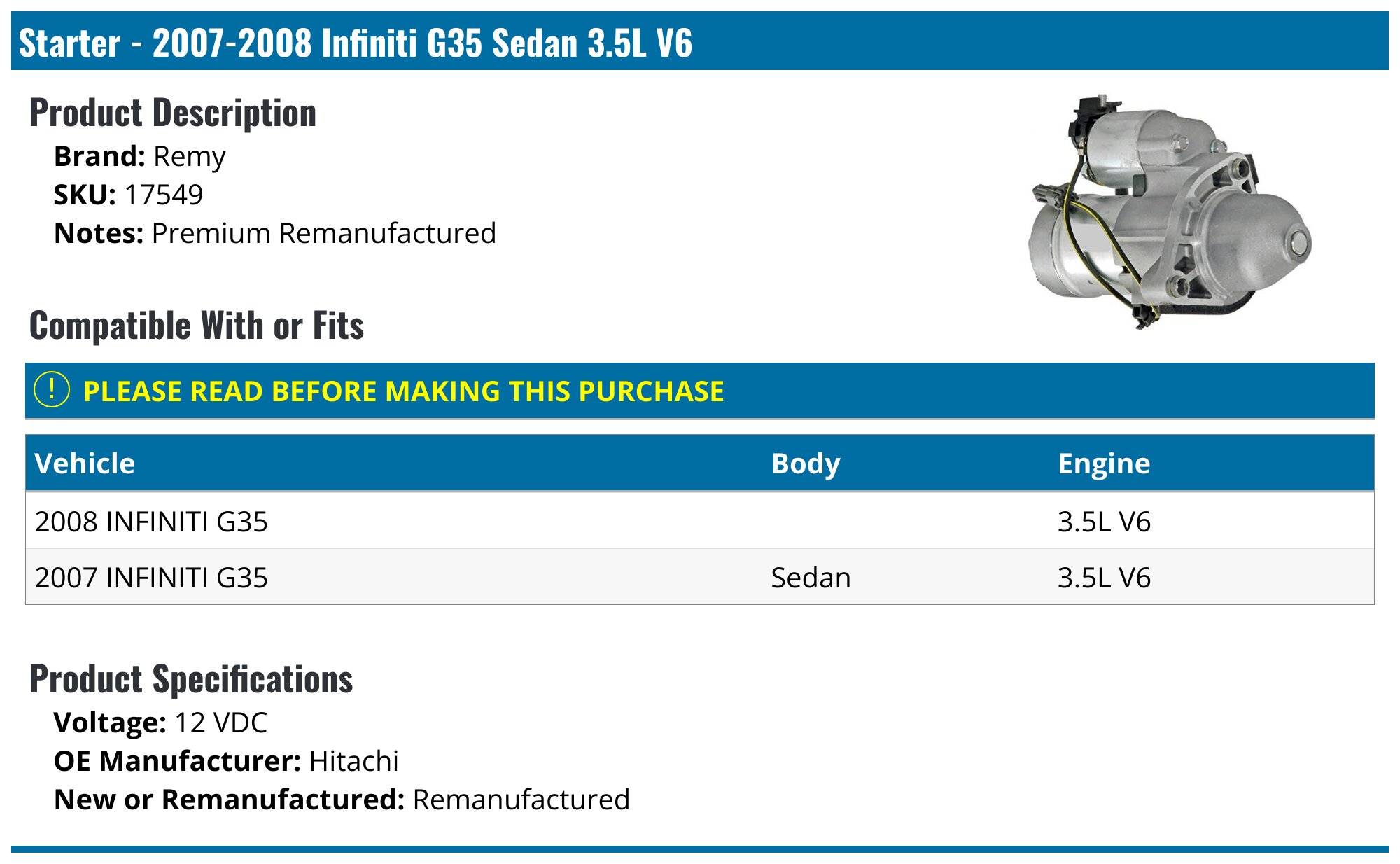
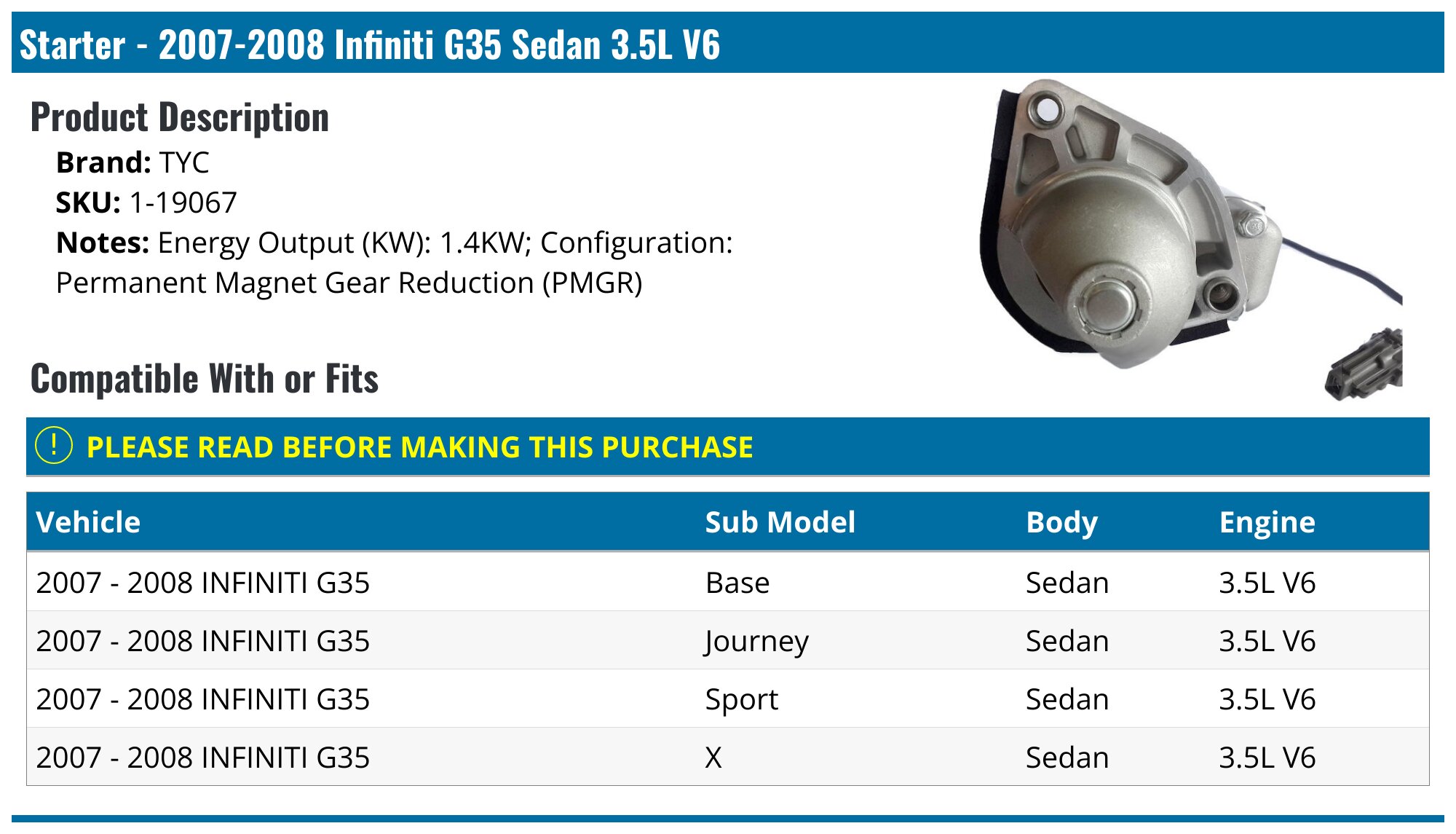
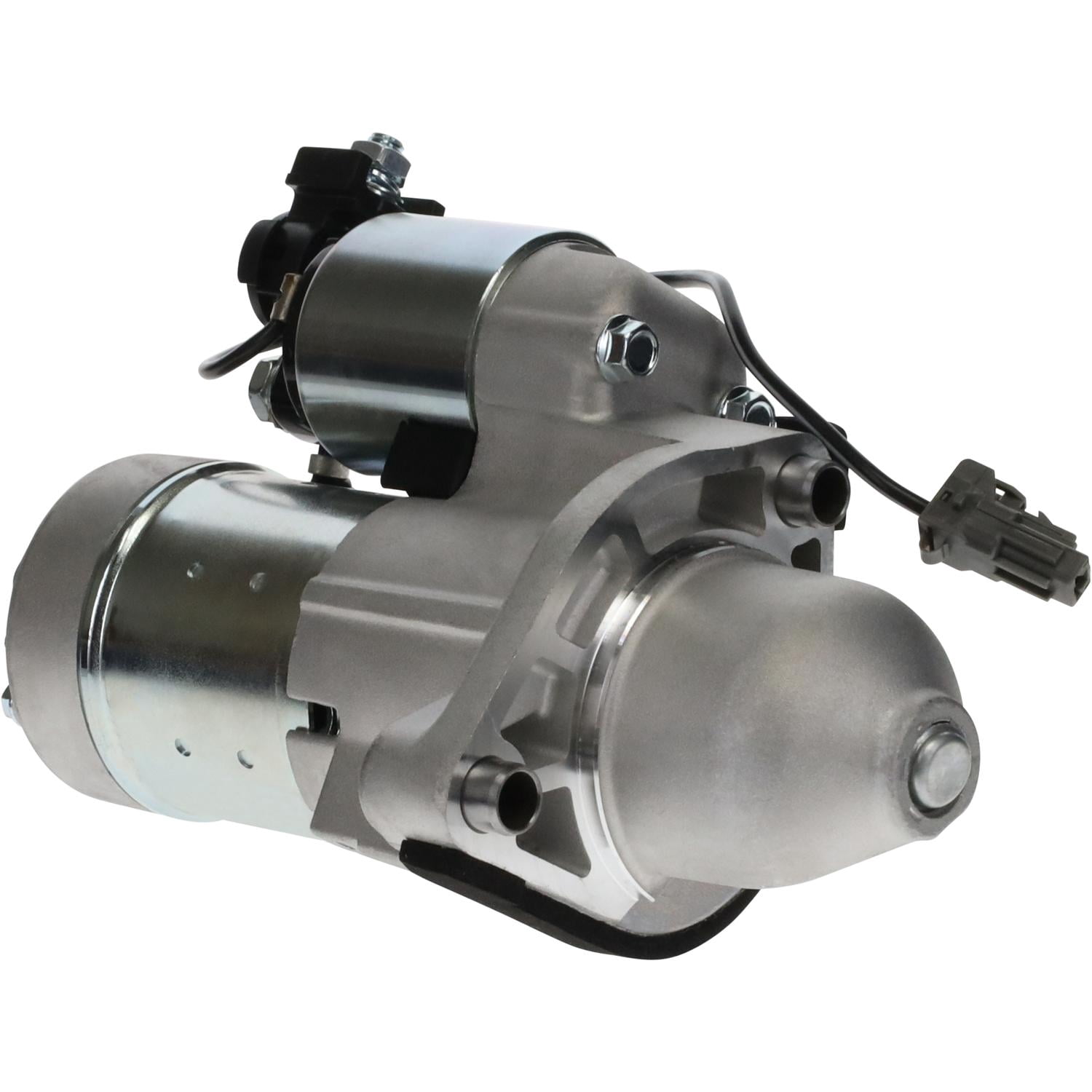
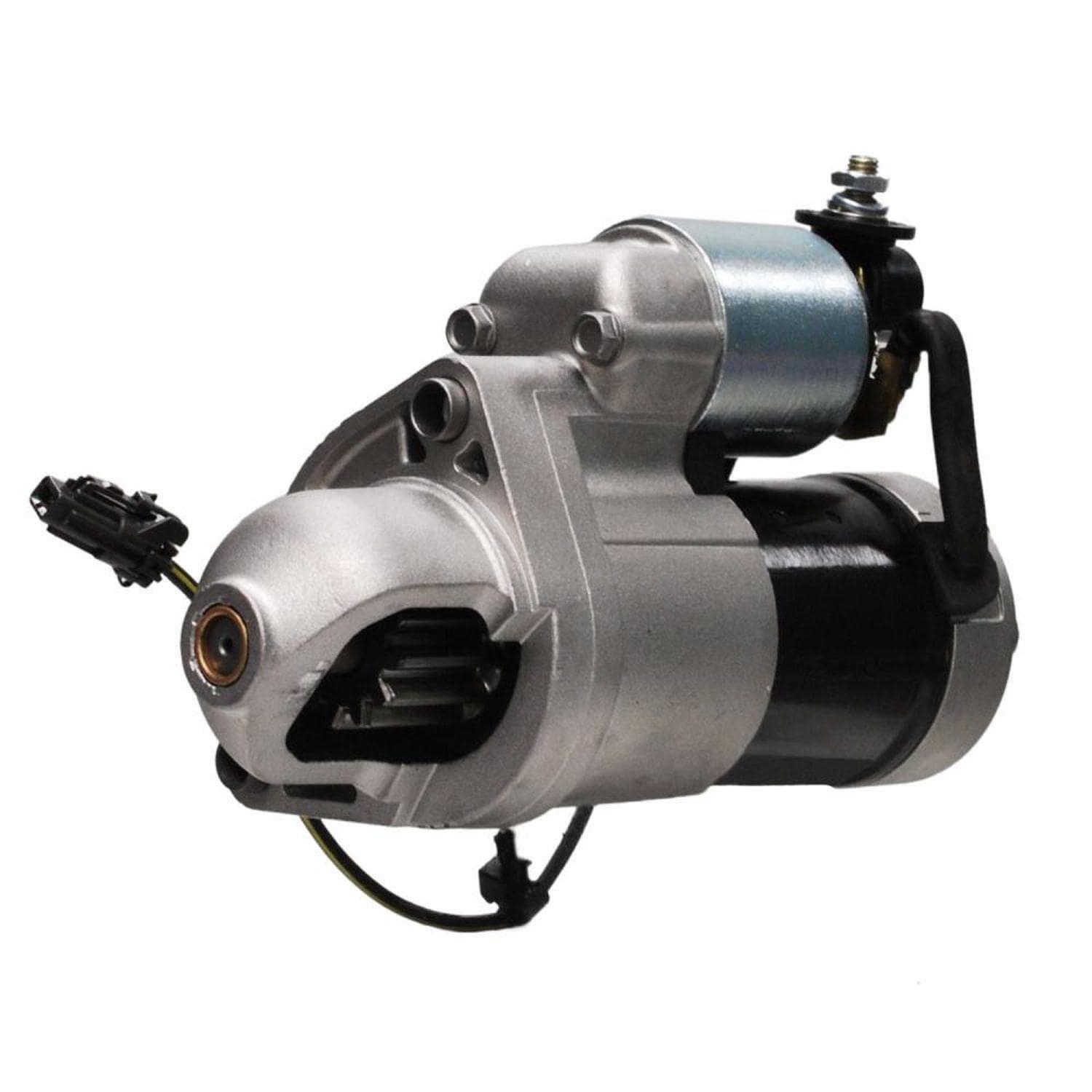
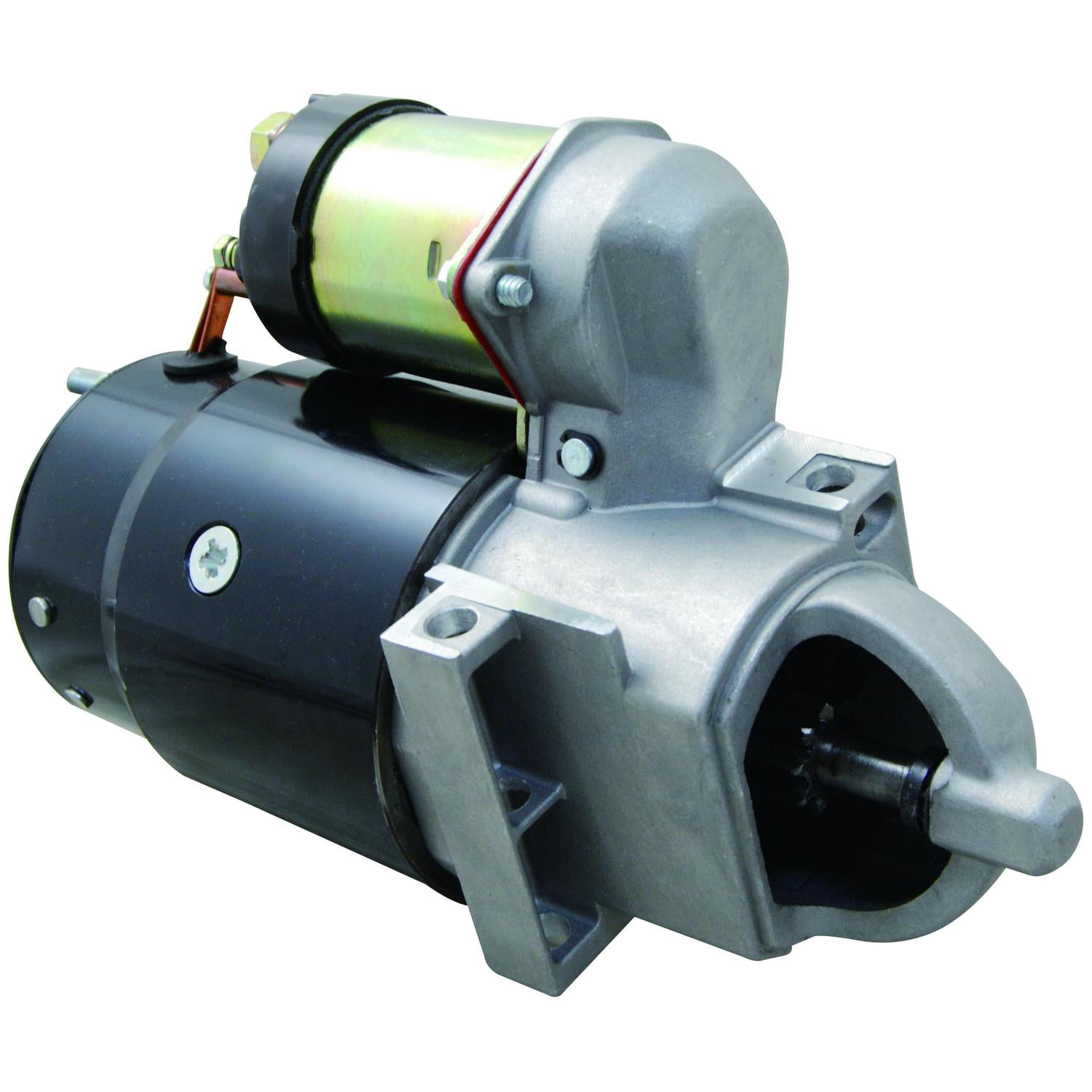
Replacing the starter in an Infiniti G35 is a manageable project for DIY enthusiasts and a standard procedure for professional technicians. Typically, the process involves disconnecting the battery, lifting the vehicle to access the passenger side of the transmission bell housing, removing two 14mm mounting bolts, and disconnecting the electrical leads. For most VQ35DE-equipped models, this task takes between 1.5 to 3 hours depending on tool availability and the presence of underbody corrosion.
Understanding the Infiniti G35 Starting System
The Infiniti G35, produced between 2003 and 2007 (Coupe) or 2008 (Sedan), utilizes a high-torque reduction starter motor designed to turn over the 3.5L V6 VQ-series engine. This system relies on a complex interaction between the battery, the Ignition Switch, the Starter Relay (located in the IPDM E/R), and the starter motor itself.
In the G35, the starter is positioned on the passenger side (right-hand side) of the engine, tucked against the transmission. Because of its location low on the engine block, it is frequently exposed to heat cycles from the exhaust manifold and road debris, which can lead to premature failure of the internal solenoid contacts or the motor brushes. By 2026, many original G35 units have either reached the end of their service life or are on their second replacement cycle, making it essential to understand the nuances of the replacement process.
Symptoms of a Failing Starter
Before committing to a replacement, it is vital to differentiate between a dead battery, a faulty relay, and a failing starter motor. The Infiniti G35 often exhibits specific "death rattles" when the starter begins to fail:
- The Single Click: When you turn the key or press the start button (on later models), you hear a single, sharp metallic click. This usually indicates that the solenoid is engaging the flywheel, but the motor is failing to spin.
- The "Heat Soak" Struggle: A common issue with the VQ35DE engine is heat soak. The car starts perfectly when cold, but after a long drive, if you stop for gas and try to restart, the engine cranks very slowly or not at all. This happens because internal resistance in the starter increases as it absorbs heat from the nearby exhaust.
- Grinding Noises: If the starter drive gear (Bendix) fails to retract or doesn't engage properly with the flexplate/flywheel, you will hear a loud screeching or grinding noise. This requires immediate attention to avoid damaging the teeth on the engine's flywheel.
- Intermittent Operation: You might have to turn the key five or six times before the motor finally catches. This typically points to worn-out carbon brushes inside the starter motor.
Technical Specifications and Tool Requirements
The Infiniti G35 uses a starter generally rated at 1.4kW to 1.7kW. When purchasing a replacement in 2026, you will find options ranging from "New Aftermarket" to "Remanufactured OEM." Brands like Hitachi and Mitsubishi were the original equipment manufacturers for Infiniti during this era, and seeking these brands often ensures better fitment and longevity.
Necessary Tools for the Job
To complete this replacement efficiently, gather the following tools:
- Socket Set: Specifically 10mm (battery), 12mm (starter signal wire), and 14mm (mounting bolts).
- Extensions: A variety of 3-inch and 6-inch extensions are crucial for reaching the upper mounting bolt.
- Wrenches: A 14mm ratcheting wrench is highly recommended for the tight spaces near the transmission tunnel.
- Floor Jack and Jack Stands: Never work under a vehicle supported only by a jack.
- Wire Brush: To clean the electrical terminals of any corrosion.
- Multimeter: To verify battery voltage (12.6V) before beginning.
Step-by-Step Replacement Procedure
1. Safety and Battery Disconnection
The starter motor is connected directly to the positive terminal of the battery without a fuse. If your wrench touches the frame while loosening the starter wire, it will cause a massive electrical arc. Always disconnect the negative (black) battery cable first using a 10mm wrench and tuck it aside so it cannot make contact with the terminal.
2. Vehicle Elevation
Raise the front of the Infiniti G35 using a floor jack at the designated center jack point (the crossmember). Secure the vehicle on jack stands placed under the side reinforced sills. Ensure the car is stable by giving it a gentle shake before crawling underneath.
3. Removing the Under-Engine Splash Shield
The G35 features a large plastic aerodynamic shield (undertray). Use a 10mm socket or a flathead screwdriver to remove the various bolts and plastic clips holding it in place. Removing this provides a clear line of sight to the passenger side of the transmission bell housing.
4. Disconnecting Electrical Leads
Locate the starter. You will see two wires:
- The S-Terminal (Signal): A small wire with a plastic clip. Squeeze the tab and pull it off. This wire tells the starter when you are turning the key.
- The B-Terminal (Battery): A thick gauge wire held on by a 12mm nut, often protected by a rubber boot. Peel back the boot, remove the nut, and pull the cable off the stud.
5. Unbolting the Starter
The starter is held in place by two 14mm bolts.
- The Lower Bolt: This is easily visible and accessible.
- The Upper Bolt: This bolt is more difficult to see. It passes through the transmission bell housing and threads into the starter. You may need a long extension and a universal joint (swivel) to get the correct angle. Once both bolts are removed, support the starter with one hand, as it is relatively heavy and can fall once the final threads clear.
6. Installation of the New Unit
Compare the new starter to the old one to ensure the gear teeth count and mounting holes match. Slide the new starter into the bell housing. It is best practice to start the top bolt by hand first to ensure it isn't cross-threaded. Tighten the mounting bolts to approximately 32–40 lb-ft (43–54 Nm).
Reconnect the B-terminal (12mm nut) and the S-terminal clip. Ensure the rubber boot is seated back over the B-terminal to prevent shorts.
7. Final Testing
Lower the vehicle and reconnect the negative battery terminal. Attempt to start the car. A healthy starter should sound crisp and engage the engine immediately. If the car does not start, double-check that the S-terminal clip is fully "clicked" into place.
Cost Analysis and Comparison (2026 Data)
By 2026, the cost of parts for the V35 platform has stabilized, though labor rates vary by region. Opting for a remanufactured unit is the most common choice for G35 owners looking for a balance between price and reliability.
| Component/Service | Estimated Cost (USD) | Notes |
|---|---|---|
| New OEM Starter (Hitachi) | $280 – $350 | Best longevity; highly recommended for daily drivers. |
| Remanufactured Starter | $120 – $190 | Usually includes a core charge; good value. |
| Budget Aftermarket | $85 – $115 | Risky; may have shorter lifespans or fitment issues. |
| Professional Labor | $150 – $250 | Based on 1.5 - 2.0 hours of shop time. |
| DIY Total Cost | $120 – $350 | Savings of roughly $200 in labor. |
Common Challenges and Troubleshooting
Dealing with Rusted Bolts
The G35 is prone to underbody rust if driven in "salt belt" regions. The 14mm mounting bolts can seize. If the bolts do not budge with moderate pressure, apply a penetrating oil (like PB Blaster or Liquid Wrench) and let it soak for at least 30 minutes. Using a six-point socket rather than a twelve-point socket will significantly reduce the risk of rounding the bolt heads.
The "Clicking" Continues After Replacement
If you replace the starter and still hear a clicking sound, the issue might reside in the IPDM (Intelligent Power Distribution Module). The starter relay is integrated into this module, located behind the battery. In some G35 models, water can leak into the IPDM area, causing corrosion. Verify that the relay is sending a 12V signal to the starter's S-terminal when the key is in the "Start" position.
Manual vs. Automatic Variations
While the starter itself is largely the same, the access path can vary slightly. On manual transmission G35s, the clutch slave cylinder and its hydraulic lines are in the vicinity. Be careful not to kink or damage these lines while maneuvering the starter out of the engine bay.
Diagnostic Verification: The Bench Test
If you have removed the starter and want to be 100% sure it is the failed component before buying a new one, you can perform a bench test using jumper cables and a 12V battery:
- Connect the negative jumper cable to the starter's metal casing (ground).
- Connect the positive jumper cable to the B-terminal (the thick stud).
- Use a small jumper wire to bridge the B-terminal to the S-terminal (the small spade).
- Observation: The gear should pop out (solenoid action) and spin rapidly (motor action). If it only pops out but doesn't spin, or spins slowly with sparks, the motor is internally shorted or the brushes are gone.
FAQ
1. Can I change the G35 starter without removing the exhaust?
Yes, on the vast majority of Infiniti G35 models (both Coupe and Sedan), the starter can be removed without touching the exhaust manifolds or the catalytic converters. There is just enough clearance to slide the starter out towards the rear of the vehicle once the bolts and wires are disconnected.
2. Is there a difference between the 2003-2006 and 2007-2008 starter?
The 2003–2006 Sedans and 2003–2007 Coupes use the VQ35DE engine, which shares the same starter. The 2007–2008 Sedans use the VQ35HR engine (dual intakes). While the starters look similar, they have different part numbers and mounting offsets. Always verify your specific engine code before purchasing parts.
3. How long should a starter last on an Infiniti G35?
An OEM starter typically lasts between 100,000 and 150,000 miles. However, this varies based on climate and how many times the car is started daily. Vehicles in hotter climates often see shorter lifespans due to heat-related degradation of the solenoid.
4. What is the "tap test" and does it work?
The tap test involves someone hitting the starter motor lightly with a hammer or a heavy tool while another person tries to start the car. This can sometimes jar the internal brushes back into contact with the commutator, allowing for one last start. While it can work in an emergency to get you home, it confirms the starter is failing and must be replaced immediately.
5. Does the G35 starter have a fuse?
There is no fuse for the main heavy-gauge power wire. However, the signal wire (S-terminal) is protected by a fuse in the IPDM E/R (located behind the battery). If you have no power at the S-terminal when turning the key, check the 10A or 15A fuses in that module.
Final Recommendation
When replacing your Infiniti G35 starter, the single most important factor for success is cleaning your grounds. While the starter is out, take a moment to clean the mounting surface on the transmission bell housing with a scotch-brite pad. A clean, metal-to-metal connection ensures the starter has a proper ground path back to the battery. Furthermore, investing in a high-quality remanufactured unit from a reputable brand like Denso or Hitachi is preferred over the cheapest available option to ensure you don't have to perform this labor-intensive task again in the near future.
For those with 2003-2005 models, also inspect the battery terminals for the "green crust" of corrosion. The G35's battery compartment is prone to moisture buildup, and a drop in voltage due to poor terminal contact is often mistaken for a failing starter.