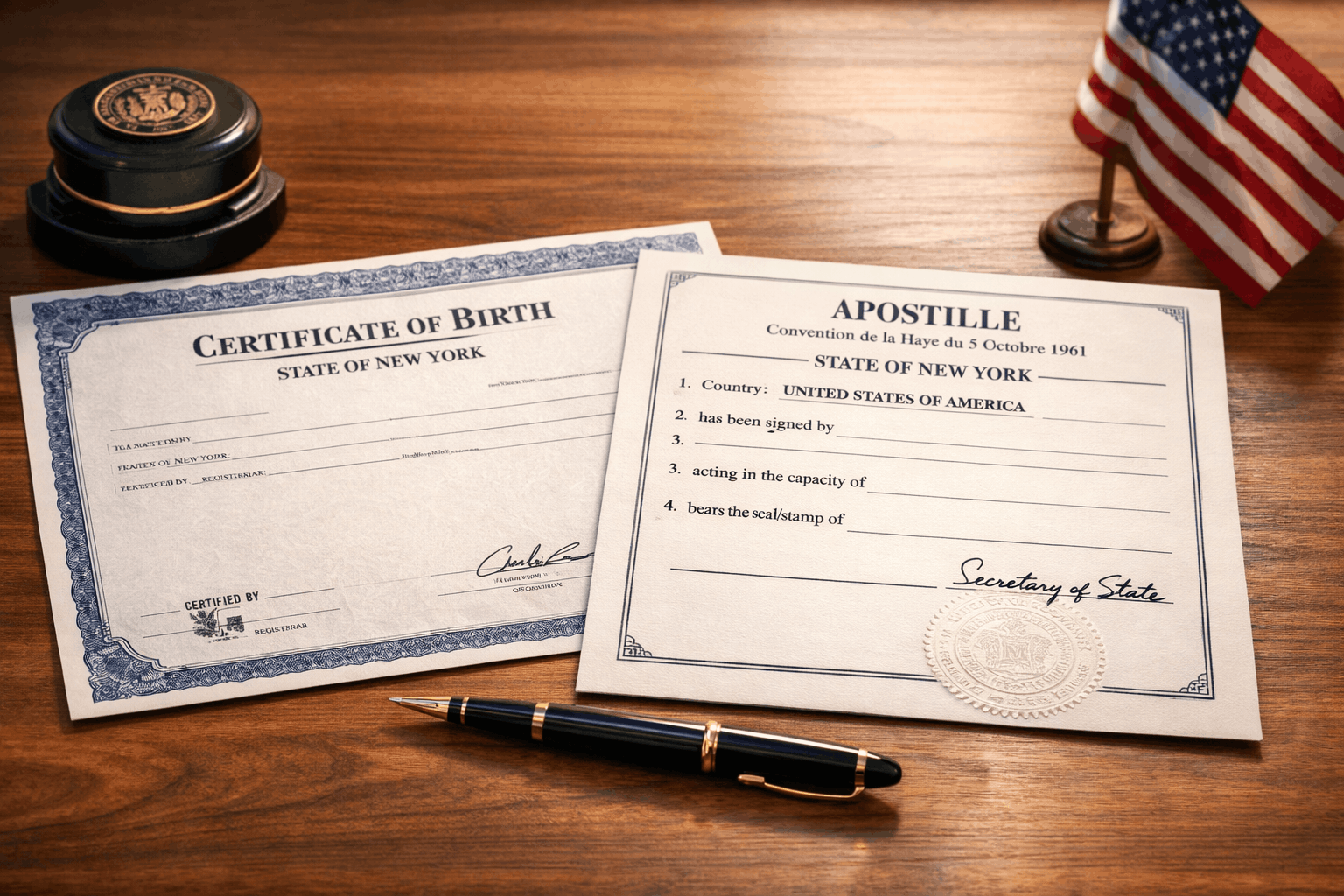
A birth certificate is a List C document that serves as evidence of employment authorization when completing Form I-9, Employment Eligibility Verification. To be valid for this purpose, the document must be an original or a certified copy issued by a state, county, municipal authority, or outlying possession of the United States bearing an official seal.
Employers in the United States are required by the Immigration Reform and Control Act of 1986 to verify the identity and employment authorization of every new employee. The Form I-9 process is designed to ensure that the individual is legally permitted to work in the country. Understanding the specific role of a birth certificate—and its limitations—is essential for both employers and employees to maintain compliance with federal regulations enforced by U.S. Citizenship and Immigration Services (USCIS).
Understanding the Form I-9 Document Structure
The Form I-9 requires employees to present acceptable documents that establish both identity and employment authorization. These documents are categorized into three lists, commonly referred to as List A, List B, and List C.
- List A: Documents that establish both identity and employment authorization (e.g., U.S. Passport, Permanent Resident Card).
- List B: Documents that establish identity only (e.g., State-issued driver’s license, school ID).
- List C: Documents that establish employment authorization only (e.g., U.S. Social Security account number card, birth certificate).
A birth certificate falls exclusively under List C. This means that if an employee chooses to present a birth certificate to prove they are authorized to work, they must also provide a separate document from List B to satisfy the identity verification requirement. An employer cannot accept a birth certificate as the sole document for Form I-9 completion unless it is accompanied by a valid List B document.
Eligibility Requirements for Birth Certificates
Not every document labeled as a "birth certificate" is acceptable for I-9 purposes. The USCIS provides specific criteria to ensure the authenticity and reliability of these documents.
Official Issuing Authority
To be acceptable, a birth certificate must be issued by a government entity. This includes:
- State vital statistics offices.
- County registrar or clerk offices.
- Municipal or city health departments.
- Outlying possessions of the United States (e.g., Puerto Rico, Guam, U.S. Virgin Islands, American Samoa).
Physical Characteristics and Authenticity
The document must bear an official seal, stamp, or signature of the issuing authority. Photocopies are not acceptable for Form I-9 purposes. The document must be an original or a certified copy. If the certificate has been laminated or altered, it may be rejected by the employer if they determine it does not appear to be genuine or does not relate to the person presenting it.
Documents That Are Not Acceptable
It is a common error to present documents that look like birth certificates but do not meet federal standards. Specifically, the following are not acceptable for Form I-9:
- Hospital-issued birth announcements or certificates (which often feature baby footprints).
- Baptismal certificates.
- Notarized copies of birth certificates (if not also certified by the issuing government office).
- Expired or altered documents that appear to have been tampered with.
Step-by-Step Process for Employers
As an employer, you are responsible for reviewing the documents provided by the employee in their presence. Follow this procedure to ensure compliance:
- Request Presentation: Notify the employee that they must provide either one List A document or a combination of one List B and one List C document.
- Examine the Document: Inspect the birth certificate to determine if it appears to be genuine and relates to the employee. Look for the official seal and the signature of the registrar.
- Record Information: On Section 2 of Form I-9, record the document title (e.g., "Birth Certificate"), the issuing authority, document number (if applicable), and the expiration date (if applicable). Many birth certificates do not have an expiration date; in such cases, you may leave that field blank or write "N/A."
- Complete Certification: Sign and date the certification section of the Form I-9, affirming that you have examined the document and that it appears to be genuine.
- Retention: Store the Form I-9 in a secure location for the required retention period—either three years after the date of hire or one year after the date employment ends, whichever is later.
Comparison of Common List C Documents
When employees are choosing which List C document to present, they often weigh the availability of a birth certificate against other common options.
| Document Type | Requirements | Issuing Entity |
|---|---|---|
| Birth Certificate | Must be original or certified copy with seal | State, County, or City Government |
| Social Security Card | Unrestricted original card | Social Security Administration |
| Native American Tribal Document | Must be recognized tribal record | Federally Recognized Tribe |
| Consular Report of Birth Abroad | Form FS-240, DS-1350, or FS-545 | U.S. Department of State |
While the birth certificate is a common choice, some employees may find it easier to provide a Social Security card if they have one readily available. Employers must never specify which document an employee should present; the choice remains entirely with the employee, provided the document is on the acceptable list.
Troubleshooting Common Issues
The "Hospital Certificate" Trap
Many individuals confuse the commemorative birth certificate provided by a hospital with the official birth certificate filed with the state. If an employee presents a hospital-issued document, the employer must inform them that it is not acceptable for Form I-9 purposes. The employee must then contact their state’s vital records office to obtain an official certified copy.
Dealing with Illegible or Damaged Documents
If a birth certificate is physically damaged to the point where the seal or the registrar's signature is no longer visible, the employer should decline it. The document must be sufficiently legible to confirm that it is an official record. In such instances, the employee should be advised to request a replacement from the issuing jurisdiction.
Name Changes
If the name on the birth certificate does not match the name currently used by the employee (e.g., due to marriage or legal name change), the employer should still accept the document as long as the document appears to be genuine and relates to the person. Employers are not required to demand a marriage certificate or court order to verify the name change for Form I-9 purposes.
Frequently Asked Questions
Can I accept a photocopy of a birth certificate?
No, federal regulations strictly require the presentation of an original or a certified copy of the document. Photocopies are not acceptable, even if they appear high-quality or are notarized.
What should I do if an employee presents an expired birth certificate?
Birth certificates generally do not expire. If the document is an official, government-issued version, the date of issuance is irrelevant. You should accept it provided it meets the other criteria of being an original or certified copy.
Are Puerto Rican birth certificates acceptable for Form I-9?
Yes, but with a caveat. Birth certificates issued by the government of Puerto Rico prior to July 1, 2010, are considered invalid for I-9 purposes due to a law change in Puerto Rico. Employees presenting older Puerto Rican birth certificates must be asked to provide a current version issued on or after July 1, 2010.
What happens if the employee cannot find their birth certificate?
If the employee does not possess a birth certificate and cannot obtain one quickly, they may choose to provide another document from List C, such as a Social Security card or a U.S. Citizen ID card. If they possess none of the documents on the acceptable lists, they cannot be hired until they can prove their eligibility to work.
Does the employer keep a copy of the birth certificate?
Employers are not required to keep copies of the documents provided by employees, though they may choose to do so as a matter of internal policy. If an employer decides to keep copies, they must do so for all employees consistently to avoid potential claims of discrimination.
Professional Guidance and Compliance
The information provided here serves as a general guide based on the USCIS Handbook for Employers (M-274). Immigration law is subject to strict enforcement, and penalties for failing to properly verify employment eligibility can be significant. Employers should regularly consult the official USCIS I-9 Central website for the most current version of the form and instructions.
If an employer encounters a unique situation, such as an employee with documentation from a foreign country that is difficult to verify or an employee claiming an exemption, it is advisable to contact legal counsel specializing in immigration law. Compliance is a proactive effort, and maintaining a consistent, well-documented process protects the business and the employee.