A major cloud security incident in December 2025 highlighted critical vulnerabilities in identity and access management (IAM) and exposed cloud service APIs. This comprehensive overview examines the attack vector, incident timeline, enterprise impact, forensic mitigation steps, and key remediation strategies required to protect cloud infrastructure in 2026.
Context and Root Cause Analysis of the December 2025 Incident
Cloud security incidents routinely stem from a combination of architectural oversights, misconfigurations, and sophisticated credential harvesting techniques. The cloud security incident occurring in December 2025 served as a stark reminder that while cloud infrastructure providers maintain high physical and hypervisor-level security, the customer responsibility domain—specifically identity governance and application security—remains the primary target for malicious threat actors.
Understanding the root cause of this incident requires evaluating the modern attack surface in multi-tenant and hybrid cloud environments. In this event, adversaries did not breach the underlying cloud provider infrastructure directly. Instead, they compromised long-lived access credentials associated with automated deployment pipelines and administrative accounts that lacked continuous risk-based authentication.
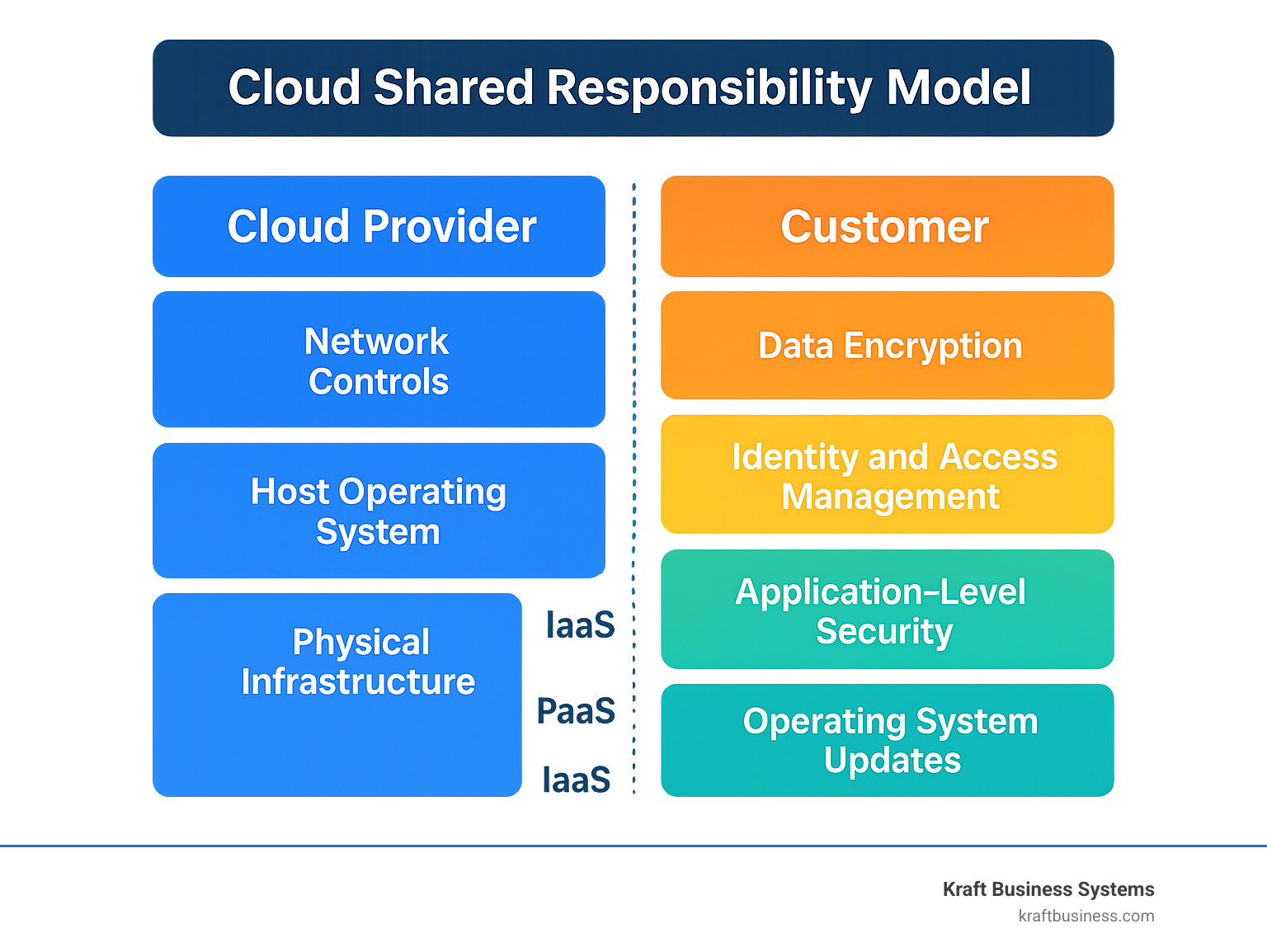
Shared Responsibility Model:
- Customer Responsibility (Breached Area)
- Identity & Access Management (IAM)
- API Security & Key Management
- Data Classification & Storage Encryption Policies
- Cloud Provider Responsibility (Intact)
- Physical Data Centers & Hardware Infrastructure
- Virtualization & Hypervisor Isolation
Initial Access Vector and Misconfiguration Mechanics
The initial entry point was traced to an exposed continuous integration and continuous deployment (CI/CD) configuration file residing within an improperly scoped secondary code repository. This file contained static API access keys for a high-privilege service account used to deploy infrastructure resources across multiple cloud environments.
Static credentials remain one of the most critical security liabilities in cloud engineering. Unlike human users who can be subjected to mandatory multi-factor authentication (MFA) prompts at login, automated service principals frequently bypass traditional MFA constraints. When these keys are hardcoded, logged, or checked into source code management platforms without rotation, any entity gaining access to the repository can impersonate the service principal.
Control Plane vs. Data Plane Vulnerabilities
The attackers capitalized on a fundamental distinction in cloud architecture: the difference between the control plane and the data plane.
- Control Plane Compromise: Using the exposed service account keys, the threat actors issued management API calls to modify security group rules, attach new policy roles, and generate short-lived session tokens with expanded permissions. This effectively allowed them to manipulate the environment's security boundaries without raising traditional network perimeter alarms.
- Data Plane Exploitation: Once management plane dominance was achieved, the threat actors moved into the data plane. They targeted unencrypted object storage buckets, relational database snapshots, and secrets management repositories, exfiltrating sensitive organizational assets and proprietary data.
By abusing valid management APIs, the threat actors blended in with legitimate operational administrative activity. This masking technique significantly extended the incident dwell time prior to initial detection.
Detailed Incident Timeline and Operational Impact
A granular reconstruction of the December 2025 cloud breach illustrates how quickly an undetected credential compromise can escalate across distributed infrastructure. Security operations centers (SOC) must analyze incident timelines to pinpoint blind spots in logging, alerting, and automated containment systems.
Timeline of Events (December 2025):
- [T0: Day 1, 02:14 UTC] Key Compromise: Static service key leaked via code repository.
- [T1: Day 1, 04:30 UTC] Initial Access: Threat actor initiates API calls from unknown IP.
- [T2: Day 1, 06:12 UTC] Privilege Escalation: Policy modifications attach admin rights.
- [T3: Day 2, 01:45 UTC] Exfiltration Phase: Massive data reads from storage buckets.
- [T4: Day 2, 09:20 UTC] Detection & Alerting: GuardDuty/Sentinel flags anomalous volume.
- [T5: Day 2, 10:05 UTC] Containment: SOC revokes session tokens and locks service account.
Phase 1: Reconnaissance and Unmonitored API Exploitation
The breach began when the threat actor validated the stolen API keys against public cloud provider endpoints. Initial operations were deliberately muted, consisting of low-frequency discovery calls designed to enumerate active cloud subscriptions, identify deployed resource groups, and audit user permissions without triggering rate-limiting or brute-force alerts.
Because the compromised account was a legitimate deployment principal, routine read operations did not generate high-severity alerts in standard Security Information and Event Management (SIEM) systems. This highlights a common vulnerability: logging solutions configured to record management events often lack baseline behavioral profiles capable of distinguishing between a standard automated deployment script and an external attacker conducting discovery.
Phase 2: Lateral Movement and Privilege Escalation
After identifying the scope of access, the threat actor modified identity policies to escalate their privileges. By exploiting permissive trust relationships, the adversary performed cross-account role assumption, pivoting from a non-production cloud sub-account into primary production environments.
To ensure persistence, the attacker created secondary IAM accounts disguised as automated maintenance utilities and added backup SSH keys to running cloud compute instances. This multi-layered persistence model ensured that simply revoking the original compromised API key would not fully sever their access to the environment.
Phase 3: Data Exfiltration and Storage Abuse
With administrative access secured, the adversary targeted cloud object storage systems and managed database services. Using multi-threaded command-line tools designed for high-throughput cloud migration, the threat actor exfiltrated multi-terabyte data stores within hours.
To conceal the outbound traffic, data was routed through public cloud cloud-front networks and serverless proxy relays, disguising the exfiltration as internal cloud-to-cloud data transfers. The operational impact included:
- Confidentiality Breach: Exposure of customer personally identifiable information (PII), proprietary system designs, and internal authentication tokens.
- Financial Cost: Significant egress bandwidth charges incurred due to massive data transfer volume.
- Regulatory Non-Compliance: Mandatory disclosure obligations under international cybersecurity and privacy laws.
Forensic Investigation and Containment Methodology
When responding to a cloud security incident, traditional network and disk forensic tools are often insufficient. Security teams must rely on API audit logs, cloud infrastructure snapshots, volatile memory captures of container instances, and identity provider session logs.
Organizations addressing cloud breaches must apply structured digital forensics and incident response (DFIR) principles adapted for cloud architectures, as outlined in the NIST Special Publication 800-86: Guide to Integrating Forensic Techniques into Incident Response.
Cloud Forensics & Containment Workflow:
- Step 1: Isolation & Preservation
- Revoke active tokens and rotate keys
- Take immutable memory/disk snapshots of virtual instances
- Enable log stream protection (WORM/S3 Object Lock)
- Step 2: Evidence Analysis
- Parse API event logs (CloudTrail, Azure Activity, Cloud Audit)
- Perform correlation analysis between IP, UserAgent, and Role
- Map lateral movement paths across cloud accounts
- Step 3: Eradication & Verification
- Terminate unauthorized instances and rogue IAM principals
- Deploy fresh infrastructure using vetted IaC scripts
- Conduct continuous posture auditing
Live Forensics in Cloud Management Planes
Cloud-native forensics begins with log preservation. Because threat actors with compromised administrative access often attempt to disable or delete logging buckets to cover their tracks, incident response protocols must mandate write-once-read-many (WORM) storage configurations for audit logs.
Forensic engineers analyzed central audit log streams (such as AWS CloudTrail, Azure Activity Logs, or Google Cloud Audit Logs) to map the attacker's path. Key telemetry metrics extracted during the investigation included:
- Source IP Addresses and Geolocation Anomalies: Discrepancies between expected automated pipeline sources and adversary command-and-control nodes.
- UserAgent Strings: Non-standard HTTP client signatures associated with automated exfiltration scripts.
EventNameSequence Patterns: Rapid, sequential calls toAttachRolePolicy,CreateAccessKey, andGetObjectexecuted within short time windows.
Immediate Containment Steps
To halt active exfiltration without causing unplanned outages across unaffected services, the SOC executed a targeted containment strategy:
- Token Invalidation: Executed administrative session revocation commands to invalidate all active OAuth and temporary STS (Security Token Service) sessions tied to compromised roles.
- Key Invalidation and Rotation: Immediately disabled the compromised static service credentials and issued emergency rotation across all linked deployment pipelines.
- Security Group Quarantine: Applied restrictive network access control lists (NACLs) and security group rules to isolate affected compute nodes and database clusters while preserving their volatile memory state for analysis.
- IAM Policy Freeze: Temporarily applied an explicit
DenyAllinline policy overlay to high-risk roles pending identity verification.
Comparative Analysis of Cloud Mitigation Strategies
Managing cloud security requires implementing overlapping technical controls across identity, computing, network, and storage domains. The following table compares key attack vectors identified in the December 2025 incident, their operational impacts, immediate containment steps, and long-term preventive architectures.
| Security Domain | Identified Attack Vector | Operational Impact | Immediate Containment Action | Long-Term Preventive Control |
|---|---|---|---|---|
| Identity & Access Management (IAM) | Over-privileged long-lived service account keys | Full control-plane compromise and lateral account movement | Revoke active session tokens; disable static keys | Implement Ephemeral Credentials, Just-In-Time (JIT) access, and Zero Trust Architecture |
| API & Configuration Security | Exposed API keys in secondary source repositories | Unauthorized administrative command execution | Invalidate exposed credentials; quarantine repositories | Automated secret scanning, CI/CD pipeline masking, and hardcoded secret blocking |
| Data Storage | Broad object storage read/write policies | Data exfiltration of unencrypted object stores and database backups | Enforce explicit bucket access blocks; modify network endpoints | Enforce default KMS client-side/server-side encryption; restrict storage endpoints via VPC Service Controls |
| Logging & Monitoring | Delayed detection due to unprofiled control plane usage | Extended threat actor dwell time (~31 hours) | Enforce real-time SIEM ingestion; enable alerting thresholds | Deploy Cloud Security Posture Management (CSPM) with behavioral anomaly detection |
| Network & Perimeter | Direct public internet access to management endpoints | Unrestricted outbound exfiltration routes | Apply restrictive NACLs; shut down unauthorized egress paths | Implement Private Link endpoints, VPC Peering controls, and strict egress proxy filtering |
Core Lessons Learned and Remediation Guidance for 2026
The technical analysis of the December 2025 event offers crucial lessons for security architects, CISOs, and cloud engineering teams operating in 2026. Security in cloud environments cannot be achieved through perimeter defense alone; it requires continuous identity verification, automated policy enforcement, and proactive threat hunting.
For comprehensive architectural standards on building resilient cloud environments, organizations should consult the Cloud Security Alliance (CSA) Security Guidance for Critical Areas of Focus in Cloud Computing.
1. Identity Is the New Security Perimeter
The primary failure mode in the December 2025 incident was relying on static credentials and broad permissions. Organizations must transition from static key management to dynamic, short-lived, ephemeral credentials.
- Workload Identity Federation: Eliminate long-lived access keys for software services. Use workload identity federation (such as OIDC-backed service account impersonation) so that CI/CD systems, container pods, and external workloads request short-lived tokens valid for minutes rather than months.
- Zero Trust Architecture: Implement continuous authentication and authorization mechanisms that evaluate session risk based on device context, network location, and request velocity, aligning with NIST SP 800-207 Zero Trust Architecture Guidelines.
- Least-Privilege Enforcement: Periodically run identity analytics tools to identify unused permissions and automatically downscope broad wildcard (
*) access statements to minimal required actions.
2. Infrastructure as Code (IaC) and Continuous Posture Management
Manual infrastructure provisioning creates configuration drift and introduces invisible security gaps. Managing security configurations through Infrastructure as Code (IaC) allows organizations to audit, version control, and automatically validate cloud security settings prior to deployment.
Continuous Posture Management Lifecycle:
- Code Commit: Pre-commit hooks check for hardcoded keys
- CI Build Phase: Static Analysis (SAST) validates IaC rules
- Deployment: CSPM monitors runtime for configuration drift
- Runtime Audit: Automated remediation resets drift
- Pre-Deployment Static Analysis: Integrate automated scanners into code delivery pipelines to detect hardcoded secrets, overly permissive IAM policies, and open storage endpoints before pull requests are merged.
- Automated Drift Detection: Utilize Cloud Security Posture Management (CSPM) tools to continuously audit live environments against baseline IaC templates. Any manual modifications in the management console must automatically trigger alerts or automated remediation routines.
3. Unified Telemetry and Behavioral Anomaly Detection
Securing multi-cloud environments requires centralized visibility. Telemetry must be aggregated from audit logs, network flow logs, DNS records, and identity provider activity.
- Behavioral Baselining: Deploy machine learning detection rules capable of identifying anomalous API call sequences. For example, a sudden surge in
DescribeorListcommands followed immediately by bulk data downloading must automatically trigger security automation playbooks. - Integrated SOAR Playbooks: Modern Security Orchestration, Automation, and Response (SOAR) systems should automatically isolate compromised entities. Upon receiving a high-confidence severity alert, automated routines must quarantine affected roles, invalidate active user sessions, and notify on-duty incident responders without waiting for human intervention.
Step-by-Step Response Playbook for Future Cloud Incidents
Organizations seeking to upgrade their cloud incident response plans should follow a structured, phased operational framework.
Step 1: Initial Triage and Scope Verification
- Validate the alert source to rule out false positives generated by routine automated operations.
- Determine the affected cloud subscriptions, accounts, regions, and resources.
- Identify all identity entities (human users, roles, service accounts) associated with the anomalous activity.
Step 2: Immediate Isolation and Containment
- Revoke all active session tokens for affected identities using cloud provider CLI tools or management APIs.
- Disable compromise-suspected static API keys and service account credentials.
- Apply temporary, restrictive deny policies to stop ongoing administrative calls without destroying logs or infrastructure state.
- Isolate compromised workload instances by updating security groups to block all ingress and egress, except for dedicated forensic workstations.
Step 3: Forensic Collection and Root Cause Analysis
- Enable immutable storage settings on log buckets containing audit events, flow logs, and application records.
- Collect volatile system memory and create cryptographic disk snapshots of impacted virtual instances.
- Correlate API log entries across accounts to build a complete timeline of attacker actions, focusing on role assumption events and permission modifications.
Step 4: Eradication and Infrastructure Recovery
- Terminate all rogue infrastructure, backdoored accounts, and unauthorized persistence mechanisms identified during forensics.
- Redeploy known-good application environments using validated Infrastructure as Code (IaC) templates.
- Rotate all passwords, application secrets, API keys, and database credentials across production and non-production environments.
Step 5: Post-Incident Review and Compliance Reporting
- Conduct a formal post-mortem review to document timeline gaps, tool failures, and systemic security weaknesses.
- Fulfill regulatory obligations by notifying relevant data protection authorities and impacted stakeholders within required statutory windows, utilizing guidelines provided by the Cybersecurity and Infrastructure Security Agency (CISA).
- Update incident playbooks, SIEM detection rules, and security awareness training programs based on findings.
Frequently Asked Questions
What was the primary root cause of the December 2025 cloud security incident?
The primary root cause was the exposure of long-lived, high-privilege static API access keys associated with an automated service account within an unmonitored code repository. The threat actor used these credentials to bypass traditional multi-factor authentication, modify management plane policies, elevate privileges, and exfiltrate sensitive data from cloud object storage.
How can organizations detect unauthorized lateral movement within cloud management planes?
Organizations can detect lateral movement by monitoring API audit logs (such as AWS CloudTrail or Azure Activity Logs) for cross-account role assumption calls, unexpected policy modifications, and unusual geographic or IP address source changes. Deploying behavioral analytics tools that establish a baseline for standard administrative actions helps highlight anomalies quickly.
What immediate steps should be taken if a cloud API key is leaked?
If a cloud API key is leaked, security teams should immediately disable or delete the key in the cloud identity management system, revoke all active session tokens associated with that key, review recent audit logs to identify unauthorized actions taken during the compromise window, and rotate any secondary secrets or credentials accessible via the compromised role.
How does Zero Trust Architecture prevent privilege escalation during cloud breaches?
Zero Trust Architecture assumes that no user or service principal is inherently trustworthy, even within internal networks. By enforcing strict least-privilege policies, context-aware risk evaluations, dynamic short-lived credentials, and continuous micro-segmentation, Zero Trust limits an attacker's ability to escalate privileges or move laterally across accounts if initial credentials are stolen.
What compliance and regulatory reporting requirements follow a cloud data breach?
Depending on jurisdiction and industry, organizations face strict breach notification mandates. For instance, regulations like GDPR or state-level reporting laws in the U.S. require notifying data protection authorities and affected individuals within specific timeframes (often 72 hours). Additionally, public companies may need to submit regulatory filings detailing the operational and financial impact of the incident.
Strategic Recommendations for 2026
Security operations in 2026 require shifting from reactive monitoring to proactive identity governance and continuous posture validation. Organizations must prioritize eliminating static deployment credentials, enforcing strict least-privilege roles, and integrating real-time automated containment playbooks.
To protect cloud environments effectively:
- Conduct an immediate audit of all source code repositories and deployment pipelines to purge hardcoded static access keys.
- Implement workload identity federation across all multi-cloud environments to mandate short-lived, ephemeral session tokens.
- Deploy automated Cloud Security Posture Management (CSPM) and Cloud Detection and Response (CDR) tools capable of instantly revoking compromised credentials upon detecting unauthorized API activity.