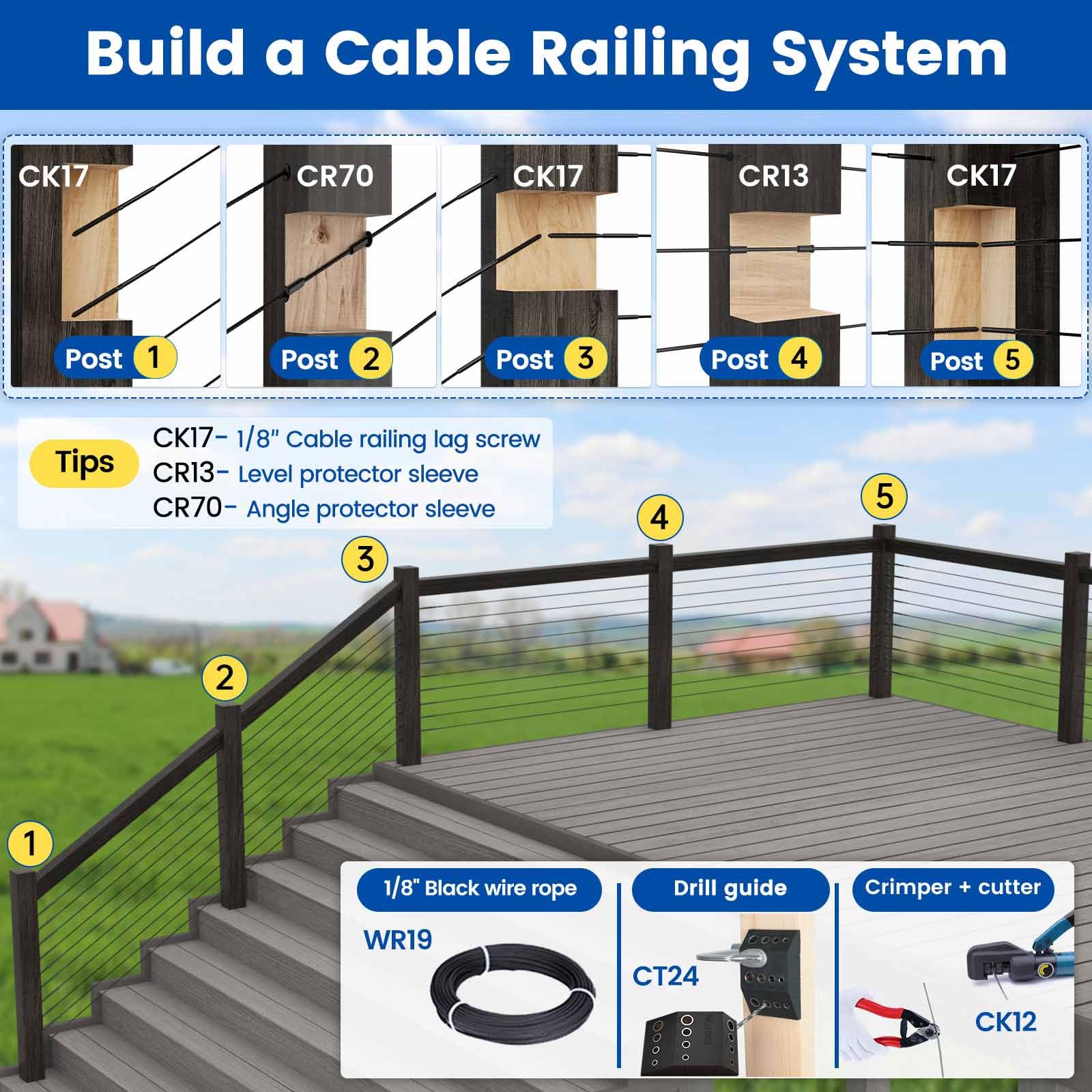
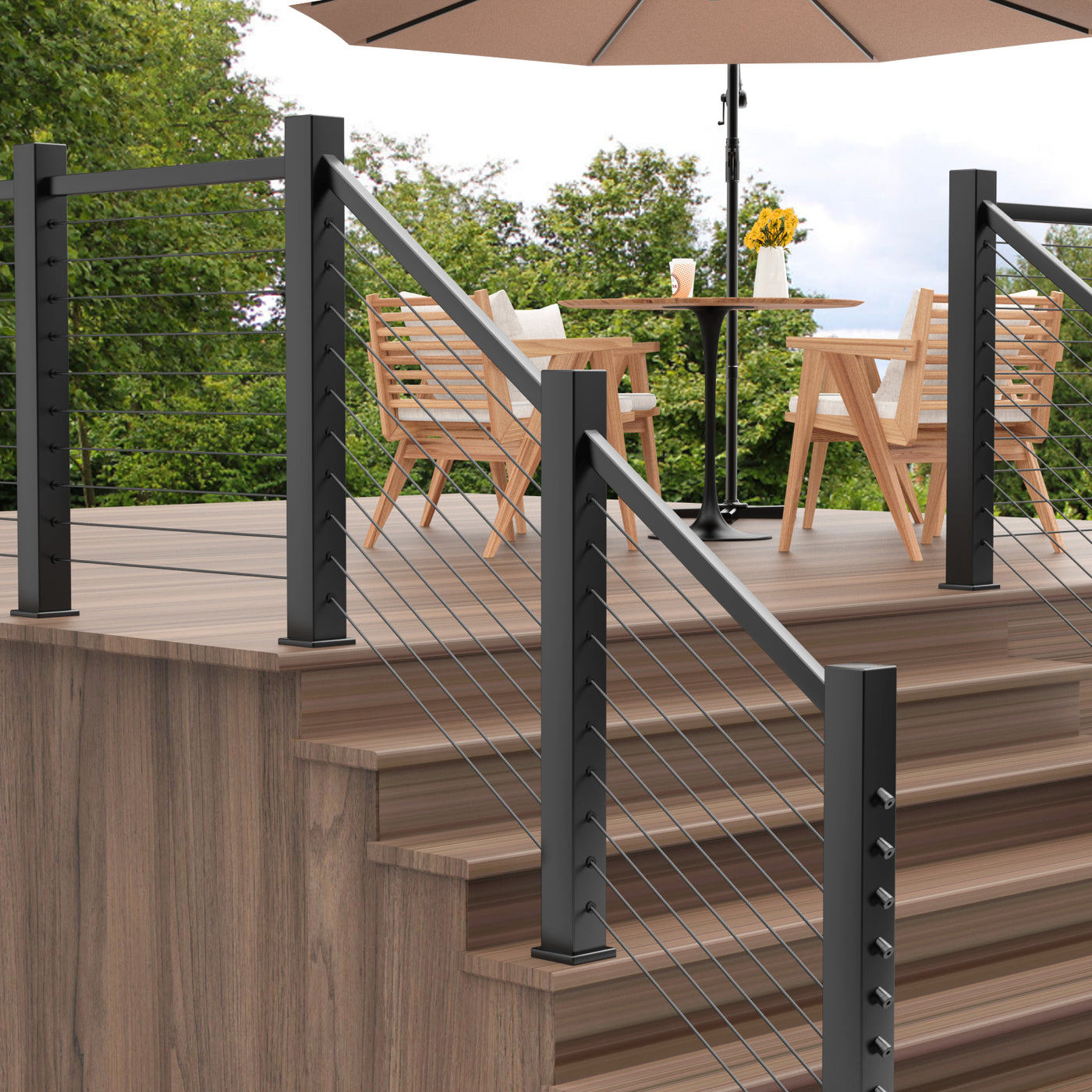
In modern home design, 1/8" cable railing serves as the industry standard for achieving a minimalist, high-visibility aesthetic without sacrificing structural safety. This specific diameter offers the ideal balance between "invisible" infill and the tensile strength required to meet residential building codes for decks, balconies, and interior staircases.
Why 1/8-Inch Cable is the Residential Standard
Choosing the correct cable thickness is one of the most critical decisions in railing design. While commercial projects may occasionally opt for 3/16" or 1/4" cables to suggest a more rugged, industrial feel, the 1/8-inch diameter is preferred by architects and homeowners for its ability to disappear into the background.
At a distance of just a few feet, 1/8" stainless steel cable becomes nearly invisible to the eye, preserving panoramic views and creating an open, airy feel in small interior spaces. Despite its slim profile, high-quality 1/8" cable is remarkably strong. A standard 1x19 construction 1/8" cable typically has a breaking strength exceeding 1,700 pounds. When tensioned correctly across multiple rows, the system provides a rigid, secure barrier that can withstand significant impact and pressure.
The 1/8" size also enjoys the widest availability of hardware. Whether you are looking for hidden tensioners that mount inside metal posts or decorative turnbuckles for wooden frames, the vast majority of residential railing hardware is engineered specifically for 1/8" cable. This compatibility simplifies the sourcing process and often results in lower material costs compared to less common, larger diameters.
Essential Materials: 304 vs. 316 Stainless Steel
In 2026, the material science behind cable railing remains centered on two primary grades of stainless steel. Understanding the difference is vital for the longevity of your home design project.
Type 304 Stainless Steel
Type 304 is the most common grade of stainless steel. It contains high levels of chromium and nickel, providing excellent corrosion resistance for most interior applications or controlled environments. In home design, 304-grade 1/8" cable is a cost-effective choice for indoor staircases or lofts where the railing is protected from the elements. However, it is susceptible to "tea staining" or surface rust if exposed to salt air or heavy industrial pollution.
Type 316 Stainless Steel (Marine Grade)
For any exterior application—especially in coastal regions—Type 316 stainless steel is the gold standard. It contains molybdenum, an element that significantly increases resistance to chlorides (like salt) and environmental pitting. While Type 316 carries a price premium, its durability in harsh environments ensures that the cable maintains its luster and structural integrity for decades. For homeowners in 2026, the long-term reduction in maintenance costs almost always justifies the initial investment in 316-grade materials for decks and balconies.
Cable Construction: Why 1x19 Matters
When purchasing 1/8" cable, you will encounter different "weaves" or constructions, most notably 7x7 and 1x19.
- 7x7 Construction: This consists of seven strands, each made of seven smaller wires. It is more flexible and is often used in pulley systems. However, its rougher surface can trap dirt and salt, and it has a slight "stretch" over time.
- 1x19 Construction: This is the preferred choice for architectural railing. It consists of 19 solid wires twisted into a single strand. It is much stiffer than 7x7, meaning it resists sagging and requires less frequent re-tensioning. Crucially, the 1x19 weave results in a smoother surface that is more reflective and easier to clean, enhancing the high-end look of the home.
Designing with Transparency: Interior vs. Exterior Applications
The versatility of 1/8" cable railing allows it to bridge the gap between various architectural styles, from ultra-modern to rustic-industrial.
Interior Lofts and Staircases
Inside the home, 1/8" cable is frequently used to open up floor plans. Traditional wooden balusters can create a "cage" effect, making a hallway or loft feel smaller. By replacing those balusters with horizontal cable, the sightlines remain uninterrupted. Designers in 2026 are increasingly pairing 1/8" cable with hardwood top rails (like white oak or walnut) to warm up the metal's coldness, creating a "transitional" look that fits both contemporary and traditional homes.
Exterior Decks and Balconies
On an exterior deck, the primary goal is often to preserve a view of the yard, mountains, or water. 1/8" cable is significantly less obstructive than glass panels, which require constant cleaning to remove fingerprints and water spots. Furthermore, cable railing allows for natural airflow, keeping outdoor living spaces cooler during summer months.
Structural Integrity and Post Requirements
A common mistake in DIY cable railing projects is underestimating the tensile force exerted on the end posts. To keep 1/8" cables from sagging and to meet safety codes, each cable must be tensioned to approximately 200–300 pounds.
On a standard 36-inch high railing with 10 rows of cable, the "terminal" (end) posts must be able to withstand a cumulative pull of nearly 3,000 pounds.
- Wooden Posts: Should be at least 4x4 (nominal) and made of a structural hardwood or pressure-treated timber. Corner posts often require double-posting or internal steel reinforcement to prevent leaning over time.
- Metal Posts: Steel or aluminum posts must have sufficient wall thickness (typically 1/4" for steel or reinforced chambers for aluminum) to prevent the walls from collapsing under the pressure of the tensioners.
Intermediate posts (or "spacer" posts) are placed every 3 to 4 feet. Their job is not to provide tension, but to maintain the vertical spacing of the cables so they cannot be spread apart easily, ensuring compliance with the "4-inch sphere" rule.
Understanding Building Codes and the 4-Inch Rule
Safety is the paramount concern in railing design. Most local building codes in the United States are based on the International Residential Code (IRC).
- The 4-Inch Sphere Rule: The most critical requirement is that a 4-inch diameter sphere cannot pass through any opening in the railing. For horizontal 1/8" cable systems, this means the cables are typically spaced 3 inches apart on center. This tighter spacing accounts for the "deflection" (stretch) that happens when someone pushes on the cables.
- Height Requirements: For residential decks and stairs, the top rail height must generally be at least 36 inches. Some jurisdictions require 42 inches for commercial or multi-family buildings.
- The Ladder Effect: Historically, some codes restricted horizontal railings because they were thought to be climbable by children. However, the 2026 IRC and most modern updates have removed these restrictions for residential applications, recognizing that many other household items pose similar risks and that cable railings are a standard, safe architectural feature. Always verify with your local building department before installation.
Installation Methods: Swaged vs. Swageless Hardware
The "hardware" refers to the fittings that attach the 1/8" cable to the posts and allow you to tighten it.
Swaged Fittings
Swaging involves using a hydraulic or manual crimping tool to permanently "cold-weld" the metal fitting onto the cable.
- Pros: Usually more compact and can often be hidden entirely inside the post. It is generally the more affordable hardware option.
- Cons: Requires a specialized swaging tool. There is no room for error; if you cut the cable too short, you must start over with a new piece.
Swageless Fittings
Swageless fittings use an internal wedge or "jaw" system to grip the cable as you tighten the fitting.
- Pros: No special tools are required—just standard wrenches. This makes them the preferred choice for DIYers. They allow for easy adjustments on-site.
- Cons: The fittings are typically larger and more visible than swaged options. They are also more expensive per unit.
Cost Analysis for 2026 Projects
Budgeting for a 1/8" cable railing system depends heavily on post material and hardware choices. As of 2026, homeowners should expect the following price ranges for professional-grade materials:
| Component | Estimated Cost (Material Only) | Notes |
|---|---|---|
| 1/8" 316 SS Cable | $0.85 – $1.50 per linear foot | Sold in spools (100ft, 500ft, etc.) |
| Swaged Hardware Kit | $15 – $30 per cable run | Includes tensioner and end cap |
| Swageless Hardware Kit | $30 – $60 per cable run | Higher cost for ease of installation |
| Aluminum Post Kits | $80 – $150 per post | Pre-drilled for 1/8" cable |
| Professional Labor | $40 – $100 per linear foot | Varies by region and complexity |
A typical 20-foot deck section with a wood frame might cost between $1,500 and $2,500 for high-quality 316 stainless steel components. An all-metal system with custom finishes will likely double that figure.
Maintenance and Longevity
While stainless steel is "stain-less," it is not "stain-proof." To ensure your 1/8" cable railing remains a highlight of your home design for decades, a simple maintenance routine is required.
- Initial Cleaning: After installation, wipe down the cables with a stainless steel cleaner to remove any oils or metallic dust left behind during the cutting and swaging process.
- Passivation: For coastal homes, applying a chemical passivation treatment can help "reset" the protective chromium oxide layer on the steel, providing an extra shield against salt spray.
- Annual Inspection: Once a year, check the tension of each cable. Natural settling of the home or deck posts can cause cables to slacken slightly. Most hardware systems allow for easy re-tightening with a simple wrench.
- Cleaning Frequency: Inland railings may only need a soapy water wash once a year. Coastal railings should be rinsed with fresh water every few months to prevent salt buildup.
Comparison of Cable Diameters
While 1/8" is the focus, it helps to understand the alternatives often discussed in home design.
| Feature | 1/8" (Standard) | 5/32" (Mid-Range) | 3/16" (Heavy Duty) |
|---|---|---|---|
| Visibility | Lowest (Best View) | Moderate | Highest (Obstructive) |
| Breaking Strength | ~1,700 lbs | ~2,400 lbs | ~3,700 lbs |
| Primary Use | Residential Infill | High-traffic Stairs | Commercial/Industrial |
| Hardware Choice | Massive | Limited | Specialized |
| Aesthetic | Modern/Minimalist | Transitional | Industrial/Bold |
Frequently Asked Questions
Is 1/8" cable railing safe for homes with small children?
Yes, when installed according to the 4-inch sphere rule. The cables are spaced closely enough that a child cannot slip through. While children should always be supervised, modern cable railings are engineered to handle the lateral pressure and impact of everyday residential use.
Can I install 1/8" cable railing myself?
Yes, particularly if you use swageless fittings. These systems are designed for homeowners with basic mechanical skills. However, the most difficult part of the installation is not the cable itself, but ensuring the posts are structurally sound enough to handle the tension. If you are unsure about your deck's framing, consult a structural engineer or a professional contractor.
Does cable railing rust?
Inland, Type 304 stainless steel rarely rusts. In coastal environments, even Type 316 can develop surface "tea staining" if not cleaned regularly. This is usually just surface oxidation and does not affect the structural integrity of the 1/8" cable. It can be removed with specialized stainless steel cleaners or a mild abrasive pad.
How do I stop the cables from vibrating in the wind?
In areas with high winds, long runs of cable can occasionally produce a humming sound. This is easily solved by ensuring the cables are properly tensioned and by using intermediate spacers every 3-4 feet. Some manufacturers also offer small rubber grommets that sit inside the post holes to dampen vibrations.
Do I need a top rail?
Yes. Building codes require a "guard" that can withstand a 200-lb concentrated load at any point along the top. The top rail also serves a structural purpose: it takes the compressive force of the tensioned cables, preventing the end posts from pulling inward toward each other. A cable railing system without a sturdy top rail will eventually fail.
Final Recommendations for Homeowners
When integrating 1/8" cable railing into your home design, prioritize material quality over hardware aesthetics. While a sleek, hidden tensioner looks beautiful, it provides no value if the cable itself begins to rust within two years because you chose 304-grade steel for a coastal balcony.
Always start by verifying your local 2026 building codes to ensure horizontal railings are permitted and to confirm the exact height and spacing requirements. For the best visual result, choose 1x19 Type 316 stainless steel cable and pair it with a top rail that complements your home's existing architecture—whether that is a modern black powder-coated aluminum or a warm, natural cedar.