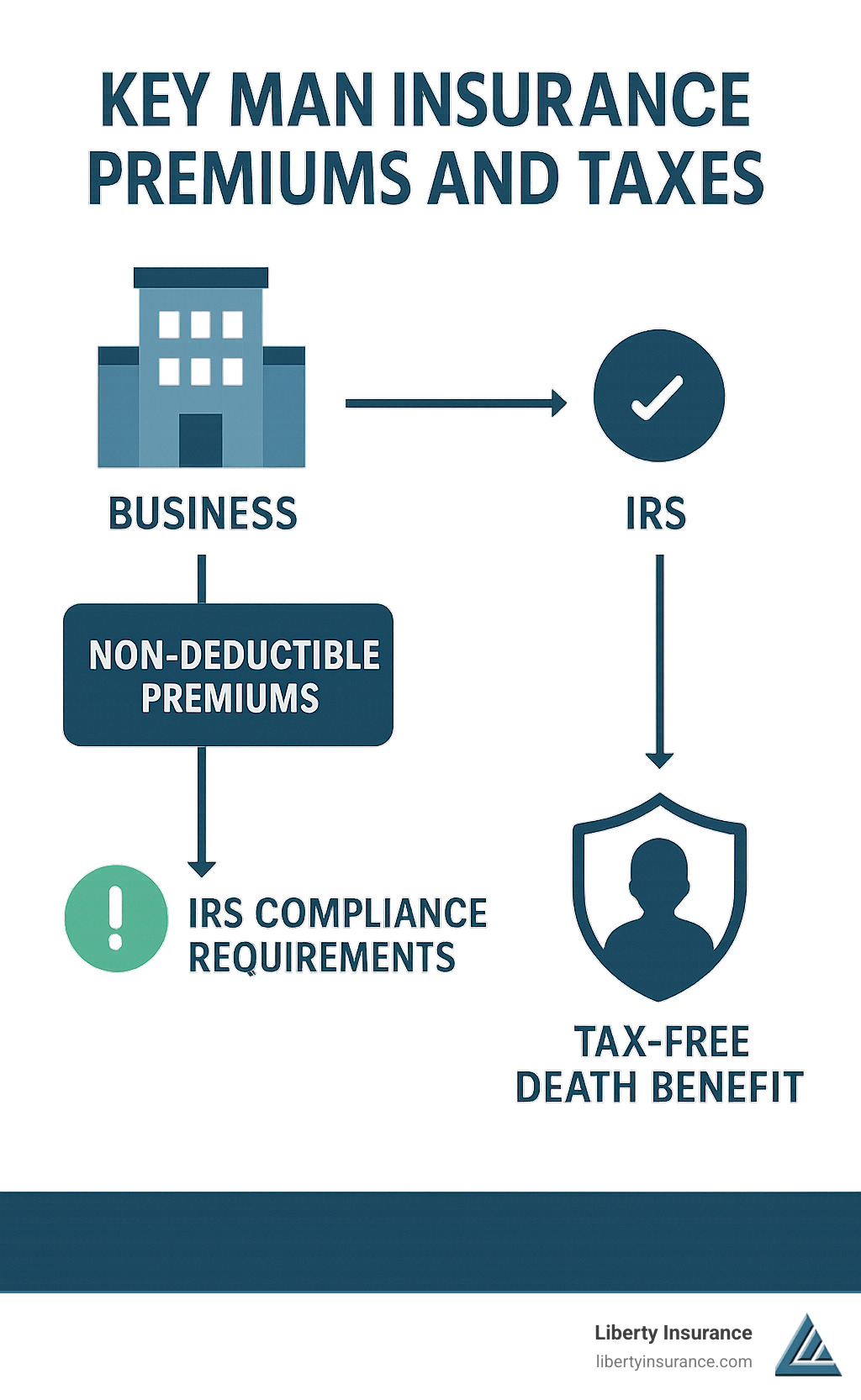
Generally, life insurance premiums paid by a business are not tax-deductible if the business is directly or indirectly a beneficiary under the policy. For a deduction to be permissible, the business must have no beneficial interest in the policy, and the premiums must qualify as ordinary and necessary business expenses, such as when premiums are paid as a form of employee compensation.
Determining the tax deductibility of life insurance premiums requires a precise understanding of the Internal Revenue Code and the nature of the policy in question. In the realm of business finance, tax authorities often view life insurance through the lens of beneficiary interest. The foundational rule, established under Section 264 of the Internal Revenue Code, dictates that no deduction is allowed for premiums paid on any life insurance policy covering the life of any officer or employee, or any person financially interested in any trade or business carried on by the taxpayer, when the taxpayer is directly or indirectly a beneficiary under such policy.
This principle serves to prevent businesses from obtaining tax-advantaged insurance coverage where they stand to gain a financial windfall upon the death of the insured. When a company owns a policy on a key executive—often termed "Key Person Insurance"—it is the company that receives the death benefit. Because the company is the beneficiary, the premiums paid are considered a non-deductible capital outlay rather than an operational expense.
The Beneficiary Test: Determining Deductibility
The "beneficiary test" is the primary mechanism for determining whether a premium payment qualifies for a tax deduction. If your business, or any entity related to your business, is designated as the recipient of the insurance proceeds, the expense is generally disallowed for tax purposes.
To bypass this hurdle, some businesses consider transferring the ownership of the policy or changing the beneficiary designation. However, simply naming a spouse or a third party as the beneficiary may not be sufficient if the business retains "incidents of ownership." Incidents of ownership include the right to change the beneficiary, the right to borrow against the cash value of the policy, or the right to surrender the policy for its cash value. If a business retains any of these rights, the IRS generally views the business as having an indirect beneficial interest, thereby disqualifying the premiums from being tax-deductible.
When Premiums Qualify as Compensation
The most common scenario in which life insurance premiums may be deductible occurs when the insurance is provided as part of an employee's compensation package. In this instance, the business provides the insurance as a fringe benefit. For the premiums to be deductible, the following conditions must typically be met:
- The business must have no beneficial interest in the policy.
- The policy must be owned by the employee, or the beneficiary must be someone chosen by the employee (such as a spouse or family member).
- The premium payment must be treated as additional taxable compensation to the employee.
- The total compensation paid to the employee, including the insurance premiums, must be reasonable and necessary for the services rendered.
When these criteria are met, the business reports the premium payment as a deductible business expense. Concurrently, the employee must report the value of these premiums as taxable income on their personal tax return, as the premiums function as a form of non-cash wages. This creates a "wash" for the business: it receives a deduction for the payment, but the payment is part of the overall payroll expense.
Common Policy Types and Their Tax Status
The structure of the insurance contract significantly impacts how it is treated for tax purposes. Different products offer varying levels of cash value accumulation, death benefits, and ownership models. Understanding these distinctions is vital for tax planning.
| Policy Type | Ownership | Beneficiary | Tax Deduction Status |
|---|---|---|---|
| Key Person Insurance | Business | Business | Not Deductible |
| Group Term Life | Business | Employee Designee | Generally Deductible |
| Split-Dollar Insurance | Shared | Shared | Complex; Rules vary |
| Executive Bonus Plan | Employee | Employee Designee | Deductible (as compensation) |
Group Term Life Insurance
Many businesses provide group term life insurance to their employees. Under Section 79 of the Internal Revenue Code, the cost of the first $50,000 of group-term life insurance coverage provided by an employer is generally excluded from the employee's gross income. The premiums paid by the employer for this coverage are typically deductible as a business expense, provided the plan is non-discriminatory and covers a broad group of employees rather than focusing solely on highly compensated individuals or owners.
The Role of Executive Bonus Plans (Section 162 Plans)
An Executive Bonus Plan, often referred to as a "Section 162 Plan," is a popular strategy for rewarding key staff members. In this arrangement, the business pays the premiums for a life insurance policy owned by the employee. Because the business is not the beneficiary and has no ownership rights, the premiums are deductible by the company as a business expense (compensation). The employee owns the policy and can accumulate cash value on a tax-deferred basis, while the death benefit passes to the employee's chosen beneficiaries.
Considerations for Sole Proprietors and Partners
For sole proprietors and partners in a partnership, the rules are more restrictive. Since these individuals are not considered "employees" in the traditional sense, they cannot deduct premiums paid on their own lives under the guise of an employee compensation plan. If a sole proprietor purchases a policy on their own life, the premiums are considered personal expenses and are generally not deductible, even if the insurance is intended to protect the business.
In the case of partnerships, if the partnership pays for a policy on the life of a partner, the payment is typically treated as a distribution to the partner or as guaranteed payments, depending on the partnership agreement. It does not qualify as a standard business expense deduction in the same way as an employee benefit would.
Potential Pitfalls and Regulatory Compliance
One of the most frequent errors businesses make is failing to distinguish between the "cost" of the insurance and the "investment" component of permanent life insurance. In policies with cash value, the portion of the premium that builds equity is distinct from the cost of the death benefit. However, when the business is the beneficiary, the entire premium payment is usually considered a capital outlay, regardless of whether it covers the risk of death or builds cash value.
Another common mistake is the failure to document the business purpose of the insurance. If you are audited, the IRS will scrutinize why the insurance was purchased. If the insurance is linked to a loan requirement (e.g., a bank requiring a policy as collateral for a business loan), the premiums may still not be deductible if the business is the beneficiary or is indirectly benefiting from the policy’s existence. According to IRC Section 264(a)(1), no deduction is allowed for interest on indebtedness incurred to purchase or continue any life insurance policy if the business is a beneficiary.
Practical Steps for Implementation
If your business is looking to implement a life insurance strategy, follow these steps to ensure compliance and fiscal efficiency:
- Audit Existing Policies: Review your current insurance portfolio to determine who owns the policy and who is listed as the beneficiary.
- Consult with a Tax Professional: Given the complexity of the tax code and the evolving nature of IRS interpretations, working with a Certified Public Accountant (CPA) or tax attorney is essential. Laws vary by jurisdiction and can be subject to specific court rulings.
- Formalize Agreements: If you intend to provide life insurance as a fringe benefit, ensure that your employee handbook or individual employment contracts explicitly detail the insurance as part of the compensation package.
- Maintain Proper Records: Document the payment of premiums, the ownership of the policies, and the business rationale for the coverage. This documentation is critical for tax filing and potential audits.
- Periodic Review: Business needs change. A key person who was essential in 2026 may transition out of the role in the future, necessitating a change in the policy's ownership or beneficiary structure.
Frequently Asked Questions
Are premiums for insurance on a business partner deductible? Generally, no. If the partnership is the beneficiary (such as in a buy-sell agreement), the premiums are not deductible. If the partners purchase insurance on each other, they are typically considered personal expenses of the partners, not deductible business expenses of the partnership.
Does it matter if the policy is term or permanent insurance? For tax deduction purposes, the primary concern is who the beneficiary is, not the type of policy. Whether it is term, whole life, or universal life, if the business is the beneficiary, the premiums are not deductible.
Can I deduct life insurance premiums if they are required by a lender? No. Even if a lender requires you to take out a policy on your life as a condition for a business loan, the premiums are not deductible if you (the business) are the beneficiary of the policy.
What is the tax consequence of an executive bonus plan for the employee? The employee must report the amount of the premium paid by the company as taxable income on their annual return. The company, however, receives a tax deduction for that same amount as a business expense.
Is the death benefit taxable to the business? If a business is the beneficiary of a life insurance policy, the death benefit proceeds are generally received tax-free, subject to specific rules under IRC Section 101(j). However, failing to follow notice and consent requirements can lead to the proceeds being taxed as income.
Recommendation
If your goal is to reduce tax liability while providing insurance coverage, focus on "Executive Bonus Plans" where the employee owns the policy. This shifts the classification of the premium from a non-deductible capital expense to a deductible compensation expense. Always obtain a written opinion from a tax advisor to confirm that your specific policy structure qualifies under current federal and local tax regulations before filing your business taxes for the 2026 fiscal year.