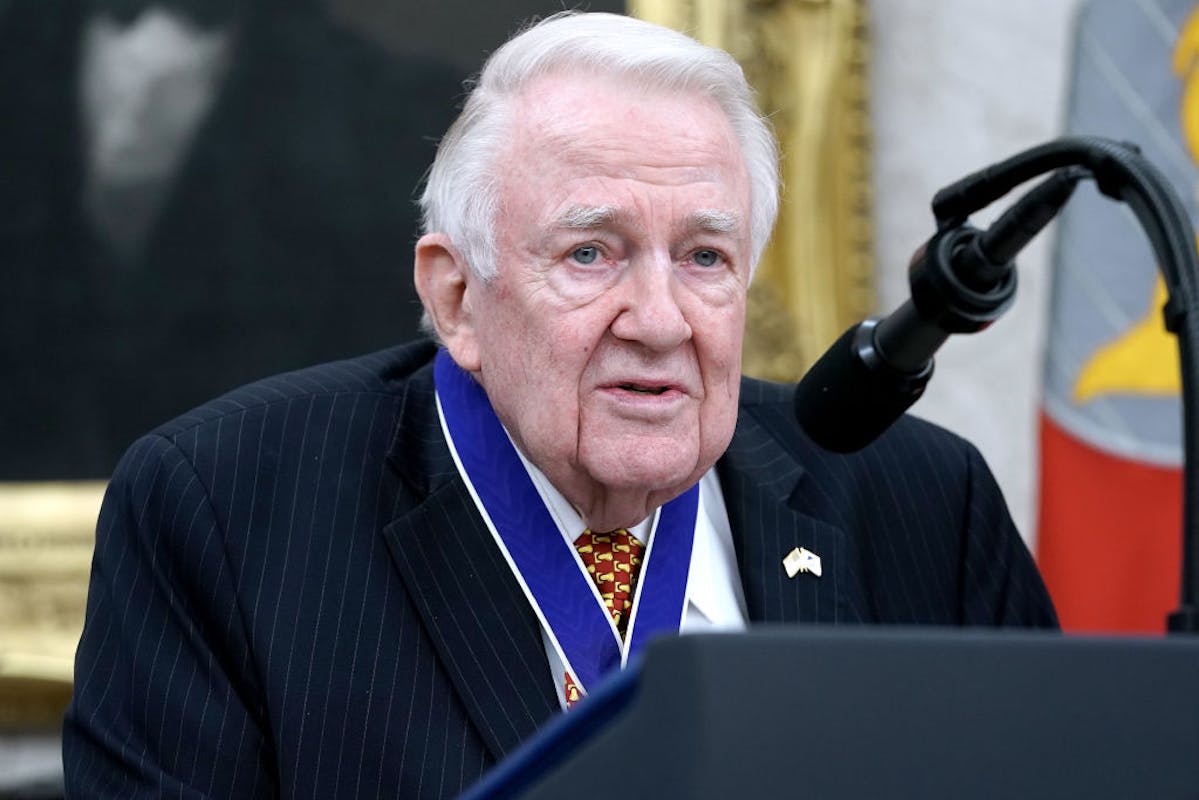
During the presidency of Ronald Reagan, which spanned from 1981 to 1989, the office of the United States Attorney General was occupied by three distinct individuals: William French Smith, Edwin Meese III, and Richard Thornburgh. Each of these figures played a critical role in shaping the legal landscape of the 1980s, overseeing the Department of Justice during a period characterized by significant shifts in constitutional interpretation, federal prosecution priorities, and the expansion of executive branch authority. Understanding their tenures requires examining their respective legal philosophies, the political pressures of the era, and the high-profile controversies that defined their terms in office.
William French Smith (1981–1985)
William French Smith served as the 74th Attorney General and was the first to serve under President Reagan. A corporate lawyer from California and a longtime personal friend of the President, Smith brought a philosophy of judicial restraint to the Department of Justice. His appointment signaled an intention to shift the federal judiciary toward a more conservative interpretation of the law, specifically focusing on "original intent."
Core Objectives and Legal Philosophy
Smith’s primary mission was the implementation of the Reagan administration’s "New Federalism," which sought to reduce the scope of federal intervention in state matters. He prioritized the appointment of conservative judges, working closely with the White House to fill vacancies with individuals committed to a strict constructionist view of the Constitution. Smith was particularly focused on curtailing what he viewed as judicial activism, which he argued had improperly expanded the reach of federal courts into areas traditionally reserved for the states or the legislature.
Challenges and Legacy
One of the most significant aspects of Smith’s tenure was the focus on dismantling the regulatory apparatus that had grown during the 1970s. He advocated for a significant reduction in the influence of the Department of Justice over private industry, favoring deregulation. However, his tenure was also marked by the internal reorganization of the Department of Justice, where he sought to centralize power within the Office of the Attorney General to ensure that legal policy remained strictly aligned with the White House's political agenda.
Edwin Meese III (1985–1988)
Following Smith’s resignation in 1985, Edwin Meese III—who had previously served as the Counselor to the President—took office as the 75th Attorney General. Meese was perhaps the most influential ideological architect of the Reagan administration’s legal strategy. His time in office is often cited as the period when the "Conservative Legal Movement" gained its most significant institutional momentum within the federal government.
The Rise of Originalism
Meese is widely credited with bringing the theory of "originalism"—the belief that the Constitution should be interpreted as it was understood at the time of its adoption—to the forefront of public discourse. Through his speeches and directives, he sought to shift the Department of Justice away from the "living constitution" approach that had dominated liberal legal thought for decades. He exerted significant pressure on the Supreme Court, arguing that judges had a duty to defer to the text of the law rather than subjective notions of fairness or policy goals.
The Wedtech Scandal and Investigations
Meese’s tenure was not without severe controversy. He became the subject of multiple independent counsel investigations, most notably regarding the Wedtech Corporation scandal and his financial dealings. While he was never charged with a crime, the constant scrutiny of his ethics and the allegations of favoritism toward associates created a polarized atmosphere. His resignation in 1988 marked the end of a turbulent period that had brought the legal theories of the Reagan revolution into direct, often abrasive, contact with Washington political norms.
Richard Thornburgh (1988–1989)
Richard Thornburgh assumed the role of Attorney General in the final months of the Reagan administration, having previously served as the Governor of Pennsylvania. Thornburgh’s transition into the role provided a sense of stability following the protracted controversies surrounding Meese.
Stabilizing the Department
Thornburgh was viewed as a more moderate, traditional figure compared to his predecessor. His focus was less on the high-level theoretical battles of constitutional jurisprudence and more on the operational efficiency of the Department of Justice. He brought a "law-and-order" perspective rooted in his experience as a federal prosecutor and governor. During his brief tenure under Reagan, he prioritized the strengthening of the criminal justice system and improved cooperation between federal, state, and local law enforcement agencies.
The Transition to the Bush Administration
Because Thornburgh was appointed in the final year of Reagan's presidency, his tenure was essentially a bridge to the administration of George H.W. Bush, who retained Thornburgh as Attorney General. His role was crucial in ensuring that the transition of legal priorities occurred without disrupting ongoing federal prosecutions or administrative mandates. He provided a bridge between the ideological fervor of the mid-1980s and the more pragmatic governance style that followed.
Comparative Overview of Tenures
The three Attorneys General under Reagan each represented a different facet of the administration's legal goals. The following table summarizes their focus areas and political standing.
| Attorney General | Tenure | Key Philosophical Focus | Primary Legacy |
|---|---|---|---|
| William French Smith | 1981–1985 | Judicial Restraint | Initial shift to conservative judicial appointments. |
| Edwin Meese III | 1985–1988 | Originalism | Institutionalizing conservative legal theory. |
| Richard Thornburgh | 1988–1989 | Law Enforcement | Stabilizing federal prosecution and operations. |
Major Themes in Reagan-Era Justice Policy
The Expansion of Executive Power
A unifying theme across all three attorneys general was the persistent effort to strengthen the power of the executive branch. This included attempts to control independent regulatory agencies, minimize the impact of congressional oversight on executive decisions, and centralize legal decision-making within the Department of Justice. The "Unitary Executive Theory," which argues that the President holds total control over the executive branch, was fostered during this era, setting a precedent for subsequent presidencies.
Judicial Selection as Strategy
The Reagan administration recognized that the most lasting impact on the nation would come from the federal courts. By coordinating closely with the Federalist Society and other conservative legal groups, the attorneys general helped create a pipeline of conservative jurists. This strategy ensured that the administration's influence would persist for decades after Reagan left office, impacting rulings on civil rights, environmental law, and administrative authority.
Law and Order and the "War on Drugs"
Throughout the 1980s, the Department of Justice played a central role in the escalation of the War on Drugs. This included the implementation of mandatory minimum sentencing guidelines, increased federal funding for prison construction, and the militarization of drug enforcement policies. Each Attorney General contributed to this shift, moving the focus of federal law enforcement toward harsh punitive measures, a stance that remained a standard feature of federal policy for the following twenty years.
Frequently Asked Questions
What was the main role of the Attorney General under Reagan?
The primary role was to act as the chief law enforcement officer of the United States and the chief legal adviser to the President. Under Reagan, this role was leveraged to advance conservative judicial appointments, deregulate industry, and implement a strict "law-and-order" domestic agenda.
Why was Edwin Meese III considered a controversial figure?
Meese was controversial primarily due to multiple ethics investigations regarding his financial disclosures and his alleged involvement in helping private companies secure government contracts. These investigations dominated news cycles and led to intense scrutiny of the Reagan administration’s commitment to ethical standards.
How did the Department of Justice change between 1981 and 1989?
The Department transitioned from an agency focused on civil rights and social reform—as seen in the preceding decades—to one focused on originalist jurisprudence and strict criminal enforcement. The power within the department became more centralized under the direct influence of the White House.
Did the Reagan Attorneys General influence today's Supreme Court?
Yes. The systematic approach used by the Reagan administration to identify and appoint conservative judges laid the institutional groundwork for the modern Supreme Court. The focus on originalism remains a defining characteristic of the conservative legal movement in 2026.
Were there significant legal failures during this period?
Failures generally centered on administrative controversies, such as the Iran-Contra affair, where the Department of Justice faced criticism for its handling of information and legal oversight. Additionally, the constant focus on ideological appointments sometimes led to clashes with a Democrat-controlled Congress.
What was the relationship between the Attorney General and the White House?
Under Reagan, the relationship was exceptionally close. The administration viewed the Department of Justice not just as an independent law enforcement body, but as an essential arm of the White House’s policy agenda. This was particularly true under Edwin Meese, who acted as a key policy advisor to the President.
Conclusion and Recommendations
The tenure of the Attorneys General under Reagan serves as a foundational case study for how a presidential administration can use the Department of Justice to reshape the national legal framework. For researchers or students looking to understand this period, a recommended next step is to examine the "Report of the Attorney General on the Constitution and the Protection of Human Rights," which encapsulates the shift in interpretation that defined the era. Examining the archives of the Reagan Library regarding the vetting processes for judicial nominees also provides granular insight into how the administration successfully shifted the ideological composition of the federal judiciary. Understanding these historical figures is essential for interpreting the current debates surrounding the balance of executive and judicial power in 2026.