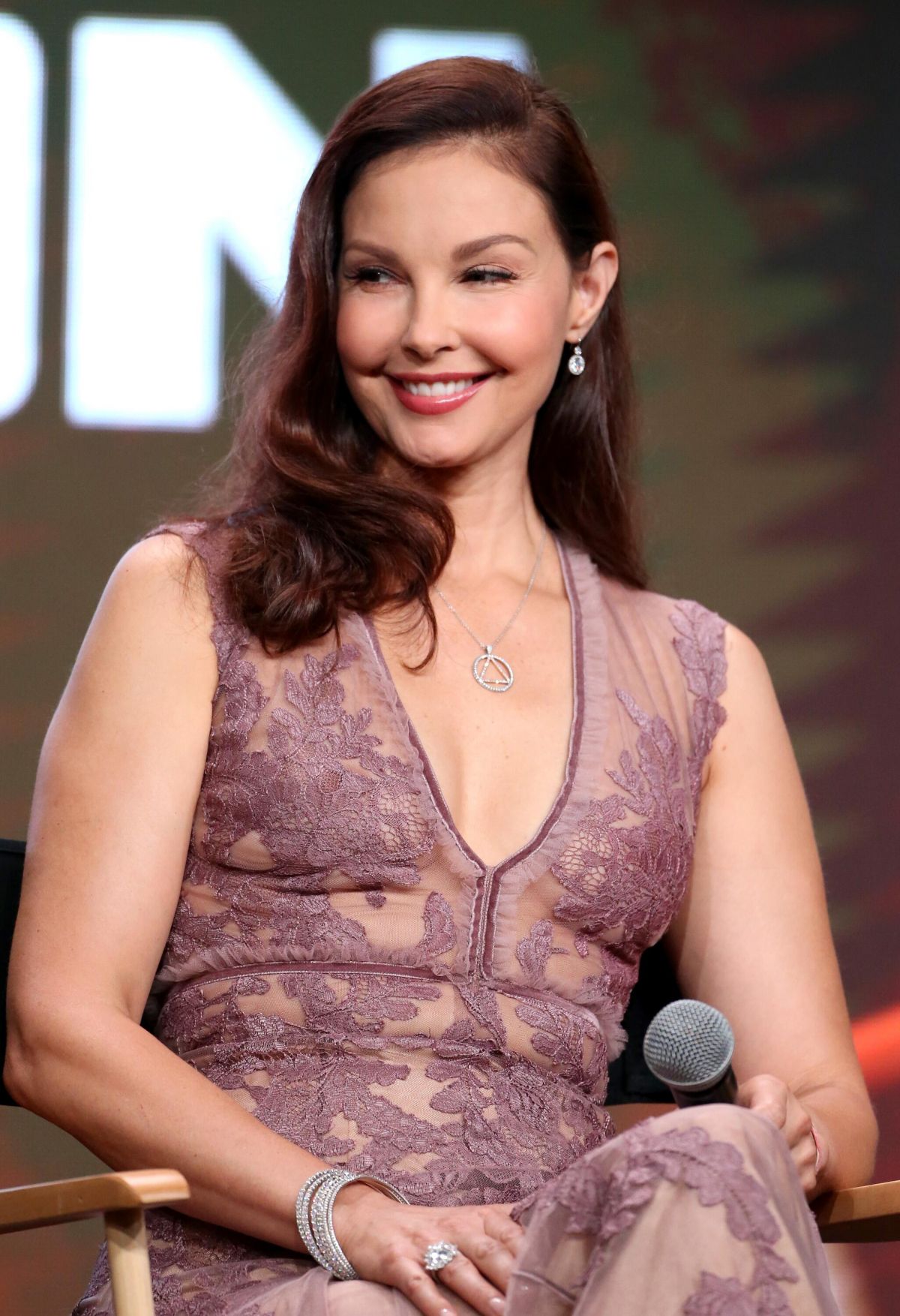
Ashley Judd is an acclaimed American actress and political activist known for her leading roles in 1990s thrillers and her outspoken advocacy for social justice. Born into a famous country music family, she carved her own path through critically acclaimed independent films and blockbuster hits before becoming a pivotal figure in the global humanitarian community and the #MeToo movement.
The Roots of a Dynasty: Early Life and Family Heritage
Born Ashley Tyler Ciminella on April 19, 1968, in Granada Hills, California, Ashley Judd was born into a household that would eventually become synonymous with American country music. Her mother, Naomi Judd, and her sister, Wynonna Judd, would later form "The Judds," one of the most successful duos in music history. However, Ashley's early childhood was marked by a lack of the financial stability that the family would later enjoy.
When Ashley was still a toddler, her parents divorced. She moved frequently with her mother and sister, eventually settling in Kentucky, her mother's native state. During these formative years, Ashley attended 13 different schools. This itinerant lifestyle fostered a sense of adaptability and self-reliance. While Naomi and Wynonna pursued their musical aspirations, Ashley often found solace in books and academics, creating a distinct identity for herself that was separate from the stage performances of her family.
The cultural contrast between the Hollywood hills of her birth and the rural landscapes of Kentucky and Tennessee deeply influenced her worldview. As we reflect on her trajectory in 2026, it is clear that this dual upbringing provided her with the emotional range necessary for her acting career and the grounded perspective required for her later humanitarian work.
Academic Excellence and Intellectual Foundations
Unlike many of her peers who moved straight into the entertainment industry, Ashley Judd prioritized her education. She attended the University of Kentucky, where she majored in French and minored in anthropology, art history, theater, and women's studies. Her time at the university was not merely a placeholder for her acting career; she was a member of the Honors Program and was elected to Phi Beta Kappa.
Her intellectual curiosity did not stop with her undergraduate degree. In 2010, at the height of her fame, she earned a Master of Public Administration (MPA) from the John F. Kennedy School of Government at Harvard University. This move was indicative of her commitment to understanding the systemic issues she advocated for on the global stage. Her academic background in public policy has frequently informed her testimonies before the United States Congress and her various roles within the United Nations.
The Breakthrough: From "Ruby in Paradise" to Mainstream Fame
Ashley Judd’s acting career began with small roles, including a recurring part as Ensign Robin Lefler in Star Trek: The Next Generation. However, her true breakthrough came in 1993 with the independent film Ruby in Paradise. In this film, Judd played a young woman seeking a new life in a Florida resort town. Her performance was hailed for its subtlety and emotional depth, earning her the Independent Spirit Award for Best Female Lead and the Sundance Film Festival’s Grand Jury Prize.
The success of Ruby in Paradise caught the attention of major Hollywood studios. She soon transitioned into high-profile supporting roles in major productions. In 1995, she appeared in Michael Mann’s crime epic Heat, playing the wife of Val Kilmer’s character. This was followed by a pivotal role in the legal thriller A Time to Kill (1996), based on the John Grisham novel. These roles established her as a versatile actress capable of holding her own alongside industry titans like Al Pacino, Robert De Niro, and Matthew McConaughey.
The Queen of the Thriller: Box Office Dominance in the Late 90s
By the late 1990s, Ashley Judd had become one of the most bankable stars in Hollywood, specifically within the "domestic thriller" genre. Her presence in a film often guaranteed a significant opening weekend. Two films, in particular, defined this era of her career:
Kiss the Girls (1997)
In this adaptation of James Patterson’s novel, Judd played Dr. Kate McTiernan, a strong-willed woman who escapes a serial kidnapper and teams up with detective Alex Cross (played by Morgan Freeman) to bring him to justice. The film was a massive commercial success and solidified her image as a resilient, intelligent protagonist who could navigate perilous situations.
Double Jeopardy (1999)
Arguably her most famous role, Double Jeopardy saw Judd playing a woman framed for her husband's murder. The film’s plot hinges on the legal concept of "double jeopardy," suggesting that she could not be prosecuted for the same crime twice if she were to actually kill the husband who faked his death. While the legal premise was widely debated by scholars, the film was a global box office sensation, spending multiple weeks at number one.
During this period, Judd's appeal lay in her ability to project both vulnerability and immense inner strength. She avoided the "damsel in distress" tropes of earlier eras, instead portraying women who took control of their own destinies.
Artistic Diversification: The 2000s and Beyond
As the industry moved into the 2000s, Judd began to diversify her portfolio, seeking out more experimental and character-driven roles. She earned a Golden Globe nomination for her portrayal of Linda Porter in the Cole Porter biopic De-Lovely (2004), demonstrating her range in musical drama.
She also took on challenging roles in independent films like William Friedkin’s Bug (2006), a psychological horror film that explored themes of paranoia and isolation. Her performance was described by critics as raw and fearless, proving that she was willing to take risks even if they didn't lead to traditional box office hits.
In later years, Judd embraced supporting roles in major franchises, most notably the Divergent series, where she played Natalie Prior, the mother of the protagonist Tris. This role introduced her to a new generation of filmgoers and allowed her to maintain a presence in big-budget cinema while focusing more heavily on her activism.
A Global Voice: Humanitarianism and Public Policy
While her acting career continued, Ashley Judd’s primary focus shifted significantly toward global health and social justice in the 21st century. She became a Global Ambassador for Population Services International (PSI), an organization dedicated to improving the health of people in developing countries.
Her work with PSI took her to some of the most remote and impoverished regions of the world, including parts of Africa, Southeast Asia, and Central America. She focused specifically on:
- HIV/AIDS Prevention: Working to reduce the stigma associated with the disease and increasing access to preventative care.
- Gender-Based Violence: Advocating for the rights of women and girls and seeking to end human trafficking.
- Maternal Health: Improving medical resources for expectant mothers in high-risk environments.
Judd’s activism is characterized by her hands-on approach. She does not merely lend her name to causes; she engages in deep research and on-the-ground volunteer work. Her 2011 memoir, All That is Bitter and Sweet, details these experiences and the personal healing she found through service to others.
The #MeToo Movement and Legal Advocacy
Ashley Judd’s legacy is inextricably linked to the #MeToo movement. In 2017, she was one of the first high-profile actresses to go on the record in a New York Times investigation regarding the predatory behavior of producer Harvey Weinstein. Her courage in speaking out encouraged dozens of other women to share their stories, leading to a tectonic shift in the entertainment industry.
Judd’s involvement was not limited to public statements. She filed a defamation and sexual harassment lawsuit against Weinstein, alleging that he sabotaged her career after she rejected his advances (specifically citing his interference in her potential casting in the Lord of the Rings franchise). Her legal battles have been instrumental in clarifying the laws surrounding workplace harassment for independent contractors and freelancers.
Personal Resilience and Health Challenges
The personal life of Ashley Judd has been marked by both high-profile relationships and significant physical trials. She was married to Scottish racing driver Dario Franchitti from 2001 to 2013; despite their divorce, the two have remained close friends.
In February 2021, Judd suffered a catastrophic accident while researching bonobos in the Democratic Republic of the Congo. She tripped over a fallen tree, shattering her leg in four places and suffering nerve damage. Her rescue involved a grueling 55-hour ordeal, including being carried out of the rainforest in a hammock and a long motorbike ride to medical facilities. Her recovery was a testament to her physical and mental fortitude, as she documented her journey back to walking and, eventually, hiking.
Furthermore, the Judd family faced a profound tragedy in 2022 with the passing of Naomi Judd. Ashley has since become a vocal advocate for mental health awareness and "privacy in death" for high-profile families, championing legislative changes to protect the privacy of death records in cases of suicide.
Summary of Career Milestones
The following table highlights the key films and professional turning points in Ashley Judd’s career.
| Year | Title | Role | Significance |
|---|---|---|---|
| 1993 | Ruby in Paradise | Ruby Lee Gissing | Breakthrough role; Independent Spirit Award winner. |
| 1995 | Heat | Charlene Shiherlis | Entry into major Hollywood ensemble drama. |
| 1997 | Kiss the Girls | Dr. Kate McTiernan | Established her as a leading lady in the thriller genre. |
| 1999 | Double Jeopardy | Libby Parsons | Her most significant commercial box office success. |
| 2004 | De-Lovely | Linda Porter | Earned a Golden Globe nomination for Best Actress. |
| 2010 | Harvard MPA | Student | Transitioned her career focus toward public policy. |
| 2014 | Divergent | Natalie Prior | Key role in a major young adult film franchise. |
| 2017 | #MeToo | Self | Pivotal figure in the exposé of Harvey Weinstein. |
Frequently Asked Questions
What is Ashley Judd's most famous movie?
While she has had many hits, Double Jeopardy (1999) is widely considered her most famous film. It was a massive commercial success and defined her "thriller queen" persona of the late 90s. Kiss the Girls and Ruby in Paradise are also frequently cited as career-defining works.
Is Ashley Judd still acting in 2026?
As of 2026, Ashley Judd continues to accept select acting roles that align with her values, though her primary focus remains on humanitarian work and public speaking. She often balances character roles in television and film with her duties as a United Nations Population Fund (UNFPA) Goodwill Ambassador.
What happened to Ashley Judd's leg?
In 2021, Judd suffered a severe injury in the Democratic Republic of the Congo. She shattered her leg in multiple places and sustained permanent nerve damage. After several surgeries and intensive physical therapy, she regained her mobility, though she often speaks about the ongoing journey of chronic pain and recovery.
What is Ashley Judd's educational background?
Ashley Judd is exceptionally well-educated for a Hollywood star. She holds an undergraduate degree from the University of Kentucky in French and a Master of Public Administration from the Harvard Kennedy School of Government. Her academic work focused on gender equality and international human rights.
How is Ashley Judd related to Wynonna and Naomi Judd?
Ashley is the daughter of the late country singer Naomi Judd and the half-sister of singer Wynonna Judd. While her mother and sister formed the legendary musical duo "The Judds," Ashley chose to pursue acting and academia rather than a career in the music industry.
Practical Recommendation for Further Reading
For those interested in a deeper understanding of Ashley Judd’s philosophy and her transition from Hollywood star to global advocate, her memoir, "All That is Bitter and Sweet," is the most comprehensive resource. It provides a first-hand account of her childhood, her struggles with depression, and the transformative power she found in her humanitarian missions. Additionally, following her work through the UNFPA (United Nations Population Fund) provides the most current updates on her ongoing efforts to protect the rights of women and girls worldwide as we move through 2026 and beyond.