An architectural tour of San Francisco offers a deep dive into the city’s evolution from a Gold Rush outpost to a global center of high-tech design. By exploring neighborhoods like the Financial District and Alamo Square, visitors can witness a unique blend of Victorian elegance, Beaux-Arts grandeur, and cutting-edge contemporary skyscrapers.
San Francisco’s skyline and streetscapes are more than just aesthetic achievements; they are a physical timeline of resilience and innovation. Following the 1906 earthquake and fire, the city became a laboratory for seismic-resistant engineering and urban planning. Today, in 2026, the city continues to lead in sustainable architecture and adaptive reuse, making it a premier destination for enthusiasts of the built environment. Whether you are interested in the ornate "Painted Ladies" or the sleek curves of the Salesforce Tower, understanding the context behind these structures requires a curated approach to exploration.
The Evolution of San Francisco’s Built Environment
The architectural identity of San Francisco is defined by its dramatic topography and its history of sudden transformations. Before the 1848 Gold Rush, the area was a modest settlement known as Yerba Buena. The influx of wealth during the late 19th century funded the construction of massive mansions and civic buildings that established the city’s early prestige.
The Influence of the 1906 Earthquake
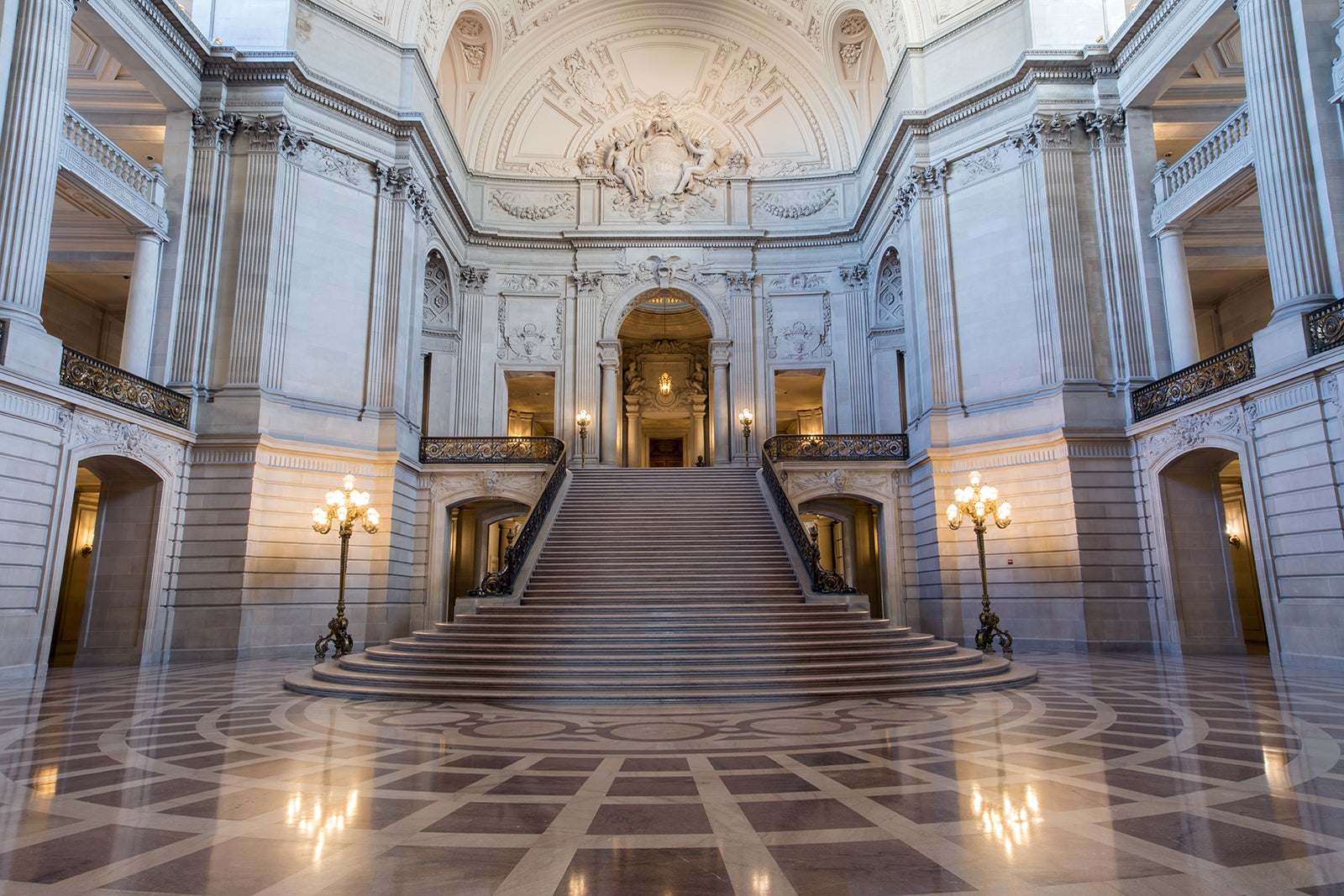
No event shaped San Francisco’s architecture more than the 1906 earthquake and subsequent fire, which destroyed approximately 80% of the city. The rebuilding effort embraced the City Beautiful movement, which emphasized grand civic centers and neoclassical aesthetics. This is most evident in the San Francisco Civic Center, a National Historic Landmark district that includes City Hall, the War Memorial Opera House, and the Veterans Building. These structures utilize a monumental Beaux-Arts style, characterized by symmetry, arched windows, and classical details that were intended to project stability and cultural sophistication during the recovery era.
From Victorian Splendor to Mid-Century Modernism
The city is perhaps most famous for its Victorian and Edwardian residential architecture. Between 1850 and 1915, thousands of these homes were built in styles such as Italianate, Stick, and Queen Anne. These homes were often constructed from redwood, which was abundant in the region and relatively resistant to fire and rot.
As the 20th century progressed, the city’s architecture shifted toward Modernism. The post-World War II era saw the rise of the Financial District’s high-rises. The Transamerica Pyramid, designed by William Pereira and completed in 1972, initially faced criticism for its unconventional shape but eventually became the city’s most recognizable landmark. Its futuristic, tapered design was a response to strict shadow laws, allowing more light to reach the street level compared to traditional rectangular towers.
Essential Architectural Styles Found in San Francisco
To appreciate a tour of San Francisco, one must be able to distinguish between the various styles that dominate different districts. Each style represents a specific economic era and social philosophy.
Victorian and Edwardian (1860s–1910s)
- Italianate: Notable for tall, narrow windows, decorative cornices, and "false fronts" that made buildings look taller.
- Queen Anne: The most ornate style, featuring wrap-around porches, turrets, and varied wall textures (shingles and horizontal siding). The "Painted Ladies" of Alamo Square are classic examples.
- Stick-style: Focused on showing the "bones" of the building through vertical and horizontal wood strips that mimic the interior framework.
Beaux-Arts and Neoclassical (Early 20th Century)
This style is defined by massive scale, heavy masonry, and an abundance of sculptures and columns. San Francisco City Hall, with its massive dome that is taller than the United States Capitol, is the pinnacle of this movement. The use of granite and marble reflects the desire for permanence after the devastation of 1906.
Brutalism and International Style (1950s–1970s)
The Embarcadero Center and the Glen Park BART Station represent the city's foray into Brutalism, characterized by raw concrete (béton brut) and geometric forms. While sometimes polarizing, these structures are significant for their structural honesty and functionalist approach.
Contemporary and High-Tech (2000s–2026)
Modern San Francisco is defined by "high-tech" architecture that prioritizes transparency and environmental sustainability. The Salesforce Tower (designed by Pelli Clarke Pelli) and the 181 Fremont tower utilize advanced glass curtain walls and state-of-the-art seismic damping systems. The San Francisco Museum of Modern Art (SFMOMA) expansion by Snøhetta features a rippling white facade inspired by the fog and waters of the San Francisco Bay, showcasing how contemporary design can reflect local natural phenomena.
Top Professional Architectural Tours
While self-guided walks are popular, professional tours provide access to interior spaces and technical insights that are otherwise unavailable. As of 2026, several organizations dominate the architectural touring landscape in San Francisco.
1. AIA San Francisco (American Institute of Architects)
The AIA San Francisco offers tours led by practicing architects. These are highly technical and focus on urban design, sustainability, and the challenges of building on the city's steep hills and seismic zones. Their "Architecture and the City" festival, typically held in September, includes behind-the-scenes access to private residences and high-performance commercial buildings.
2. San Francisco City Guides
This non-profit organization, sponsored by the San Francisco Public Library, offers a wide array of neighborhood-specific walks. These tours are donation-based and are excellent for understanding the social history that influenced the architecture. Popular routes include the "Gold Rush City" tour and the "Victorian San Francisco" walk through Pacific Heights.
3. San Francisco Heritage
Focusing on preservation, San Francisco Heritage operates out of the Haas-Lilienthal House—the only Victorian house museum in the city with its original furniture. Their tours emphasize the importance of maintaining the historical fabric of the city and the technical processes involved in restoring 19th-century woodwork and masonry.
4. Private Niche Tours (e.g., Rick Evans Architecture)
For a more curated experience, private guides often focus on "hidden" gems, such as the Art Deco interiors of the Financial District or the secret rooftop gardens (POPOS—Privately Owned Public Open Spaces) that are required by city planning codes.
Comparing Architectural Tour Options in San Francisco
| Tour Provider | Primary Focus | Best For | Typical Duration |
|---|---|---|---|
| AIA San Francisco | Modern Design & Urbanism | Professionals & Students | 2–3 Hours |
| SF City Guides | Historical Context & Neighborhoods | General Tourists | 1.5–2 Hours |
| SF Heritage | Victorian Preservation | History Enthusiasts | 1 Hour (House Tour) |
| Rick Evans Tours | Art Deco & Hidden Spaces | Detail-Oriented Travelers | 2.5 Hours |
| San Francisco Museum of Modern Art | Contemporary Art & Architecture | Art & Design Lovers | 1 Hour |
Neighborhood-Specific Itineraries
If you prefer to explore at your own pace, focusing on specific districts allows you to see the concentration of styles more clearly.
The Financial District and Embarcadero
This area is a masterclass in the evolution of the American skyscraper. Start at the Ferry Building, a triumph of restoration that serves as a beacon of the city's waterfront. From there, walk to the Sentinel Building (now the Columbus Tower), a Flatiron-style building with a distinctive green copper facade. Proceed to the Salesforce Transit Center, which features a 5.4-acre rooftop park. This project is a prime example of "biophilic design," integrating nature into the urban core to improve air quality and resident well-being.
Pacific Heights and Presidio Heights
For those interested in residential grandeur, these neighborhoods offer the highest concentration of high-end architectural styles. The Haas-Lilienthal House provides the best interior look at Victorian life. Nearby, the "Billionaire's Row" on Broadway displays a mix of Italian Renaissance Revival and Modernist mansions, many with sweeping views of the Golden Gate Bridge.
The Mission District
The Mission offers a different perspective, focusing on Spanish Colonial Revival architecture and the city's vibrant mural culture. The Mission Dolores, founded in 1776, is the oldest building in San Francisco. Its thick adobe walls and redwood roof timbers have survived multiple major earthquakes, standing as a testament to early colonial engineering.
Technical Considerations for the 2026 Traveler
When planning an architectural tour in 2026, several modern factors should be considered:
- Seismic Retrofitting: Many historic buildings have undergone visible seismic upgrades. Look for steel "X-bracing" in windows or base isolation systems (like those under City Hall), which allow the building to move independently of the ground during a quake.
- Sustainability Standards: San Francisco has some of the strictest green building codes in the world. Many new towers are LEED Platinum certified, utilizing rainwater harvesting and natural ventilation.
- Accessibility: Most guided walking tours are designed to be accessible, but the city's famous hills can be challenging. It is recommended to check the elevation gain of a tour route if mobility is a concern.
- POPOS Access: Many of the best views of the city's architecture are from "Privately Owned Public Open Spaces." These are plazas or terraces within private buildings that the public has a legal right to access during business hours.
For more information on preservation efforts, visit San Francisco Heritage, which provides extensive resources on the city's landmarking process. For current development projects, the San Francisco Planning Department offers maps and data on the newest additions to the skyline.
Frequently Asked Questions
What is the best time of day for an architectural walking tour?
Morning is generally the best time for architectural photography and walking. The light is softer, highlighting the textures of Victorian wood carvings and the glass of modern towers. Additionally, San Francisco's famous fog often clears by mid-morning, providing better views of the upper floors of skyscrapers.
Are there any interior architectural tours available?
Yes, but they are more limited than exterior tours. The Haas-Lilienthal House offers regular interior tours. City Hall is open to the public during business hours, allowing visitors to see its grand rotunda. For modern buildings, the AIA San Francisco often facilitates interior access during specific events or via specialized private tours.
How has the 2026 city plan affected architecture?
By 2026, the city has placed a heavy emphasis on "adaptive reuse"—converting older office buildings into residential units to address housing needs. This has led to innovative interior renovations that preserve historic facades while completely modernizing the structural cores and living spaces.
Can I see the "Painted Ladies" for free?
Yes, the "Painted Ladies" are private residences located across from Alamo Square Park. You can view them from the park at any time. However, remember that these are private homes; please remain on the sidewalk and respect the residents' privacy while taking photos.
What is the most significant modern building in San Francisco?
While the Salesforce Tower is the tallest, many architects consider the Federal Building (designed by Thom Mayne) to be the most significant modern structure. It was designed to be "breathable," with a skin that adjusts to the weather, and it famously lacks air conditioning in most of the office space to reduce its carbon footprint.
Final Recommendation for Visitors
To truly appreciate San Francisco's architecture, combine a structured professional tour with independent exploration. Start with a San Francisco City Guides walk to establish a historical foundation, then visit the Salesforce Transit Center to see the future of urban integration. Always look up; the most intricate details—from Art Deco gargoyles to Victorian "gingerbread" trim—are often found above the first floor. Wear comfortable shoes, carry a light jacket for the shifting microclimates, and keep a digital map of the city's POPOS to find the best hidden vantage points.