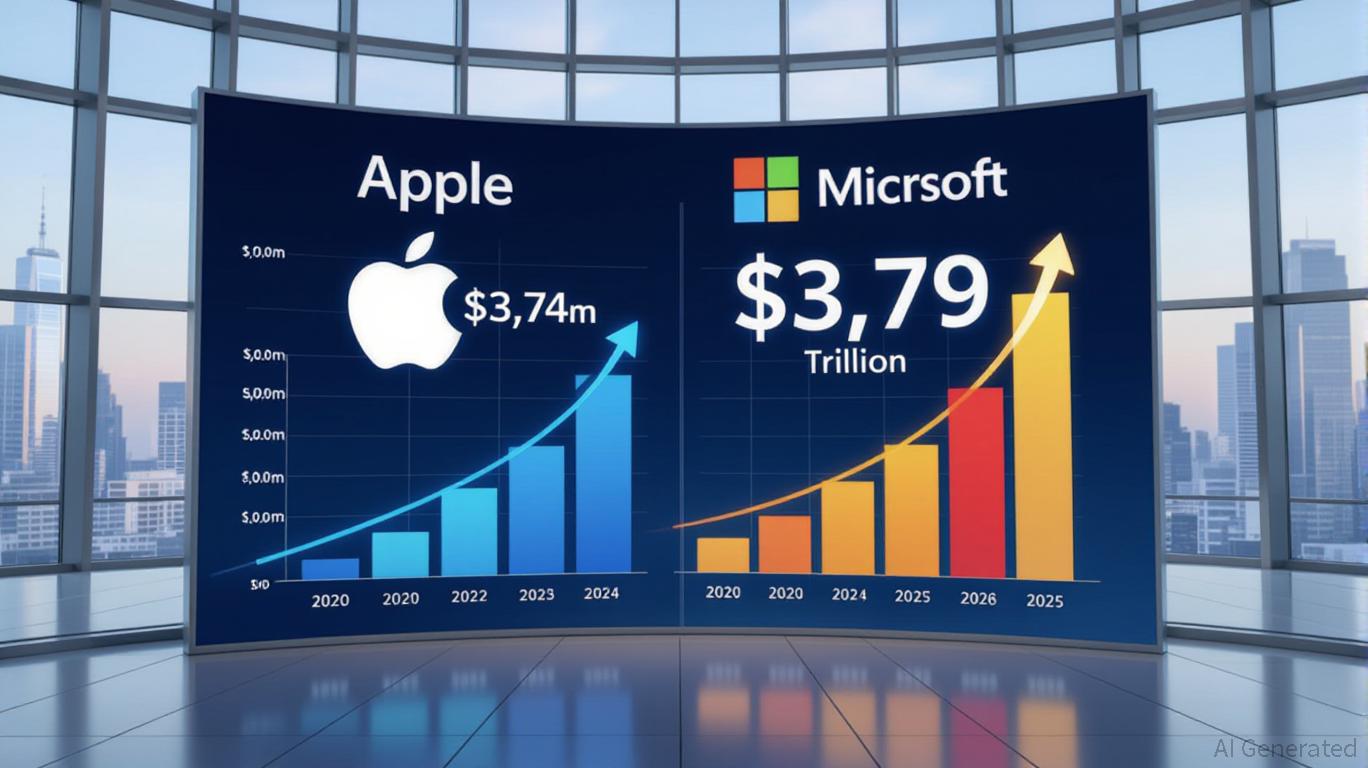
Apple Inc. and Microsoft Corporation shape global technology markets by driving the core architectures of consumer computing, enterprise software, cloud infrastructure, and artificial intelligence. Apple leverages vertical hardware and software integration to maximize consumer ecosystem value, while Microsoft operates a horizontal enterprise distribution model powered by cloud infrastructure and productivity software. Together, their capital deployment, developer frameworks, and strategic pivots define global technology valuation standards and operational workflows.
Dual Pillars of the Digital Economy: Core Business Models
The global technology sector rests largely on the infrastructure and consumer touchpoints established by Apple and Microsoft. While both companies routinely command multi-trillion-dollar market valuations, their revenue engines, operational philosophy, and market penetration strategies diverge fundamentally.
- Global Technology Market Infrastructure
- APPLE INCORPORATED
- Consumer Hardware Ecosystem
- Vertical Chip Integration (M/A)
- On-Device & Private Cloud AI
- Monetized Services & App Store
- MICROSOFT CORPORATION
- Enterprise Cloud (Azure)
- Software SaaS (Microsoft 365)
- Frontier AI Integration
- Developer Tools (GitHub, VS)
- APPLE INCORPORATED
Apple: Vertical Integration and Consumer Platform Lock-In
Apple’s strategy centers on vertical integration—controlling the design, silicon architecture, operating system layer, application ecosystem, and retail experience. By manufacturing custom Apple Silicon (such as the A-series for iPhone and M-series for Mac computers), Apple bypasses third-party semiconductor dependency. This hardware-software optimization grants high profit margins per unit and establishes superior power-to-performance efficiency ratios.
Apple's monetization engine relies on two interconnected drivers:
- High-Margin Hardware Sales: Devices serve as the primary entry point into the ecosystem.
- High-Margin Digital Services: Subscriptions including iCloud, Apple Music, Apple Pay, and App Store commission tariffs monetize the active install base over time.
This closed-loop system creates structural platform switching costs. Hardware features (such as AirDrop, Continuity, and iMessage) are tightly linked to proprietary software APIs, making ecosystem exit costly for consumers.
Microsoft: Horizontal Infrastructure and Enterprise Distribution
Microsoft’s business model emphasizes horizontal platform ubiquity and B2B enterprise entrenchment. Rather than relying on proprietary hardware revenue, Microsoft provides foundational operating systems, cloud compute capability, and productivity suites across heterogeneous hardware environments.
Microsoft’s growth strategy rests on three structural pillars:
- Intelligent Cloud (Azure): Providing hyper-scale computing infrastructure, data warehousing, and hosting backend systems for global enterprises and governments.
- Productivity and Business Processes: Commercial SaaS deployments including Microsoft 365, Teams, Dynamics 365, and LinkedIn.
- More Personal Computing: Windows OS licensing, Xbox gaming hardware and subscription services (Game Pass), and Surface hardware devices.
By embedding its authentication, compliance, and enterprise software contracts into global corporate operations, Microsoft creates long-term recurring revenue streams protected by high enterprise deployment migration costs.
The Battle for AI Supremacy and Compute Infrastructure
The expansion of generative artificial intelligence represents the primary catalyst re-architecting technology hardware, cloud capacity, and end-user software interaction models. Apple and Microsoft have taken opposing architectural approaches to AI deployment based on their legacy infrastructure strengths.
Microsoft’s Frontier AI and Cloud Compute Scale
Microsoft secured an early operational lead in enterprise generative AI through its multi-billion-dollar partnership with OpenAI. By integrating large language models (LLMs) directly into Azure infrastructure and embedding Copilot capabilities into the Microsoft 365 productivity suite, Microsoft transformed AI from a speculative research initiative into a monetizable software layer.
Microsoft's artificial intelligence framework relies on three main technical components:
- Azure OpenAI Service: Enterprise access to GPT-class foundational models backed by enterprise security, role-based access control (RBAC), and data privacy guarantees.
- Copilot Stack: Natural-language interfaces embedded inside Word, Excel, PowerPoint, Outlook, and GitHub that automate workflow scripts, software code generation, and complex document synthesis.
- Custom Data Center Infrastructure: Massive capital spending directed toward GPU-dense data centers, liquid cooling systems, and specialized AI accelerators (including custom Maia silicon) to support enterprise inference and training workloads.
Apple’s Privacy-First, On-Device Silicon AI
Apple approached generative AI by prioritizing user privacy, low latency, and energy-efficient on-device execution. Rather than routing all user prompts to hyper-scale cloud servers, Apple built its system architecture around Apple Intelligence, distributing processing across local device chips and secure external compute.
Apple’s AI processing hierarchy uses a three-tier model:
- On-Device Models: Small, highly optimized language and image models run directly on the Neural Engine built into modern Apple Silicon, processing sensitive contextual user data without transmitting information over a network.
- Private Cloud Compute (PCC): When requests require complex parameters beyond on-device capacity, Apple routes data to custom server clusters powered by Apple Silicon. PCC uses cryptographic verification to prevent data persistence, logging, or third-party access.
- Third-Party Integration APIs: For broad world-knowledge queries, Apple provides optional, explicit user-permission gateways to external frontier models (such as OpenAI's ChatGPT), insulating core operating system data from external training pipelines.
Ecosystem Mechanics and Developer Platform Control
Both tech giants exercise immense market power by managing developer ecosystems that govern software distribution, computing standards, and digital commerce.
| APPLE | MICROSOFT |
|---|---|
| Primary Gateway: App Store | Primary Gateway: GitHub & Azure APIs |
| Control Model: Curated Walled Garden | Control Model: Open Enterprise Stack |
| Target Audience: End Consumer & Retail | Target Audience: Corporate & Developer |
| Key API Advantage: Metal, CoreML, iOS | Key API Advantage: Azure, .NET, Win32 |
App Store Governance vs. Enterprise API Integration
Apple controls access to more than one billion active iPhone users through the iOS App Store. Developers targeting high-income consumer demographics must adhere to strict App Review Guidelines, native API restrictions, and digital purchase commission models (typically 15% to 30%). This absolute administrative control allows Apple to standardize app quality, maintain high device security standards, and capture a direct percentage of mobile software commerce.
Microsoft controls the developer pipeline at the infrastructure level. By owning GitHub (the world's largest source code repository), Visual Studio Code (the dominant integrated development environment), and the .NET framework, Microsoft embeds its software ecosystem directly into developer workflows. Rather than charging high commission fees on consumer app downloads, Microsoft monetizes the software supply chain by converting developers and enterprise software engineering teams into paid Azure cloud compute customers.
Comparative Platform Matrix
The structural differences between Apple and Microsoft highlight how both tech companies shape global technology markets across hardware, cloud, developer control, and business metrics.
| Strategic Dimension | Apple Inc. | Microsoft Corporation |
|---|---|---|
| Primary Core Engine | Consumer Hardware & Ecosystem Services | Enterprise Cloud Infrastructure & Business SaaS |
| Dominant Platforms | iOS, iPadOS, macOS, watchOS, visionOS | Windows, Microsoft Azure, Microsoft 365, GitHub |
| Hardware Strategy | Fully proprietary, vertically integrated consumer silicon | Developer reference designs, Surface line, partner OEM ecosystems |
| AI Deployment Model | On-device Neural Engine execution combined with Private Cloud Compute | Cloud-first hyper-scale inference via Azure and Copilot integration |
| Monetization Method | Hardware sales margins, App Store commissions, digital subscriptions | Per-seat SaaS licensing, enterprise cloud consumption fees, developer tools |
| Primary Customer Base | Retail consumers, creative professionals, personal device users | Fortune 500 enterprises, SMBs, software developers, public sector |
| Regulatory Exposure | Mobile app distribution monopolies, mandatory sideloading, web engine rules | Big Tech M&A scrutiny, AI partnership competition probes, SaaS bundling |
Supply Chain Diversification and Capital Deployment
Apple and Microsoft deploy hundreds of billions of dollars annually in capital expenditures, research and development, and global supply chain logistics. Their capital allocation decisions set industry standards for semiconductor manufacturing, hardware assembly, data center expansion, and corporate sustainability.
- Global Capital Allocation
- APPLE CAPITAL DEPLOYMENT
- Advanced Chip Packaging (TSMC)
- Regional Assembly Diversification
- Specialized Consumer Hardware
- MICROSOFT CAPITAL DEPLOYMENT
- GPU Procurement & Datacenters
- Strategic M&A (Activision, AI)
- Renewable Energy & Power Grid
- APPLE CAPITAL DEPLOYMENT
Manufacturing Logistics and Regional Diversification
Apple manages one of the world's most complex physical supply chains. Historically centralized in mainland China, Apple has systematically shifted manufacturing logistics across a broader footprint, expanding assembly facilities in India (primarily for flagship iPhone models) and Vietnam (for AirPods, iPad, and Apple Watch production). Apple's reliance on custom silicon makes it the largest customer of Taiwan Semiconductor Manufacturing Company (TSMC), driving global advance-node manufacturing investments at 3-nanometer and smaller chip nodes.
Microsoft’s supply chain is heavily weighted toward digital infrastructure rather than physical consumer product assembly. Microsoft directs capital toward physical data center construction, undersea high-speed fiber cables, power grid interconnection agreements, and specialized server hardware. As enterprise demand for generative AI training and inference grows, Microsoft has emerged as one of the largest buyers of high-performance GPU hardware from providers like NVIDIA, while simultaneously co-developing custom internal ASICs.
Mergers, Acquisitions, and R&D Focus
The companies take fundamentally different approaches to inorganic growth and corporate acquisitions:
- Apple’s Internal R&D Strategy: Apple rarely acquires large public companies. Instead, it buys early-stage technology startups, acquiring specific intellectual property, specialized engineering teams, or emerging software components. It then integrates those assets into proprietary hardware platforms over multi-year product development cycles (such as its acquisition of AuthenTec for Touch ID or PrimeSense for Face ID).
- Microsoft’s Strategic M&A Strategy: Microsoft executes massive acquisitions to capture dominant positions in high-growth digital sectors. Major structural transactions include the acquisitions of LinkedIn (professional social networking), GitHub (developer supply chain), Nuance Communications (healthcare AI speech recognition), and Activision Blizzard (gaming content and distribution infrastructure).
Regulatory Scrutiny and Market Interventions
Because Apple and Microsoft operate platform monopolies or duopolies within their respective operating environments, both face sustained legal and antitrust pressure from regulatory bodies in the United States, the European Union, and Asian markets.
- Global Regulatory Antitrust Framework
- APPLE ANTITRUST CHALLENGES
- EU Digital Markets Act (DMA)
- US DOJ Smartphone Monopoly Suit
- Alternative App Store Mandates
- MICROSOFT ANTITRUST CHALLENGES
- AI Partnership Competition Reviews
- Enterprise Software Bundling
- Cloud Competitor Pricing Probes
- APPLE ANTITRUST CHALLENGES
The European Union Digital Markets Act (DMA)
The European Union’s enforcement of the Digital Markets Act (DMA) officially designated both Apple and Microsoft as market "gatekeepers," fundamentally altering their business operations across European member states:
- Impact on Apple: The DMA forced Apple to re-architect iOS within the EU, mandating support for third-party alternative app stores, alternative payment processors, default browser engine selection without WebKit requirements, and open NFC chip access for third-party digital wallets.
- Impact on Microsoft: Microsoft’s core business software escaped some of the harshest early DMA restrictions due to clear enterprise market segmentation. However, regulators forced Microsoft to unbundle Teams from its Microsoft 365 suites globally to address antitrust complaints from enterprise software competitors.
United States Antitrust Enforcement
In the United States, enforcement agencies have pursued distinct civil litigation paths against both tech platforms:
- US Department of Justice (DOJ) v. Apple: The DOJ, alongside multiple state attorneys general, filed major antitrust litigation alleging Apple illegal monopolized smartphone markets through contractual restrictions, degraded cross-platform messaging features, restricted third-party smartwatch interoperability, and limited digital wallet access.
- FTC & International Oversight on Microsoft AI Agreements: Federal agencies and international oversight groups, including the UK Competition and Markets Authority (CMA), continue to scrutinize Microsoft’s non-controlling multi-billion-dollar investments and compute-provisioning partnerships with frontier AI startups to evaluate whether these arrangements act as quasi-mergers designed to bypass traditional antitrust review.
Strategic Guidance for Enterprise IT, Developers, and Investors
Understanding how Apple and Microsoft shape global technology markets enables business leaders, software engineers, and institutional capital managers to mitigate vendor lock-in risks and position tech strategies effectively.
For Enterprise IT Leaders and CISOs
- Decouple Data Layers from SaaS Lock-In: Build corporate IT architectures using open, interoperable data formats. While Microsoft 365 and Azure offer robust identity management through Microsoft Entra ID, ensure enterprise data backups and cross-cloud redundancies exist outside a single vendor's tenant boundary.
- Implement Hybrid Mobility Governance: Plan device management architectures using agnostic Mobile Device Management (MDM) platforms. As Apple hardware expands inside enterprise corporate fleets, IT organizations must maintain zero-trust access controls that support both Windows endpoints and Apple macOS/iOS hardware transparently.
For Software Developers and Engineering Leaders
- Architect for Multi-Engine AI Deployments: Avoid tying core product logic exclusively to proprietary cloud APIs. Design software abstractions that allow application workflows to switch between cloud-hosted frontier models (such as Azure OpenAI) and local on-device small language models (via Apple’s CoreML or open-source frameworks) based on latency, privacy, and cost constraints.
- Diversify Monetization Channels: Mobile developers targeting consumer software must prepare for fragmented app distribution ecosystems as alternative market mandates spread beyond the EU. Maintain direct web billing capabilities alongside standard platform SDK integrations.
For Institutional Investors and Market Analysts
- Evaluate Hardware Margin Resiliency: Monitor Apple’s gross margin stability as consumer hardware upgrade cycles lengthen and regulatory adjustments impact high-margin App Store services revenue.
- Track Azure Capital Expenditure Efficiency: Measure Microsoft’s commercial cloud growth rates against its capital expenditure dedicated to data center construction and GPU procurement to ensure AI capacity spending converts directly into durable per-seat SaaS yield expansion.
Frequently Asked Questions
How do Apple and Microsoft differ in how they monetize artificial intelligence?
Microsoft monetizes AI primarily through enterprise B2B SaaS models—charging per-user monthly subscription add-ons for Copilot across Microsoft 365, while billing enterprise customers for consumption compute through Azure OpenAI APIs. Apple monetizes AI indirectly by using privacy-centric, on-device features (Apple Intelligence) to drive premium hardware upgrades across iPhone, iPad, and Mac product lines, protecting its core consumer hardware profit margins.
Which company poses a greater risk of platform vendor lock-in?
Both companies create high vendor lock-in through different mechanisms. Apple creates consumer lock-in by controlling hardware, operating systems, and proprietary messaging/cloud synchronization services. Microsoft creates enterprise software lock-in through deep organizational integration of Active Directory/Entra identity systems, enterprise licensing bundles, compliance tools, and long-term cloud infrastructure contracts.
How does the EU Digital Markets Act impact Apple’s business model?
The DMA forces Apple to break its historical structural monopoly on iOS software distribution in EU countries. Apple must allow alternative app marketplaces, enable non-WebKit browser engines, grant open access to hardware NFC chips for alternative mobile payment services, and permit third-party payment links inside apps, reducing its traditional 30% App Store commission model within European territories.
Why does Microsoft focus more on enterprise markets while Apple focuses on consumers?
This divergence stems from historical platform victories in the late 1980s and 1990s. Microsoft secured platform dominance by licensing the Windows operating system horizontally to third-party PC manufacturers, making it the global standard for business productivity. Apple preserved vertical hardware-software control, which struggled in enterprise offices but positioned the company perfectly for consumer hardware, mobile design, and personal computing devices starting with the iPod, iPhone, and iPad.
How do custom silicon chips factor into each company's long-term competitive moat?
Custom silicon gives Apple complete control over performance efficiency, battery longevity, thermal management, and dedicated Neural Engine capabilities on its consumer devices without relying on third-party processor roadmaps. Microsoft uses custom silicon (such as Azure Maia AI chips and Cobalt CPUs) inside data centers to lower cloud infrastructure operating costs, decrease reliance on external chipmakers, and optimize hardware specifically for hyper-scale enterprise AI workloads.
Executive Takeaway
Apple and Microsoft remain the foundational architects of the modern technology economy. Apple commands consumer access through premium, vertically integrated hardware ecosystems, setting standards for user experience, mobile silicon performance, and on-device data security. Microsoft anchors global enterprise infrastructure, driving corporate workflows, developer productivity software, and scalable artificial intelligence capabilities through hyper-scale cloud deployment. Enterprise leaders, developers, and investors must navigate the distinct competitive moats of each platform, building operational frameworks that leverage their respective infrastructure strengths while insulating their organizations against sole-source vendor dependency.