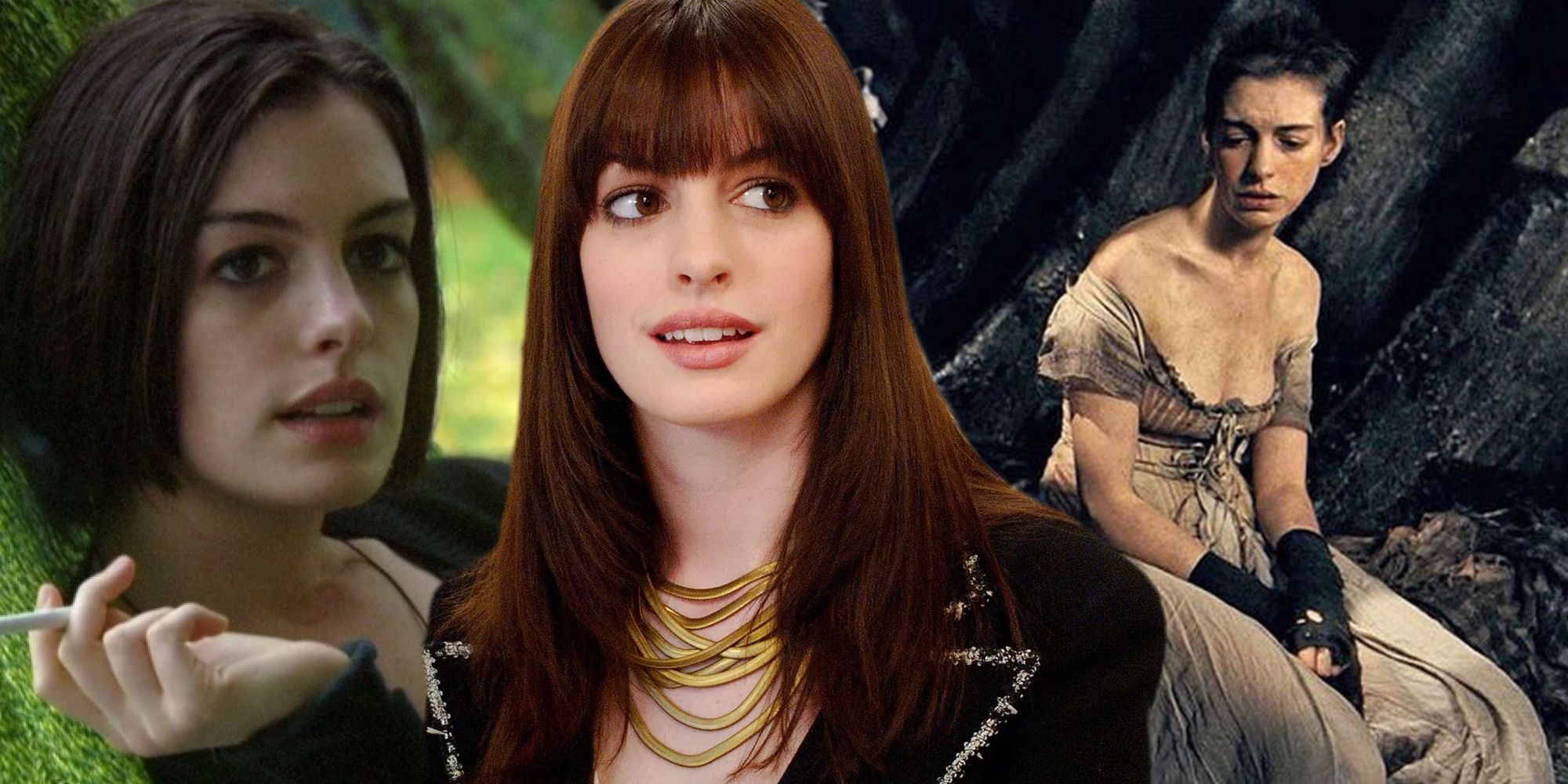
Anne Hathaway’s music journey in film spans over two decades, evolving from juvenile pop-rock showcases in fantasy comedies to world-class, dramatic musical performances. Trained as a coloratura soprano, Hathaway uniquely combines formal theatrical technique with visceral, emotionally raw acting, culminating in an Academy Award for her groundbreaking live-recorded performance in Les Misérables.
The Foundations of a Dual-Threat Performer
Long before cinema audiences heard Anne Hathaway sing on screen, she was an intensively trained vocalist. Raised in New Jersey, Hathaway developed her voice under classical theater standards, performing with the All-Eastern U.S. High School Honors Chorus and competing in the Paper Mill Playhouse Rising Star Awards. Her early ambitions leaned heavily toward musical theater, shaped by an innate soprano range that allowed her to effortlessly clear legit theater repertoire.
This formal foundation distinguishes Hathaway from screen actors who approach singing as a secondary promotional requirement. Her vocal instrument possesses natural projection, precise pitch center, and agility across registers. Yet, rather than pursuing a conventional Broadway trajectory or a standalone pop recording contract, Hathaway chose to integrate vocal performance directly into her cinematic roles. This approach allowed her to use singing not merely as spectacle, but as a primary vehicle for character development.
The Fairy-Tale Era: Jukebox Numbers and Regal Duets
Hathaway’s early 2000s screen presence established her as a defining face of contemporary family cinema, a niche that capitalized directly on her vocal ability. During this era, studios embraced the commercial power of teen-oriented soundtracks, positioning Hathaway’s musical numbers at the intersection of pop accessibility and theatrical storytelling.
Ella Enchanted (2004) and the Jukebox Dynamic
In Tommy O'Haver’s fractured fairy-tale Ella Enchanted, Hathaway’s singing served as an essential plot mechanic. Under the spell of obedience, her character, Ella of Frell, is forced to perform Freddie Mercury’s iconic anthem, "Somebody to Love," before an audience of giants.
From a technical standpoint, this performance required Hathaway to abandon pristine classical phrasing in favor of energetic, mid-tempo arena rock. Hathaway leaned into punchy glottal attacks, controlled chest-voice belting up to high belts, and comedic physical choreography. She also anchored the film’s finale with an upbeat rendition of Elton John and Kiki Dee’s "Don't Go Breaking My Heart" alongside co-star Hugh Dancy. These studio-recorded tracks proved that Hathaway possessed genuine radio-ready commercial appeal without losing her comedic timing.
The Princess Diaries 2 and Singing with Julie Andrews
Released the same year, The Princess Diaries 2: Royal Engagement presented a historic musical milestone. Director Garry Marshall orchestrated "Your Crowning Glory," an original lullaby-turned-duet written by Larry Grossman and Lorraine Feather. The sequence marked the first time musical icon Julie Andrews sang on film following her 1997 vocal cord surgery.
Singing opposite Andrews demanded supreme vocal sensitivity. Rather than attempting to overpower the scene, Hathaway adapted her timbre to support Andrews’ limited four-note range. Hathaway’s lines offered a crisp, rounded, crystalline counterpoint that celebrated Andrews’ presence while establishing Mia Thermopolis’s transition into dignified adulthood. The performance demonstrated Hathaway’s intuitive collaborative musicianship—she prioritized balance, tone blending, and narrative warmth over vocal acrobatics.
Animated Musicals and Vocal Rhythm
Voice acting in animated features provided Hathaway with a platform to experiment with rhythmic phrasing, international musical styles, and vocal characterization unconstrained by live-action physical acting.
Hoodwinked! (2005)
In the independent computer-animated hit Hoodwinked!, Hathaway voiced Red Puckett. The film featured an eccentric, genre-hopping soundtrack overseen by Todd Edwards. Hathaway performed "Great Big World," an energetic pop-rock song that established Red’s yearning for life beyond the forest. The piece demanded swift vocal runs and contemporary pop brightness, proving her adaptability across non-traditional animated formats where vocal tracks are captured long before animation is finalized.
The Rio Franchise: Brazilian Polyphony and Syncopation
Hathaway expanded her sonic palette significantly in Blue Sky Studios’ Rio (2011) and Rio 2 (2014), where she voiced Jewel, an endangered Spix's macaw living in Rio de Janeiro. Working with executive music producer Sérgio Mendes and composer John Powell, Hathaway tackled complex Brazilian musical structures, including bossa nova, samba, and tropicalia rhythms.
- "Real in Rio" (2011): Opening the film with an intricate choral celebration, Hathaway navigated syncopated tempos alongside veteran Brazilian percussionists and vocalists. The track was nominated for the Academy Award for Best Original Song.
- "Hot Wings (I Wanna Party)" (2011): Hathaway blended fast-cadence melodic delivery alongside will.i.am and Jamie Foxx, shifting cleanly between dance-pop hooks and animated character work.
- "What Is Love" and "Don't Go Away" (2014): In the sequel, Hathaway delivered tender, acoustic-driven lullabies that highlighted her lower register and warm head voice, arranged against intricate acoustic arrangements curated by Carlinhos Brown.
The Rio films proved that Hathaway’s musicality extended far beyond Anglo-American pop and traditional show tunes, demonstrating an acute ear for complex, percussive timing.
The Paradigm Shift: Les Misérables and Live Vocal Realism
While her early career showcased polished studio recordings, the 2012 screen adaptation of Alain Boublil and Claude-Michel Schönberg’s Les Misérables fundamentally redefined Hathaway’s cinematic singing legacy. Cast as the tragic Fantine, Hathaway underwent an intense physical and emotional transformation, but her vocal approach represented the production's true technical feat.
Studio Dubbing (Standard) ---> Recorded in advance ---> Lip-synced on camera ---> Emotion fits playback Live Audio Capture (2012) ---> Pianist in earpiece ---> Performed in real time ---> Playback fits emotion
The Technical Challenge of Direct Audio Recording
Director Tom Hooper broke with Hollywood convention by refusing to have his cast lip-sync to pre-recorded studio masters. Instead, every vocal take was recorded live on set. Hathaway performed wearing a discreet earpiece that transmitted a live piano accompaniment played by a musician stationed off-camera. The musician followed Hathaway's tempo rather than forcing her into a rigid, predetermined metronome click track.
This choice placed immense technical strain on the performer. Live recording captured every biological reality:
- Irregular breathing patterns caused by physical kneeling and weeping.
- Saliva intake and vocal fold constriction resulting from genuine emotional distress.
- Ambient environmental acoustics and physical fatigue across multiple takes.
Deconstructing "I Dreamed a Dream"
Hathaway’s performance of "I Dreamed a Dream" departed drastically from the triumphant, belt-heavy concert renditions popularized by theater legends like Patti LuPone and Elaine Paige. Hooper captured the song in a single, unyielding close-up shot, forcing Hathaway to construct an intimate interior monologue rather than an external theatrical proclamation.
Musically, Hathaway dismantled the song's conventional phrasing. She initiated the opening verses in a raspy, threadbare whisper, allowing her vocal tone to break on key transitions. Instead of maintaining an even, supported vibrato, she utilized straight tone to communicate devastating psychological collapse. When reaching the climax—"He tore my hope apart / As hope was dawn turning"—she pushed her mixed voice into an abrasive, mournful sob without fully breaking pitch.
The performance demonstrated that musical perfection in cinema is not defined by pitch-corrected purity, but by dramatic authenticity. Her raw rendering earned universal critical acclaim, sweeping the major industry awards and securing Hathaway the Academy Award for Best Supporting Actress.
Indie Realism and Contemporary Pop Deconstruction
Following the dramatic heights of Les Misérables, Hathaway sought film projects that integrated music as a thematic centerpiece rather than a traditional narrative break.
Song One (2014): Brooklyn Indie Folk
In Kate Barker-Froyland’s quiet drama Song One, Hathaway took on the dual role of lead actress and producer. Playing Franny Ellis, an anthropologist who returns home after her musician brother falls into a coma, Hathaway immersed herself in the contemporary Brooklyn indie-music community.
The film’s score and original songs were written by indie-folk duo Jenny Lewis and Johnathan Rice. Hathaway performed several acoustic pieces, including the fragile track "In Pursuit of Happiness." Unlike the theatrical power of her previous roles, Song One demanded extreme vocal minimalism:
- Microphone Technique: Singing close to sensitive condenser microphones, capturing quiet breath sounds and vocal-fry textures.
- Instrumentation: Backed only by fingerpicked acoustic guitars and soft upright bass, requiring precise pitch placement without dynamic compression.
- Acting Restraint: Portraying a non-musician finding solace through simple melodies, deliberately avoiding any showy vocal displays.
The Idea of You (2024): The Pop-Industry Lens
In the 2024 romantic comedy The Idea of You, which Hathaway starred in and produced, music operated as the foundational backdrop. While Hathaway played Solène, an art gallerist whose life is disrupted by a relationship with the lead singer of the fictional boyband August Moon (played by Nicholas Galitzine), her deep real-world understanding of the music industry guided the film's creative choices. As producer, she ensured the soundtrack—penned by elite pop songwriters like Savan Kotecha—accurately mirrored the polished production dynamics of modern arena-pop culture.
Mother Mary: Approaching Full-Scale Pop Stardom
Continuing her exploration of musical cinema, Hathaway committed to David Lowery’s feature Mother Mary, produced by A24. Portraying an iconic contemporary pop musician, the role required Hathaway to return to high-concept, fully realized original pop music. Collaborating with contemporary music heavyweights Jack Antonoff and Charli XCX, the production placed Hathaway at the center of modern synth-pop and stadium-scale production, demanding an entirely new vocal aesthetic rooted in polished electro-pop delivery, aggressive hooks, and commanding physical showmanship.
Critical Comparison: Anne Hathaway’s Musical Performances in Film
The following table compares Hathaway's primary cinematic vocal performances across key parameters, documenting the evolution of her vocal style, technical setup, and dramatic function.
| Film | Year | Role | Primary Song(s) | Vocal Style & Genre | Recording Method | Narrative / Cinematic Function |
|---|---|---|---|---|---|---|
| Ella Enchanted | 2004 | Ella of Frell | "Somebody to Love", "Don't Go Breaking My Heart" | Jukebox Pop/Rock; bright belt with glottal attacks | Pre-recorded studio master with lip-syncing | Plot-driven comedic release under a magical obedience curse. |
| The Princess Diaries 2 | 2004 | Mia Thermopolis | "Your Crowning Glory" | Theatrical Lullaby; clear, supported head voice and soprano mix | Pre-recorded studio master with lip-syncing | Royal coming-of-age; intergenerational duet with Julie Andrews. |
| Hoodwinked! | 2005 | Red Puckett | "Great Big World" | Upbeat Animated Pop; fast-tempo, forward-placed belt | Studio session voice tracking | Character introduction outlining a desire for adventure. |
| Rio | 2011 | Jewel | "Real in Rio", "Hot Wings (I Wanna Party)" | Bossa Nova, Samba, Hip-Hop-influenced Dance Pop | Studio session voice tracking | Cultural world-building and establishing romantic tension. |
| Les Misérables | 2012 | Fantine | "I Dreamed a Dream" | Tragic Dramatic Realism; raw, sobbing mixed voice and straight tone | 100% Live audio capture on set via hidden earpiece | Climactic psychological breakdown depicting complete loss of dignity. |
| Rio 2 | 2014 | Jewel | "What Is Love", "Don't Go Away" | Acoustic Lullaby, Tropicalia | Studio session voice tracking | Maternal comfort and community bonding in the Amazon. |
| Song One | 2014 | Franny Ellis | "In Pursuit of Happiness" | Indie Folk; breathy, intimate close-mic delivery | Hybrid (Live-on-set and low-fi studio capture) | Introspective grief processing and emotional connection to family. |
Vocal Technique Analysis: How Hathaway Adapts Her Instrument
Hathaway’s endurance as a singing actor stems from rigorous technical mechanics that prevent vocal fatigue while accommodating diametrically opposed genres.
1. Breath Management and Support
A classically trained coloratura foundation gives Hathaway superior breath control (appoggio). In upbeat pop numbers like "Somebody to Love," she engages consistent subglottic pressure to sustain bright, ringing belts without vocal strain. Conversely, during her dramatic performance in Les Misérables, she intentionally disrupts this support mechanism to allow genuine gasps, vocal catches, and air leaks into the tone, creating the sound of physical starvation and despair without damaging her vocal folds.
2. Resonance and Pharyngeal Shaping
Hathaway shifts her resonance spaces depending on the narrative context:
- Forward (Pharyngeal/Nasal) Placement: Used in Ella Enchanted and Hoodwinked! to produce a youthful, bright tone that cuts through dense pop-rock instrumental arrangements.
- Warm, Dome-Shaped Pharyngeal Space: Employed in The Princess Diaries 2 and Rio 2, lifting the soft palate to produce a rounded, classical head-voice color appropriate for traditional melodies and lullabies.
- Direct, Unfiltered Chest-Mix: Utilized in Les Misérables, dropping the theatrical vibrato in favor of spoken-singing (parlando) that privileges raw textual delivery over aesthetic balance.
3. Emotional De-escalation of Technique
Perhaps Hathaway’s greatest asset is her willingness to abandon vocal perfection for dramatic impact. Many classically trained vocalists struggle to sing poorly or vulnerably on camera, instinctively correcting pitch flaws or awkward consonants. Hathaway treats the voice as an extension of physical acting: if a character is broken, weeping, or exhausted, she allows the singing voice to reflect that physical state, subverting classical rules to serve the emotional reality of the scene.
Practical Takeaways for Actors and Vocal Performers
Hathaway’s cinematic trajectory provides concrete lessons for vocalists and actors seeking to navigate screen musicals:
- Prioritize Diction and Text over Tone: On camera, close-up lenses magnify artificial vocal posturing. Shape vowels cleanly and let the emotional weight of the consonant guide the narrative rather than forcing a rounded operatic vowel on a film set.
- Master the Technicalities of On-Set Audio: Live recording on camera demands exceptional pitch memory. Practicing with an off-pitch ear prompter or piano reference track without an ambient rhythm section is essential for screen realism.
- Tailor Resonance to the Medium: Wide-shot theatrical performance requires vocal projection into an auditorium; film requires intimate mic placement where quiet timbral shifts, whispered glides, and natural breath patterns communicate far more power than broad theatrical belts.
Frequently Asked Questions
Did Anne Hathaway really sing in Les Misérables?
Yes. Anne Hathaway performed all her songs completely live on the set of Les Misérables. Instead of lip-syncing to pre-recorded studio tracks, she wore a concealed earpiece through which a pianist played live off-camera, allowing her to alter her tempo, pause, and express authentic sobbing without falling out of sync with an orchestral track.
Is Anne Hathaway a trained singer?
Yes. Hathaway is a classically trained soprano with substantial formal musical theater training. In her youth, she performed with the All-Eastern U.S. High School Honors Chorus and trained at the Paper Mill Playhouse in New Jersey, developing a strong vocal range before pursuing professional on-screen acting.
Did Anne Hathaway win an Oscar for singing?
Hathaway won the Academy Award for Best Supporting Actress in 2013 for her performance as Fantine in Les Misérables. While the Oscar is an acting award, her live vocal performance of "I Dreamed a Dream," captured in a single dramatic close-up take, was widely cited as the defining achievement that secured her the award.
What was the first movie where Anne Hathaway sang?
Hathaway first sang prominently on film in 2004, starring in both Ella Enchanted (performing Queen’s "Somebody to Love" and Elton John’s "Don't Go Breaking My Heart") and The Princess Diaries 2: Royal Engagement (singing "Your Crowning Glory" alongside Julie Andrews).
Can Anne Hathaway sing opera?
While Hathaway has a natural soprano range and received classical training capable of navigating legit musical theater and light classical pieces, she is not a professional opera singer. She uses classical techniques, such as breath support and resonant placement, to enhance her contemporary and theatrical film performances.
Final Recommendation: Where to Explore Her Work Next
To fully appreciate Anne Hathaway's musical range, revisit her work in chronological contrast. Pair her early vocal work in Ella Enchanted (2004) directly with Les Misérables (2012) to observe how she transitioned from bright, highly polished studio pop-rock to unfiltered dramatic realism. For an appreciation of her nuanced, acoustic restraint, listen to the Song One soundtrack, which illustrates her command over delicate indie-folk vocal textures.