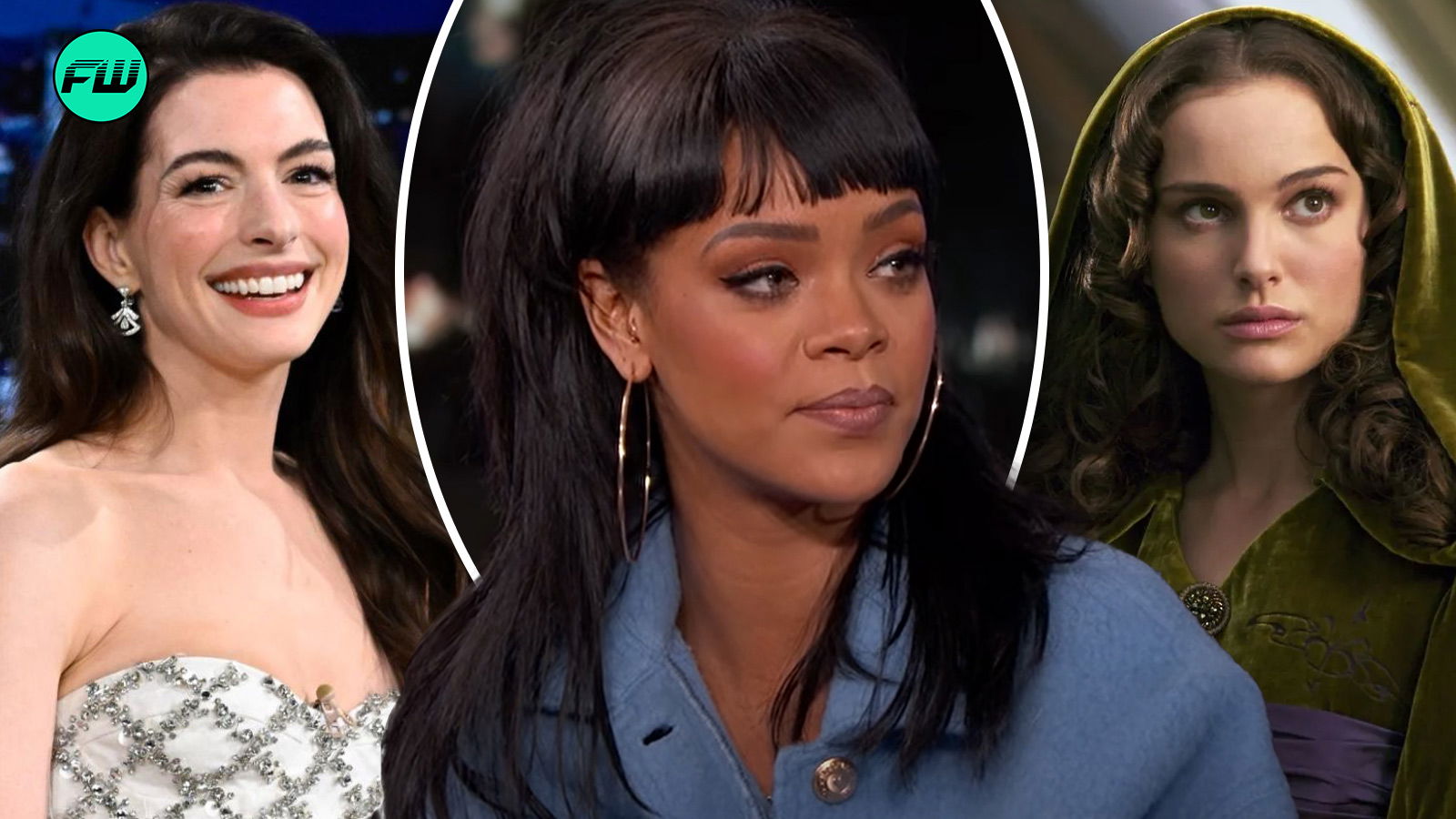
Anne Hathaway and Natalie Portman are two of the most influential actresses of their generation, sharing parallel career trajectories that include early stardom, Academy Award victories, and successful transitions into producing. While they have rarely shared the screen, their similar ages, intellectual reputations, and dominance in prestige cinema make them frequent subjects of comparison in film history.
The Parallel Origins: Child Stars and Breakout Roles
To understand the current standing of Anne Hathaway and Natalie Portman in 2026, one must look back at how their professional foundations were laid. Both actresses entered the industry at a young age, though their initial paths reflected different segments of the market.
Natalie Portman’s debut in Luc Besson’s Léon: The Professional (1994) remains one of the most significant child performances in cinematic history. At just twelve years old, Portman exhibited a gravitas that immediately categorized her as a "serious" actress. This reputation was further solidified through her roles in Heat (1995) and Beautiful Girls (1996), eventually leading to her casting as Padmé Amidala in the Star Wars prequel trilogy. Her early career was defined by a balance between massive commercial franchises and intellectually demanding independent films.
Anne Hathaway’s rise followed a more traditional "Disney" trajectory, but with a unique twist. Her breakout role in The Princess Diaries (2001) turned her into an overnight sensation. Unlike many of her peers who struggled to break free from the teen-idol mold, Hathaway utilized her theater background to pivot quickly. By the time she appeared in Brokeback Mountain (2005) and The Devil Wears Prada (2006), she had successfully bridged the gap between commercial family films and adult-oriented drama.
The early 2000s saw both actresses navigating the transition from "young starlet" to "leading lady." While Portman was finishing her psychology degree at Harvard University—a move that added to her public persona as a scholarly intellectual—Hathaway was honing her craft in diverse genres, from the action-comedy of Get Smart to the gritty realism of Rachel Getting Married (2008).
The Quest for the Academy Award: Two Career Peaks
The most significant overlap in the careers of Hathaway and Portman occurred in the early 2010s, when both reached the pinnacle of critical acclaim within two years of each other. Their Oscar wins were not just personal milestones but cultural moments that defined the cinematic landscape of that era.
In 2010, Natalie Portman starred in Darren Aronofsky’s Black Swan. The role of Nina Sayers required an immense physical and psychological transformation. Portman’s background in ballet, combined with her ability to portray a descent into madness, earned her the Academy Award for Best Actress. The performance was hailed as a "once-in-a-generation" turn, cementing her status as a powerhouse of method-adjacent acting.
Just two years later, Anne Hathaway delivered a similarly transformative performance as Fantine in Les Misérables (2012). Her rendition of "I Dreamed a Dream," captured in a grueling single take, became the definitive image of the film. Like Portman, Hathaway underwent significant physical changes for the role, including drastic weight loss and cutting her hair on camera. She won the Academy Award for Best Supporting Actress in 2013, completing her evolution from a Disney princess to a respected dramatic heavyweight.
Comparing Acting Styles and On-Screen Presence
While both actresses are often grouped together due to their similar age and stature, their acting methodologies offer a fascinating study in contrast.
Natalie Portman is often described as a "precise" actress. Her performances frequently feature a sense of controlled intensity and intellectual distance. She excels in roles where internal conflict is masked by a composed exterior, such as in Jackie (2016) or May December (2023). Portman’s choices often lean toward the avant-garde or the psychological, favoring directors who challenge the traditional narrative structure.
Anne Hathaway, by contrast, is a more "theatrical" and "expressive" performer. Drawing from her roots in musical theater, she is unafraid of big emotions and high-stakes physical comedy. Her range is arguably broader in terms of genre; she is equally comfortable in a Christopher Nolan sci-fi epic like Interstellar as she is in a heist comedy like Ocean's 8. Hathaway’s screen presence is often characterized by an earnestness that allows the audience to connect deeply with her characters' vulnerabilities.
Public Perception and the "Hathahate" Phenomenon
A significant part of the discourse surrounding these two women involves how the public has perceived them over the decades. Natalie Portman has largely maintained a steady, respected image. Her decision to prioritize her education at Harvard and her selective approach to roles created a sense of prestige that shielded her from much of the tabloid scrutiny common in the 2000s.
Anne Hathaway, however, faced a unique and often irrational wave of public backlash in the early 2010s, colloquially known as "Hathahate." Critics and social media users polarized around her perceived "over-earnestness" during the 2013 awards season. This period of her career is now frequently studied as a prime example of online misogyny and the "tall poppy syndrome."
By 2026, the narrative has shifted entirely. Hathaway’s resilience and her continued delivery of high-quality performances have led to a massive "Hathaway Renaissance." Her recent work in both film and fashion has transformed her into a cultural icon of grace and longevity. Portman, meanwhile, has moved into a more directorial and production-heavy phase of her career, maintaining her status as a thoughtful "elder statesman" of the industry despite being in her early 40s.
Commercial Impact and Box Office Statistics
Comparing the commercial viability of Hathaway and Portman reveals two actresses who have balanced "one for them, one for me" strategies with high efficiency.
| Metric | Anne Hathaway | Natalie Portman |
|---|---|---|
| Major Debut | The Princess Diaries (2001) | Léon: The Professional (1994) |
| Academy Awards | 1 (Best Supporting Actress) | 1 (Best Actress) |
| Highest Grossing Film | The Dark Knight Rises ($1.08B) | Avengers: Endgame (Cameo) / Thor: Love and Thunder ($760M) |
| Genre Versatility | High (Comedy, Drama, Sci-Fi, Musical) | Moderate-High (Drama, Sci-Fi, Indie Thriller) |
| Producing Credits | The Idea of You, Song One, etc. | May December, Eating Animals, etc. |
| Directorial Work | None (Primary focus on Acting/Producing) | A Tale of Love and Darkness (Feature) |
Hathaway has historically been the bigger box-office draw in terms of leading lady roles in commercial "four-quadrant" movies. Her participation in the Batman franchise and family-oriented hits like Alice in Wonderland gives her a higher cumulative box office total. Portman’s commercial weight is heavily tied to the Star Wars and Marvel Cinematic Universes, though her "prestige" films consistently perform well within the independent circuit.
The 2026 Landscape: Current Status and Future Projects
As of 2026, both actresses have transitioned into the "veteran" stage of their careers, where they exercise significant control over their projects through their respective production companies.
Natalie Portman has deepened her commitment to female-led narratives through her production banner, MountainA. Following the success of May December, she has focused on limited series and international co-productions that allow for more complex character studies. She remains a face of luxury brands like Dior, maintaining a high-fashion profile that complements her cinematic work.
Anne Hathaway has entered a period of prolific creative output. In 2026, she continues to be a favorite for high-concept dramas and sophisticated comedies. Her ability to trend on social media with every red carpet appearance has made her an invaluable asset for studios looking for "organic" marketing reach. She has also become a vocal advocate for ageism in Hollywood, intentionally taking roles that challenge the traditional "expiration date" for leading ladies.
Why Haven't They Worked Together?
One of the most frequent questions from fans is why two actresses of such similar caliber have never shared a major leading-role dynamic in a film. Several factors contribute to this:
- Leading Lady Paradox: Both are "A-list" stars who typically command the primary role in a production. Finding a script that offers two equally weighted, compelling female leads is historically difficult in Hollywood, though this is changing.
- Scheduling: With both actresses managing families and production companies, aligning two high-demand schedules is a logistical challenge.
- Tonal Differences: Portman often gravitates toward darker, more insular psychological pieces, whereas Hathaway often leans toward more accessible, emotionally expansive narratives.
However, in the current 2026 climate of "prestige TV" and ensemble-led streaming movies, the possibility of a Hathaway-Portman collaboration is higher than ever. Industry rumors often link them to potential "rivalry" dramas or biographical pieces where they could play contrasting figures of the same era.
Summary of Key Differences and Similarities
While they are contemporaries, the distinctions between them define their unique niches:
- Education: Both are highly educated (Portman at Harvard, Hathaway at NYU/Vassar), which informs their script selection.
- The "Oscars" Path: Portman won for a Lead role; Hathaway for a Supporting role that had the impact of a Lead.
- Public Persona: Portman is seen as the "Intellectual Icon"; Hathaway is the "Empathetic Professional."
- Longevity: Both have successfully navigated over 25 years in the spotlight without major career lapses, a rarity for actresses who started as children or teens.
FAQs
Have Anne Hathaway and Natalie Portman ever been in a movie together?
They have not starred together as a duo or as primary costars in a feature film. They both appeared in the 2011 documentary/short project The 10th Annual Oscar Celebrate: The Nominees, and have been present at the same Academy Award ceremonies, but they have yet to share a narrative screen credit.
Who has more Academy Awards, Anne Hathaway or Natalie Portman?
They are currently tied with one Academy Award win each. Natalie Portman won Best Actress for Black Swan (2010), and Anne Hathaway won Best Supporting Actress for Les Misérables (2012). Both have multiple nominations beyond their wins.
Are Anne Hathaway and Natalie Portman friends?
While they are not known to be "best friends" in the public eye, they have always spoken of each other with immense professional respect. They move in the same social and professional circles and have been photographed together at various industry events, including fashion weeks and award galas.
Which actress has a higher net worth in 2026?
As of 2026, both actresses have comparable net worths estimated between $80 million and $100 million. These figures fluctuate based on their production deals, backend points on blockbusters, and long-term brand endorsements (such as Portman’s Dior contract and Hathaway’s various luxury partnerships).
Did both actresses start as child stars?
Yes, though at slightly different ages. Natalie Portman was discovered at age 11 and debuted at 12 in Léon: The Professional. Anne Hathaway’s professional career began in her late teens with the television series Get Real, followed by The Princess Diaries when she was 18.
Practical Recommendation for Film Enthusiasts
For those looking to appreciate the contrast between these two icons, a "double feature" of their most transformative works is highly recommended. Watch Black Swan followed by Les Misérables to see how two different performers approach the theme of physical and mental sacrifice for art. Additionally, comparing Portman’s work in Jackie with Hathaway’s in Rachel Getting Married provides a deep look into how each actress handles grief and internal trauma. As we move further into 2026, keeping an eye on their production credits is the best way to see where the next generation of prestige cinema is headed.