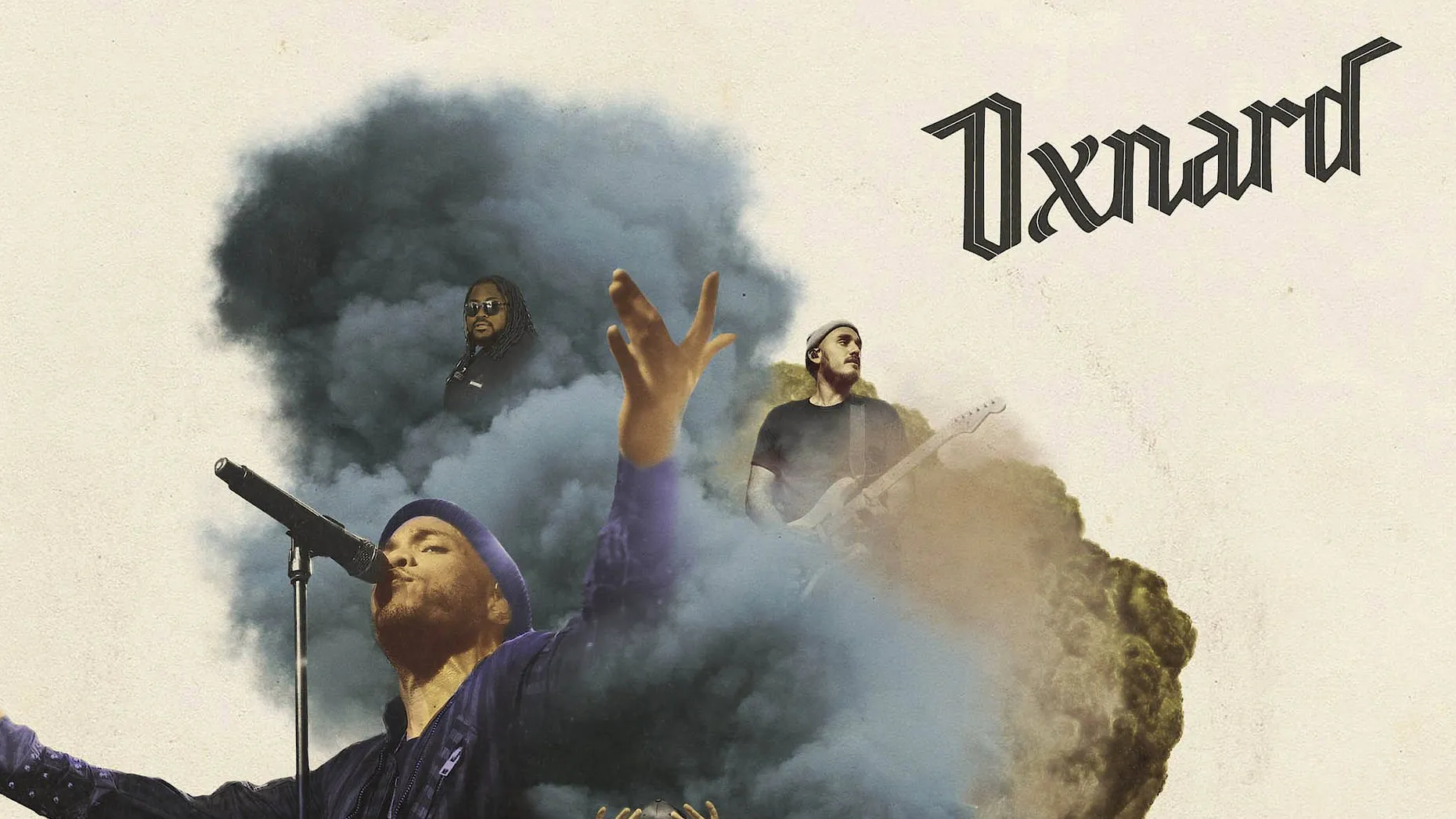
Anderson .Paak’s third studio album, Oxnard, debuted at number 11 on the US Billboard 200, moving approximately 39,800 album-equivalent units in its first week. This performance marked a significant commercial step forward from his previous independent releases, solidifying his transition into the major-label ecosystem under Dr. Dre’s Aftermath Entertainment.
The release of Oxnard on November 16, 2018, represented a pivotal moment for Brandon Paak Anderson. After the critical explosion of 2016’s Malibu, the music industry and fans alike were eager to see how his eclectic blend of funk, soul, and hip-hop would translate under the tutelage of Dr. Dre. As we look back from the vantage point of 2026, Oxnard remains a fascinating case study in how a "critic's darling" navigates the pressure of high-profile mainstream expectations and major-label marketing.
The Context: Transitioning to Aftermath Entertainment
To understand the chart performance of Oxnard, one must first understand the landscape of Anderson .Paak’s career leading up to late 2018. His previous solo effort, Malibu, had peaked at number 79 on the Billboard 200. While that position might seem modest, the album's "long tail" performance and critical acclaim—including a Grammy nomination for Best New Artist—transformed .Paak into a global superstar in the underground and alternative R&B scenes.
The move to Aftermath Entertainment, in partnership with 12 Tone Music and Atlantic Records, changed the stakes. With Dr. Dre serving as the executive producer, Oxnard was marketed as the final installment of his "Beach Series" trilogy (following Venice and Malibu). The involvement of Dr. Dre traditionally signals a "blockbuster" release, often resulting in number-one debuts for artists like Eminem, 50 Cent, or Kendrick Lamar. However, .Paak’s sound has always been more idiosyncratic, which influenced how the album eventually performed on the charts.
Domestic Chart Performance: The US Billboard Rankings
Upon its release, Oxnard faced stiff competition during a busy fourth-quarter holiday season. Despite the massive anticipation, it narrowly missed the Top 10 of the Billboard 200.
First-Week Sales and Units
In its debut week, Oxnard earned 39,800 album-equivalent units. The breakdown of these numbers is essential for understanding the 2018-era music economy:
- Pure Album Sales: Approximately 14,000 units.
- Streaming Equivalent Albums (SEA): Roughly 25,000 units, reflecting about 33 million on-demand audio streams of the album’s tracks.
- Track Equivalent Albums (TEA): The remaining small percentage coming from individual song downloads.
While #11 was a massive jump from #79 (Malibu), some industry analysts at the time viewed the performance as slightly under-projected, given the heavy promotional push and the Kendrick Lamar feature on the lead single, "Tints."
Categorical Charts
While it sat just outside the general Top 10, Oxnard performed exceptionally well on genre-specific charts:
- Top R&B/Hip-Hop Albums: Peaked at number 6.
- Top Rap Albums: Peaked at number 6.
These rankings demonstrated that while .Paak was still growing his "all-format" pop audience, he had firmly captured the core hip-hop and R&B demographic.
International Chart Trajectory
Anderson .Paak has always maintained a robust international following, often performing at major European festivals and selling out tours in the UK and Australia. The chart performance of Oxnard reflected this global footprint, though it saw varying levels of success depending on the territory.
| Country | Peak Position | Chart Organization |
|---|---|---|
| United States | 11 | Billboard 200 |
| Netherlands | 11 | Dutch Album Top 100 |
| Canada | 16 | Billboard Canadian Albums |
| Australia | 20 | ARIA Charts |
| Switzerland | 24 | Schweizer Hitparade |
| Belgium (Flanders) | 25 | Ultratop |
| Norway | 37 | VG-lista |
| United Kingdom | 42 | Official Charts Company |
The performance in the Netherlands (peaking at #11) was particularly noteworthy, matching its US performance and highlighting the strong appetite for "Soulection-adjacent" and funk-heavy sounds in the Dutch market. In the United Kingdom, a peak of #42 was considered a solid showing for an artist who leans heavily into West Coast G-Funk aesthetics, which sometimes struggle to penetrate the higher reaches of the UK pop charts compared to home-grown grime or drill.
Single Performance: "Tints" and "Who R U?"
The commercial success of an album is often tethered to the performance of its singles. For Oxnard, the lead single was "Tints," featuring Kendrick Lamar. Released in October 2018, the track was a polished, radio-ready funk record.
Despite heavy rotation on alternative and urban contemporary radio, "Tints" did not become a "Billboard Hot 100" juggernaut, peaking at number 22 on the Bubbling Under Hot 100. Its true value, however, was in its streaming longevity. By 2026, "Tints" remains one of .Paak’s most-streamed solo tracks, proving that chart peaks do not always tell the full story of a song's cultural reach.
The second single, "Who R U?", showcased the Dr. Dre influence with its aggressive percussion and sharp delivery. While it didn't replicate the crossover success of "Tints," it solidified the album’s reputation within the hip-hop community and became a staple of .Paak’s high-energy live performances.
Critical Reception vs. Commercial Reality
There is often a tension between critical acclaim and chart numbers. Oxnard received generally positive reviews, with a Metacritic score in the high 70s. Critics praised the technical proficiency, the lush production, and .Paak’s versatile vocal performances.
However, some longtime fans of Malibu felt that the heavy-handed production of Dr. Dre occasionally obscured .Paak’s natural soulfulness. This "grittier" sound may have influenced the chart performance. Oxnard was less "summery" than its predecessor, opting for a more dense, industrial West Coast sound. This stylistic choice likely appealed more to hip-hop purists than the "indie-soul" crowd that propelled Malibu to its cult status.
In comparison, the follow-up album, Ventura (2019), which was released only six months later, returned to a smoother R&B sound and actually debuted higher at number 4 on the Billboard 200. This suggests that the "Anderson .Paak brand" was actually more commercially potent when leaning into soul than when leaning into hard-hitting rap, even with the Dre co-sign.
The Long-Term Commercial Legacy
In the years following 2018, the commercial value of Oxnard has been bolstered by its "prestige" status. While it didn't achieve RIAA Platinum status in its first year, the album’s tracks have contributed significantly to .Paak's overall streaming billions.
The album also served as a catalyst for .Paak’s later successes, including his work with Bruno Mars as Silk Sonic. The visibility granted by the Oxnard release cycle—including a performance on Saturday Night Live and a massive world tour—elevated his "Q Score" (a measure of celebrity familiarity and appeal) to a level that made his future Top 10 debuts and Grammy wins almost inevitable.
Production and Technical Depth
From a technical SEO and industry analysis perspective, Oxnard was a "hybrid" release. It utilized the 12 Tone Music Group’s distribution infrastructure, which was a new venture at the time led by Doug Morris. This partnership was designed to give independent-leaning artists major-label muscle without stifling their creativity. The chart performance of Oxnard was, in many ways, a successful "proof of concept" for this business model.
Comparison of the Beach Trilogy Chart Peaks
To see the growth of Anderson .Paak as a commercial entity, one must look at the progression of his primary solo albums leading into the 2020s.
| Album | Year | US Peak | First Week Units | Primary Label |
|---|---|---|---|---|
| Venice | 2014 | — | N/A | Steel Wool / OBE |
| Malibu | 2016 | 79 | ~6,000 | Steel Wool / ArtClub |
| Oxnard | 2018 | 11 | 39,800 | Aftermath / 12 Tone |
| Ventura | 2019 | 4 | 55,000 | Aftermath / 12 Tone |
As the table illustrates, Oxnard was the bridge that took .Paak from a niche artist to a consistent Top 20 (and eventually Top 5) performer. The jump from 6,000 units to nearly 40,000 units is a 566% increase in first-week performance, a feat few artists achieve between two consecutive studio albums.
FAQ: Understanding the Oxnard Release
Why didn't Oxnard debut at number 1?
While Oxnard had significant hype, it was released during a highly competitive week. The number one spot that week was held by Mumford & Sons with Delta, and other high performers included Michael Bublé’s Love. Additionally, .Paak’s music is genre-fluid, which sometimes makes it harder to dominate the "General" charts compared to straightforward pop or trap artists who receive more aggressive playlisting on services like Spotify's RapCaviar.
Was Oxnard considered a commercial failure?
Absolutely not. For an artist whose previous peak was #79, a #11 debut is a massive success. It also earned significant revenue through vinyl sales and touring. In the context of 2018, moving nearly 40,000 units in a week was a strong indicator of a "mid-tier" artist successfully breaking into the "A-list" tier.
Did any songs from Oxnard win a Grammy?
The song "Bubblin" won the Grammy Award for Best Rap Performance in 2019. While "Bubblin" was released as a standalone single shortly before the album and included on some digital versions/deluxe editions of the Oxnard era, its success was inextricably linked to the momentum and branding of the Oxnard rollout.
How did Dr. Dre influence the chart performance?
Dr. Dre’s involvement provided two main benefits: high-end production quality and massive media attention. The "Aftermath" logo carries a certain weight in the music industry that ensures an album will be reviewed by every major publication (Pitchfork, Rolling Stone, etc.) and placed in prominent positions on digital storefronts. This "institutional support" is a large reason why the album's first-week units were so much higher than Malibu.
Is Oxnard available on vinyl and physical formats?
Yes, Oxnard had a significant physical release, including several colored vinyl variants (red and clear/opaque versions). These physical sales accounted for a large portion of the "pure sales" component of its chart debut, as Anderson .Paak has a fanbase that values high-quality physical media.
Practical Guidance for Fans and Collectors
For those looking to explore the commercial history of Anderson .Paak or collect his discography, Oxnard represents the peak of his "G-Funk" era. If you are tracking his chart performance for academic or industry reasons, it is vital to use the Billboard 200 as the primary metric, but do not overlook the Top R&B/Hip-Hop Albums chart, where .Paak has historically been a Top 10 mainstay.
Collectors should note that the vinyl pressings of Oxnard have maintained their value well into 2026, often cited for their superior mixing—a hallmark of Dr. Dre’s "sonic perfectionist" approach to engineering. For a complete understanding of this era, listen to Oxnard alongside its "sister album" Ventura to hear the full range of his commercial and creative capabilities during his time with Aftermath Entertainment.