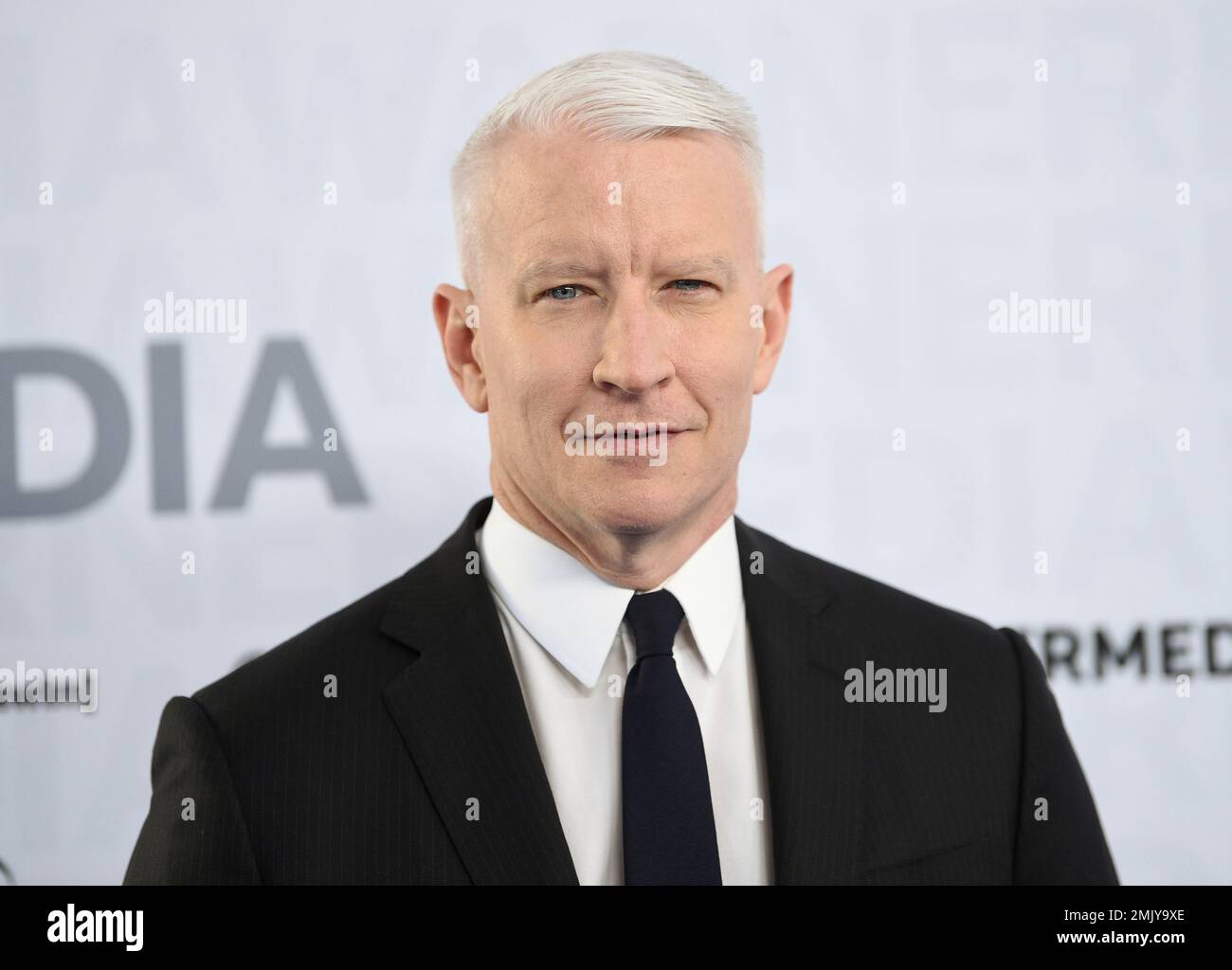
As of 2026, Anderson Cooper remains one of the most recognizable and influential figures in global broadcast journalism. His career is defined by a unique synthesis of high-intensity field reporting, emotional authenticity, and rigorous investigative work. Primarily known for his long-running CNN program Anderson Cooper 360° and his contributions to CBS’s 60 Minutes, Cooper has fundamentally reshaped the role of the modern news anchor from a detached narrator to an empathetic, frontline witness.
Foundations and Early Career: The Self-Made War Correspondent
Anderson Cooper’s path to the pinnacle of broadcast journalism was unconventional, marked by a deliberate rejection of the "nepotism" label often associated with his Vanderbilt family lineage. After graduating from Yale University in 1989 with a degree in political science, Cooper did not immediately land a network role. Instead, he forged a path through independent, high-risk reporting.
Feeling a profound sense of restlessness following the death of his brother, Cooper decided to immerse himself in environments where "the stakes were life and death." He famously "forged" a press pass and traveled to Myanmar (Burma) with a home video camera to document students fighting the government. This period of his career was characterized by a "do-it-yourself" ethos that predated the modern era of citizen journalism.
He eventually joined Channel One News, a youth-oriented news program shown in American schools. For three years, Cooper served as a chief foreign correspondent, reporting from war-torn regions including Somalia, Bosnia, and Rwanda. This era was critical because it allowed him to develop a raw, unpolished reporting style that prioritized the human experience over teleprompter-driven polish. It was during these formative years that Cooper learned the technical aspects of field production—editing, sound, and lighting—skills that would later inform his authoritative presence in the studio.
The CNN Era and the Birth of Anderson Cooper 360°
In 2001, Cooper joined CNN, initially serving as a weekend anchor before launching his signature show, Anderson Cooper 360°, in 2003. The show's title was more than just a brand; it represented a commitment to examining multiple angles of a story and providing a "360-degree" view of the world.
During the early 2000s, cable news was often criticized for being overly reliant on "talking heads" and partisan bickering. Cooper’s program diverged by emphasizing field reporting. Whether it was the aftermath of the Indian Ocean tsunami or the famine in Niger, Cooper was frequently on the ground rather than behind a desk in New York or Atlanta. This commitment to being physically present at the site of news events helped CNN maintain a reputation for serious international coverage during a period of shifting media priorities.
As of 2026, the program continues to serve as a cornerstone of CNN’s primetime lineup, having survived multiple changes in network leadership and shifts in the media landscape. Its longevity is a testament to Cooper’s ability to adapt his interviewing style to a wide range of subjects, from grieving families to combative politicians.
Hurricane Katrina and the Shift Toward Emotional Journalism
The defining moment of Anderson Cooper’s career—and arguably a turning point for 21st-century journalism—occurred in 2005 during the aftermath of Hurricane Katrina. While reporting from the devastated streets of New Orleans, Cooper broke the traditional "fourth wall" of journalistic objectivity.
In a live interview with Senator Mary Landrieu, Cooper expressed visible frustration and anger regarding the federal government's slow response to the crisis. He famously challenged her for "thanking" colleagues while bodies were still being discovered in the streets. This moment resonated with millions of viewers who felt the same disconnect between official rhetoric and the reality on the ground.
This event sparked a broader industry debate: Should a journalist remain a dispassionate observer, or do they have a moral obligation to express the collective human response to tragedy? Cooper’s "emotional journalism" did not replace factual reporting; rather, it added a layer of perceived authenticity that many viewers found more trustworthy than the practiced neutrality of previous generations. This shift paved the way for a more personality-driven news era where the anchor's humanity is viewed as an asset rather than a bias.
Investigative Rigor: Anderson Cooper on 60 Minutes
Parallel to his nightly work at CNN, Cooper has maintained a long-standing role as a correspondent for CBS’s 60 Minutes. This dual role is rare in the industry and highlights his versatility. If AC360 is about the "now," his work on 60 Minutes is about the "deep dive."
His investigative work for CBS has spanned topics from the psychological impact of solitary confinement to the intricacies of the Syrian civil war. This platform allows Cooper to engage in long-form storytelling, where segments are developed over months rather than hours. His style on 60 Minutes is marked by meticulous research and a patient interviewing technique that often leads subjects to reveal more than they intended through the use of strategic silence.
By participating in the "gold standard" of investigative journalism, Cooper has fortified his credibility against critics who might dismiss cable news as ephemeral. He has earned multiple Emmy Awards and Peabody Awards for these contributions, solidifying his status as a serious investigative journalist capable of handling complex socioeconomic and geopolitical data.
Reporting from the Front Lines: Global Crises and Risk
Throughout his career, Cooper has consistently placed himself in high-risk environments. This is a central pillar of his identity as a journalist. From the 2010 Haiti earthquake—where he famously dropped his camera to help a boy injured by a piece of falling concrete—to the ongoing conflicts in the Middle East and the war in Ukraine, Cooper’s reporting often prioritizes the suffering of non-combatants.
This "frontline" approach requires a specific set of technical and logistical skills:
- Situational Awareness: Navigating active combat zones or disaster areas while maintaining a broadcast signal.
- Resourcefulness: Operating with minimal equipment in environments with no power or infrastructure.
- Ethics of Intervention: Deciding when to stop being a reporter and start being a human being (as seen in the Haiti incident).
Critics have occasionally accused him of "disaster tourism," but the depth of his reporting usually silences these claims. His longevity in these regions suggests a genuine commitment to the stories rather than a fleeting search for ratings.
Comparative Analysis: Anderson Cooper in the Modern Media Landscape
To understand Anderson Cooper’s impact, it is helpful to compare his professional profile with other leading anchors in the 2026 media environment.
| Feature | Anderson Cooper (CNN/CBS) | Jake Tapper (CNN) | Rachel Maddow (MSNBC) | David Muir (ABC) |
|---|---|---|---|---|
| Primary Style | Empathetic/Frontline | Adversarial/Fact-Check | Analytical/Narrative | Traditional/Polished |
| Defining Strength | Live crisis reporting | Political accountability | Long-form historical context | Mass-audience accessibility |
| Background | War correspondent | Political reporter | Academic/Policy expert | Local news to network desk |
| Key Mediums | Nightly Cable & Investigative | Daily News & Sunday Talk | Weekly Specialized Cable | Evening Broadcast News |
While Tapper excels at the "Washington grind" and Maddow at "connecting the dots" of policy and history, Cooper occupies a space that bridges the gap between the studio and the field. He remains the industry's go-to figure for events that require both a logistical "boots on the ground" presence and a high degree of emotional intelligence.
Technical Methodology and Interviewing Style
Cooper’s interviewing methodology is often studied by aspiring journalists. Unlike the aggressive "gotcha" style popularized in the 1990s, Cooper tends to use a more conversational, yet persistent, approach.
- The "Slow Build": He often starts with non-confrontational questions to establish a rapport, then pivots to tougher inquiries once the subject is comfortable.
- Strategic Silence: Following the lead of legendary interviewers like Mike Wallace, Cooper understands that silence is a tool. If a subject gives an evasive answer, staying silent often pressures them to continue speaking to fill the void, often revealing more truth in the process.
- The Evidence-Based Challenge: When interviewing political figures, Cooper frequently relies on pre-researched clips or documents. He doesn't just say a subject is wrong; he shows them the video evidence of their previous contradictory statements.
- Vulnerability: Cooper is one of the few anchors who will admit when he doesn't know something or when he is personally moved by a story. In an era of high skepticism toward the "mainstream media," this vulnerability is a technical asset that builds audience trust.
Personal Identity and the Public Interest
In 2012, Cooper publicly came out as gay, a move that was significant given his prominence in the media. From a journalistic perspective, this was handled with the same directness that characterizes his reporting. He noted that while he valued his privacy, being silent about his identity could give the impression that he was trying to hide something or was ashamed.
His openness has occasionally informed his reporting, particularly during events like the Pulse nightclub shooting in Orlando. However, he has largely maintained a boundary between his personal life and his professional duties, ensuring that his identity does not overshadow the stories he covers. By 2026, he is seen as a trailblazer who proved that a journalist's personal identity could coexist with—and even enhance—their professional integrity.
Criticisms and Limitations
No journalist at Cooper's level is without critics. Some media analysts argue that the "CNN style"—which Cooper helped define—can sometimes lean too heavily on spectacle and the "breaking news" banner, even when the developments are minor.
Others have criticized the blending of emotion and news, suggesting that it can cloud objective judgment. There is also the inevitable critique regarding his high salary and celebrity status; critics wonder if a multimillionaire anchor can truly relate to the victims of the economic and social tragedies he covers. Cooper usually counters these points through the sheer volume and consistency of his field work, arguing that his presence in the mud and the rubble is a more accurate measure of his commitment than his bank account.
Summary of Professional Impact
Anderson Cooper’s legacy as a journalist is built on the idea that the anchor should not be a "voice from on high," but an active participant in the discovery of truth. He transitioned from a freelance war correspondent to a primetime anchor without losing the "field" mentality.
In 2026, his career serves as a blueprint for how to maintain relevance in a fragmented media market: by combining high-end production values with raw, unscripted human moments. He has successfully navigated the transition from traditional broadcast to digital-first consumption, ensuring that his brand of journalism—rooted in physical presence and emotional resonance—remains a vital part of the global conversation.
Frequently Asked Questions
What is Anderson Cooper's educational background in journalism?
Interestingly, Anderson Cooper did not study journalism in college. He graduated from Yale University with a B.A. in Political Science. He has often stated that his true "journalism school" was the three years he spent traveling the world with a camera, teaching himself how to tell stories under pressure in war zones.
How did Hurricane Katrina change his career?
Before Hurricane Katrina in 2005, Cooper was seen as a rising star but still a relatively traditional anchor. His visceral, emotional reaction to the government's failure in New Orleans transformed him into a "voice for the people." This moment increased his ratings and established the "authentic" style that has defined his career since.
Does Anderson Cooper still report from war zones in 2026?
Yes. Despite his status as a senior anchor, Cooper consistently leaves the studio to report from major conflict zones. His coverage of the war in Ukraine and various humanitarian crises in the 2020s demonstrates that he still considers field reporting the core of his professional identity.
How many awards has Anderson Cooper won for his journalism?
As of 2026, Cooper has won more than 15 Emmy Awards, several Peabody Awards, and the Edward R. Murrow Award. These accolades cover a wide range of his work, from his nightly show on CNN to his investigative pieces for 60 Minutes.
What is the significance of the "360" in his show's title?
The "360" refers to the goal of providing a comprehensive, all-encompassing look at the news. It signifies that the program will look at a story from all angles, including perspectives that might be overlooked by more traditional, one-dimensional news broadcasts.
Recommendation for Further Study
For those interested in the technical and ethical evolution of broadcast news, a primary recommendation is to watch archival footage of Cooper’s reporting during the 2005 Hurricane Katrina crisis alongside his more recent investigative work for 60 Minutes. This comparison reveals the development of his "emotional authority"—the ability to use human empathy as a tool for accountability. Students of journalism should focus on his use of the "uncomfortable pause" in interviews, which remains one of the most effective technical skills in modern investigative reporting.