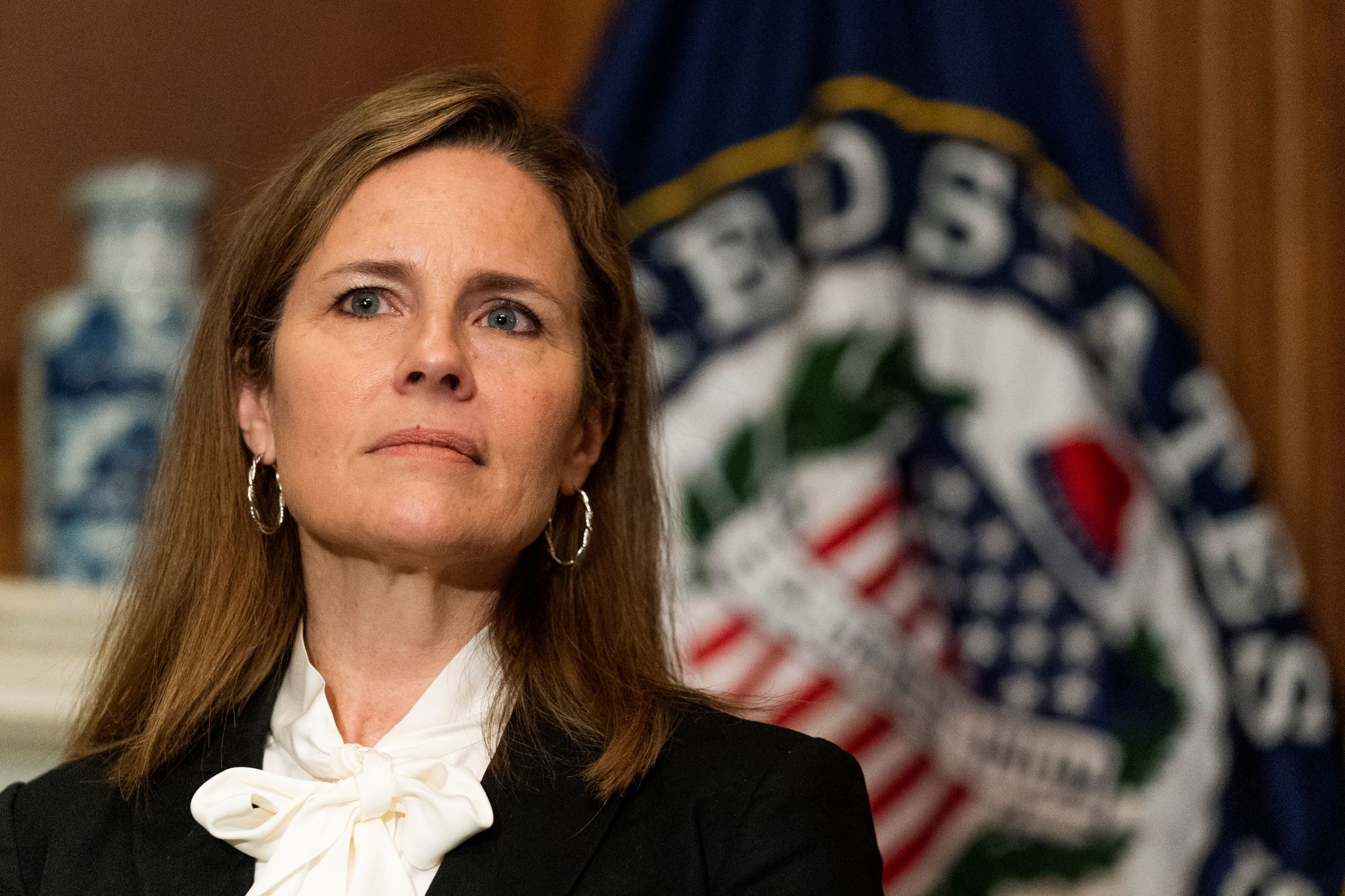
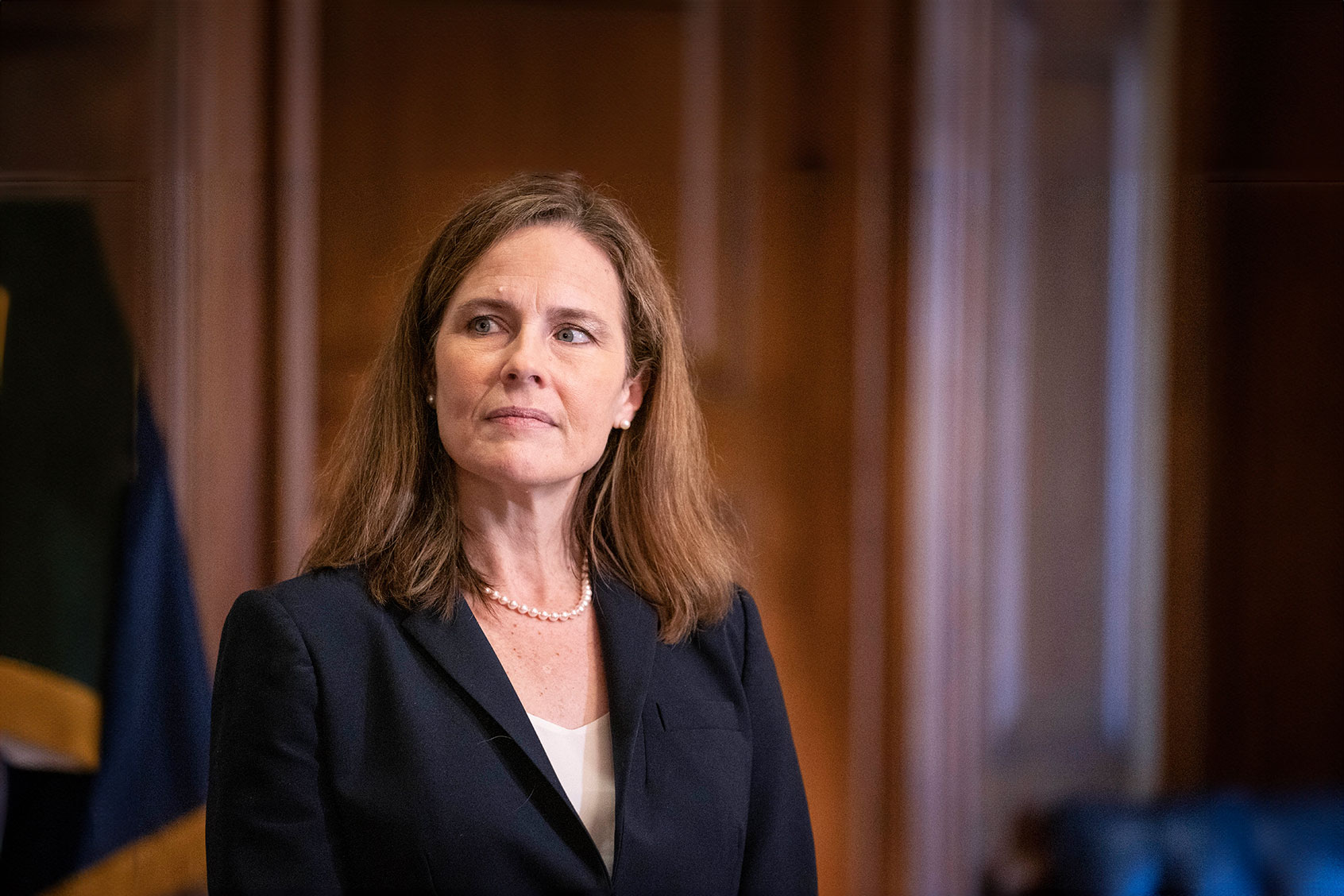
Photographic records of Justice Amy Coney Barrett offer a comprehensive visual timeline of her rapid ascent from a Notre Dame law professor to a pivotal figure on the United States Supreme Court. These images capture key historical milestones, including her 2020 Rose Garden nomination, the rigorous Senate confirmation hearings, and her official judicial portraits that now reside in the national archives.
Visual media serves as a powerful record of judicial history, and for Justice Amy Coney Barrett, the imagery associated with her career reflects both the traditional solemnity of the American legal system and the modern intensity of the confirmation process. As of 2026, her image has become synonymous with the conservative shift of the Roberts Court, documented through thousands of press photographs, official government portraits, and candid moments shared during public appearances.
The Evolution of Justice Barrett’s Public Image
The visual narrative of Amy Coney Barrett began in the academic halls of the University of Notre Dame. Early images often depict her as a scholar—captured in lecture halls or at faculty events—wearing professional attire that signaled her role as a constitutional expert. These early photographs provide a baseline for her public persona: composed, articulate, and deeply embedded in the world of legal theory.
When she was nominated to the U.S. Court of Appeals for the Seventh Circuit in 2017, the imagery shifted. The academic settings were replaced by the formal backdrop of the Dirksen Federal Courthouse in Chicago. Photography from this era focuses on her "investiture"—the formal ceremony where a judge assumes office. These images are characterized by the first appearance of the black judicial robe, a garment that visually strips away personal identity in favor of institutional authority.
By the time she was considered for the Supreme Court in 2020, her image had become a focal point of national media. The transition from a relatively private academic to a household name occurred almost overnight, and the photography from this period reflects that high-stakes environment. High-contrast portraits and telephoto shots from press scuffles outside her home in Indiana became common, marking a departure from the controlled environments of the courtroom and the classroom.
Official Portraits and Judicial Iconography
Official portraits are the most enduring images of any Supreme Court Justice. They are carefully staged to convey stability, wisdom, and the weight of the law. For Amy Coney Barrett, these portraits serve as the definitive visual record of her tenure.
The 2020 Supreme Court Official Portrait
Following her swearing-in, the Supreme Court released Justice Barrett's first official portrait. In this image, she is positioned against the traditional dark wood paneling and velvet drapery of the Court's interior. Unlike the more candid press photos, this portrait uses soft, directional lighting to emphasize the texture of the judicial robe.
One notable detail in her official imagery is the choice of accessories. While her predecessor, Justice Ruth Bader Ginsburg, was famous for her diverse collection of decorative collars (jabots), Barrett’s early official images showed a more minimalist approach, often featuring a simple neckline or a subtle lace trim. As of 2026, observers have noted that her visual style remains consistent with this "minimalist professional" aesthetic, emphasizing the robe itself rather than personal embellishments.
The Seventh Circuit Records
Before reaching the high court, Barrett’s image was cataloged in the archives of the Seventh Circuit. These photos are often more utilitarian—headshots used for court directories and internal publications. However, they are essential for researchers looking to understand her visual transformation. The lighting in these earlier government photos is often flatter and less dramatic than the "heroic" lighting found in Supreme Court portraiture.
The Confirmation Process: Capturing a Pivot in History
The 2020 confirmation process provided some of the most iconic images of Amy Coney Barrett. Because the Supreme Court does not allow cameras during oral arguments, the televised and photographed confirmation hearings are often the only time the public sees a Justice in a high-pressure, interactive environment.
The Rose Garden Nomination Ceremony
On September 26, 2020, President Donald Trump formally nominated Barrett in the White House Rose Garden. The images from this event are striking for their composition: the bright green of the garden contrasted with the formal dark suits and dresses of the attendees. These photos are historically significant not only for the nomination itself but also for the context of the era, capturing a specific moment in American political and social history.
Photographers at this event captured Barrett standing at the podium, often with the White House colonnade in the background. These "power shots" were designed to project a sense of readiness and presidential endorsement.
The Senate Judiciary Committee Hearings
The images from the Senate hearings are perhaps the most famous in the Barrett archive. One specific photo gained significant viral traction: Justice Barrett holding up a completely blank notepad. When asked by Senator John Cornyn what notes she was using to answer complex constitutional questions, she revealed she had none.
This image became a powerful visual metaphor for her supporters, representing mental acuity and preparation. Conversely, for her critics, the image was analyzed through the lens of political theater. From a photographic perspective, the "blank notepad" shot is a masterclass in timing, capturing a candid moment that spoke volumes more than a posed portrait ever could.
Family and Personal Life in the Public Eye
Unlike many of her predecessors, Justice Barrett’s family life has been a central component of her visual narrative. As a mother of seven, images of her children and husband, Jesse Barrett, have frequently appeared in press coverage.
During the confirmation hearings, the "family row" became a recurring subject for photojournalists. Images of her children sitting quietly in the hearing room were used by various media outlets to frame different narratives. For lifestyle and news publications, these photos highlighted the "working mother" aspect of her biography. The visual presence of a large family in the halls of the Supreme Court added a new dimension to the traditional imagery of the judiciary, which historically leaned toward older, solo figures.
Visual Symbolism: The Judicial Robe and Accessories
The black robe is the primary visual symbol of a judge. In the context of Amy Coney Barrett's imagery, the robe acts as an equalizer. When photographed alongside her colleagues in the "class photo" of the Supreme Court, the uniformity of the robes emphasizes the collective power of the institution.
However, photographers often look for small details that differentiate the Justices. For Barrett, these details include:
- The Choice of Collar: Whether she wears a traditional white shirt underneath or a more modern lace collar.
- The Fit of the Robe: Modern judicial robes are often custom-tailored, and photographers sometimes capture the subtle differences in fabric weight and sheen.
- Posture and Expression: In group photos, Barrett is often captured with a neutral, focused expression, consistent with the "judicial temperament" expected of a high court justice.
Comparison of Image Categories and Sourcing
When searching for or using images of Justice Barrett, it is important to understand the source and the associated usage rights.
| Image Type | Primary Source | Usage Rights | Historical Significance |
|---|---|---|---|
| Official Portrait | Supreme Court of the U.S. | Public Domain (usually) | Definitive record of her tenure. |
| Confirmation Hearing | Senate Media Gallery / AP | Copyrighted / Editorial Use | Captures the political process. |
| Rose Garden Ceremony | White House Archives | Public Domain | Records the moment of nomination. |
| Academic/Early Career | University of Notre Dame | Copyrighted by Institution | Documents her life before the bench. |
| Candid Press Photos | Reuters / Getty Images | Copyrighted (License required) | Shows her in everyday environments. |
Where to Source and Verify Authentic Images
For researchers, journalists, and students, finding high-resolution and authentic images of Justice Barrett requires using reliable repositories.
- The Supreme Court Website: The Court maintains a gallery of current and former Justices. These are the "gold standard" for official use and are generally available in high resolution for public information purposes.
- DVIDS (Defense Visual Information Distribution Service): This is a primary source for images of federal events, including swearing-in ceremonies involving military or high-level government officials. These images are typically in the public domain as works of the U.S. government.
- The Library of Congress: The LoC archives significant press photography and official government records. This is the best place to find long-term historical context and photos that have been curated for their national importance.
- National Archives (NARA): As Justice Barrett's career progresses toward 2026 and beyond, more of her official records and associated photography will be moved into the National Archives, ensuring they are preserved for future generations.
It is critical to distinguish between official government-produced images (which are often free of copyright) and images taken by private photojournalists (which require licensing). Using a copyrighted photo from a major agency like Getty Images without a license can lead to legal complications.
FAQ
Where can I find copyright-free images of Amy Coney Barrett?
The best source for copyright-free images is the Supreme Court of the United States official website or DVIDS. Because these images are produced by federal government employees as part of their official duties, they typically reside in the public domain. However, you should always check the specific "Terms of Use" on the sourcing site to confirm.
What is the significance of the "blank notepad" photo?
The "blank notepad" photo was taken during the 2020 Senate Judiciary Committee hearings. It became a viral sensation because it visually demonstrated that Justice Barrett was answering complex legal questions for hours without the aid of written notes or briefing materials. It is considered one of the most defining "candid" images of her career.
Are there photos of Justice Barrett in the courtroom?
There are no photographs of Justice Barrett—or any other Justice—actively presiding over oral arguments at the Supreme Court. The Court strictly prohibits cameras during its proceedings. Instead, visual records of these moments are provided by courtroom sketch artists. Photos of the Justices in the courtroom are only taken during special ceremonial sessions or for official portraits.
Who took the official portrait of Justice Amy Coney Barrett?
Official Supreme Court portraits are usually commissioned by the Court and taken by professional photographers who specialize in institutional portraiture. While the specific photographer's name isn't always publicized in every press release, the images are credited to the Supreme Court of the United States.
How has her image changed since her 2020 appointment?
As of 2026, her image has shifted from that of a "nominee under scrutiny" to an "established jurist." Early images focused on her family and her potential impact on the court. More recent imagery focuses on her role within the Court's hierarchy, often appearing in the context of major rulings or attending formal events like the State of the Union address.
Practical Recommendation for Researchers
If you are looking for a comprehensive visual history of Justice Amy Coney Barrett, start by building a timeline using the Library of Congress Digital Collections. For high-quality, professional use, prioritize official government sources to avoid copyright infringement. When analyzing these images, pay close attention to the setting and the source, as these factors heavily influence the narrative the image is intended to convey. For those interested in the artistic side of judicial history, comparing the official portraits of Justice Barrett with those of her predecessors, such as Justice Sandra Day O'Connor or Justice Ruth Bader Ginsburg, provides fascinating insight into the evolution of judicial iconography in the 21st century.